
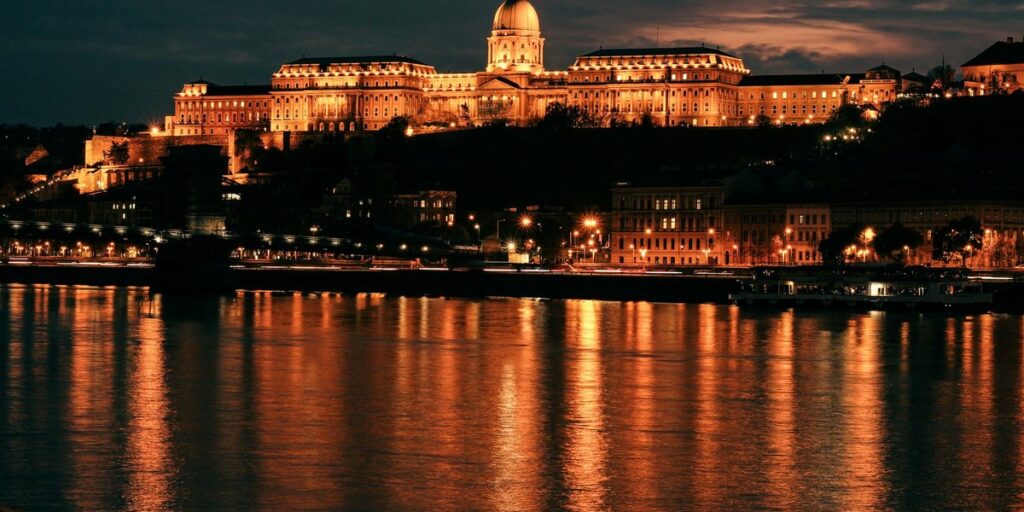
Most lists of historical places in Hungary give you the same five things in Budapest, then stop. Buda Castle, the Basilica, Matthias Church, Fisherman’s Bastion, Parliament. All worth your time. But Hungary has eight UNESCO World Heritage Sites, Roman ruins older than the Hungarian language itself, and a fully preserved 17th-century village where people still live. The good stuff is spread across the country, and a lot of it sits within a day’s drive of the capital.
This guide covers fifteen sites worth building a trip around. Each one comes with what it is, why it matters, what to actually look at when you’re there, and the practical bits — hours, costs, and how to get there from Budapest if you’re using the city as a base.
Table of Contents
- The Budapest Cluster
- Day Trips from Budapest
- Worth the Longer Drive
- The UNESCO Sites at a Glance
- How to Plan Your Route
The Budapest Cluster
Budapest earns its reputation. The historic core straddles the Danube, with medieval Buda on the hilly west bank and 19th-century Pest on the flat east. The whole Banks of the Danube and Buda Castle Quarter is a single UNESCO listing, so you’re walking through a World Heritage Site whether you mean to or not.
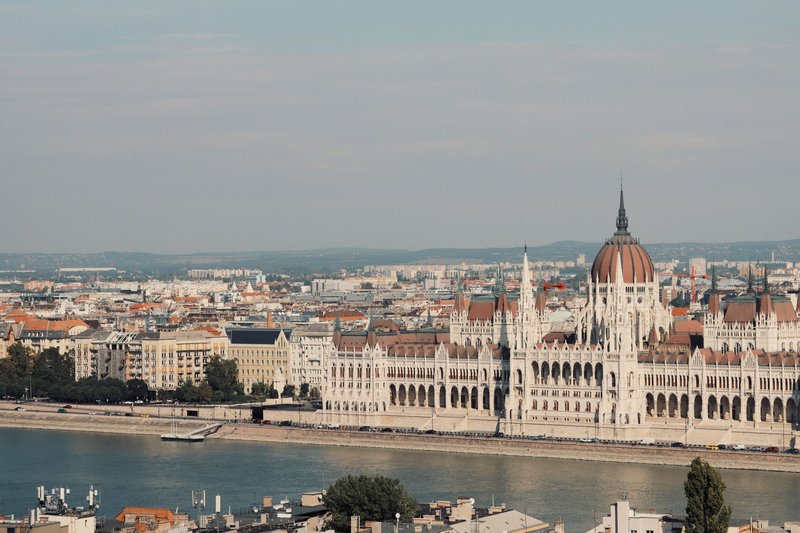
1. Buda Castle
The castle hill has been fortified since the 13th century, leveled and rebuilt so many times that the current Baroque palace dates mostly to the 18th and 20th centuries. What survives underneath is more interesting than the facade: a network of medieval cellars and Gothic halls excavated after WWII bombing exposed them. The Castle Museum inside the Budapest History Museum walks you through the layers.
What to see: The medieval royal chambers, the restored Gothic statues found buried in the courtyard in 1974, and the view from the terrace over the Danube. Hours & cost: Budapest History Museum open Tue–Sun, roughly 2,400 HUF. The castle grounds and courtyards are free and open all day. Getting there: Castle Hill funicular from the Chain Bridge, or bus 16.
2. Fisherman’s Bastion
Built between 1895 and 1902, this is the youngest “old” thing on the list and the one most people photograph. The seven white stone towers represent the seven Magyar tribes that founded Hungary in 895. It was never a real fortification — it’s a neo-Romanesque viewing terrace, and it knows it.
What to see: Go at sunrise. The upper terraces charge a small fee, but the lower walkways are free and the light at dawn is the whole point. Hours & cost: Upper towers around 1,200 HUF, open daily; lower level free and always open. Getting there: Same as Buda Castle — it’s a five-minute walk along the hill.
3. Matthias Church
A church has stood here since the 11th century, but the wild, polychrome-tiled version you see now is a 19th-century reimagining by architect Frigyes Schulek. Two kings were crowned here, and the Habsburg emperor Franz Joseph took the Hungarian crown in this nave in 1867. The diamond-patterned Zsolnay roof tiles are a Hungarian signature you’ll start spotting everywhere.
Hours & cost: Open daily with limited hours during services, around 2,500 HUF. Getting there: Adjacent to Fisherman’s Bastion.
4. Hungarian Parliament Building
The third-largest parliament building in the world, finished in 1902, with 691 rooms and a dome that hits exactly 96 meters — matching St. Stephen’s Basilica, because no Budapest building was allowed to exceed 96 meters until recently. The number 96 nods to 896, the year of Hungarian settlement. Inside, the Holy Crown of Hungary sits under armed guard in the central hall.
Hours & cost: Guided tours only, around 4,000 HUF for EU citizens and higher for others. Book ahead online — same-day tickets sell out. Getting there: Metro M2 to Kossuth Lajos tér, on the Pest side.
5. St. Stephen’s Basilica
Named for Hungary’s first king, this is the country’s most important church and holds its strangest relic: the mummified right hand of Stephen himself, kept in a glass reliquary and paraded through the city every August 20th. The dome is climbable.
Hours & cost: Free entry to the nave (donation suggested); dome and tower around 2,200 HUF. Getting there: Metro M1 or M3 to Deák Ferenc tér, then a short walk.
Day Trips from Budapest
This is where most guides go quiet. These four are all reachable as a day return from the capital, and they’re where Hungarian history gets less polished and more real.
6. Hollókő
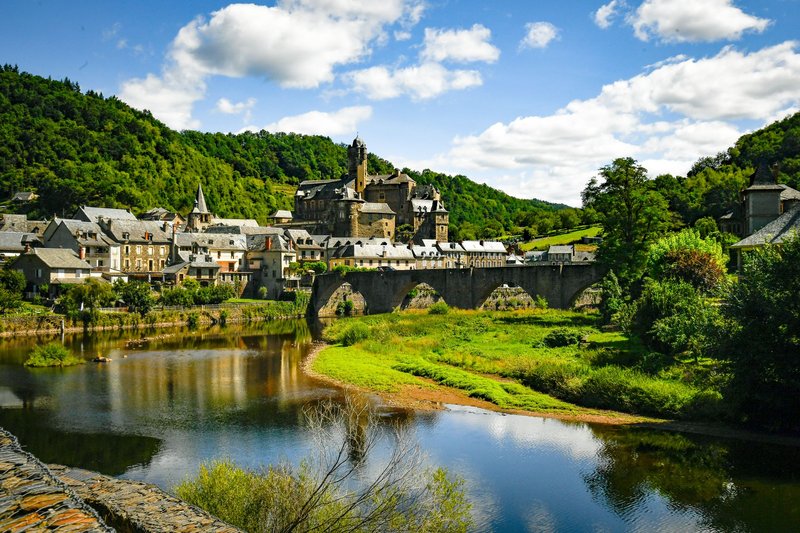
A 17th-century Palóc village frozen in time, and one of the few UNESCO sites in the world that protects a living traditional settlement rather than a monument. The 67 protected houses with their whitewashed walls and carved wooden balconies have been continuously inhabited since they were rebuilt after a 1909 fire — using the same medieval layout. Above the village sits a 13th-century hilltop castle.
Why it matters: It’s the best-preserved example of pre-industrial rural architecture in Central Europe, listed by UNESCO in 1987. What to see: The Old Village lanes, the castle ruins, and the village at Easter, when locals wear full Palóc folk dress. Hours & cost: Village free to wander; castle around 1,500 HUF. Getting there: About 90 minutes by car northeast of Budapest. Public transport is slow — a rental or tour is easier.
7. Esztergom Basilica
The largest church in Hungary, sitting on a hill above the Danube right across from Slovakia. This was the country’s first capital and the seat of the Hungarian Catholic Church for a thousand years. The basilica’s crypt holds the tombs of archbishops, and the treasury is the richest collection of ecclesiastical art in the country.
What to see: Climb the cupola for a view across the river into Slovakia. The Bakócz Chapel, carved from red marble in 1507, survived the Ottoman occupation intact. Hours & cost: Basilica free; crypt, treasury, and cupola charged separately, roughly 700–2,000 HUF each. Getting there: One hour by train or car northwest of Budapest. Pairs well with Visegrád.
8. Visegrád Citadel
A 13th-century hilltop fortress built after the Mongol invasion, overlooking the dramatic bend where the Danube turns south. In the 14th century this was the royal seat, and the lower Renaissance palace hosted a 1335 summit of Central European kings. The citadel was a near-impregnable ruin by the 18th century; what remains gives you the best panorama in the Danube Bend.
Hours & cost: Citadel around 1,700 HUF, open daily in season. Getting there: About an hour north of Budapest by car or boat. A summer Danube ferry from the city is the scenic option.
9. Gödöllő Palace
The largest Baroque palace in Hungary and the favorite residence of Empress Elisabeth — “Sisi” — the famously melancholic wife of Franz Joseph. She loved Hungary, learned the language, and spent as much time here as the Vienna court allowed. The restored royal apartments are decorated in her preferred violet.
Hours & cost: Around 3,200 HUF, open Tue–Sun. Getting there: 30 minutes by suburban HÉV train from Örs vezér tere. The easiest day trip on this list.
Worth the Longer Drive
These reward a longer journey or an overnight. Several are UNESCO sites the Budapest-only crowd never reaches.
10. Pécs Early Christian Necropolis
Beneath the southern city of Pécs lies a 4th-century Roman burial complex from the era when the town was called Sopianae. The painted underground tomb chambers — some two stories deep, decorated with frescoes of Adam and Eve and Daniel in the lion’s den — are among the best-preserved early Christian art north of the Alps. UNESCO listed them in 2000.
Hours & cost: Cella Septichora visitor center around 1,800 HUF, closed Mondays. Getting there: About 2.5 hours south of Budapest by car or train. Pécs itself is worth a night.
11. Tokaj Wine Region
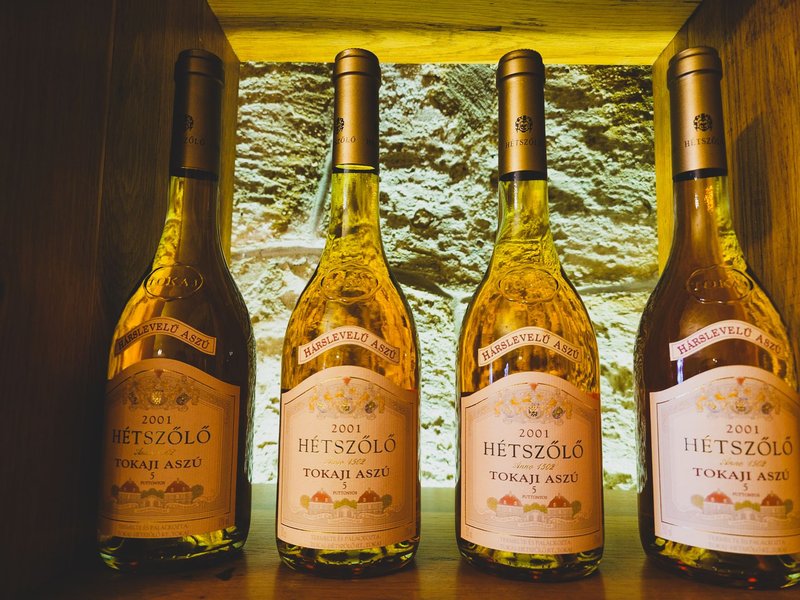
A cultural landscape, not a building — the entire Tokaj-Hegyalja region is UNESCO-listed for a winemaking tradition documented since 1737, when it became one of the world’s first legally defined appellations. Louis XIV called Tokaji “the wine of kings and the king of wines.” The volcanic hills are honeycombed with centuries-old cellars cut into the rock, their walls black with noble mold.
What to see: The historic cellars in Tokaj town and Mád, and the sweet Aszú wines made from botrytized grapes. Getting there: Roughly 2.5 hours northeast of Budapest. Overnight recommended if you’re tasting.
12. Eger Castle
The castle that stopped an empire. In 1552, around 2,000 defenders held Eger against an Ottoman force estimated at 40,000 — a victory so famous it’s the subject of Hungary’s most-read historical novel, Eclipse of the Crescent Moon. The Ottomans came back in 1596 and took it, leaving behind the northernmost surviving Turkish minaret in Europe, which still stands in the town below.
What to see: The casemates, the underground tunnels, and the minaret. Eger’s Baroque old town and thermal baths fill out a weekend. Hours & cost: Castle around 2,500 HUF, open daily. Getting there: Two hours northeast of Budapest by car or direct train.
13. Pannonhalma Archabbey
A Benedictine monastery founded in 996, making it one of the oldest in the world still in operation — monks have lived and prayed on this hill for over a thousand years without interruption. The library holds 400,000 volumes, including the 1055 Tihany Abbey charter, the oldest surviving document containing Hungarian words. UNESCO-listed in 1996.
Hours & cost: Guided tour around 3,000 HUF. Check the schedule, as access depends on monastic life. Getting there: About 1.5 hours west of Budapest, near Győr.
14. Hortobágy National Park
The puszta — Hungary’s great plain — is a UNESCO cultural landscape, recognized for two thousand years of pastoral land use. This is where you’ll find the long-horned Hungarian Grey cattle, racka sheep with corkscrew horns, and csikós horsemen demonstrating the riding tradition that defined the region. The Nine-Arch Bridge from 1833 is the longest stone road bridge in the country.
Getting there: Around 2.5 hours east of Budapest. Combine with Tokaj or Eger.
15. Sopron Old Town
Right on the Austrian border, Sopron escaped the Ottoman destruction that flattened so much of Hungary, so its medieval and Baroque core survived intact. The Firewatch Tower has Roman foundations, a medieval body, and a Baroque top — a thousand years of architecture stacked vertically. In 1921 the city voted to stay Hungarian rather than join Austria, earning it the nickname “the most loyal town.”
Hours & cost: Firewatch Tower around 2,000 HUF. Getting there: About 2.5 hours west of Budapest, or an easy day trip from Vienna.
The UNESCO Sites at a Glance
Hungary has eight World Heritage Sites. Here’s how they map to this list and how far each sits from the capital.
| Site | Type | Listed | Distance from Budapest |
|---|---|---|---|
| Budapest Danube & Castle Quarter | Urban | 1987 | In the city |
| Hollókő | Village | 1987 | 90 min NE |
| Pannonhalma Archabbey | Monastery | 1996 | 1.5 hr W |
| Hortobágy National Park | Landscape | 1999 | 2.5 hr E |
| Pécs Early Christian Necropolis | Roman ruins | 2000 | 2.5 hr S |
| Tokaj Wine Region | Landscape | 2002 | 2.5 hr NE |
| Aggtelek Caves | Natural | 1995 | 3 hr NE |
| Fertő/Neusiedlersee | Landscape | 2001 | 2.5 hr W |
The full inscription details for each are on the UNESCO World Heritage list. Aggtelek (a cave system shared with Slovakia) and Fertő (a lakeside cultural landscape near Sopron) round out the eight and are natural rather than built sites, which is why they sit outside the main list above.
How to Plan Your Route
If you’ve got three days, base in Budapest and run the day trips: Gödöllő and the city sites on day one, the Danube Bend (Esztergom plus Visegrád) on day two, Hollókő on day three. That covers four of the eight UNESCO sites without ever unpacking twice.
With a week, add a loop. Head northeast through Eger and Tokaj for the castle-and-wine combination, or southwest through Pannonhalma to Pécs for the Roman ruins. The History Hit guide to historic sites in Hungary is a useful cross-reference for opening times, which shift seasonally — most rural sites cut hours sharply from November through March, so confirm before you drive two hours for a locked gate.
One practical note on tickets: Hungary’s major sites rarely require advance booking except the Parliament tour, which genuinely sells out days ahead in summer. Everything else you can buy at the door. Carry cash for the smaller village sites — card machines at a 13th-century castle ticket booth are not a guarantee.
The sites that stick with people aren’t always the famous ones. Buda Castle is magnificent, but it’s the black-walled cellar in Tokaj or the lane in Hollókő where a woman is still hanging laundry between 300-year-old houses that make Hungary feel less like a museum and more like a country that never stopped living in its own history.