Here’s the thing that trips up almost everyone searching for this: Pennsylvania does not have a single “National Park.” No Yellowstone, no Yosemite, no big-gates-and-an-entrance-sign flagship. What it has instead are 19 sites run by the National Park Service — battlefields, historical parks, memorials, a river, a recreation area, and a few trails that just pass through.
That distinction matters when you’re planning a trip. A “national historical park” in Philadelphia and a “national recreation area” in the Poconos are nothing alike. One is cobblestones and the building where they signed the Declaration of Independence. The other is 70,000 acres of river gorge where you can spend a weekend in a kayak. Lumping them together as “national parks” is how people end up disappointed.
So this guide does two things the directory lists don’t. It groups every site by region, so you can actually build an itinerary around where you are. And it tells you the practical stuff — what’s free, when to go, what’s worth a full day versus a quick stop.
Table of Contents
- National park vs. NPS site: the quick version
- The fast answer: the ones worth your time
- Philadelphia and southeastern PA
- Western Pennsylvania
- The Poconos and northeast
- Battlefields and Civil War sites
- Trails and rivers that pass through
- How to plan a Pennsylvania NPS trip
National park vs. NPS site: the quick version
The National Park Service manages over 400 sites across the country. Only 63 of them carry the full “National Park” designation — the marquee wilderness ones. The rest are national monuments, historical parks, battlefields, seashores, recreation areas, and so on. They’re all “NPS units,” all run by the same agency, all marked with the same brown arrowhead sign. But they’re not all “national parks.”
This is not a Pennsylvania quirk. Plenty of states draw the same blank when you go looking for a flagship — Arkansas has exactly one true national park and a handful of other NPS units, and the math gets confusing there for the same reason it does here. Pennsylvania’s 19 sites fall almost entirely into the historical and recreational buckets, which makes sense. This is where the country was founded and where some of the Civil War’s bloodiest days played out. The land here tells American history more than it shows off geology. If you came for granite cliffs, you’re in the wrong state. If you came for the room where the Constitution was argued into existence, you’re in exactly the right one.
The fast answer: the ones worth your time
If you only hit a handful, make it these:
- Independence National Historical Park (Philadelphia) — the Liberty Bell and Independence Hall. Non-negotiable if you’re in the city.
- Gettysburg National Military Park (south-central PA) — the most significant Civil War battlefield in the country, and it’s enormous.
- Delaware Water Gap National Recreation Area (Poconos) — the one place on this list that’s purely about the outdoors. Waterfalls, the Appalachian Trail, the river.
- Valley Forge National Historical Park (near Philadelphia) — the winter encampment, with 35 miles of trails wrapped around the history.
- Flight 93 National Memorial (western PA) — sobering, beautifully designed, worth the detour.
Everything else is a worthy stop if it’s near your route. Below, all 19, by region.
Philadelphia and southeastern PA
This is the densest cluster. You could spend two full days here without driving more than 40 minutes between sites.
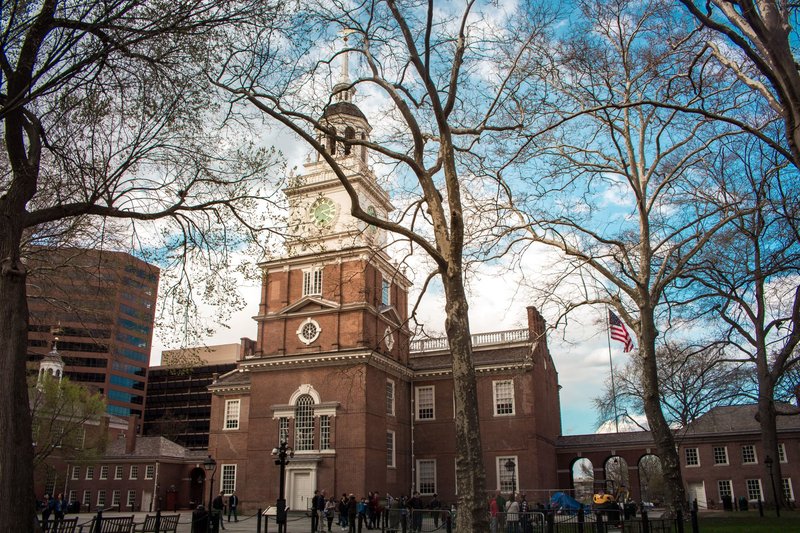
Independence National Historical Park is the anchor. Independence Hall, the Liberty Bell Center, Congress Hall, and a walkable few blocks of colonial Philadelphia. The park is free, but timed tickets are required for Independence Hall itself — book ahead through the official NPS reservation system, especially in summer when same-day tickets vanish by mid-morning.
A short walk away sits the Edgar Allan Poe National Historic Site, the house where Poe lived during one of his most productive stretches. It’s small, it’s free, and it’s genuinely eerie in the right way. Twenty minutes, tops, but a good one.
Thaddeus Kosciuszko National Memorial is the smallest unit in the entire National Park System — a single boarding-house room honoring the Polish engineer who helped win the Revolution. Blink-and-miss-it, but free and a few blocks from the Liberty Bell.
Valley Forge National Historical Park is 25 minutes northwest, and it’s the one I’d tell families to prioritize after Independence. This is where Washington’s army survived the brutal winter of 1777–78. The encampment story is well told, but the real draw is the landscape: rolling fields, reconstructed log huts, and 35 miles of trails. Cyclists love the Joseph Plumb Martin Trail loop. Free to enter.
Push west into Chester County and you reach Hopewell Furnace National Historic Site, a restored 19th-century iron-making village. It’s quiet, it’s rural, and the costumed-interpreter operation here is one of the better living-history experiences in the state. Pairs naturally with a stop at the adjacent French Creek State Park.
Last in this cluster: First State National Historical Park technically spans Delaware and Pennsylvania, with one of its sites — the Beaver Valley area — sitting in PA’s southeast corner. Easy to overlook, but it’s there.
Western Pennsylvania
The Pittsburgh region and the southwest corner hold a very different mix — industrial history, frontier conflict, and one of the most moving memorials in the country.
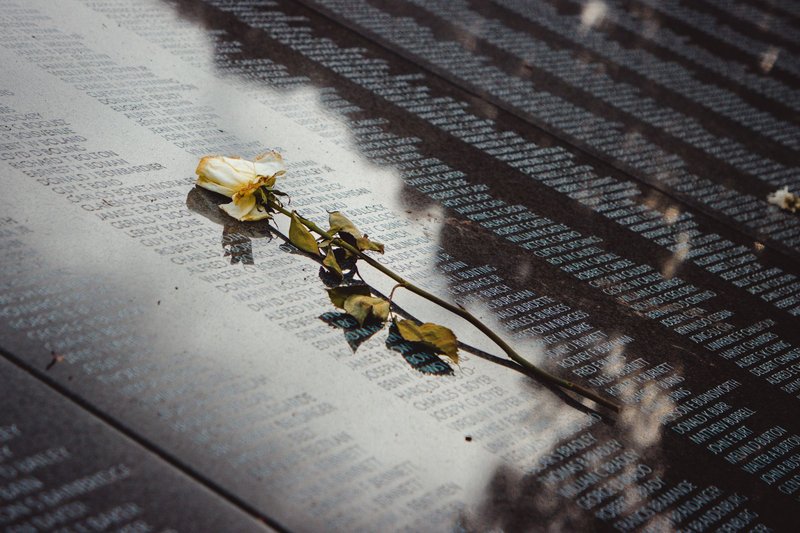
Flight 93 National Memorial near Shanksville marks where United Flight 93 crashed on September 11, 2001, after passengers fought back. The design is restrained and powerful — the Wall of Names, the Tower of Voices with its 40 wind chimes, the long approach road that makes you slow down. It’s about 75 minutes east of Pittsburgh, and it’s free. Allow at least two hours.
Fort Necessity National Battlefield in Farmington is where a young George Washington fought his first battle — and lost — in 1754, helping spark the French and Indian War. The reconstructed fort is modest, but the visitor center does a sharp job explaining how a skirmish in the Pennsylvania backcountry escalated into a global war.
Friendship Hill National Historic Site preserves the estate of Albert Gallatin, the long-serving Treasury secretary who financed the Louisiana Purchase. It’s underrated and rarely crowded, with trails along the Monongahela River.
In Pittsburgh proper, the Allegheny Portage Railroad National Historic Site (a bit east, near Gallitzin) tells the strange, brilliant story of how canal boats were hauled over the Allegheny Mountains by railroad in the 1830s. The Johnstown Flood National Memorial, nearby, commemorates the 1889 dam failure that killed over 2,200 people — one of the deadliest disasters in American history, and a stark lesson in industrial negligence. The two pair well as a single day trip from Pittsburgh.
The Poconos and northeast
If you want the version of this list that looks like an actual park — trees, water, trails — this is where to go.
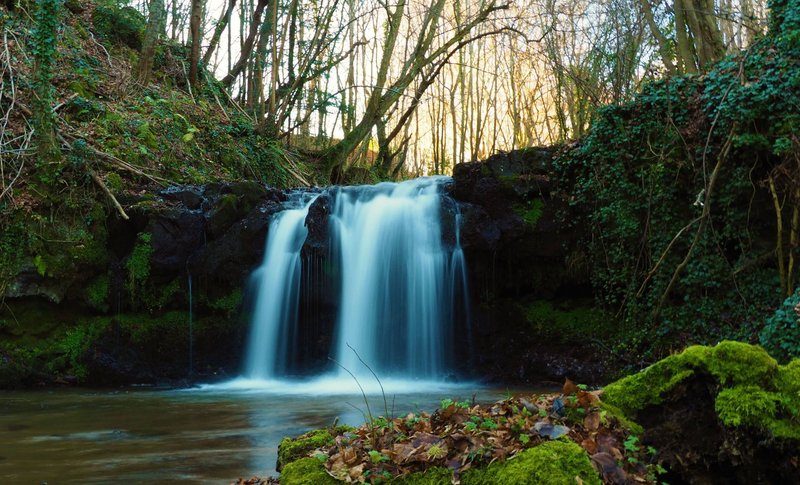
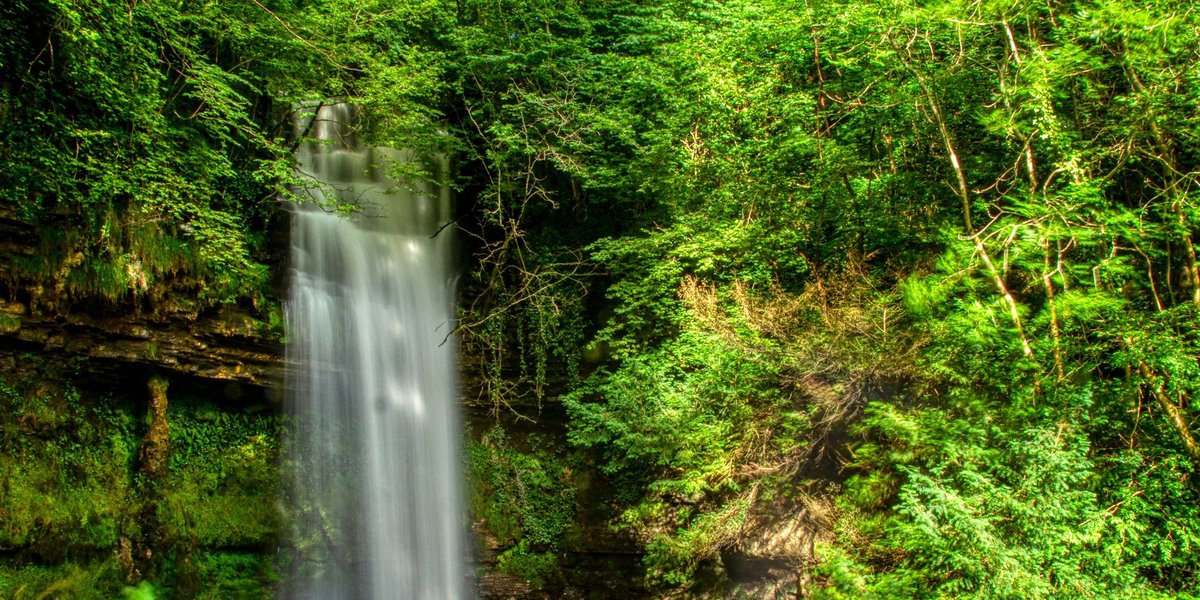
Delaware Water Gap National Recreation Area stretches roughly 40 miles along the Delaware River on the PA–New Jersey border, protecting around 70,000 acres. This is the closest Pennsylvania gets to a traditional national park experience. Highlights: the Raymondskill Falls trail (the tallest waterfall in PA), Dingmans Falls and its accessible boardwalk, the swimming and paddling along the river, and a long stretch of the Appalachian Trail running through. There’s a per-vehicle fee at some access points (Bushkill, Smithfield Beach), but much of the recreation area is free.
This is also the corner of the state that bleeds into New York, and it’s easy to fold the recreation area into a wider loop through the small towns straddling the New York–Pennsylvania border if you’re coming down from the north. Plan a full day minimum here, two if you’re hiking. Fall is spectacular — the gorge lights up in October — but it’s also the most crowded, so arrive early at the falls parking lots.
Battlefields and Civil War sites
Pennsylvania saw the Civil War’s northernmost major action, and one site towers over everything else.
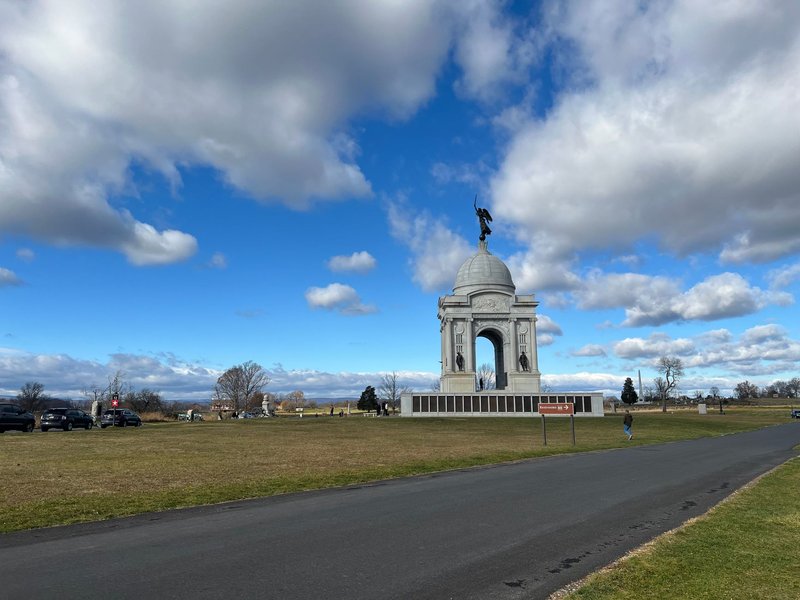
Gettysburg National Military Park is the reason a lot of people come to Pennsylvania at all. Over three days in July 1863, more than 50,000 men were killed, wounded, or went missing here — the bloodiest battle of the war, and its turning point. The park is huge: 6,000 acres dotted with over 1,300 monuments. The grounds are free; the museum, the Cyclorama painting, and the film carry a fee, and they’re worth it for first-time visitors.
Do not just drive through. Either take a Licensed Battlefield Guide in your car (book ahead) or download the auto-tour. Standing on Little Round Top or looking across the field of Pickett’s Charge does something a textbook can’t. Budget a half-day at the absolute minimum; a full day if you care about the history.
Gettysburg is the only dedicated battlefield unit in the state, but combined with Valley Forge, Fort Necessity, and the Revolutionary sites in Philadelphia, Pennsylvania gives you a remarkably complete tour of American military history from 1754 through 1863.
Trails and rivers that pass through
A few NPS units don’t have a single “place” you visit — they’re long corridors that cross the state.
The Appalachian National Scenic Trail runs about 230 miles through Pennsylvania, including the notoriously rocky midsection that long-distance hikers call “Rocksylvania.” The Captain John Smith Chesapeake and Potomac Heritage national scenic/historic trails also touch the state’s watersheds. The Delaware and Lehigh corridors are recognized as national heritage areas. These aren’t day-trip destinations in the usual sense, but if you’re a serious hiker or cyclist, they’re part of the count.
Pennsylvania also contains a stretch of the Lewis and Clark-era and Washington-Rochambeau Revolutionary Route trails as commemorative corridors — more lines on a map than gated parks, but officially NPS-administered all the same. This is exactly why the “19 sites” number floats between 19 and 28 depending on who’s counting: trails and heritage areas may or may not get tallied.
How to plan a Pennsylvania NPS trip
A few things the directory lists never tell you.
Cluster by region, not by interest. Don’t try to hit Gettysburg, Pittsburgh’s sites, and the Delaware Water Gap in one trip — they’re hours apart in different corners of the state. Pick a base. Philadelphia gives you five-plus sites in two days. Pittsburgh anchors the western cluster. The Poconos are their own getaway. If you’d rather settle into a smaller, quieter base between the marquee sites, it’s worth checking the safest cities in Pennsylvania when you book.
Most of it is free. Independence, Valley Forge, Gettysburg’s grounds, Flight 93, and most of the smaller historic sites cost nothing to enter. The fees show up at the museums (Gettysburg) and certain Delaware Water Gap access points. If you’re visiting multiple fee sites in a year nationwide, the America the Beautiful annual pass pays for itself fast — but for a PA-only trip, you likely won’t need it.
Time it to the season. The historic sites are year-round and arguably better off-season, when the crowds thin and the buildings aren’t packed. The outdoor sites — Delaware Water Gap especially — peak in fall foliage (early-to-mid October) and are gorgeous but busy. Summer brings the families and the timed-ticket scrambles in Philadelphia. Spring is the quiet sweet spot.
Give the big ones real time. Gettysburg, Independence, and the Delaware Water Gap each deserve the better part of a day. The small memorials — Poe, Kosciuszko — are 20-minute stops you slot in between. Don’t reverse that math and rush the sites that earned their reputation.
Pennsylvania won’t give you a flagship national park. What it gives you is denser and, in its way, harder to find anywhere else: the actual ground where the country was founded and fought over, plus one genuinely great river gorge to catch your breath. Nineteen sites, one brown arrowhead sign, and a lot more history per mile than most states can claim.