Syria doesn’t get filed under “lake country” in most people’s heads, and until December 2024 it barely got filed under “places you can go” at all. But the country has seven genuine lakes worth knowing about, ranging from a 525-square-kilometer reservoir that waters half of Aleppo to a salt-crusted sinkhole in the northeast that locals swear hides a sunken village.
This is the full list, what makes each one distinct, and a straight answer on whether you can actually visit any of them right now.
Table of Contents
- The quick answer
- 1. Lake Assad (Euphrates Lake)
- 2. Sabkhat al-Jabbul
- 3. Lake Qattinah (Homs Lake)
- 4. Zarzar Lake
- 5. Mashqita Lake (Balloran)
- 6. Dreikish Lake
- 7. Khatuniyyah Lake
- How Syria’s lakes compare
- Is it safe to visit these lakes in 2026?
The quick answer
Syria has seven notable lakes: Lake Assad (the big one, on the Euphrates), Sabkhat al-Jabbul (a Ramsar-listed salt wetland near Aleppo), Lake Qattinah near Homs, Zarzar in the Hauran, Mashqita and Dreikish in the coastal mountains, and Khatuniyyah, a crater lake near Hasakah. Most are reservoirs behind dams rather than lakes in the geological sense — Syria’s climate is too dry to have produced many on its own.
As for visiting: entry got dramatically easier after the Assad government fell in December 2024, with visa-on-arrival now available at Damascus airport and land crossings. But the US State Department, the UK Foreign Office, and Canada’s government all still advise against any travel to Syria, and that advice hasn’t softened much through mid-2026. More on what that actually means further down.
1. Lake Assad (Euphrates Lake)
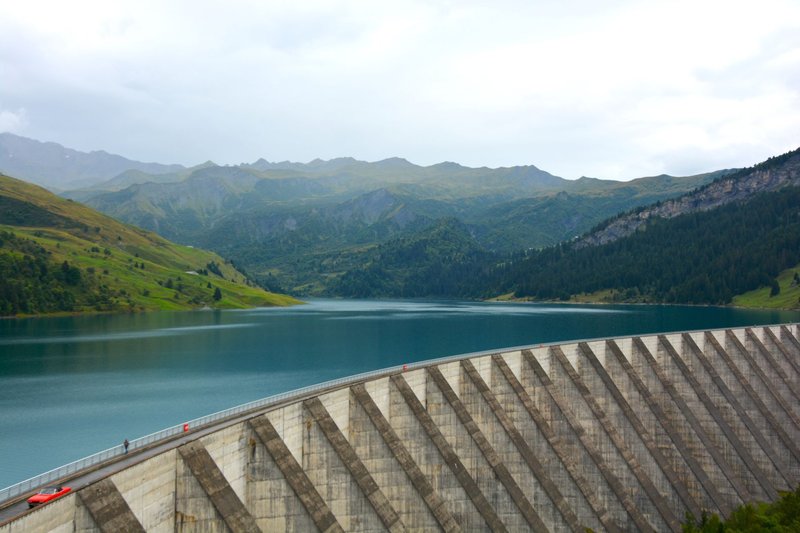
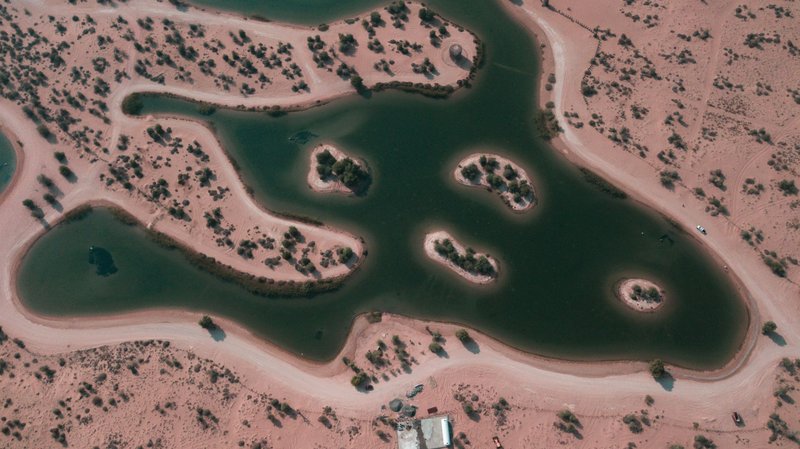
Lake Assad is Syria’s largest lake by a wide margin, and it isn’t natural — it’s the reservoir behind the Tabqa Dam, an earthen dam completed in 1974 that backs the Euphrates up into a body of water 80 kilometers long and roughly 8 kilometers wide, with a maximum surface area near 525 square kilometers. It sits entirely within Raqqa Governorate in Syria’s north.
The lake does real work: it supplies drinking water to Aleppo, feeds irrigation canals that turned stretches of desert into farmland on both banks, and supports a fishing industry that predates the dam by centuries in the villages along its shore. During the civil war, water levels fell noticeably, and hydrologists have pointed to the dam’s own power station drawing out more water than the Euphrates was replenishing — a maintenance and management problem more than a drought one.
Since the fall of the Assad government in late 2024, you’ll increasingly hear Syrians call it simply Buhayrat al-Furat — Euphrates Lake — dropping the family name attached to it for fifty years.
2. Sabkhat al-Jabbul
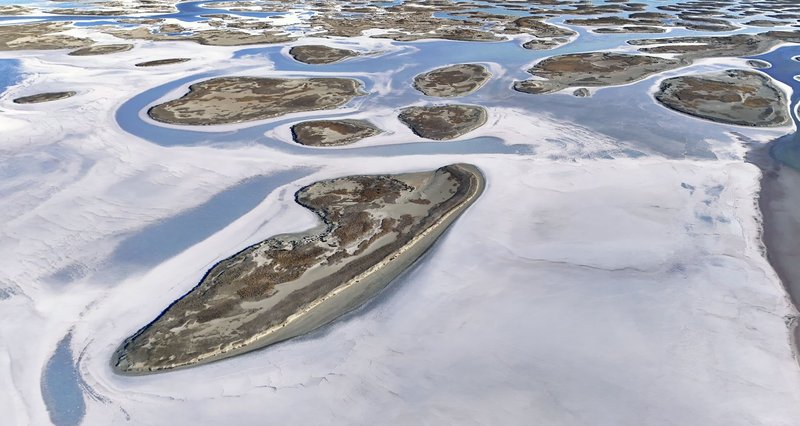
Southeast of Aleppo, Jabbul is a different animal entirely: a saline wetland rather than a freshwater lake, split into three separate water bodies that shift from brackish to fully saline depending on the season. It’s been a designated Ramsar wetland — an internationally recognized wetland of importance — since 1998, and researchers with the International Center for Agricultural Research in the Dry Areas have documented it as one of Syria’s most significant bird habitats, supporting wintering flocks of greater flamingos alongside the globally threatened white-headed duck and marbled duck.
That significance is precisely what makes it fragile. The same research flags uncontrolled water pollution, fluctuating salinity, and unregulated hunting as ongoing threats to a site that, on paper, has international protection status.
3. Lake Qattinah (Homs Lake)
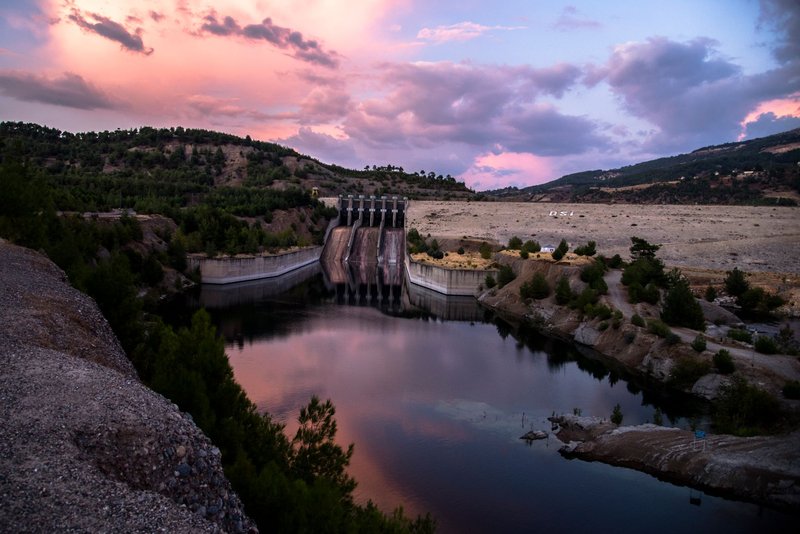
Lake Qattinah sits just southwest of Homs on the Orontes River, and the dam behind it has a claim almost no other reservoir on earth can make: the original structure dates back roughly 3,300 years, built under Pharaoh Seti I, making it one of the oldest dams still functioning anywhere in the world after multiple rebuilds and reinforcements over the centuries.
The lake itself is a working freshwater reservoir — smaller than Lake Assad, but central to irrigating the Homs plain, one of Syria’s more productive agricultural belts. It’s also drawn recreational visitors and local fishing for generations, long before “eco-tourism” was a word anyone used here.
4. Zarzar Lake
Zarzar is the odd one on this list because it isn’t reliably a lake at all. Sitting in a volcanic depression in the Hauran region near Sweida in Syria’s south, it fills with winter and spring rains and can shrink dramatically — or vanish — by late summer. When it’s full, it draws migratory waterfowl and local families for swimming and picnicking, the kind of spot that shows up in someone’s Facebook photos every March and gets forgotten by August.
Its seasonal, volcanic-basin nature makes it geologically closer to a vernal pool than to Lake Assad’s engineered permanence, even though both get called “lakes” in casual Arabic and English alike.
5. Mashqita Lake (Balloran)
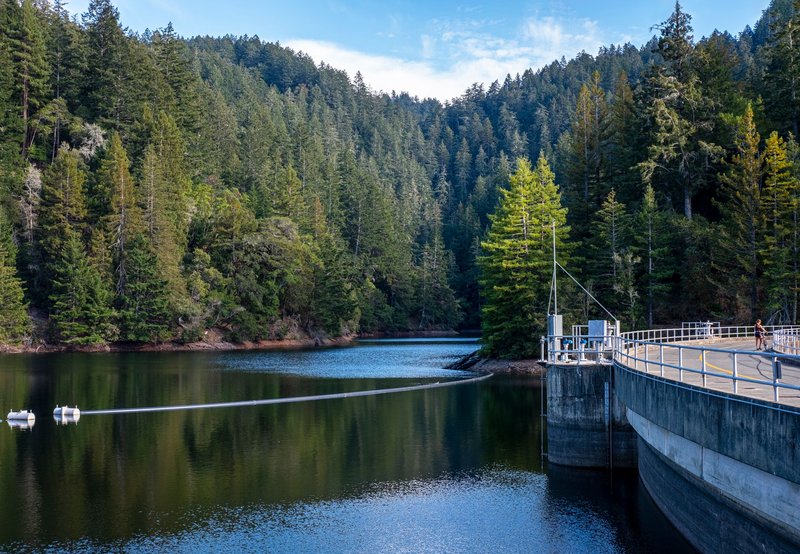
Up in the pine-forested hills above Latakia, Mashqita — also known locally as Lake Balloran — is a small artificial reservoir that became one of the coast’s go-to weekend spots before the war: paddle boats, lakeside cafés, and cooler mountain air than the coastal cities below. It’s modest in size compared to the reservoirs further inland, but the setting does the heavy lifting — Mediterranean pine forest wrapped around still water is not a common combination in Syria.
6. Dreikish Lake
Near the town of Dreikish in Tartus Governorate, this small reservoir sits in the same coastal mountain range famous for the Dreikish mineral springs that get bottled and sold across Syria and Lebanon. The lake itself is modest — built primarily for irrigation and local water storage — but the surrounding hills, cooler and greener than most of the country, make it a regional retreat rather than a headline destination.
7. Khatuniyyah Lake
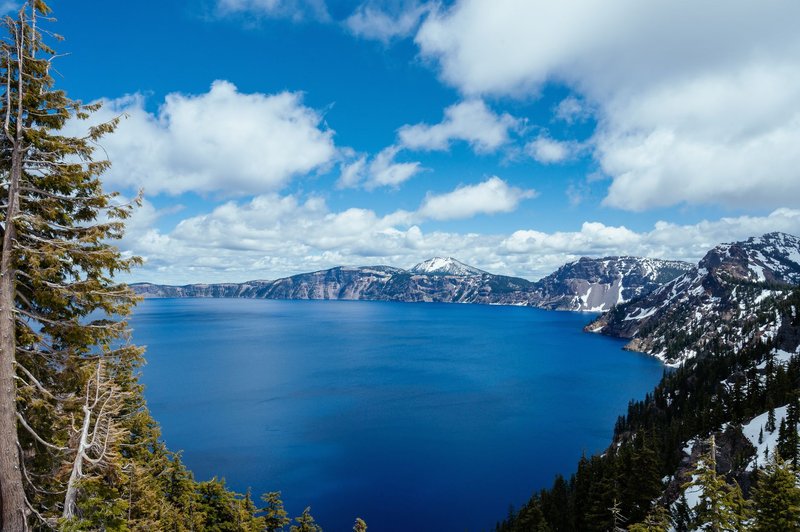
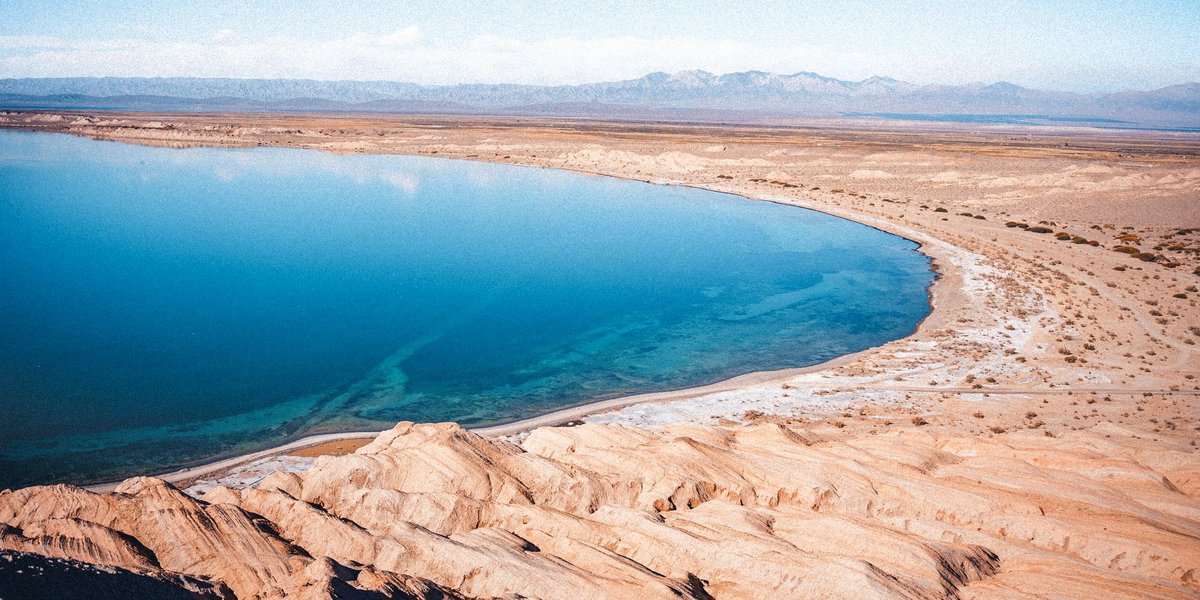
Out near Hasakah in Syria’s northeast, close to the Iraqi border, Khatuniyyah is a saline crater lake formed inside a collapsed sinkhole — a doline, in geological terms — rather than behind any dam. Local legend holds that a village or palace lies submerged at its bottom, a story that’s been attached to the lake for generations without much to back it beyond the fact that the water is genuinely deep and genuinely dark blue against the surrounding flatlands.
Mineral-rich and cold even in summer, it’s long been a wild-swimming spot for people from Hasakah and nearby towns, with essentially no tourist infrastructure — no lifeguards, no facilities, just a lake in the middle of the steppe.
How Syria’s lakes compare
| Lake | Governorate | Type | Approx. size | Formed by |
|---|---|---|---|---|
| Lake Assad (Euphrates Lake) | Raqqa | Freshwater | ~525 km² | Tabqa Dam (1974) |
| Sabkhat al-Jabbul | Aleppo | Saline wetland | Up to ~270 km² | Natural depression (Ramsar site) |
| Lake Qattinah | Homs | Freshwater | Mid-sized reservoir | Ancient dam, rebuilt over centuries |
| Zarzar | Sweida (Hauran) | Freshwater, seasonal | Small, variable | Volcanic depression |
| Mashqita (Balloran) | Latakia | Freshwater | Small reservoir | Dam |
| Dreikish | Tartus | Freshwater | Small reservoir | Dam |
| Khatuniyyah | Al-Hasakah | Saline | Small crater lake | Sinkhole/doline |
Is it safe to visit these lakes in 2026?
Here’s the honest split. Since HTS took control in December 2024 and dismantled the old visa system, getting into Syria has never been simpler — visa on arrival at Damascus airport or overland crossings, no pre-approval needed. Traveler blogs and tour operators have started running trips to Damascus, Aleppo, and Palmyra, and CNN’s coverage of Syria’s tourism reopening captures a country genuinely trying to rebuild a visitor economy after over a decade of war.
That’s the pull. Here’s the counterweight: official guidance hasn’t caught up to the on-the-ground optimism. The US State Department’s Syria travel advisory still tells American citizens not to travel to Syria for any reason, citing terrorism, kidnapping, civil unrest, and armed conflict. The UK and Canada carry near-identical warnings. Israeli strikes inside Syria, including near Damascus, have continued into 2026, often without warning. There’s no functioning emergency medical system to speak of outside the largest cities, and that matters specifically for lakes — Khatuniyyah and Zarzar have zero infrastructure, meaning a swimming accident or a car breakdown near either one could turn serious fast.
Health logistics matter too: the CDC’s Syria travel page flags the country for a range of preventable diseases tied to limited healthcare access, on top of the security picture.
None of this means nobody is visiting Lake Assad or Qattinah right now — people are, and some are posting normal-looking travel photos to prove it. It means you’re making that call with your eyes open, against advice from every government that tracks the region, in a place where the tourism infrastructure to catch you if something goes wrong mostly doesn’t exist yet. If you go, the lakes near Damascus, Homs, and the coast carry less risk than anything close to the Iraqi border or areas with recent strike activity — check current advisories immediately before finalizing any itinerary, since the picture shifts month to month.