
TLDR
Tonga has no inscribed UNESCO World Heritage Sites. Zero. What it has are two entries on the UNESCO Tentative List — a formal waiting room for future nominations — called “Ancient Capitals of the Kingdom of Tonga” and “Lapita Pottery Archaeological Sites.” The physical places behind those two listings are real, visitable, and worth the trip: the Haʻamonga ʻa Maui trilithon, the langi royal tombs at Lapaha, the old capital ruins at Heketā, and the Lapita settlement at Nukuleka. This guide covers all of them, plus what “tentative” actually means for a country still building its UNESCO case.
Table of Contents
- The misconception, cleared up
- What “tentative list” actually means
- The Ancient Capitals of the Kingdom of Tonga
- Haʻamonga ʻa Maui: the trilithon
- The langi royal tombs at Lapaha
- Heketā: the first capital
- The Lapita Pottery Archaeological Sites
- Planning a heritage day trip on Tongatapu
- Why none of this is inscribed yet
The misconception, cleared up
Type “World Heritage Sites in Tonga” into a search bar and you’ll get a wall of results that assume the answer is a list. It isn’t. Tonga is one of a shrinking number of UNESCO member states with zero inscribed properties, cultural or natural. Fiji has one. Vanuatu has one. Tonga has none, despite sitting on some of the oldest continuously occupied ground in Polynesia.
That’s not a knock on the place. It’s a paperwork gap. Getting a site inscribed on the World Heritage List takes years of documentation, a management plan, and government resources that a country of about 100,000 people spread across 36 inhabited islands doesn’t always have sitting around. What Tonga does have is two sites on the Tentative List, submitted in 2017, which is the formal first step toward an eventual nomination.
What “tentative list” actually means
A Tentative List isn’t a runner-up bracket. It’s a legal prerequisite. UNESCO requires a country to place a site on its Tentative List — essentially a public notice of intent — at least a year before it can submit a full nomination dossier. States parties are expected to review and update the list every ten years or so, and plenty of countries let entries sit for a decade or more before pushing them to full inscription. Tonga’s two entries have been sitting since 2017.
So when a travel site tells you Tonga “has UNESCO sites,” what it usually means is Tonga has two properties UNESCO has acknowledged as plausible future candidates. Nothing on Tongan soil currently carries the protections, funding, or bragging rights of an inscribed site. That’s the honest starting point, and it’s also the more interesting story: you get to see the actual monuments without the crowds an inscription would eventually bring.
The Ancient Capitals of the Kingdom of Tonga
This is the bigger and more visitable of the two tentative entries, and it’s really a serial nomination — a package of several related archaeological sites rather than one location. The core argument is that Tongatapu’s ancient capitals document the rise of the Tuʻi Tonga dynasty, the maritime empire that once extended Tongan influence across Fiji, Samoa, and beyond, centuries before European contact. The nomination bundles three places in particular: the Haʻamonga ʻa Maui trilithon, the royal tombs at Lapaha, and the earlier capital ruins at Heketā.
Haʻamonga ʻa Maui: the trilithon
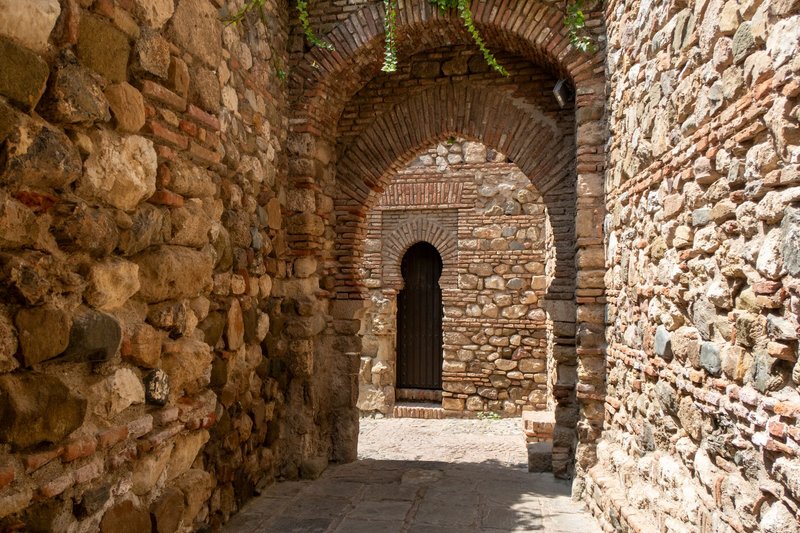
This is the site every “top 10” Tonga list leads with, and for once the hype holds up. It’s a stone gateway — three slabs of coral limestone, two uprights and a crossbeam locked into a notched joint with no mortar — standing 5.2 meters high on the eastern end of Tongatapu near the village of Niutōua. King Tuʻitātui, the eleventh Tuʻi Tonga, had it built in the early 13th century, and oral tradition says it commemorated the unity of his two sons.
It sits about 32 kilometers east of Nukuʻalofa, close enough for a half-day trip by rental car. There’s a marked turnoff on the road between Niutōua and Afa, a short walk in, and no admission fee. Facilities are close to nonexistent — bring water, and go early. Morning light does the stone justice, and you’ll likely have the site to yourself on a weekday. Some guides also point out a stone slab nearby locals call the “Tongan Stonehenge sundial,” reportedly used to mark solstices, though that claim rests more on local tradition than excavated evidence.
The langi royal tombs at Lapaha
Fifteen minutes further down the coast, in the village of Lapaha within the larger district of Muʻa, sits Tonga’s most extensive archaeological landscape: the langi. These are stepped, rectangular tomb platforms built from massive coral limestone slabs, constructed for the Tuʻi Tonga line starting around 1200 AD when the dynasty moved its capital here from Heketā. Estimates of how many exist vary — researchers count anywhere from 22 to 28 langi in and around Lapaha — because some are buried, overgrown, or absorbed into the modern village.
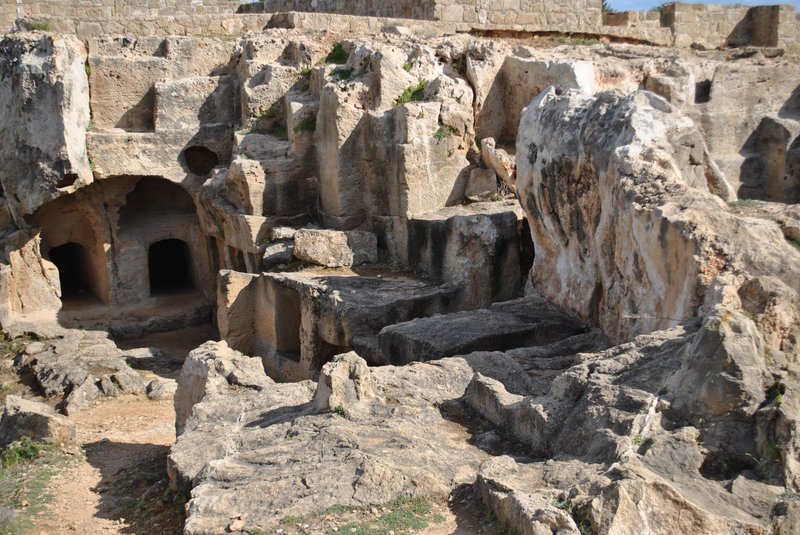
The engineering is the detail worth lingering on: some of the limestone slabs weigh several tons and were quarried and transported from other islands, evidence of the same maritime logistics network the Tuʻi Tonga empire ran on. The site is roughly 30 kilometers, about a 30-minute drive, east of Nukuʻalofa, and admission is free.
This is also the one place on this list where the “just wander up” instinct needs a correction. The langi are active sacred sites to Tongan people, not open-air museums. If you’re visiting independently, stay outside the tomb perimeters — the respectful move is to view from the boundary rather than climb the platforms. Go with a local guide or an organized tour and you can often get permission to enter specific tomb grounds and hear context you won’t find on a placard, because there mostly aren’t placards.
Heketā: the first capital
Before Lapaha, the Tuʻi Tonga capital was at Heketā, near where the Haʻamonga ʻa Maui trilithon now stands — the two sites are close enough that most visitors see them in the same stop. Heketā was the seat of power for the earliest Tuʻi Tonga rulers before the 13th-century shift to Lapaha, and what remains are more subtle than the trilithon or the langi: house mound foundations, terracing, and scattered stone features that archaeologists have mapped but that don’t read as dramatically to an untrained eye. It matters historically because it’s the missing first act — without Heketā, the story jumps straight to Lapaha’s tombs with no explanation of where that dynasty came from.
The Lapita Pottery Archaeological Sites
The second tentative entry is a different kind of nomination: instead of monuments, it’s a scatter of more than 30 archaeological sites across Tonga’s island groups where Lapita pottery — the dentate-stamped ceramic style associated with the earliest human settlement of Remote Oceania — has been found. Most excavated sites cluster in the Haʻapai group, but the single most significant one sits on Tongatapu itself, at Nukuleka, on the eastern shore near the entrance to the Fanga ʻUta Lagoon.
Radiocarbon dating from Nukuleka puts the earliest Lapita occupation there at roughly 2,800 years ago, calibrated to around 900 BCE, based on a study published in the Proceedings of the National Academy of Sciences. Some archaeologists argue Nukuleka may represent the actual founding settlement of Polynesia — the beachhead from which the wider Polynesian expansion eventually launched. That’s a heavier historical claim than the tombs or the trilithon carry, and it’s also the harder site to visit: there’s no reconstructed monument to photograph, just a coastal village and the knowledge of what’s buried beneath it. Worth knowing about, less worth a dedicated special trip unless archaeology is specifically your interest.
Planning a heritage day trip on Tongatapu
The practical version of this article: you can hit the trilithon, Heketā, and the Lapaha tombs in a single day from Nukuʻalofa without rushing.
Rent a car in the capital, or arrange a driver — both are easy and inexpensive on Tongatapu. Head east along Taufaʻahau Road toward Niutōua first, since the trilithon and Heketā sit close together at the far end of the route; that also means the return drive naturally passes through Lapaha, so you see the langi on the way back rather than backtracking. Weekday mornings beat weekends for both quiet and light. Tonga’s dry season, roughly May through October, gives you the clearest skies and least humidity for walking around exposed coral limestone in the midday sun.
Pack water and sun protection regardless of season — none of these sites have on-site food vendors, and shade is limited. A handful of Nukuʻalofa-based tour operators run guided cultural history trips that bundle all three stops with a local guide who can speak to the Tuʻi Tonga lineage in a way roadside signage doesn’t attempt to. If getting inside the tomb perimeter at Lapaha matters to you, book one of these rather than going solo. The same tour operators can often arrange visits to other historical places in Tonga worth visiting if you want to extend your itinerary.
Why none of this is inscribed yet
The honest answer is resources, not merit. A World Heritage nomination dossier runs to hundreds of pages: comparative analysis against similar sites worldwide, a legal framework proving the site is protected under domestic law, a management and conservation plan, and community consultation documentation. Assembling that takes dedicated staff and funding that a small island nation has to weigh against competing priorities like housing, health care, and climate adaptation — which, for Tonga, is not an abstract concern.
The two entries on the Tentative List signal genuine intent rather than a stalled process. Serial nominations like the Ancient Capitals listing tend to take longer because they require coordinating documentation across multiple sites instead of one, and transnational nominations like the Lapita Pottery entry — which frames Tonga’s sites as part of a wider Pacific settlement story — require cooperation with archaeological bodies in other countries. Neither is unusual in the UNESCO pipeline; the average gap between tentative listing and inscription runs well over a decade globally.
What that means for a visitor right now: you get to stand at a 700-year-old stone gateway, or at the edge of a royal tomb complex built by a maritime empire that once ran much of the Western Pacific, without the crowds, ticket booths, or roped walkways that usually arrive once UNESCO puts its name on something. That won’t last forever. It’s worth going before it does.
Sources referenced include the UNESCO Tentative List entry for the Ancient Capitals of the Kingdom of Tonga and the UNESCO Tentative List entry for the Lapita Pottery Archaeological Sites.