Ask someone in Zagreb how they’re doing and they might say “kaj ideš”. Ask the same question on Hvar and you’ll get “ča ćeš”. Neither one is wrong, and neither is slang — they’re two different dialects, and the word that gives each one away is just the local way of saying “what.” Croatian has three of these, and the letters that mark them — što, kaj, ča — are the fastest way to understand why the country sounds so different from region to region.
This isn’t a country with one language and some funny accents layered on top. It’s three historically distinct dialect groups that happened to end up inside the same national border, plus a fourth thing — standard Croatian — that most people learn in school and use on the news, but that almost nobody’s grandmother actually grew up speaking at home.
Table of Contents
- Three Words for “What” Split the Whole Country
- Štokavian: The Dialect Doing Most of the Talking
- Kajkavian: Zagreb’s Dialect, and Why It Sounds Like Slovenian
- Čakavian: The Coast’s Dialect, Full of Italian
- The Vocabulary Test: Same Word, Different Country
- Can Croatians From Different Regions Actually Understand Each Other?
- Is There Stigma Around Speaking Dialect?
- Where You’ll Actually Hear Each Dialect as a Traveler
- The Short Version
Three Words for “What” Split the Whole Country
Linguists group South Slavic speech into three named branches based on the interrogative pronoun for “what”: Štokavian (što), Kajkavian (kaj), and Čakavian (ča). All three are spoken inside Croatia’s borders, which makes Croatia unusual — most countries have one dominant vernacular with regional accents, while others like Romania are divided into distinct dialect zones. Croatia has three genuinely separate dialect systems, each with its own sound, grammar quirks, and vocabulary, and none of them is simply “Croatian with an accent.”
Standard Croatian, the version taught in schools and used in national media, is built on Neo-Štokavian — specifically the variety spoken around eastern Herzegovina and parts of Croatia. That’s a political and historical choice as much as a linguistic one, dating back to 19th-century efforts to unify a written South Slavic standard. It means Štokavian speakers grow up hearing something close to their own dialect on TV. Kajkavian and Čakavian speakers grow up hearing what is, in effect, a related but foreign-sounding dialect on the evening news.
Štokavian: The Dialect Doing Most of the Talking
Štokavian covers the largest footprint by far: Slavonia in the east, Lika, Kordun, Srijem, Dubrovnik and Konavle in the south, Ilok, and large chunks of inland Dalmatia. It’s also the dialect standard Croatian is modeled on, which is why it’s the one that sounds most “normal” to anyone who’s studied the language from a textbook.
Within Štokavian there’s still real variation — the speech of Dubrovnik carries centuries of Ragusan Republic influence and a distinct melodic pattern, while Slavonian Štokavian has picked up Hungarian and Turkish loanwords from centuries of Ottoman and Habsburg proximity. But structurally, Štokavian speakers across these regions understand each other with minimal friction, which is more than you can say once Kajkavian or Čakavian enters the conversation.
Kajkavian: Zagreb’s Dialect, and Why It Sounds Like Slovenian
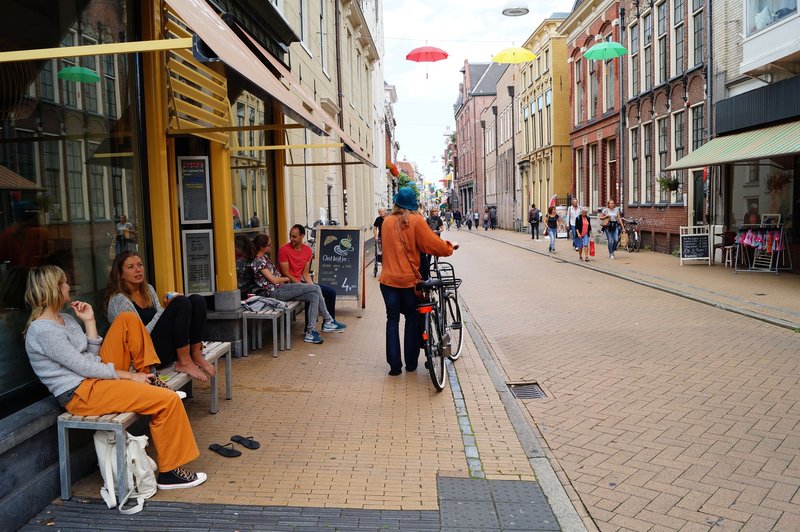
Kajkavian belongs to Zagreb and the counties wrapped around it — Krapina-Zagorje, Varaždin, Međimurje, Bjelovar-Križevci, Gorski Kotar, and a sliver of northern Istria. It’s the dialect of the capital, which sounds like it should make it dominant, but capital-city status and dialect prestige don’t automatically travel together here.
What throws people who’ve studied standard Croatian is how much Kajkavian leans toward Slovenian, both in vocabulary and in the softer, more melodic intonation. That’s not a coincidence — Kajkavian-speaking territory sits directly against the Slovenian border, and the dialect developed in continuous contact with it rather than in isolation. A Zagreb local speaking heavy Kajkavian at home can be genuinely harder for a Split native to follow than a Slovenian speaking slowly.
Vocabulary gives it away fast. Where standard Croatian says “jastuk” for pillow, Zagorje and Međimurje say “vanjkuš.” Breakfast is “doručak” in the textbook, but order “gablec” in a Zagreb office canteen and everyone knows what you mean. Centuries of Habsburg administration also left German loanwords sitting comfortably in everyday Kajkavian speech — “šuster” for shoemaker and “šnajder” for tailor are still in casual use, long after anyone stopped thinking of them as foreign.
Čakavian: The Coast’s Dialect, Full of Italian
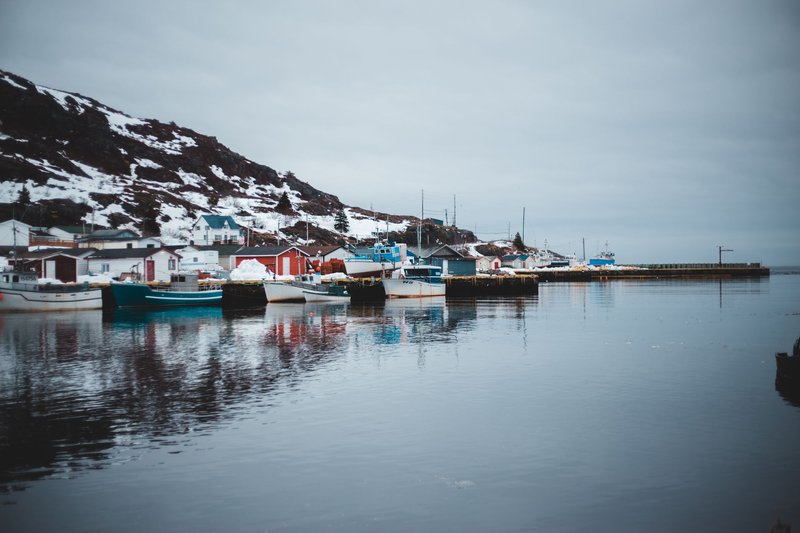
Čakavian runs down the Adriatic side of the country — Istria, the islands, the stretch of coast between Zadar and Vodice, Senj, and pockets of Gorski Kotar. If Kajkavian’s neighbor is Slovenia, Čakavian’s is Venice, and it shows in the vocabulary in a way that’s impossible to miss once you’re listening for it.
Centuries under Venetian and later Italian administration left Istria and the Dalmatian coast thick with Italian loanwords, especially anything to do with food, the house, and daily routine. “Kušin” for pillow (from cuscino) instead of the Kajkavian “vanjkuš” or standard “jastuk.” “Lancun” for bed sheet (from lenzuolo) where Zagreb says “plahta.” Even the everyday rhythm of the speech carries a coastal cadence that a Zagreb ear picks up on immediately — it’s part of why Croatian film and TV lean on a Dalmatian accent as instant shorthand for “laid-back.”
The Vocabulary Test: Same Word, Different Country
None of this is theoretical — you can hear it in five words that change meaning depending on which coastline or hillside you’re standing on.
| Concept | Standard Croatian | Regional Variant |
|---|---|---|
| Free (of charge) | besplatno | džaba — heard everywhere from Zagreb cafés to Split waterfronts |
| Donkey | magarac | tovar (Dalmatia, Istria) |
| Pillow | jastuk | vanjkuš (Zagorje, Međimurje) / kušin (Dalmatia, Istria) |
| Bed sheet | plahta | lancun (Dalmatia, from Italian) |
| Breakfast | doručak | gablec (Zagreb) / marenda (Dalmatia, Istria) / fruštuk (Zagorje) |
| Cornmeal / polenta | žganci (Central Croatia) | palenta (Istria, northern littoral) / pura (Dalmatia) |
Order breakfast using the wrong regional word and you won’t be misunderstood, exactly — you’ll just get a small, knowing smile that says “you’re not from here.”
Can Croatians From Different Regions Actually Understand Each Other?
Yes, but not automatically, and that gap gets skipped over in most explainers of this topic. Štokavian and Čakavian speakers generally follow each other without much trouble, since the two share more grammatical DNA and Čakavian’s differences show up mostly in vocabulary and pronunciation rather than sentence structure. Kajkavian is the outlier. Its closer kinship with Slovenian means a thick, unfiltered Kajkavian conversation — the kind two Zagorje farmers might have, not the toned-down version spoken in Zagreb offices — can leave a Dalmatian listener catching maybe two words in three.
In practice, this rarely causes real breakdowns, because almost everyone code-switches toward standard Croatian the moment they’re talking to someone from outside their region. The dialect comes out at home, at the local bar, with family. Standard Croatian is the bridge language, deployed automatically the second a Zagorje accent meets a Dalmatian one.
Is There Stigma Around Speaking Dialect?
There’s a hierarchy, even if nobody states it outright. National broadcasting, politics, and formal education all run on standard Croatian, which means speaking heavy dialect in those settings can read as provincial, even among Croatians who’d never say so directly. Dialect is the language of home, of grandparents, of the local pub — not of a job interview.
That said, the direction isn’t purely one of decline. Dalmatian and Istrian identity is worn proudly, partly because coastal tourism has turned regional flavor into something marketable rather than embarrassing — restaurant menus and tourist signage in Split lean into local words rather than scrubbing them out. Kajkavian carries less of that commercial rehabilitation, and younger Zagreb residents raised on national media and internal migration from other regions tend to speak a flattened, standard-leaning version of it, with the deepest Kajkavian now concentrated more in Zagorje villages than in the capital itself.
There’s a legal wrinkle worth knowing, too. Croatia ratified the Council of Europe’s European Charter for Regional or Minority Languages in 1997, which grants protected status to languages like Italian, Hungarian, and Istro-Romanian spoken within the country. Kajkavian and Čakavian aren’t on that list. Legally, they’re dialects of Croatian, not separate minority languages — a classification some regional linguists dispute, but one that shapes how much institutional support each dialect gets.
Where You’ll Actually Hear Each Dialect as a Traveler
You don’t need a linguistics degree to notice this on a trip, just an ear. In Zagreb, listen for Kajkavian in cafés and markets, especially among older speakers — softer vowels, that Slovenian-adjacent lilt. Head south to Split, Hvar, or Dubrovnik and Dalmatian speech blends Štokavian grammar with Čakavian- and Italian-flavored vocabulary, plus the coastal drawl. Istria layers Čakavian with visible Italian bilingualism — bilingual road signs, menus, and place names aren’t a tourist affectation, they reflect the region’s official bilingual status. Inland, through Slavonia and the Lika highlands, standard-adjacent Štokavian dominates, with Hungarian and Ottoman-era loanwords surfacing in older speakers’ vocabulary.
None of this is a linguistic map you need to study. According to background material from UCLA’s Department of Slavic, East European, and Eurasian Languages and Cultures, the three-dialect structure is a defining feature of how Croatian developed as a standard language distinct from its South Slavic neighbors, and a detailed dialect distribution map compiled at the University of Pennsylvania shows just how sharply the three zones divide, almost county by county in places. If you’re curious before you land, that map is worth ten minutes.
The Short Version
Three dialects, one country: Štokavian across most of the interior and the basis for the standard language, Kajkavian around Zagreb with a Slovenian lean, Čakavian down the coast with heavy Italian influence. They don’t always understand each other perfectly, dialect carries a quiet social hierarchy relative to standard Croatian, and the vocabulary differences are specific enough to trip up a fluent speaker who wandered fifty kilometers from home. That’s not a quirky footnote about Croatia. It’s a fairly accurate summary of what regional identity still means there.