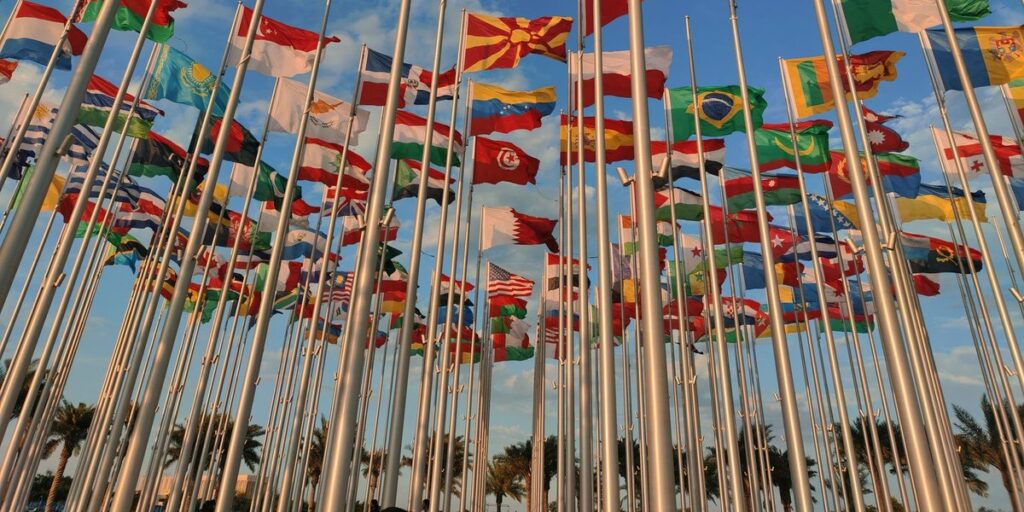
Four flags share the exact same three colors, and every quiz app, trivia deck, and half-remembered geography lesson keeps serving up the same names in a different order. Here’s the actual, sourced list of the countries with orange, green, and white flags — Ireland, Ivory Coast, India, and Niger — plus the one country that keeps getting added to that list by mistake.
TLDR
- Ireland — vertical stripes, green-white-orange, green nearest the pole.
- Ivory Coast — vertical stripes, orange-white-green, the exact mirror of Ireland’s.
- India — horizontal stripes, saffron-white-green, with a navy 24-spoke wheel in the center.
- Niger — horizontal stripes, orange-white-green, with a plain orange sun disc in the center.
- Cyprus shows up on some lists too, but its flag isn’t a tricolor at all — it’s a copper-colored island silhouette on white. More on that below.
Table of Contents
- Ireland: green comes first
- Ivory Coast: the exact mirror
- India: horizontal, with a wheel
- Niger: horizontal, with a sun
- The countries with orange, green, and white flags, side by side
- What about Cyprus?
- FAQ
Ireland: green comes first
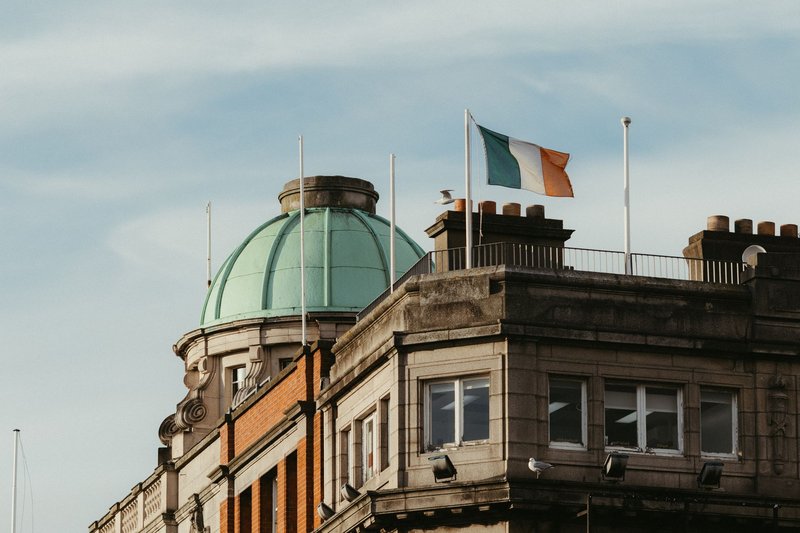
Ireland’s tricolor runs vertical, green at the pole, white in the middle, orange on the fly end. The design is older than the state that eventually adopted it. The first version showed up in Waterford in March 1848, during the Young Irelander Rebellion, nearly ninety years before it got any official standing. According to Britannica, it wasn’t written into law until the 1937 Constitution.
The colors aren’t decorative. Green stands for Ireland’s Gaelic, nationalist tradition. Orange stands for the country’s Protestant minority and the followers of William of Orange. White sits between them on purpose, a stated hope for peace between the two. That’s a different kind of flag story than most — the center stripe isn’t land or history, it’s a truce.
Ivory Coast: the exact mirror
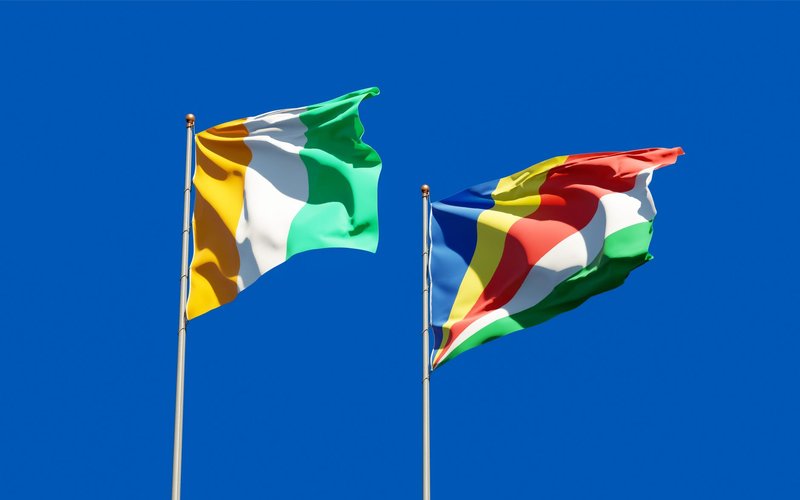
Côte d’Ivoire’s flag uses the identical three colors in the identical vertical layout, just flipped end to end. Orange sits at the pole, green sits on the fly. It’s the reason these two flags land in the same slideshow more often than any other pair on this list — flip one and you’ve got the other.
The flag became official on December 3, 1959, under law no. 59-240 passed by the Ivorian Legislative Assembly. Per Britannica, the state minister who introduced it described orange as the land, the struggle, and the blood spent for it, white as peace, and green as hope for what comes next. There’s a geographic reading too: orange for the savanna in the north, green for the forest belt along the coast.
India: horizontal, with a wheel
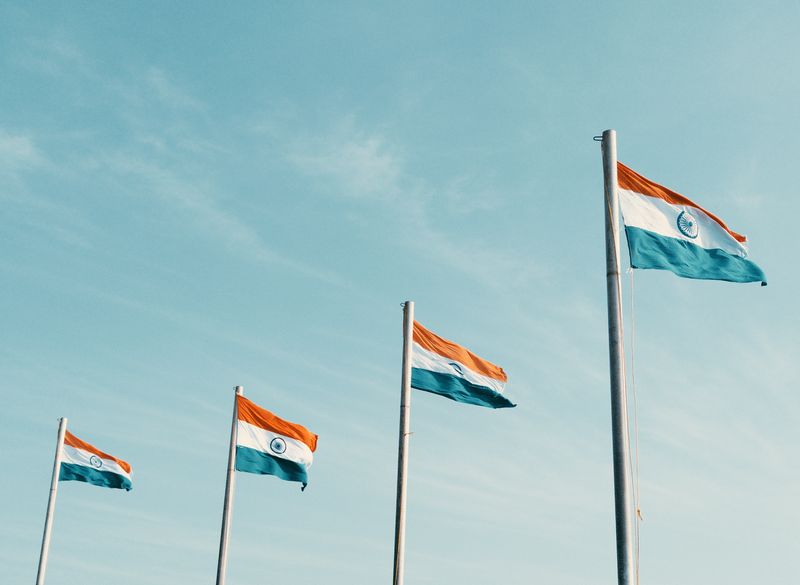
India’s flag runs horizontal — deep saffron on top, white in the middle, green on the bottom — with a navy blue wheel of 24 spokes sitting dead center. That wheel, the Ashoka Chakra, is what actually separates India’s flag from every other entry on this list at a glance.
The design has a real backstory. In 1921, a lecturer named Pingali Venkayya showed Gandhi a flag built from red and green, meant to represent India’s two largest religious communities. Gandhi added a white band for everyone else, which also gave the traditional spinning wheel a clean background to sit on. By the time the Constituent Assembly approved the current version on July 22, 1947, ahead of independence on August 15, that spinning wheel had been swapped for the Ashoka Chakra, lifted from the Lion Capital of Ashoka at Sarnath. The Indian government’s own account ties saffron to courage and sacrifice, white to truth, and green to the land itself.
Niger: horizontal, with a sun
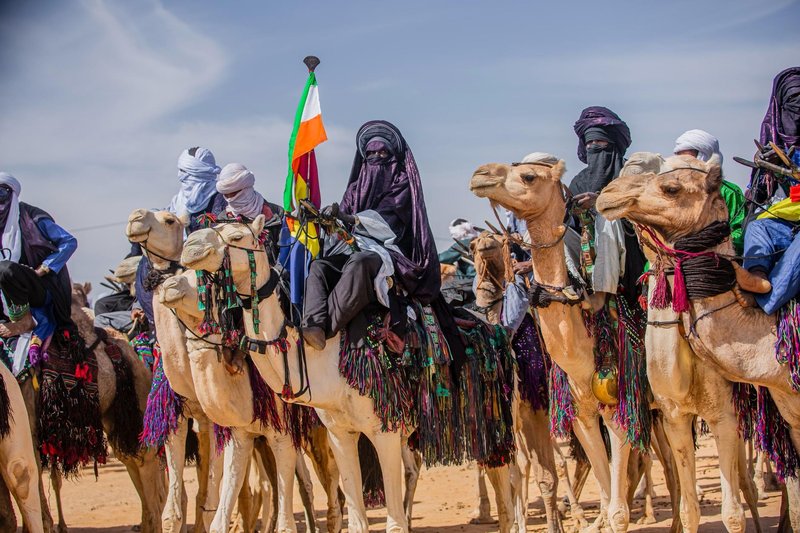
Niger’s flag is the one people confuse with India’s, and it’s a fair mix-up on paper: same three colors, same horizontal layout, same top-to-bottom order of orange, white, green. The difference is in the middle. Where India has a detailed wheel, Niger has a plain, solid orange disc — no spokes, no bezel, just a circle the same shade as the top stripe.
The flag was adopted on November 23, 1959, by the Territorial Assembly of the Niamey colony, weeks before Niger became a republic within the French Community that December, and it carried straight through to full independence in 1960 without changes. The popular reading — orange for the Sahara in the north, white for the Sahel, green for the farmland in the south, the disc for the sun overhead — is widely repeated, but according to Britannica, it’s never been officially confirmed by the government. One more tell if the colors alone don’t do it: Niger’s flag is nearly square, a 6:7 ratio, noticeably stubbier than India’s more elongated 2:3 rectangle.
The countries with orange, green, and white flags, side by side
| Country | Layout | Color order | Center | Ratio | Adopted |
|---|---|---|---|---|---|
| Ireland | Vertical | Green – White – Orange | None | 1:2 | 1848 (constitutional status in 1937) |
| Ivory Coast | Vertical | Orange – White – Green | None | 2:3 | December 3, 1959 |
| India | Horizontal | Saffron – White – Green | Navy 24-spoke wheel | 2:3 | July 22, 1947 |
| Niger | Horizontal | Orange – White – Green | Plain orange disc | 6:7 | November 23, 1959 |
Two shortcuts cover almost every case. For the vertical pair: Ireland is the Emerald Isle, so green leads at the pole; Ivory Coast is the reverse. For the horizontal pair: a detailed wheel means India, a plain dot means Niger.
What about Cyprus?
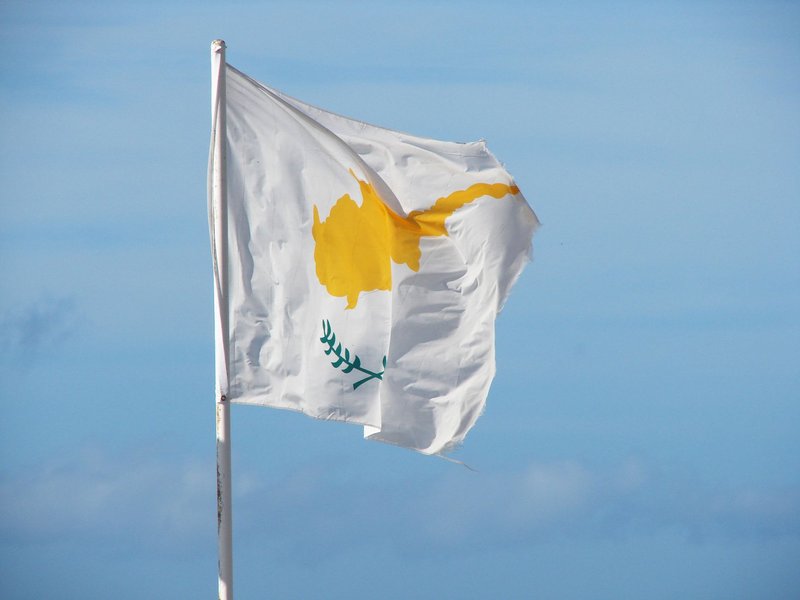
Some roundups — FlagLookup among them — toss Cyprus into this group as a fifth match. It’s a stretch, for two reasons.
First, Cyprus’s flag isn’t a tricolor. It’s a white field carrying a copper-colored silhouette of the island itself, with two crossed olive branches underneath. There’s no solid stripe of orange or green anywhere on it — just a shape and a pair of small branches.
Second, that color isn’t really orange. It’s copper, chosen specifically because Cyprus has been mined for copper since antiquity — the Latin word for the metal, cuprum, traces back to the island’s name. Per the Cypriot government’s own description, the shade was standardized to Pantone 1385 in a 2006 redesign, a rustier, browner tone than the vibrant orange in other nations’ flags. The olive branches symbolize peace between the island’s Greek and Turkish communities, which is its own color story entirely.
So Cyprus is orange-adjacent, at best. It’s a copper map and two olive branches on white, not a stripe of green, white, and orange — which is exactly why different sites can’t agree on whether it belongs on this list.
FAQ
Why do India’s and Niger’s flags look so similar?
There’s no documented connection between the two designs. India’s Constituent Assembly signed off on its flag in 1947; Niger’s colonial-era design followed in 1959, more than a decade later and from an unrelated process. The overlap comes down to a small, shared color palette — there are only so many ways to arrange three stripes — not one flag borrowing from the other. The giveaway when you’re staring at them side by side: India’s center holds a detailed navy wheel with visible spokes, Niger’s is a plain solid dot.
Is Cyprus’s flag orange, green, and white?
Not really. It’s copper and white, with small olive-green branches, and it isn’t built as horizontal or vertical stripes the way the other four are. Some lists count it anyway because copper reads as a shade of orange from a distance.
Are there other countries with this exact flag combination?
No other current UN member state flies a plain green-white-orange or orange-white-green tricolor. Ireland, Ivory Coast, India, and Niger are the complete list at the national level.
Which flag came first, Ireland’s or Ivory Coast’s?
Ireland’s, by more than a century. The first tricolor version appeared in 1848; Ivory Coast’s wasn’t adopted until 1959, the same year as Niger’s.