Table of Contents
- TLDR
- Lake Retba: The Pink Lake
- Why Lake Retba Turns Pink
- Visiting Lake Retba
- Lake Guiers: Senegal’s Working Lake
- Wildlife on Both Lakes
- Which Lake Should You Actually See
TLDR
Senegal has essentially two lakes worth knowing. Lake Retba, better known as Lac Rose or the Pink Lake, sits about 35 kilometers northeast of Dakar and owes its rose-red water to salt-loving algae. It’s free to visit, swimmable, and best seen between November and June. Lake Guiers, roughly 200 kilometers north, is the country’s only true freshwater lake and supplies half of Dakar’s drinking water to more than 16 million people. One is a photo stop. The other keeps the capital alive.
Lake Retba: The Pink Lake
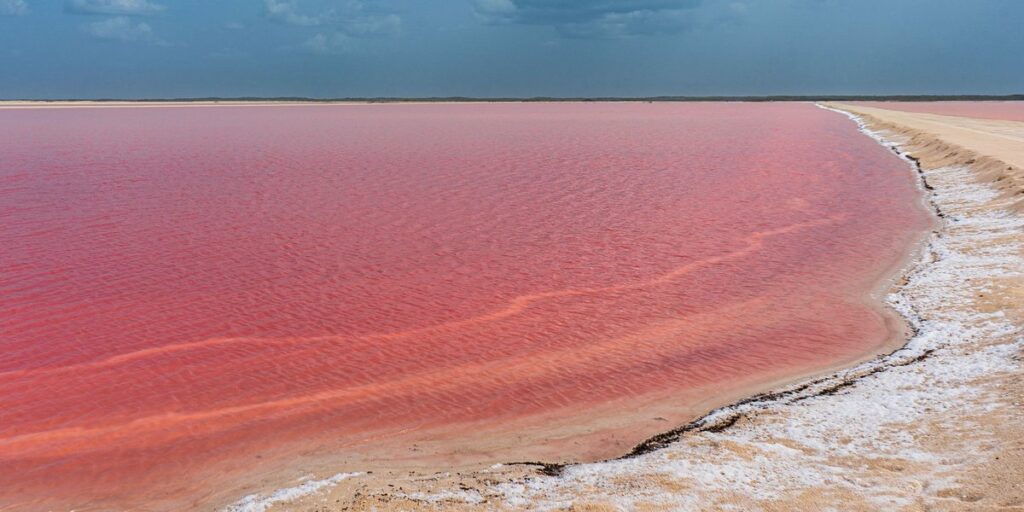
Lake Retba sits in a shallow basin separated from the Atlantic by a thin ridge of dunes, about 35 to 40 kilometers northeast of central Dakar. It’s small — under 3 square kilometers — which is part of why the color reads so intensely in photos. Nothing dilutes it.
The lake’s salinity rivals the Dead Sea, a legacy of an ancient marine inlet that got cut off from the ocean and has been concentrating salt ever since. For decades, local workers waded in with hand tools to mine that salt, coating their skin in shea butter first to protect against hours of submersion in brine. Trucks still line the shore during dry-season harvests, and salt from Retba turns up in markets across the region.
In late 2022, heavy flooding diluted the lake and washed out much of its color, turning it a dull greenish-brown for months. It’s been gradually recovering since, cycling between rusty orange and genuine pink depending on rainfall and season — worth knowing before you build a whole trip around a single Instagram shot.
Why Lake Retba Turns Pink
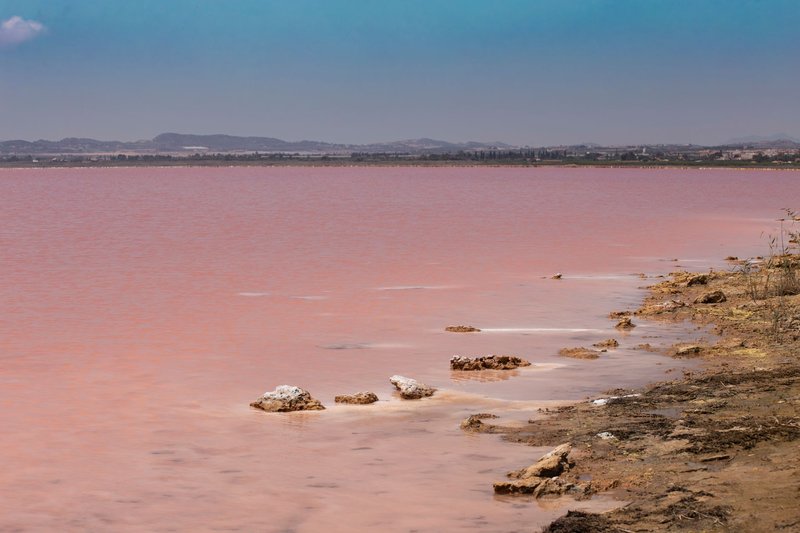
The color comes from Dunaliella salina, a microalgae that thrives in extremely salty water and produces a red pigment as a defense against intense sunlight — the same pigment mechanism that turns flamingos pink from their diet. The higher the salt concentration and the stronger the sun, the more vivid the color gets.
That’s why the lake looks most dramatic from December through May: less rain means less freshwater diluting the salt, and stronger sun triggers more pigment production. Visit during the rainy season (roughly July through October) and you may find the water looking more brown than pink, which matches what happened after the 2022 flood.
Visiting Lake Retba
Getting there from Dakar takes about an hour to ninety minutes by road, depending on traffic through the city’s outskirts. The route is paved most of the way, with a final stretch of sandy track near the shoreline — fine for a standard rental car if you go slow, easier still with a 4×4.
Entry to the lake itself is free. Once you’re there, a few things cost money:
- Boat rides across the lake, usually negotiated on the spot with local boatmen. Expect to bargain — prices aren’t fixed, and quotes vary depending on how busy the day is.
- Salt-harvesting demonstrations, sometimes bundled with a boat trip, where workers show the traditional shea-butter-and-shovel method.
- Quad biking or camel rides through the dunes separating the lake from the ocean, offered by operators near the parking areas.
You can swim in Retba, and the salt makes you float with almost no effort — closer to the Dead Sea than any ocean swim you’ve done. Keep the water out of your eyes and away from any open cuts; the salt concentration that makes floating effortless also makes contact with broken skin unpleasant. Rinse off with fresh water afterward if you can, since dried salt residue gets uncomfortable fast.
Most day-trippers combine Retba with a stop at the nearby dunes or a drive along the coast back to Dakar. Independent visits are entirely doable if you’re comfortable negotiating in French or Wolof; guided day tours from Dakar remove that friction but cost more and move on a fixed schedule.
Lake Guiers: Senegal’s Working Lake
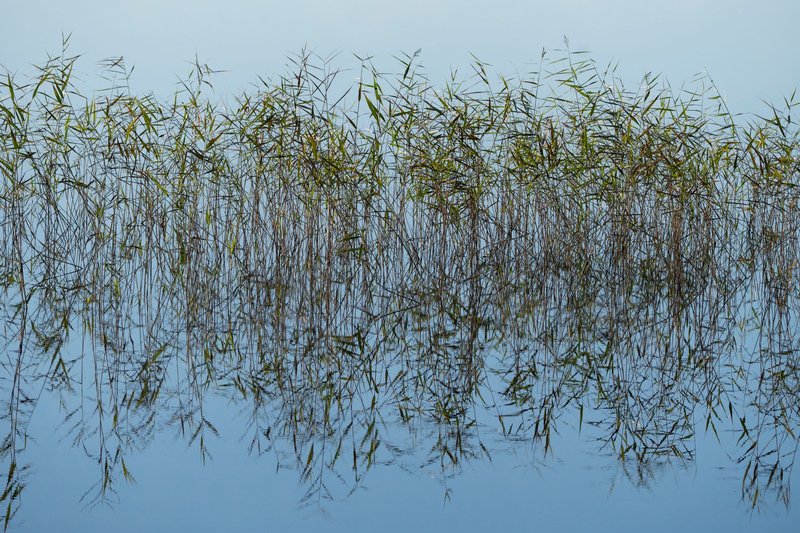
Lake Guiers sits far to the north, closer to the Senegal River delta than to Dakar, stretching about 35 kilometers long and 8 kilometers wide for a total surface area around 232 square kilometers. It’s the country’s only natural freshwater lake of any size, and functionally its most important body of water, full stop.
The lake is fed primarily by the Ferlo River and connected to the Senegal River through a system of sluice gates that let engineers control water exchange between the two. That control matters: Lake Guiers supplies roughly half of Dakar’s drinking water, piped hundreds of kilometers south through underground infrastructure to a city of more than 3 million people. Beyond the capital, it irrigates farmland along its shores and feeds the sugar refinery at Richard-Toll, one of the region’s larger agricultural employers.
Altogether, the lake supports water needs for more than 16 million people across the country, whether directly through irrigation and local use or indirectly through Dakar’s municipal supply. There’s no tourist infrastructure to speak of — no boat operators waiting at a dock, no entry fee, no gift shop. It’s not built for visitors. But if you’re driving north toward Saint-Louis or the Senegal River delta, it’s worth understanding what you’re passing: the reservoir that quite literally keeps the capital’s taps running.
Wildlife on Both Lakes
Retba’s hypersaline water isn’t hospitable to fish, but its shoreline and the surrounding dune system see birdlife typical of coastal Senegal, including migratory species that pass through the greater Dakar area seasonally.
Lake Guiers is the richer wildlife destination by a wide margin. It’s recognized as an Important Bird Area, hosting lesser flamingos, glossy ibis, Eurasian and African spoonbills, white-winged terns, and river prinia among its resident and migratory species. The lake’s freshwater marshes and reed beds along the shore support a level of biodiversity that Retba’s salt flats simply can’t match.
Which Lake Should You Actually See
If you have one day and you’re already in Dakar, Retba is the easy call — close, free, photogenic, and set up for a half-day trip with boat rides and dune activities built in. Go between November and June for the best chance at real pink water, and temper your expectations slightly given the lake’s slow recovery since the 2022 flood.
Lake Guiers isn’t a tourist stop, and it doesn’t try to be. But if your route takes you north toward Saint-Louis or the Senegal River delta, understanding what the lake does — freshwater reservoir, irrigation source, water supply for a capital city hundreds of kilometers away — gives you a fuller picture of Senegal’s geography than the Pink Lake alone ever will. Between the two, you get the country’s most photographed lake and its most consequential one, and they couldn’t be more different.