TLDR
Denmark’s UNESCO roster runs eleven properties deep, from a Bronze Age burial mound to five nearly identical Viking ring forts added in 2023. Four sit close enough to Copenhagen to visit in a long weekend (Roskilde Cathedral, Kronborg Castle, Stevns Klint, and the North Zealand hunting landscape). Three more are scattered across Jutland and Funen, and three are in Greenland — which means a genuinely different trip, not a day out. If you’ve only got one day, make it Roskilde Cathedral: 30 minutes by train from Copenhagen, and you’ll be standing over the graves of Danish kings by lunchtime.
Table of Contents
- Every Site, at a Glance
- Zealand: The Copenhagen Cluster
- Jutland and Funen: Vikings, Runes, and a Church Colony
- Greenland: Three Sites, One Serious Trip
- If You Only Have One Day
- What’s Still Waiting: Denmark’s Tentative List
Most lists of World Heritage Sites in Denmark read like a Wikipedia table with a passport stamp glued on. That’s fine if you just want the names. It’s useless if you’re trying to figure out whether you can do Roskilde and Kronborg in the same afternoon, or whether Greenland’s sites are even reachable on a normal budget. Here’s the version organized around how you’d actually visit these places, not the order UNESCO happened to inscribe them.
Every Site, at a Glance
| # | Site | Inscribed | Region |
|---|---|---|---|
| 1 | Jelling Mounds, Runic Stones and Church | 1994 | Jutland |
| 2 | Roskilde Cathedral | 1995 | Zealand |
| 3 | Kronborg Castle | 2000 | Zealand |
| 4 | Ilulissat Icefjord | 2004 | Greenland |
| 5 | Wadden Sea | 2014 | Jutland (shared) |
| 6 | Stevns Klint | 2014 | Zealand |
| 7 | Christiansfeld, a Moravian Church Settlement | 2015 | Jutland |
| 8 | Par Force Hunting Landscape, North Zealand | 2015 | Zealand |
| 9 | Kujataa Greenland | 2017 | Greenland |
| 10 | Aasivissuit – Nipisat | 2018 | Greenland |
| 11 | Viking-Age Ring Fortresses | 2023 | Zealand, Jutland, Funen |
That’s the official tally UNESCO keeps for Denmark as of the most recent session — worth a quick check before you plan, since new inscriptions get added roughly every few years and this list has grown steadily since 1994.
Zealand: The Copenhagen Cluster
Four sites sit within striking distance of Copenhagen, which makes Zealand the obvious base if your time is limited. Here’s how to string them into a loop.
Roskilde Cathedral (1995) has been the burial church of Danish monarchs since the 1400s — more than twenty kings and queens are interred inside its red-brick, twin-spired nave, each in a chapel built to outdo the one before it. It’s a 25-minute train ride from Copenhagen Central, and you can pair it with the nearby Viking Ship Museum, which isn’t part of the UNESCO listing but sits a ten-minute walk away and displays five 11th-century ships pulled from the fjord.
Kronborg Castle (2000) in Helsingør is the Renaissance fortress Shakespeare borrowed as Elsinore for Hamlet, built by Frederik II at the narrowest point of the Øresund strait — Sweden is close enough to see clearly from the ramparts. Its UNESCO listing has less to do with the play and more to do with the castle’s role collecting the Sound Dues, the toll that funded a chunk of the Danish crown’s income for three centuries. Trains from Copenhagen take about 45 minutes.
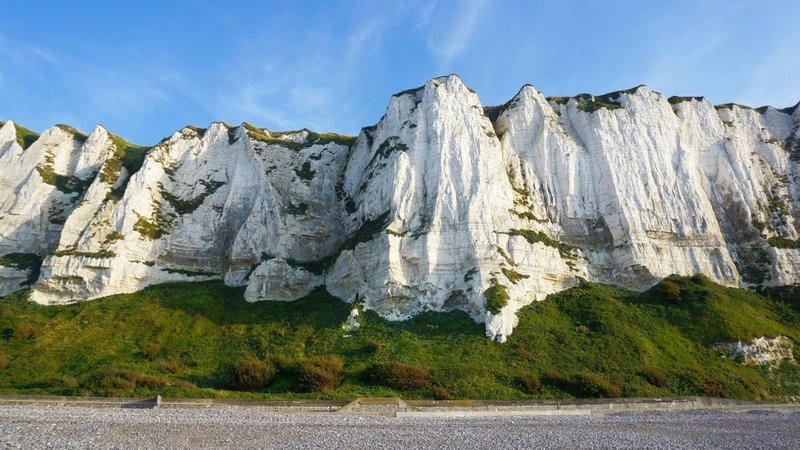
Stevns Klint (2014) is a 15-kilometer chalk cliff south of the city, and the reason it’s inscribed isn’t the scenery — it’s a thin, dark seam of clay running through the white rock, the physical trace of the asteroid impact that ended the age of dinosaurs 66 million years ago. You can see the fish clay layer with your own eyes on a guided cliff walk, no geology degree required.
Par Force Hunting Landscape, North Zealand (2015) is the least-visited of the four, and probably the most surprising. It covers a set of royal forests — Store Dyrehave, Gribskov, Jægersborg Hegn — cut through with dead-straight avenues so 17th- and 18th-century kings could chase deer on horseback along sightlines. Jægersborg Dyrehave, the section closest to Copenhagen, still has free-roaming deer and makes an easy, family-friendly afternoon combined with the old Bakken amusement park at its edge.
The itinerary: three days covers this cluster comfortably. Day one, Kronborg in the morning and back into Copenhagen by evening. Day two, Roskilde Cathedral and the Viking Ship Museum, then push on to Stevns Klint for the afternoon cliff walk. Day three, a slower morning in Jægersborg Dyrehave before flying out. Base yourself in Copenhagen the whole time — nothing here requires a hotel change.
Jutland and Funen: Vikings, Runes, and a Church Colony
Jelling Mounds, Runic Stones and Church (1994) was Denmark’s first inscription, and it’s arguably the country’s founding document in stone. The larger of two runic stones here was raised by King Harald Bluetooth around 965 AD, and it’s the earliest surviving written record to use the word “Denmark” — which is why Danes sometimes call it the nation’s birth certificate. The mounds themselves predate the stones by a couple of centuries, built as pagan burial monuments before Harald’s church went up between them.
Christiansfeld (2015), near Kolding, is a complete 18th-century town founded in 1773 by the Moravian Church, a Protestant sect that still exists and traces its roots to pre-Reformation Bohemia. The Moravian community’s own historical archive documents how these settlements were built to a strict communal grid — separate residence halls for unmarried men and women, a central square, yellow-brick uniformity — and Christiansfeld is one of the best-preserved examples left standing anywhere. People still live in it.
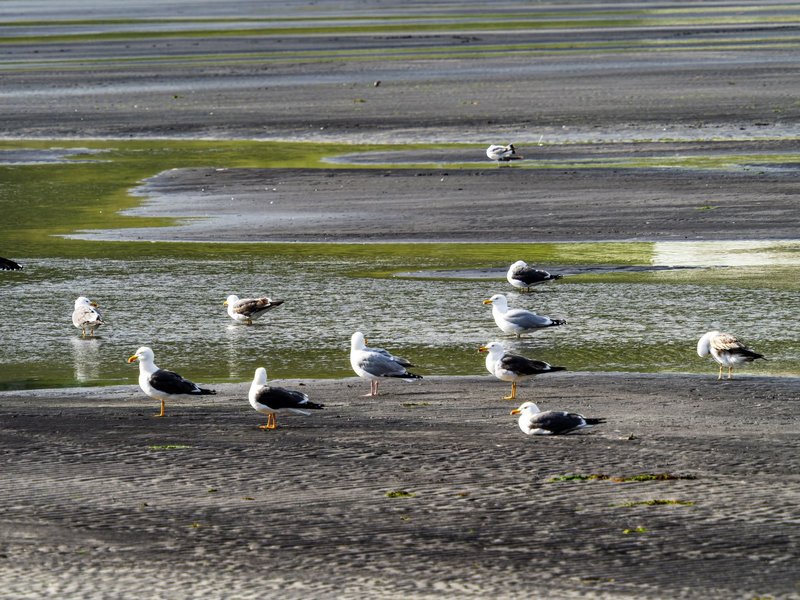
The Wadden Sea (2014) stretches along Denmark’s southwest coast and continues into Germany and the Netherlands, making it one of Europe’s few transnational World Heritage Sites. The listing protects the world’s largest unbroken system of intertidal sand and mud flats — walk out at low tide with a guide and you’re on seabed that’ll be underwater again in six hours. Millions of migratory birds stage here every spring and autumn, and harbor and grey seal colonies haul out on the sandbanks year-round.
Viking-Age Ring Fortresses (2023) is the newest addition, and it’s actually five sites in one listing: Trelleborg, Aggersborg, Fyrkat, Nonnebakken, and Borgring. All five were built under Harald Bluetooth around 980 AD to an almost identical geometric plan — a perfect circle, four gates, timber houses arranged in quadrants. Aggersborg, in North Jutland, is the largest; Borgring, discovered under a Zealand field as recently as 2014, is the newest find. Seeing all five in one trip means covering serious ground, but Trelleborg alone (near Slagelse, about an hour from Copenhagen) gives you the full picture of what these forts looked like, reconstructed longhouses included.
Greenland: Three Sites, One Serious Trip
This is the part most Denmark UNESCO lists gloss over, and it’s worth being upfront about: Greenland’s three sites are not a side trip. They’re a separate vacation.
Ilulissat Icefjord (2004) protects the mouth of Sermeq Kujalleq, one of the fastest-moving glaciers on Earth, which calves an estimated 35 billion tonnes of ice into the fjord every year. You can walk to a viewpoint from Ilulissat town itself and watch icebergs the size of city blocks drift toward Disko Bay — no boat required, which is rare for a glacier this active.
Kujataa Greenland (2017), in the south, layers Norse and Inuit farming history on the same land. Norse settlers under Erik the Red established farms here around 985 AD, including Brattahlíð near modern Qassiarsuk, and the ruins of Hvalsey Church nearby are the best-preserved Norse structure anywhere in Greenland. Inuit farmers still work the same short growing season today.
Aasivissuit – Nipisat (2018), near Kangerlussuaq and Sisimiut, protects a caribou-hunting landscape used continuously for over 4,000 years — one of the longest records of human land use anywhere in the Arctic.
Getting to any of them means flying into Greenland via Copenhagen or Reykjavik, then a domestic leg to Ilulissat, Kangerlussuaq, or Narsarsuaq. Budget a minimum of five to seven days if you want to see more than one site, and plan for May through September — outside that window, weather and daylight make travel between towns unreliable.
If You Only Have One Day
Roskilde Cathedral. It’s the shortest trip from Copenhagen, it doesn’t require booking ahead the way Kronborg’s peak-season crowds sometimes do, and pairing it with the Viking Ship Museum next door gives you two very different eras of Danish history in one half-day loop. If you’d rather stay coastal, Stevns Klint is the runner-up — the cliff walk takes about two hours and needs nothing but decent shoes.
What’s Still Waiting: Denmark’s Tentative List
Beyond the eleven inscribed sites, Denmark keeps a running tentative list — candidates the government has formally proposed but that haven’t cleared UNESCO’s full review yet. Tentative-list sites don’t come with the same visitor infrastructure or protections as inscribed ones, and the list shifts as nominations are added, withdrawn, or promoted, so it’s not something to build a trip around. It’s worth a glance if you’re the type who likes seeing what’s coming before everyone else does, but for now, the eleven above are the ones with the plaque.
Whichever cluster you pick, the throughline across all of them is the same: Denmark’s UNESCO sites aren’t monuments built to impress tourists. They’re the actual, working evidence of how the place became what it is — a runic stone that names the country for the first time, a cliff that recorded the end of the dinosaurs, a fortress ring built to a king’s exact specifications a thousand years ago. That’s a different kind of trip than checking boxes on a list.