Everyone will tell you the same thing before you land in Doha: you don’t need Arabic. English signage is everywhere, most service staff speak it fluently, and Qatar Airways will hand you a boarding pass in English without blinking. All of that is true, and none of it is the point.
Qatar’s population is roughly 85% expatriate, so the guy pouring your karak might be from Kerala and the taxi driver might be from Cairo. Arabic isn’t the default language of convenience here — it’s the language that signals you made an effort in a country that doesn’t require it of you. A handful of Gulf Arabic phrases, used correctly, gets you a warmer negotiation in the souq, a genuine laugh from a taxi driver, and occasionally a better price. This isn’t a language course. It’s a scenario-by-scenario cheat sheet built for the situations you’ll actually be in.
Table of Contents
- Quick Cheat Sheet
- Airport and Taxi Arrival
- Greetings and the Gender Rule
- Souq Shopping and Haggling
- Ordering Karak and Food
- Mosque and Cultural Etiquette
- Emergencies
- Qatari Dialect vs. Modern Standard Arabic
Quick Cheat Sheet
Screenshot this before you leave the hotel. These ten cover 90% of the interactions you’ll have as a visitor.
| Arabic | Transliteration | Meaning |
|---|---|---|
| السلام عليكم | As-salaamu alaykum | Hello (formal, literally “peace be upon you”) |
| شكرا | Shukran | Thank you |
| من فضلك | Min fadlak / min fadlik | Please (to a man / to a woman) |
| نعم / لا | Na’am / La | Yes / No |
| بكم هذا؟ | Bikam hadha? | How much is this? |
| ممكن…؟ | Mumkin…? | Is it possible / may I…? |
| آسف / آسفة | Aasif / Aasfa | Sorry (male / female speaker) |
| تفضل / تفضلي | Tafaddal / Tafaddali | Here you go / after you (to a man / to a woman) |
| يلا | Yalla | Let’s go / come on |
| إن شاء الله | Inshallah | God willing (used constantly, even for scheduling) |
Airport and Taxi Arrival
Hamad International Airport runs almost entirely in English — immigration officers, signage, the works — so you won’t need Arabic to clear customs. It’s the taxi queue outside where a few words start earning you goodwill.
Qatari taxi drivers, particularly the older Karwa drivers, respond well to a greeting before you launch into your destination. Try As-salaamu alaykum (السلام عليكم) as you get in, and if you catch a smile, that’s your cue the ride will go smoothly.
- Kam el-ujra? (كم الأجرة؟) — “How much is the fare?” Useful for the unmetered private cars you’ll sometimes flag near malls.
- Wagif hina, min fadlak (واقف هنا، من فضلك) — “Stop here, please.”
- Yalla (يلا) — “Let’s go” or “come on.” Drivers use it constantly and you’ll hear it before you say it.
Metered Karwa taxis and Uber/Careem cover most of Doha reliably, so you’re rarely negotiating a fare outright — the phrases above are for the informal rides you’ll occasionally take between the Pearl and West Bay.
Greetings and the Gender Rule
This is the part every other phrase list skips past, and it’s the part that actually trips people up: a lot of everyday Arabic changes form depending on whether you’re speaking to a man or a woman. Miss it and you’ll still be understood, but getting it right is the difference between “tourist trying” and “tourist who actually looked it up.”
The clearest example is tafaddal. Said to a man, it’s تفضل (tafaddal). Said to a woman, it’s تفضلي (tafaddali) — you add a long “ee” sound at the end. It means “here you go” when you’re handing something over, or “go ahead” when you’re inviting someone in first. You’ll use it dozens of times a day without realizing it — handing a shopkeeper cash, letting someone through a door, offering your seat.
The same pattern shows up in a few other common words:
| To a man | To a woman | Meaning |
|---|---|---|
| تفضل (Tafaddal) | تفضلي (Tafaddali) | Here you go / go ahead |
| من فضلك (Min fadlak) | من فضلك (Min fadlik) | Please |
| آسف (Aasif) | آسفة (Aasfa) | Sorry |
| شلونك؟ (Shlonak?) | شلونچ؟ (Shlonich?) | How are you? (Gulf dialect) |
If you forget which form applies, default to the masculine — it’s the more commonly understood fallback, though native speakers will register the mismatch. Nobody will correct you for it out loud.
For a first “hello,” As-salaamu alaykum (السلام عليكم) works in any setting, formal or casual, and the expected reply is Wa alaykum as-salaam (وعليكم السلام). Marhaba (مرحبا) is the more relaxed, everyday version you’ll hear from shopkeepers and hotel staff — closer to “hi” than “greetings.”
Souq Shopping and Haggling
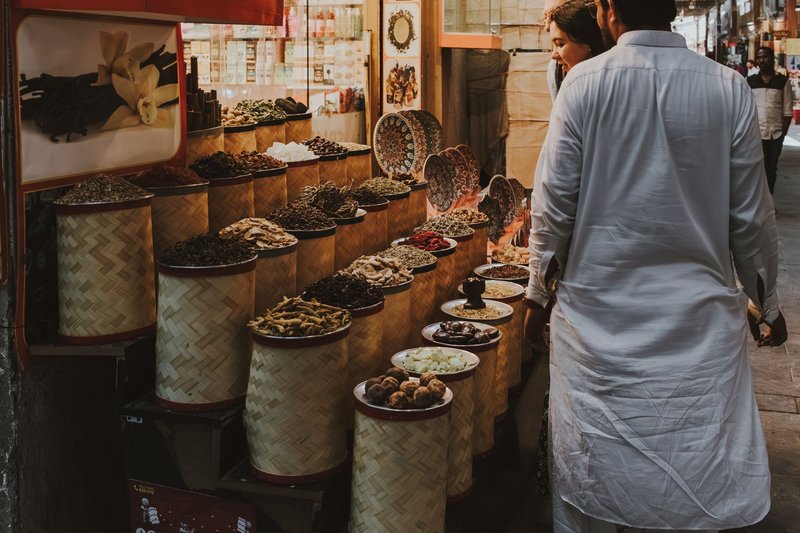
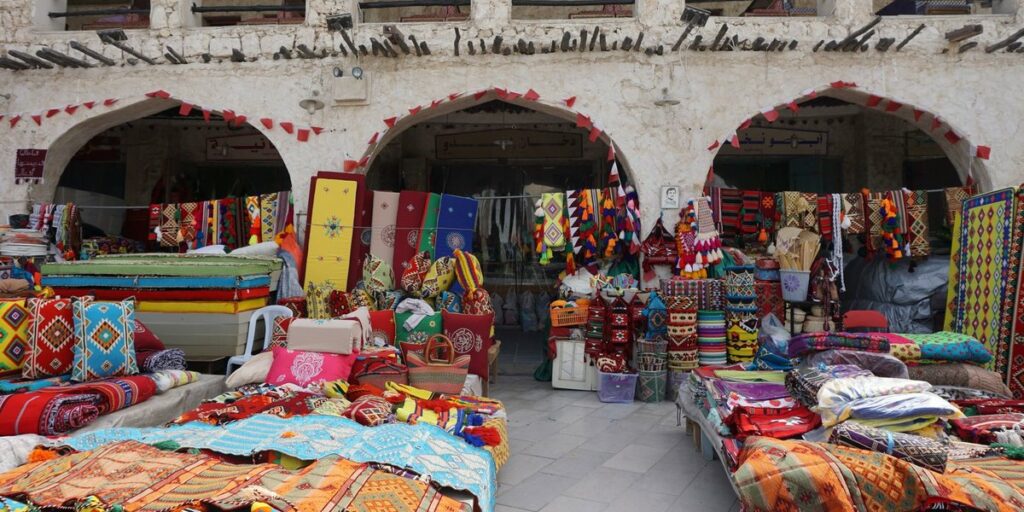
Souq Waqif is where these phrases pull the most weight, particularly in the spice, textile, and falcon souqs where prices aren’t posted. Haggling here is expected, mildly ritualized, and a lot friendlier when you can do it partly in Arabic.
- Bikam hadha? (بكم هذا؟) — “How much is this?” Your opening line, every time.
- Ghali (غالي) — “Expensive.” Said with a slight wince, this is your counter-offer opener.
- Rakhees (رخيص) — “Cheap.” Useful in reverse, if a vendor is surprised you’re not haggling.
- Khalas (خلاص) — “Done” or “that’s final.” Vendors use it to close a deal; you can use it the same way to signal you’ve landed on your number.
- Shukran, bas la (شكرا، بس لا) — “Thanks, but no.” The polite exit if you’re browsing and not buying — softer than a flat “no.”
One thing that surprises first-timers: haggling in Doha’s souqs is calmer than the stereotype of Middle Eastern markets built on aggressive back-and-forth. A vendor quoting 150 riyals for a scarf and settling at 100 after two counter-offers is a normal, unhurried exchange, not a battle. Raising your voice or getting theatrical about it reads as rude here, not as savvy.
Ordering Karak and Food
Karak — the strong, sweet, cardamom-spiced milk tea sold from small stalls across Doha — is closer to a national pastime than a beverage, and ordering it in Arabic gets a genuine reaction from the stall owner almost every time.
- Abi wahid karak, min fadlak (أبي وحد كرك، من فضلك) — “I want one karak, please.” “Abi” (أبي) is Gulf dialect for “I want,” and you’ll hear locals use it for everything from tea to taxis.
- Ma’a al-haleeb (مع الحليب) — “With milk,” if you want to specify.
- Bidoon sukkar (بدون سكر) — “Without sugar” — worth knowing, since karak by default comes sweet enough to notice.
- Lazeez (لذيذ) — “Delicious.” The compliment that gets you a second cup on the house more often than you’d expect.
- Al-hisaab, min fadlak (الحساب، من فضلك) — “The bill, please,” for sit-down restaurants.
Most karak stalls charge under 3 riyals a cup and don’t run English menus beyond “karak” and “chai,” so this is one of the few places in Doha where a couple of Arabic words genuinely change the transaction, not just the tone of it.
Mosque and Cultural Etiquette
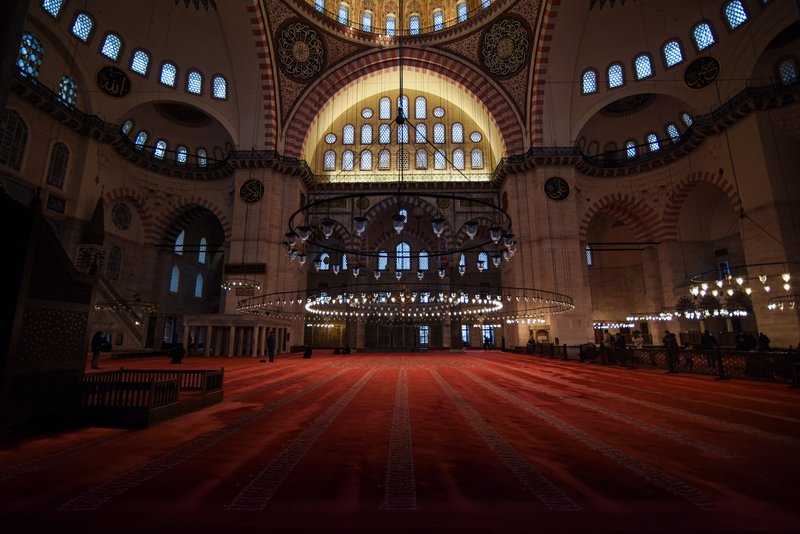
The Katara Cultural Village and Souq Waqif mosques regularly welcome non-Muslim visitors, and a few phrases and norms make the visit go smoother. Cover shoulders and knees, remove shoes at the entrance, and women will typically be asked to cover their hair — most visitor-friendly mosques keep abayas and scarves at the door for exactly this.
- As-salaamu alaykum (السلام عليكم) still applies here as your opening greeting to anyone you encounter.
- Mamnoo’ al-tasweer (ممنوع التصوير) — “Photography prohibited.” You’ll see this on signage inside prayer halls; recognizing it saves you an awkward correction from staff.
- Mumkin adkhul? (ممكن أدخل؟) — “May I come in?” — useful at smaller neighborhood mosques that aren’t set up for tourist visits, where asking first matters more than at Katara’s dedicated visitor mosque.
Outside religious buildings, the same right-hand rule shows up everywhere: eat, pass money, and accept Arabic coffee (gahwa) with your right hand. It’s not a suggestion so much as the default nobody explains to you until you’ve already used your left.
Emergencies
Hopefully you won’t need this section, but Qatar is safe enough that most tourists never test it — which makes it worth having ready rather than memorized.
- Musaada! (مساعدة!) — “Help!”
- Ittasil bil-shurta (اتصل بالشرطة) — “Call the police.”
- Ana ta’abaan (m) / ta’abaana (f) (أنا تعبان / تعبانة) — “I’m unwell.”
- Mustashfa (مستشفى) — “Hospital.” Pair it with pointing at a map; taxi drivers respond fast to this word alone.
- Ayna aqrab saydaliya? (أين أقرب صيدلية؟) — “Where’s the nearest pharmacy?” Pharmacies are common enough in Doha that this gets you help faster than a hospital trip for anything minor.
Qatar’s emergency number is 999 for police, ambulance, and fire, and operators generally handle English calls without issue — the phrases above are for the moments before a phone call is possible, not instead of one.
Qatari Dialect vs. Modern Standard Arabic
Every phrase in this guide is Gulf dialect, not the Modern Standard Arabic (MSA) taught in language apps and used in news broadcasts, and the difference matters more than most phrase lists let on. MSA is the formal, written register — the Arabic of newspapers, official documents, and Al Jazeera anchors. Nobody orders karak in it.
Qatari and wider Gulf dialect swaps in words like “abi” for “I want” instead of MSA’s “ureed,” and softens or drops sounds that MSA keeps crisp. Learn a phrase from a generic Arabic app built around Egyptian or Levantine dialect and you’ll be understood in Doha, but you’ll sound like you learned Spanish in Mexico and are now ordering coffee in Madrid — close, noticeable, not wrong. The Gulf dialect version, per phrase, is what actually gets used at the karak stand, and it’s understood across the wider Gulf and much of the broader Arab world besides, so it doubles as a useful base if Qatar isn’t your only stop in the region.
The upshot: don’t stress about grammatical correctness. Gulf dialect is forgiving of imperfect tourists, and the version above is what you’ll actually hear used back at you.