
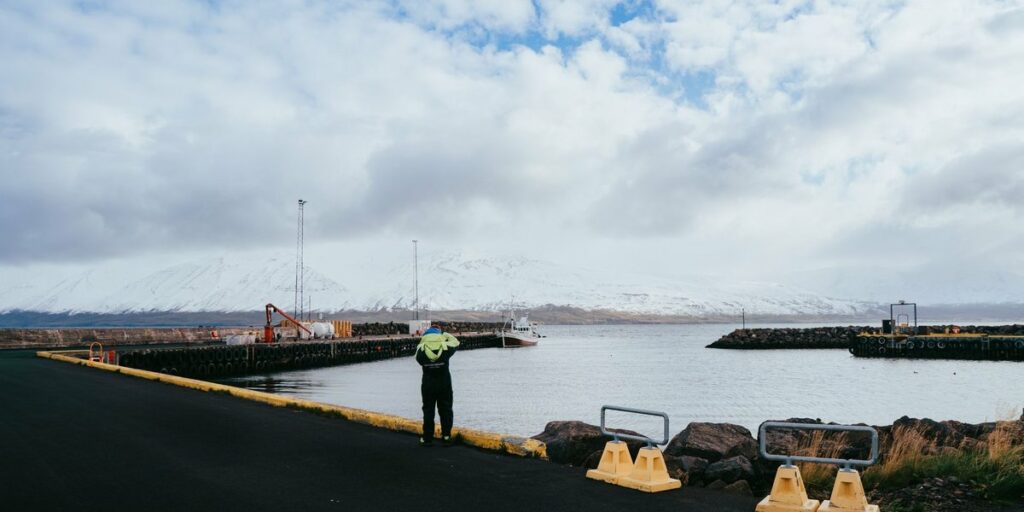
Iceland has the lowest poverty rate of any OECD country on earth — 4.9%, against a member average north of 11%. So “poorest cities in Iceland” is a strange search to land on. There isn’t a slum here in the sense the word means in most of the world, and nobody in these towns is going hungry.
But relative poverty is real, and it’s geographic. Iceland’s wealth concentrated hard around Reykjavík over the last forty years, while the fishing villages that used to anchor the coastline emptied out one quota sale at a time. This is a list of the towns where that gap shows up most — not slums, but places where the population is shrinking, the economy rests on one industry, and the average paycheck sits well under the capital’s.
TLDR: Iceland’s Least Wealthy Towns
- Árneshreppur — Iceland’s least populated municipality, down to roughly a tenth of its 1900 population
- Raufarhöfn — a herring boomtown that never recovered from the 1970s stock collapse
- Breiðdalsvík — lost its entire fishing quota to a company buyout in 1998 and never got it back
- Bíldudalur — Westfjords village still rebuilding after decades of quota consolidation
- Þingeyri — a Westfjords settlement absorbed into a larger municipality as its own economy shrank
- Skagaströnd — a north coast harbor town holding steady around 450 people
- Suðureyri — the smallest population base on this list still fighting its way back with tourism
Table of Contents
- Why “poorest” looks different in Iceland
- How we picked these towns
- 1. Árneshreppur
- 2. Raufarhöfn
- 3. Breiðdalsvík
- 4. Bíldudalur
- 5. Þingeyri
- 6. Skagaströnd
- 7. Suðureyri
- What about Breiðholt, Reykjavík’s “poor” neighborhood?
- Should you actually visit these towns?
Why “poorest” looks different in Iceland
Every one of these towns has running water, heated roads, a school, and a doctor within reach. Nobody here would recognize themselves in a list titled “poorest cities” if they read it in the context most readers bring to that phrase. What they’d recognize is the population chart: fewer people every census, a harbor with half the boats it used to have, and kids who leave for Reykjavík or Akureyri at eighteen and don’t come back.
The mechanism behind almost all of it is the same. Iceland’s Individual Transferable Quota system, introduced in 1984, let fishing rights be bought, sold, and consolidated like stock. It made the industry efficient. It also meant that quota once tied to a specific harbor could be sold off and moved anywhere in the country overnight — and often was, straight into the hands of Iceland’s largest seafood companies, which now hold around three-quarters of the national catch between roughly two dozen firms. When a village’s quota leaves, its fish plant closes within a year or two, and its economy doesn’t have a second industry to catch the fall.
How we picked these towns
There’s no official “poorest towns in Iceland” ranking — Statistics Iceland publishes wage and income data at a national and regional level, not a clean town-by-town leaderboard, and the smallest municipalities are often too small to report individually without violating anonymity rules. So this list runs on the proxies that actually track with local income: population decline over time, dependence on a single industry (almost always fishing), documented loss of fishing quota, and how far a town sits from the diversified economy of the capital region. Every town below lost quota, lost population, or both, in a way that’s on the public record.
1. Árneshreppur
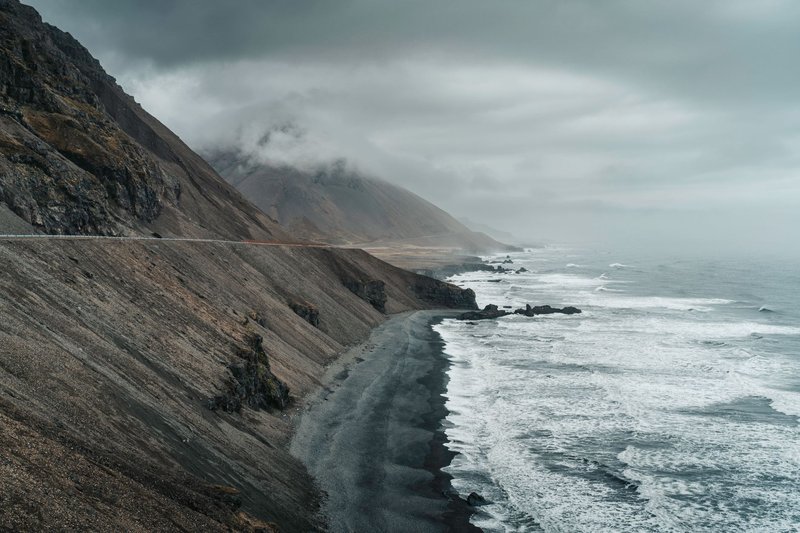
Árneshreppur, up on the Strandir coast of the Westfjords, is Iceland’s least populated municipality — somewhere around 50 people, spread across the villages of Norðurfjörður and Djúpavík and a scatter of farms. That’s roughly a tenth of what lived there in 1900. The road in closes for weeks at a stretch in winter, which leaves flights as the only reliable way out.
The town’s economy used to run on shark and herring fishing; when the herring vanished from local waters, the processing plants shut and people left with them. What’s left today is mostly farming, a handful of tourism operators running summer trips to the old herring station at Djúpavík, and a population old enough that the school has had years with a single-digit student count.
2. Raufarhöfn
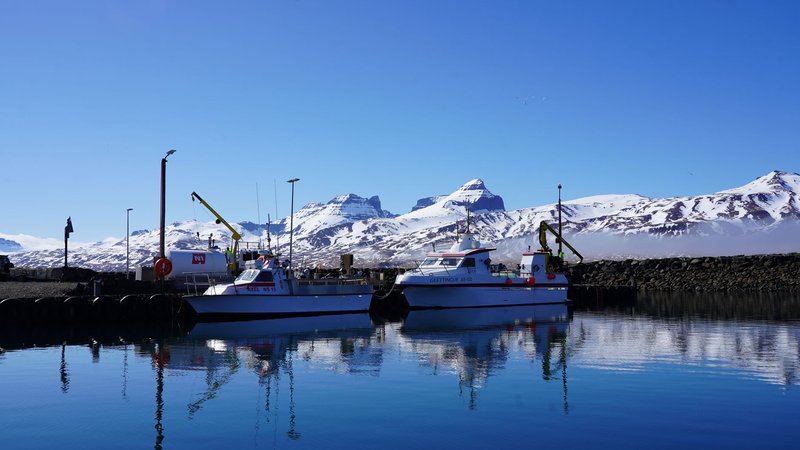
Raufarhöfn, tucked onto the Melrakkaslétta peninsula in the northeast, was briefly one of the richest fishing ports in the country. By 1961 it was Iceland’s largest herring export harbor, and its summer population swelled from a permanent base of around 500 to nearly 2,000 during the season. Then the herring stock collapsed in the late 1970s from overfishing, and the boom-town economy went with it.
The town never got that base back. Today it holds around 180 people, and the industry that once defined it is a memory marked by the Arctic Henge monument on the edge of town — built, in part, as something for visitors to come see once fish stopped being the reason to come at all.
3. Breiðdalsvík
Breiðdalsvík, in the East Fjords, is the clearest single case of a quota sale wrecking a local economy. The village had around 1,500 tons of fishing quota as recently as 1996 — enough that its population had grown to about 250 in the nineties. In 1998, the seafood company Vísir bought the controlling stake in the local operation and relocated the quota to Djúpivogur, a different town down the coast. The fish factory in Breiðdalsvík closed. There was no realistic path to replace 1,500 tons of quota with anything else.
The village and the wider valley now hold around 180 people combined, with the village itself closer to 130. It’s a textbook version of the pattern: one legal transaction, decided in an office somewhere else, and a town loses its economic reason to exist.
4. Bíldudalur
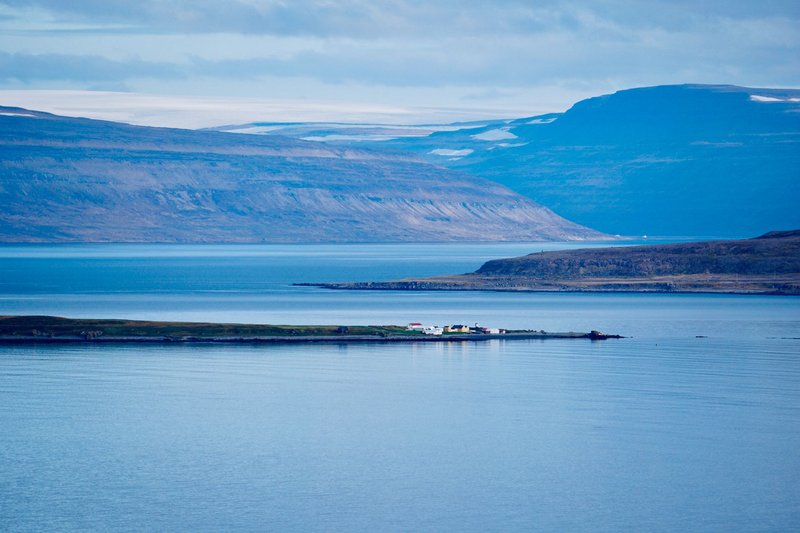
Bíldudalur sits on Arnarfjörður in the Westfjords and had real 19th-century prosperity from fishing enterprise — its harbor and merchant houses still show it. The late 20th century took a lot of that back: quota consolidation and stricter allocation rules squeezed the independent operators the town depended on, and the population settled at around 240.
What makes Bíldudalur worth watching rather than writing off is that it’s diversified on purpose — fish farming, a small aviation museum, and steady tourism traffic off the Westfjords ring route. It’s poorer than it was, but it’s also one of the few towns on this list actively building a second economy instead of waiting for the first one to come back.
5. Þingeyri
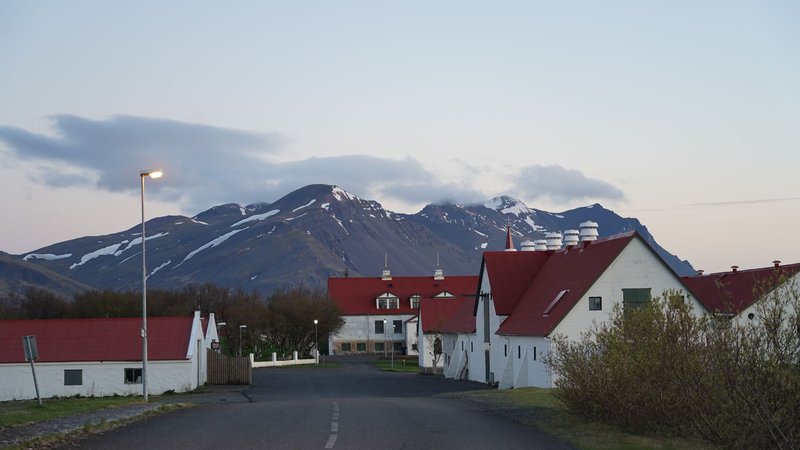
Þingeyri, on Dýrafjörður, was once its own municipality and is now folded into the larger Ísafjarðarbær — administratively convenient, and a fairly reliable sign that a town’s tax base got too small to run itself. Around 246 people live there, in a setting that’s arguably one of the most dramatic in the Westfjords, ringed by the Kaldbakur massif.
Fishing and fish processing are still present but smaller than they were, and outdoor tourism — hiking, kayaking, the annual Fossavatn ski race nearby — has become the sector actually adding jobs. It’s a town surviving on its landscape more than its harbor at this point.
6. Skagaströnd
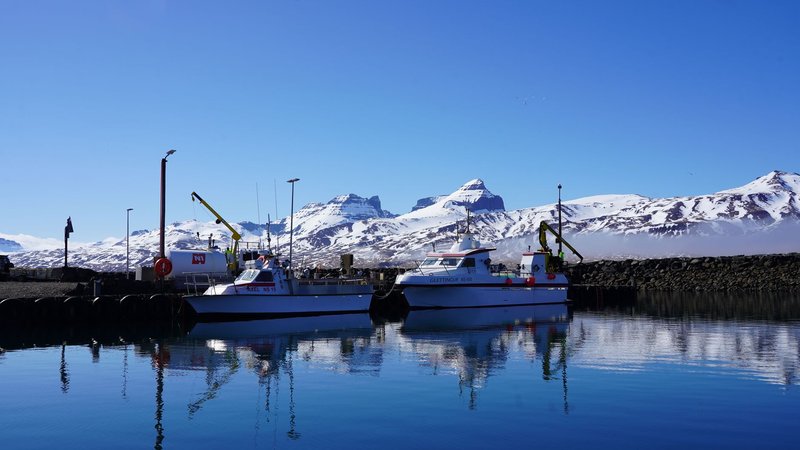
Skagaströnd, on the Skagi peninsula’s east coast facing Húnaflói bay, has held closer to steady than most towns on this list — its population has hovered around 450 to 470 for the last several years, which by rural Iceland standards counts as stability. That doesn’t mean prosperity. The town still runs on fishing and fish processing, still has a workforce with fewer options than Reykjavík’s, and still sees its younger residents leave for university and not return.
What Skagaströnd has going for it that some smaller villages don’t is a small but genuine cultural draw: NES, an international artist residency, has run there for years, bringing a rotating population of working artists through a town that would otherwise see almost no outside visitors at all.
7. Suðureyri
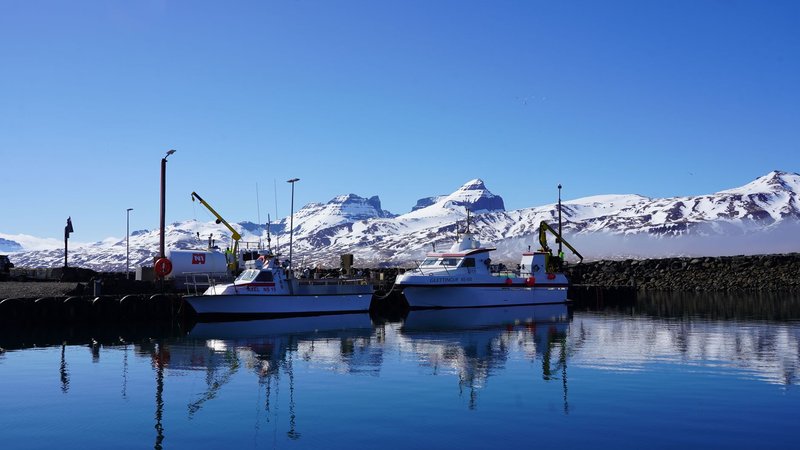
Suðureyri, on the Súgandafjörður fjord in the Westfjords, only really took shape in the early 20th century once fishing mechanized enough to support a permanent settlement. Around 300 people live there now — the smallest population on this list among towns still actively growing their economy rather than just shrinking slower than average.
It earns its spot here less as a warning story and more as the closest thing to a playbook: the town leaned directly into what it already had, pairing its working fishing fleet with sea-angling tourism aimed at European visitors who want to catch their own cod and halibut, not just look at a harbor from a bus window. Suðureyri is still a low-income town by national standards. It’s also proof the trend isn’t purely one-directional.
What about Breiðholt, Reykjavík’s “poor” neighborhood?
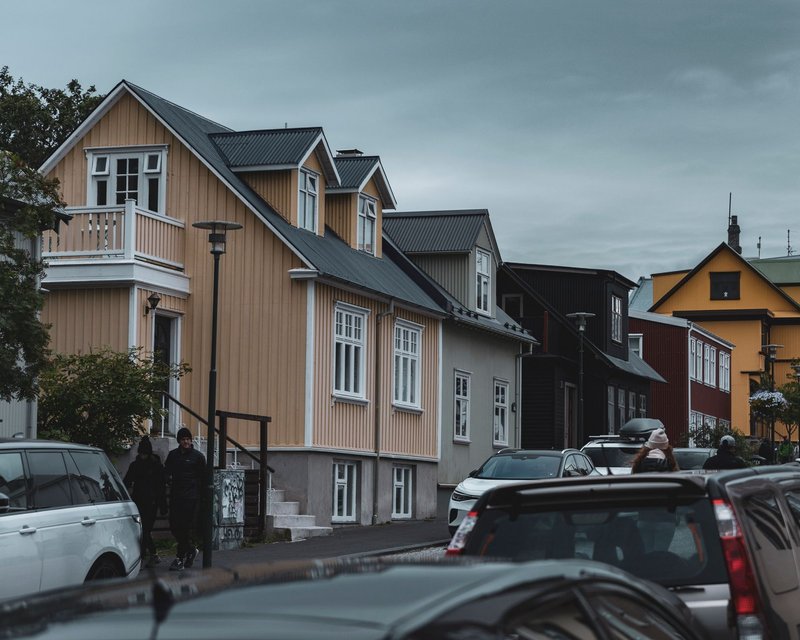
If you’ve searched around this topic already, you’ve probably run into Breiðholt — a district in Reykjavík, not a separate town, which is why it isn’t ranked above. It’s worth explaining anyway, because it’s the closest thing Iceland has to what most people picture when they hear “poor neighborhood.”
Breiðholt was built in the 1960s and 70s as a planned solution to Reykjavík’s postwar housing shortage, and Efra-Breiðholt in particular picked up a rough reputation through the 70s and 80s — high concentrations of single-parent households and, for a while, heavy local media coverage of vandalism that stuck to the area’s name for decades. That reputation has faded considerably; it’s a functional, service-covered part of the city now, not a district anyone avoids. What hasn’t changed is the affordability gap: rent in Breiðholt runs meaningfully below the Reykjavík average, and parts of the district have some of the highest shares of foreign-born residents in the capital — over 48% in some pockets per the last census, well above the city-wide figure. It’s not poverty in the way Raufarhöfn or Árneshreppur experience it. It’s Reykjavík’s cheapest zip code, inside a very expensive city.
Should you actually visit these towns?
If you’re planning a Westfjords or East Fjords loop, yes — several of these are already on the route, and none of them are staged for tourists in the way Reykjavík’s harbor district is. You’ll get an actual working fishing village, a guesthouse run by someone who also crews a boat, and a gas station that doubles as the town’s social hub. Bring cash-equivalent cards anyway (most places take them), book accommodation ahead since some of these towns have under a dozen beds total, and don’t expect much beyond a convenience store for groceries once you’re past Ísafjörður or Egilsstaðir. What you’re seeing isn’t decline dressed up for visitors. It’s rural Iceland running on whatever industry is left, which, more often than you’d think, turns out to be you.