TLDR
Tuvalu has two official languages: Tuvaluan (the daily language for most of the country) and English (used in government, courts, and schools). There’s a wrinkle, though — on the atoll of Nui, most residents speak Gilbertese, a completely different language tied to Kiribati, not Tuvalu. Tuvaluan itself splits into northern and southern dialects that are mutually intelligible but distinct enough that islanders can place each other by accent alone. UNESCO classifies Tuvaluan as “definitely endangered,” and climate-driven migration to New Zealand and Australia is accelerating the shift faster than any colonial history ever did.
Table of Contents
- The Quick Answer
- Where Tuvaluan Came From
- Northern and Southern Dialects
- Nui: The Island That Speaks Kiribati
- Sample Tuvaluan Phrases
- Language Snapshot
- A Language Running Out of Time
The Quick Answer
Tuvaluan and English are Tuvalu’s two official languages. Tuvaluan — locally called Te Ggana Tuuvalu — is what people actually speak at home, in church, and at the market on any of the country’s nine islands. English shows up in Parliament, in court documents, and in classrooms starting around upper primary school, but outside Funafuti’s small circle of civil servants and hoteliers, plenty of Tuvaluans get by with only a handful of English phrases.
Tuvaluan belongs to the Polynesian branch of the Austronesian language family, in a subgroup linguists call Ellicean — it shares that branch with Samoan, Tokelauan, and the Polynesian outlier languages scattered across Melanesia and Micronesia. If you’ve studied Samoan, a fair amount of Tuvaluan vocabulary will look familiar. That’s not a coincidence.
Where Tuvaluan Came From
The written record of Tuvaluan starts later than you’d expect for a language spoken across nine islands for centuries. Tuvaluan had no standardized script until the 1860s, when Samoan pastors working for the London Missionary Society arrived to convert the population to Christianity. A Cook Islander named Elekana, blown off course in 1861 and washed up on Nukulaelae, is generally credited as the first missionary to reach the group — and the wave of Samoan pastors who followed him shaped Tuvalu’s linguistic future for the next century.
For decades, Samoan wasn’t just the language of the church — it was the language of literacy itself. Government records, school instruction, and hymnals all ran in Samoan, because that’s what the pastors spoke and what got printed. Tuvaluan didn’t fully displace Samoan as the language of official life until the 1950s. That century-long lag is why older Tuvaluan religious vocabulary still carries a noticeably Samoan flavor, even though the two languages have since diverged.
Northern and Southern Dialects
Tuvaluan splits into two dialect zones, and the divide tracks geography almost exactly. The northern group — Nanumea, Nanumaga, Niutao, and Niulakita — shares pronunciation patterns and vocabulary that set it apart from the southern group: Vaitupu, Nukufetau, Funafuti, and Nukulaelae. The dialects are mutually intelligible; a Nanumea fisherman and a Funafuti office clerk will understand each other without effort. But the accent gap is real enough that Tuvaluans can usually place a stranger’s home island within a sentence or two, the way a New Orleans accent doesn’t sound like a Boston one despite both being English.
Phonetically, Tuvaluan is unusually clean. Five vowels, each with a short and a long form that changes meaning, and zero diphthongs — every vowel gets its own beat. The word for “tomorrow,” taeao, is four syllables, not two: ta-e-a-o. That vowel-by-vowel rhythm is part of what makes spoken Tuvaluan sound so distinct from its Melanesian and Micronesian neighbors.
Nui: The Island That Speaks Kiribati
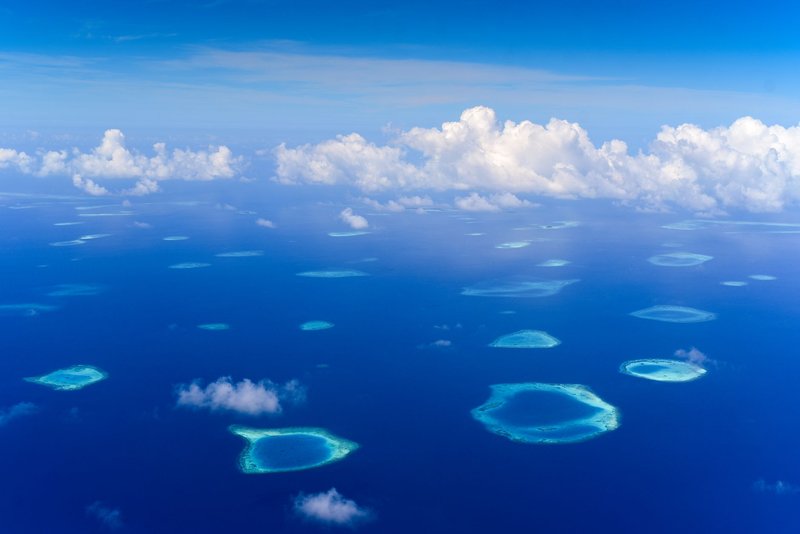
Here’s the exception that trips up most quick answers about Tuvalu’s languages: on Nui, the northernmost of the main islands, the majority language isn’t Tuvaluan at all. It’s Gilbertese, the language of Kiribati, spoken by a population descended from Gilbert Islands settlers who reached Nui generations before European contact. Gilbertese is a Micronesian language, not Polynesian, which means it’s grammatically and phonetically a different animal from Tuvaluan — not a dialect, not a cousin, but a genuinely separate branch of the Austronesian tree that happens to share an atoll.
Nui residents are generally bilingual in Gilbertese and Tuvaluan, since national schooling, media, and government all run through Tuvaluan and English. But at home, in daily conversation, Gilbertese remains dominant — a linguistic island within an island nation.
Sample Tuvaluan Phrases
A handful of Tuvaluan phrases, if you ever find yourself on Funafuti’s single runway-adjacent main road:
- Tālofa — Hello (borrowed almost unchanged from Samoan’s talofa)
- Fakafetai — Thank you
- E ā koe? — How are you? (asked to one person)
- Ko ai tou igoa? — What’s your name?
- Ie — Yes
- Ikai — No
Notice the Samoan fingerprint on tālofa — a direct legacy of those 1860s missionaries, still sitting in the most common word in the language.
Language Snapshot
| Language | Speakers | Where Spoken | Status |
|---|---|---|---|
| Tuvaluan | ~13,000 total, ~10,000–11,000 in Tuvalu | All islands except most of Nui | Definitely Endangered (UNESCO) |
| English | Second official language; fluency concentrated in govt., schools | Nationwide, especially Funafuti | Stable, but limited everyday use |
| Gilbertese | Majority language on Nui (~600 residents) | Nui atoll only | Stable locally, minority nationally |
| Samoan | Legacy liturgical/administrative use, mostly older speakers | Church contexts, historical records | Largely displaced since the 1950s |
A Language Running Out of Time
Tuvaluan’s bigger threat isn’t colonial history — it’s geography. Tuvalu sits an average of two meters above sea level, and rising seas are already pushing families toward New Zealand and Australia. The Falepili Union, a treaty Australia and Tuvalu signed in 2023, now grants up to 280 Tuvaluans a year permanent residency — a formal, government-backed pathway for exactly the kind of migration that’s been happening informally for years.
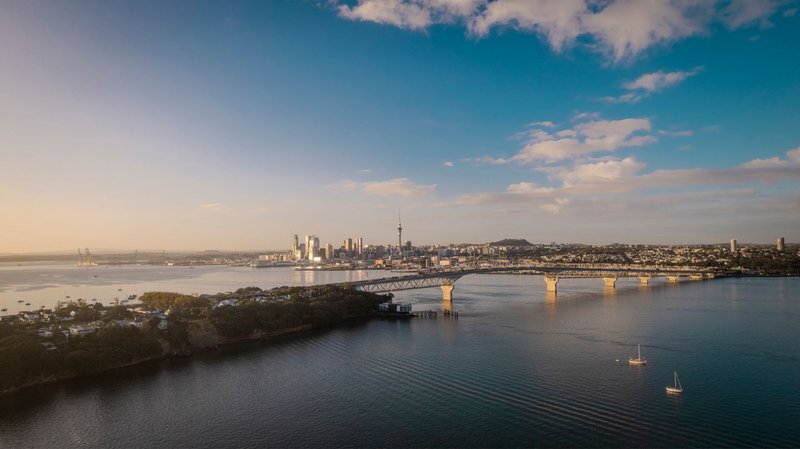
That migration comes with a language cost. Stats NZ data shows thousands of Tuvaluans now living in New Zealand, concentrated heavily in Auckland, and fluency drops noticeably in the second generation — kids raised in Auckland classrooms speak English first and Tuvaluan, if at all, at home with grandparents, a pattern reflected across many languages in New Zealand. It’s the same pattern that’s hollowed out plenty of other small Pacific languages: not a dramatic extinction, but a slow handoff where each generation retains a little less.
UNESCO’s Atlas of the World’s Languages in Danger already lists Tuvaluan as definitely endangered, the category for languages children are no longer reliably learning as a mother tongue. With a home population under 11,000 and an accelerating, government-sanctioned diaspora pipeline, Tuvaluan’s survival now depends less on what happens on the atolls and more on whether families in Auckland and Brisbane keep speaking it at the dinner table. Right now, that’s very much an open question — and one that no amount of climate resilience funding for Tuvalu itself can fully answer.