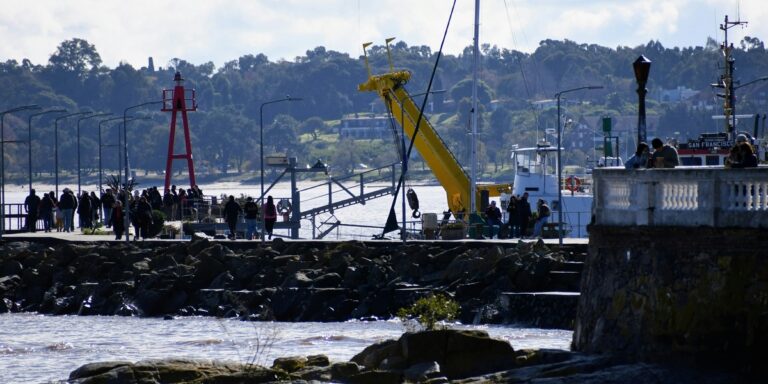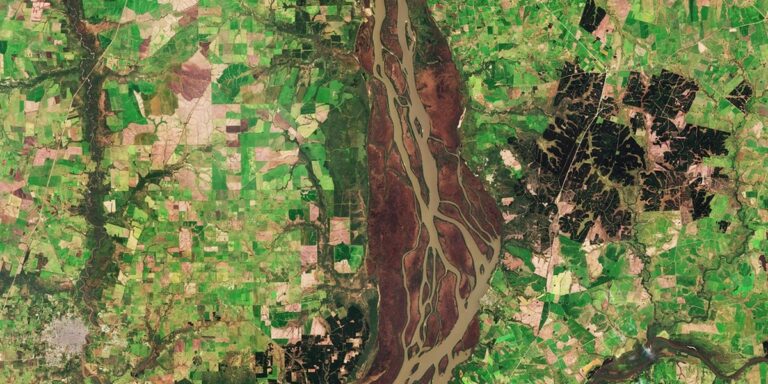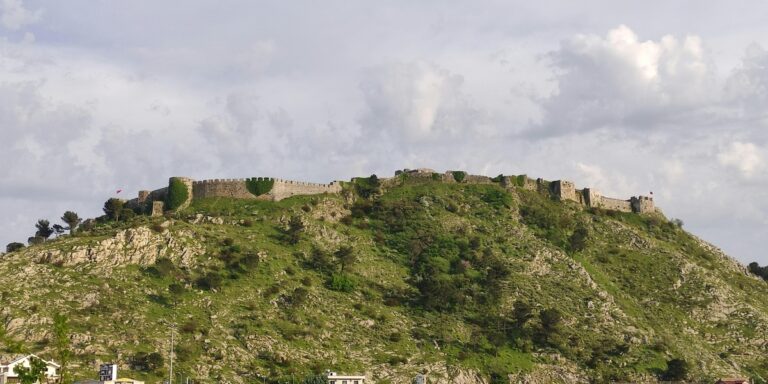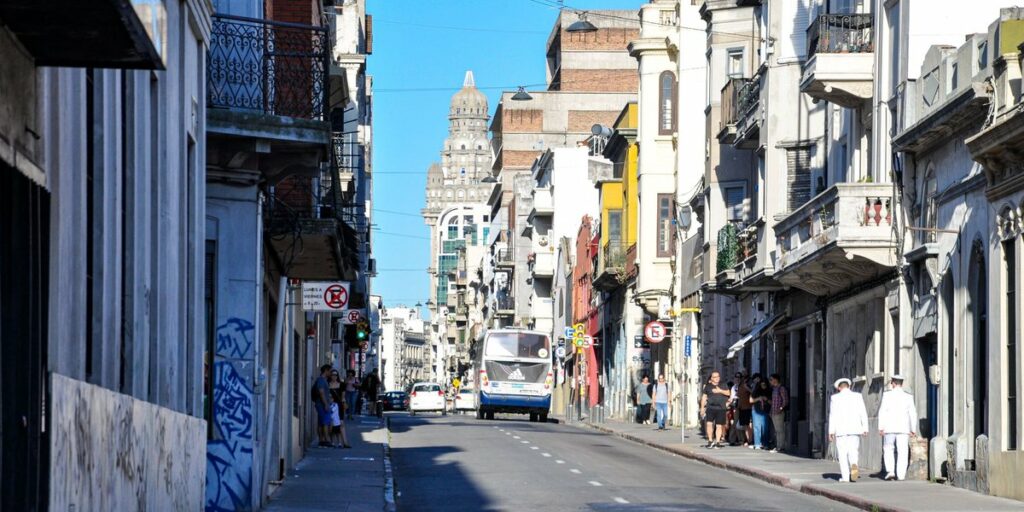
Spanish is the national language of Uruguay, spoken by nearly everyone, in the Rioplatense variety it shares with Buenos Aires: “vos” instead of “tú,” a soft “sh” sound for “ll” and “y,” and slang borrowed from Lunfardo. Along the northern border with Brazil, a Portuguese-Spanish dialect is also part of daily life.
Table of contents
- TLDR
- Spanish, the Rioplatense way
- Uruguayan Portuguese and “portuñol” on the border
- Uruguayan Sign Language
- Immigrant languages
- Indigenous languages
- Languages of Uruguay at a glance
- Do they speak English in Uruguay?
- Which language to use where
- A few Rioplatense phrases
TLDR
- Uruguay’s constitution names no official language. Spanish is the de facto national language and the language of government, schools and media.
- Uruguayan Spanish is Rioplatense: nearly identical to Argentine Spanish, noticeably different from Spain or Mexico.
- Portuguese dialects are spoken in Rivera, Artigas, Cerro Largo and other border departments. Brazilian-border towns often mix both languages.
- Uruguayan Sign Language (LSU) has been legally recognized since 2001.
- English works in Montevideo hotels and tourist zones, and much less elsewhere. Basic Spanish helps a lot.
Spanish, the Rioplatense way
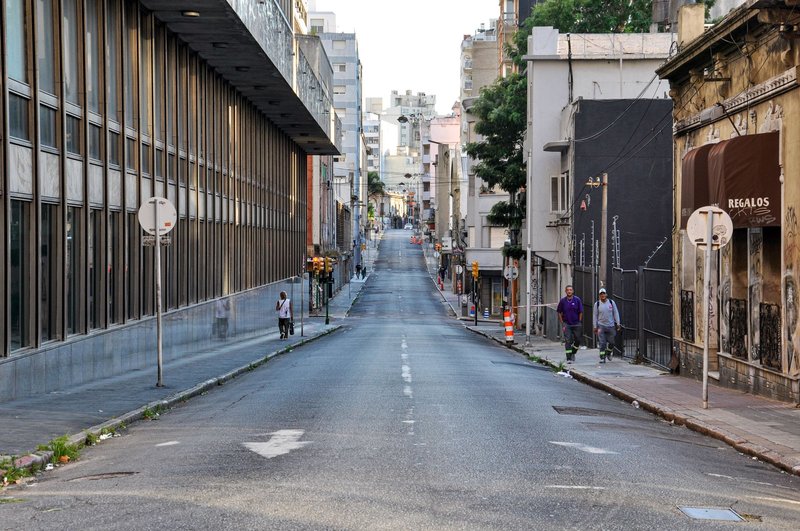
Ask what the official language of Uruguay is and the honest answer is “none, on paper.” The constitution doesn’t designate one. In practice Spanish fills the role completely: laws, courts, classrooms, newspapers and street signs all use it. The national statistics institute (INE) reports Spanish as the home language of the overwhelming majority of the roughly 3.4 million residents.
The Spanish you hear is Rioplatense, named for the Río de la Plata that Uruguay and Argentina share. Three features give it away:
- Voseo. People say “vos tenés” and “vos querés,” not “tú tienes” and “tú quieres.” In Uruguay you’ll also hear “tú” mixed with voseo verb forms, which Argentines find odd.
- Sheísmo. The “ll” and “y” sounds become “sh” or “zh.” “Calle” sounds like “CA-she,” and “yo” sounds like “sho.” Montevideo speakers lean toward the unvoiced “sh.”
- Lunfardo-flavored slang. Words born in the tango-era port neighborhoods of Buenos Aires and Montevideo, like “laburo” (work), crossed the river in both directions. Uruguay adds its own: “botija” for a kid, “ta” for “okay,” and “bo” as an all-purpose interjection.
Compared with Spain, there is no “vosotros” and no lisping “th” for “z” and “c.” Compared with Mexico, expect faster speech, “s” sounds dropped at the end of syllables, and a different vocabulary: gasoline is “nafta,” a bus is an “ómnibus,” a strawberry is a “frutilla.”
Uruguayan Portuguese and “portuñol” on the border
This is the part most guides skip. In the departments of Rivera, Artigas, Cerro Largo and parts of Rocha, Tacuarembó and Treinta y Tres, a Portuguese-based dialect has been spoken for centuries, because these lands were contested between the Spanish and Portuguese crowns long before Uruguay existed. Linguists call it Dialectos Portugueses del Uruguay (DPU). Locals often say “fronterizo,” and outsiders say “portuñol,” though that word is also used for the casual Spanish-Portuguese blend any learner produces.
The DPU is a real variety with its own grammar, close to the Portuguese of Rio Grande do Sul across the line, with many Spanish borrowings. In Rivera, the city sits against Santana do Livramento in Brazil, and the border is a row of streets and a park. You can walk from one country to the other without a checkpoint, and shopkeepers switch languages mid-sentence.
Uruguayan education law recognizes Portuguese as a mother tongue of border communities, and schools in those areas teach in both languages. Speaker numbers are estimates and vary widely by source, but the dialects reach tens of thousands of people in the north. For a researched legal background, the country’s official legal database, IMPO, publishes the education and language laws in full.
Uruguayan Sign Language
Uruguayan Sign Language (Lengua de Señas Uruguaya, LSU) is the natural language of the country’s deaf community and its own language, not a signed version of Spanish. Law 17.378 of 2001 recognized it officially, and later legislation expanded its use in education and public services, including interpreters on television broadcasts and in public institutions. If you’re traveling with deaf companions, expect LSU in Uruguay rather than American Sign Language.
Immigrant languages
Uruguay was built by immigration, mainly from Spain and Italy—one of South America’s most ethnically diverse nations. Italian arrived with so many settlers in the 19th and early 20th centuries that it shaped Rioplatense intonation, which sounds more Neapolitan than Madrid. Today Italian is mostly a heritage language, studied in schools and spoken by older families, rather than a first language.
Smaller communities kept their own tongues:
- Swiss and German speakers around Nueva Helvecia in Colonia department.
- Waldensian communities in Colonia Valdense, with Occitan roots.
- Russian-speaking Old Believers in San Javier, Río Negro.
- Armenian communities in Montevideo.
None of these is likely to affect a trip, but they are why you’ll meet Uruguayans with surnames like Tabárez, Pérez, Sosa and Bonomi in the same room.
Indigenous languages
The Charrúa, Chaná and Guaraní peoples lived in what is now Uruguay when Europeans arrived. Charrúa and Chaná are extinct as spoken languages, with only word lists and a few place names surviving. Guaraní, still alive in neighboring Paraguay, left more of a trace: the country’s own name is generally traced to Guaraní, and everyday words like “gurí” (kid, in the north) and “ñandú” (rhea) come from the same family.
Today there is no indigenous-language community of significant size in Uruguay, and the 2011 census showed a small share of people identifying with indigenous ancestry, though that ancestry no longer comes with a spoken language.
Languages of Uruguay at a glance
| Language | Status | Where spoken | Approximate speakers |
|---|---|---|---|
| Spanish (Rioplatense) | De facto national language | Nationwide | Nearly the whole population |
| Uruguayan Portuguese (DPU) | Recognized mother tongue of border communities | Rivera, Artigas, Cerro Largo and neighboring areas | Tens of thousands (estimates vary) |
| Uruguayan Sign Language (LSU) | Legally recognized (2001) | Nationwide | Deaf community and families |
| Italian, German, Russian, others | Heritage languages | Montevideo, Colonia, Río Negro | Small communities |
| English | Foreign language, taught in schools | Montevideo, Punta del Este, tourist areas | Widely studied, varying fluency |
| Charrúa, Chaná | Extinct | Nowhere | None |
Treat the numbers as approximate. The census asks about ancestry and ethnicity more often than about languages spoken at home.
Do they speak English in Uruguay?
Some, and more every year. English is taught in public schools, and Plan Ceibal, the government program that gave every public school student a laptop, also delivers remote English classes. Younger Uruguayans in Montevideo and Punta del Este usually manage basic conversation.
Outside the capital and the beach resorts, you’ll find far less English. Taxi drivers, small hotels, bus station clerks and restaurant staff in places like Tacuarembó or Salto mostly use Spanish only. A translation app and 20 phrases of Spanish cover almost everything.
Which language to use where
- Montevideo and Punta del Este: Spanish first, English as a backup at hotels and tourist restaurants.
- Colonia del Sacramento: Spanish. Many visitors arrive from Buenos Aires by ferry, so staff are used to Argentine and Brazilian guests.
- Rivera, Artigas, Chuy: Spanish and Portuguese both work. If you speak Brazilian Portuguese, use it. If you speak neither, start with Spanish and slow down.
- Rural interior: Spanish only. Speak slowly and expect warm patience.
A few Rioplatense phrases
| Phrase | Pronunciation | Meaning |
|---|---|---|
| ¿Qué hacés? | keh ah-SEHS | What’s up? (voseo) |
| Ta | tah | Okay, got it |
| Bo | boh | Hey, man (interjection) |
| Botija | boh-TEE-hah | Kid |
| Nafta | NAHF-tah | Gasoline |
| Un mate, por favor | oon MAH-teh, por fah-VOR | A mate, please |
| Calle | CA-sheh | Street (with the “sh” sound) |
Say “vos” and “sho” with confidence. Uruguayans will understand you anyway, and they’ll appreciate the effort.