Contents
- TLDR
- Uzbekistan population by ethnicity
- Why the numbers differ between sources
- The main ethnic groups in Uzbekistan
- How Soviet deportations shaped who lives where
- Ethnic groups by region
- Languages spoken in Uzbekistan
- FAQ
TLDR
Uzbeks are roughly 80 to 84% of the population of about 36 million. The next largest groups, in rough order, are Tajiks, Kazakhs, Karakalpaks, Russians, Tatars, Koreans and Kyrgyz. Every figure below is an estimate. Uzbekistan has not published detailed ethnic census results in decades, and the Tajik share in particular is disputed.
Uzbekistan population by ethnicity
The most widely quoted breakdown comes from the CIA World Factbook, which lists a 2017 estimate. The 1989 column is the last Soviet census, included for comparison.
| Group | Share (2017 est.) | Share (1989 census) |
|---|---|---|
| Uzbek | 83.8% | about 71% |
| Tajik | 4.8% | about 5% |
| Kazakh | 2.5% | about 4% |
| Russian | 2.3% | about 8% |
| Karakalpak | 2.2% | about 2% |
| Tatar | 1.5% | about 2% |
| Other (Korean, Kyrgyz, Turkmen, Uyghur, Armenian and more) | 2.9% | remainder |
Read the table by direction rather than by decimal. The Uzbek share has risen by more than ten points since 1989, and the Russian share has fallen by about three quarters. Both changes have the same cause: emigration of Russians and other Slavs after independence in 1991, plus a higher birth rate among Uzbeks.
Why the numbers differ between sources
Search for the Uzbek share and you’ll find 75.5%, “about 80%” and 83.8%, all stated with confidence. They differ because they come from different years and different methods.
- Old base data. Many pages still lean on the 1989 census and adjust it by guesswork.
- Rounding and merging. Some sources fold smaller groups into “other”; others count Uzbeks and Sarts or Uzbeks and Kipchaks together.
- Self-identification. Ethnicity is a choice recorded on a form, and in a state that promotes a single national identity, that choice isn’t always neutral.
Treat any single number as a range. Uzbeks at 80 to 84% is a safe summary.
The main ethnic groups in Uzbekistan
Uzbeks
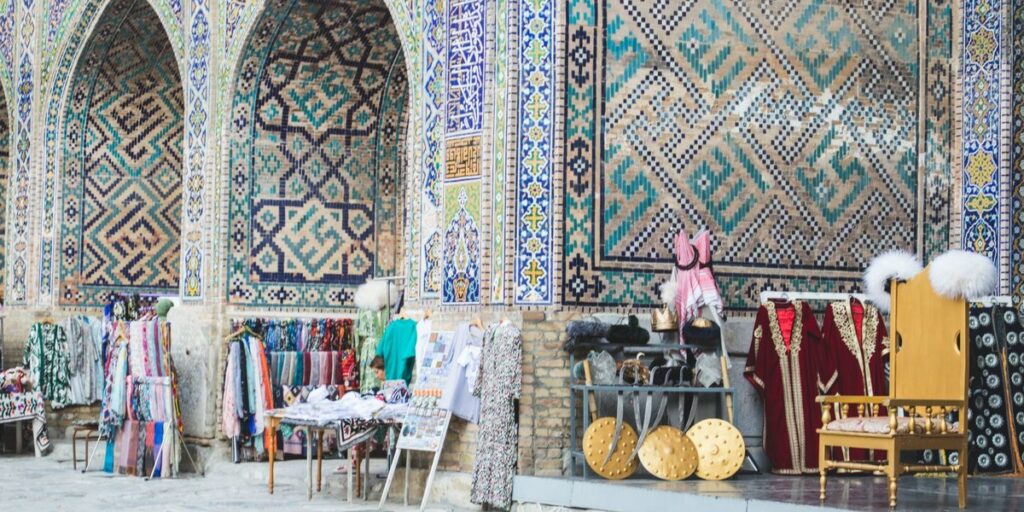
A Turkic people, overwhelmingly Sunni Muslim of the Hanafi school, and the majority in nearly every region. Their language, Uzbek, belongs to the Karluk branch of Turkic languages. The group is the product of centuries of mixing between Turkic nomads and the older Persian-speaking settled population, which is why Uzbek culture borrows so heavily from Persian: the food, the poetry, the architecture.
Tajiks
Tajiks speak a form of Persian and are the second-largest group on paper at roughly 5%. That figure is the most contested number in Uzbek demography. Outside estimates run far higher, and some researchers put the true share at 20% or more, because many people in Samarkand and Bukhara speak Tajik at home but are registered as Uzbek. The Tajik cities of Samarkand and Bukhara were historic Persian-speaking centres, and the question of who counts as what there has been politically sensitive since the Soviet border-drawing of the 1920s. Minority Rights Group covers the dispute in detail. For how Tajiks are counted across the border, see the complete list of Tajikistan ethnic groups.
Kazakhs
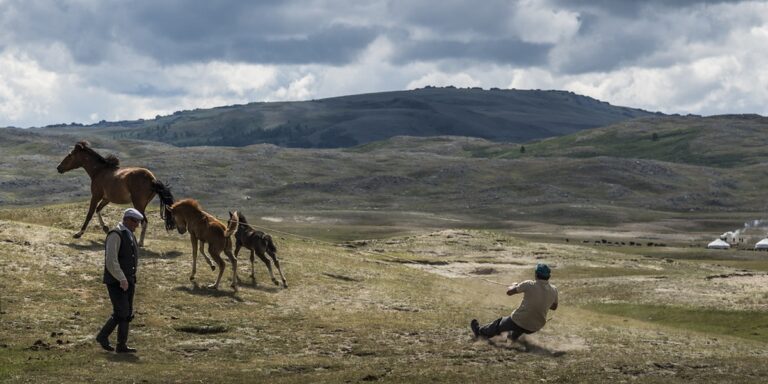
Around 2.5%, mostly in the north and west near the Kazakhstan border and in the steppe zones around Karakalpakstan and the Syr Darya. Language, religion and nomadic heritage are close to the Karakalpaks.
Karakalpaks
A Turkic people of the Aral Sea region with their own language, closer to Kazakh than to Uzbek. They number roughly 700,000 to 800,000 people, with most living in the autonomous republic of Karakalpakstan. The Aral Sea disaster hit them hardest: the fishing towns that once stood on the shore are now tens of kilometres from water.
Russians and other Slavs
Russians were about 8% of the population in 1989 and now sit near 2%. They are concentrated in Tashkent and other cities, and Russian remains the working language of much of the urban professional class there. Many arrived during WWII evacuations or as Soviet industrial workers and specialists; most who wanted to leave have already left.
Tatars
Around 1.5%. Volga Tatars came largely as Soviet-era workers and evacuees. Crimean Tatars, deported to Uzbekistan in 1944, are counted separately in some sources and together with Tatars in others, which is one more reason totals vary.
Koreans (Koryo-saram)
Roughly 175,000 to 200,000 people. Their story is one of the best documented in Central Asia: Stalin deported about 170,000 Koreans from the Russian Far East to Central Asia in 1937. Many settled in Uzbekistan, became collective farm leaders and later urban professionals, and today most speak Russian as a first language, not Korean. Tashkent has the largest community.
Kyrgyz and others
Kyrgyz live mainly in the eastern Ferghana Valley on the border with Kyrgyzstan. Smaller groups include Turkmen in the Khorezm and Karakalpakstan border areas, Uyghurs, Armenians, Greeks, Germans, Bukharan Jews (most of whom emigrated, mainly to Israel and the US), and Meskhetian Turks.
How Soviet deportations shaped who lives where
Many minorities in Uzbekistan aren’t there because they migrated. They were sent.
- Koreans, 1937. Moved from the Soviet Far East over suspicions of Japanese loyalty.
- Crimean Tatars, 1944. Deported from Crimea in May 1944. Most of the survivors were settled in Uzbekistan, and many remained after the ban on returning was lifted.
- Meskhetian Turks, 1944. Deported from Georgia to Central Asia. After violence in the Ferghana Valley in 1989, tens of thousands left Uzbekistan.
- WWII evacuees. Tashkent took in factory workers, scientists and families from the western Soviet Union. Many stayed, which built up the Russian-speaking population of the capital.
Add the borders drawn in the 1920s and you get a country whose ethnic map doesn’t match its political one. Samarkand’s Persian-speaking population ended up in Uzbekistan, while Tajikistan got the mountains.
Ethnic groups by region
Tashkent. The most mixed area. Uzbeks form the majority, but Russians, Tatars, Koreans and Kazakhs all live here in visible numbers.
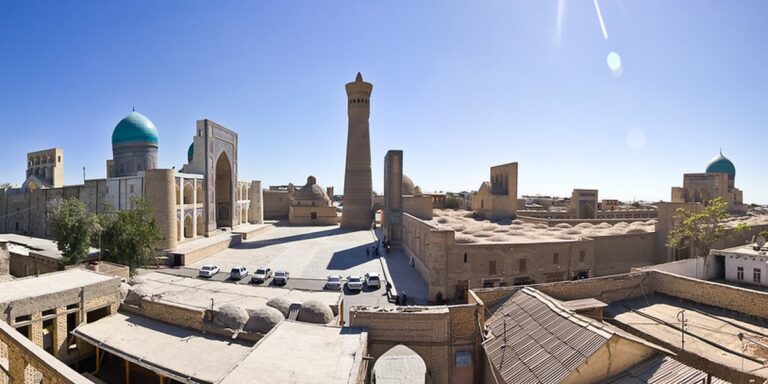
Samarkand and Bukhara. The heartland of Tajik-speaking Uzbekistan. Walk through the old streets of Samarkand, a UNESCO World Heritage city, and you will hear Uzbek and Tajik side by side, often in the same shop.
Ferghana Valley. The most densely populated part of the country, shared with Kyrgyzstan and Tajikistan. Uzbeks dominate, with Tajik and Kyrgyz communities, and borders here cut through villages. Tensions have flared in the past.
Karakalpakstan. An autonomous republic in the northwest that covers around 40% of the country’s area and has about 2 million people. Karakalpaks, Uzbeks and Kazakhs live here in roughly comparable numbers. The constitution grants Karakalpakstan the right to secede on paper, and in July 2022 a proposed amendment to remove that clause triggered deadly protests in Nukus. The government dropped the proposal.
Khorezm and the south. Uzbeks form most of the population, with Turkmen communities in the west and Tajik and Uzbek-Tajik mixed populations in Surkhandarya. The Turkmenistan ethnic groups guide covers the Turkmen population in Turkmenistan itself.
Languages spoken in Uzbekistan
Uzbek is the state language and is spoken by roughly 85% of the population or more. Russian is used for business and in the cities. Tajik is widely spoken in Samarkand, Bukhara and Surkhandarya. Karakalpak is co-official in Karakalpakstan. Uzbek itself has been moving from Cyrillic to a Latin script since the 1990s, and you’ll see both on signs. For speaker numbers and main regions for every language, see the complete list of languages spoken in Uzbekistan.
For travelers, English is limited outside the main tourist sites. Russian remains the most useful second language, and a few Uzbek phrases get an immediate response.
FAQ
What is the largest ethnic group in Uzbekistan? Uzbeks, at roughly 80 to 84% of the population.
What is the second-largest group? Officially Tajiks, at about 5%. Independent estimates are much higher.
How many Koreans live in Uzbekistan? Roughly 175,000 to 200,000, mostly descendants of the 1937 deportation, living mainly in Tashkent.
Are Karakalpaks the same as Uzbeks? No. They are a separate Turkic people with their own language, history and autonomous republic, although the two groups share religion and many customs.
Why did the Russian population drop? Russians left in large numbers after the Soviet Union dissolved in 1991, driven by economic uncertainty, the rise of Uzbek as the sole state language and better prospects in Russia.