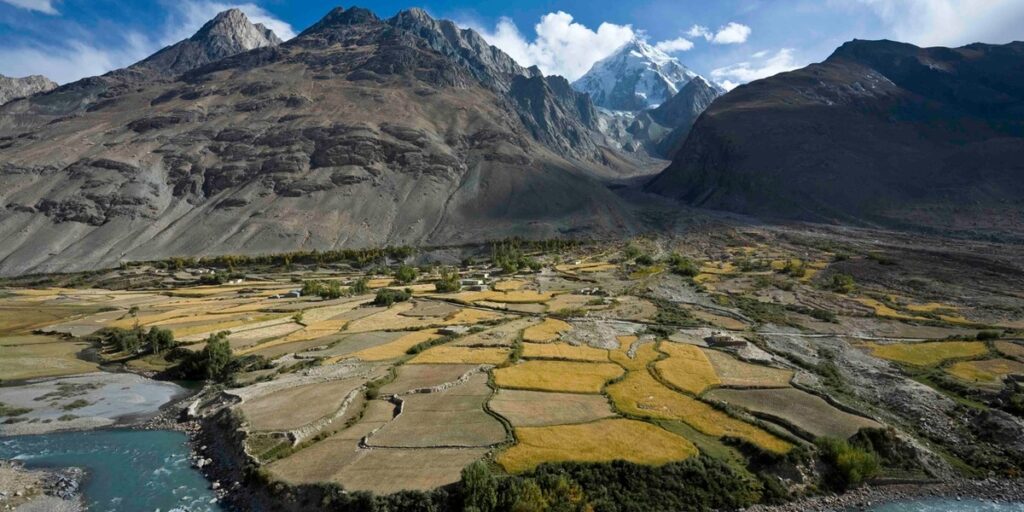
Tajikistan sits at the heart of Central Asia, a mountainous crossroads where languages, histories and trade routes have layered communities over millennia. From urban centers to remote valleys, the country’s social fabric reflects centuries of migration, empire and local adaptation.
There are 24 Tajikistan Ethnic Groups, ranging from Armenian to Yazgulyam. For each group we list Population % (census year),Primary language(s),Main region(s) — you’ll find below.
How current and reliable are the population figures for these groups?
Census data in Tajikistan gives the best official snapshot, but coverage and self-identification can shift over time; where possible the list notes the census year for Population % and flags groups with limited or outdated counts so you can weigh reliability.
Do these groups represent distinct languages or regional identities?
Some are primarily language-based (e.g., Pamiri tongues), others are regional or religious communities; the Primary language(s) column and Main region(s) entry clarify whether a group is defined by speech, geography, or both.
Tajikistan Ethnic Groups
| Group | Population % (census year) | Primary language(s) | Main region(s) |
|---|---|---|---|
| Tajik | 84.30% (2010) | Tajik (Persian variety), Russian widely used | Nationwide; especially Khatlon, Sughd, Districts of Republican Subordination |
| Uzbek | 13.80% (2010) | Uzbek, Tajik, Russian | Sughd (northern districts), border areas with Uzbekistan |
| Russian | 0.52% (2010) | Russian | Dushanbe, other urban centers, Sughd |
| Kyrgyz | 0.26% (2010) | Kyrgyz, Russian | Eastern border areas (e.g., parts of Sughd) |
| Tatar | 0.12% (2010) | Tatar, Russian | Urban centers such as Dushanbe, Khujand |
| Turkmen | 0.03% (2010) | Turkmen, Russian | Small communities, mainly urban |
| Ukrainian | 0.04% (2010) | Ukrainian, Russian | Urban areas, formerly industrial towns |
| Kazakh | 0.11% (2010) | Kazakh, Russian | Border areas and scattered villages |
| Armenian | 0.06% (2010) | Armenian, Russian | Dushanbe and other cities |
| Azerbaijani | 0.03% (2010) | Azerbaijani, Russian, Tajik | Urban communities, trade centers |
| Jewish | 0.01% (2010) | Various (Russian, Judeo-Tajik historically) | Dushanbe historically; now very small |
| Korean (Koryo‑saram) | 0.03% (2010) | Korean, Russian | Urban areas |
| German | 0.01% (2010) | German, Russian | Mostly urban; historically scattered |
| Roma (Gypsies) | 0.03% (2010) | Romani, Russian, Tajik | Scattered settlements near towns |
| Uyghur | Included in ‘Other’ 1.39% (2010) | Uyghur, Chinese dialects, Russian | Small urban pockets, trade areas |
| Pamiri (umbrella) | Included in ‘Tajik’ 84.30% (2010) | Eastern Iranian languages (e.g., Shughni, Wakhi), Tajik, Russian | Gorno-Badakhshan Autonomous Region (Pamir) |
| Shughni | Included in ‘Tajik’ 84.30% (2010) | Shughni (Eastern Iranian), Tajik, Russian | Pamir valleys in Gorno-Badakhshan |
| Rushani | Included in ‘Tajik’ 84.30% (2010) | Rushani (Eastern Iranian), Tajik | Rushon and surrounding Pamir areas |
| Wakhi | Included in ‘Tajik’ 84.30% (2010) | Wakhi (Eastern Iranian), Tajik | Upper Bartang, Wakhan corridor (Pamir) |
| Ishkashimi | Included in ‘Tajik’ 84.30% (2010) | Ishkashimi (Eastern Iranian), Tajik | Ishkashim area, Pamir |
| Yazgulyam | Included in ‘Tajik’ 84.30% (2010) | Yazgulyam (Eastern Iranian), Tajik | Yazgulyam River valley, Gorno-Badakhshan |
| Bartangi | Included in ‘Tajik’ 84.30% (2010) | Bartangi (Eastern Iranian), Tajik | Bartang Valley, Pamir |
| Munji | Included in ‘Tajik’ 84.30% (2010) | Munji (Eastern Iranian), Tajik | Munjand/upper regions near Afghan border |
| Yaghnobi | Included in ‘Tajik’ 84.30% (2010) | Yaghnobi (descendant of Sogdian), Tajik | Yaghnob Valley, Sughd region |
Images and Descriptions
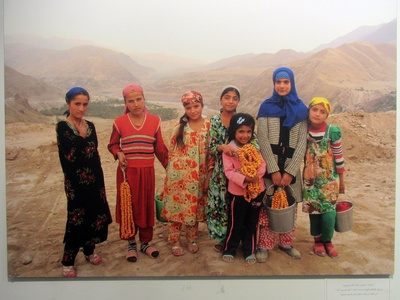
Tajik
The majority ethnic group of Tajikistan speaking Tajik (a Persian variety); predominantly Sunni Muslim. Central to national identity, literature, and politics; many urban Tajiks are bilingual in Russian.
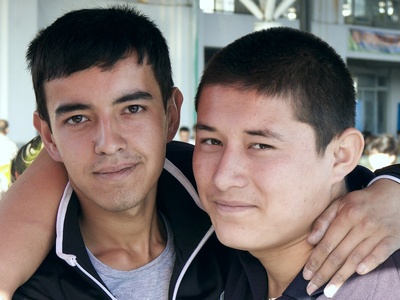
Uzbek
A Turkic-speaking minority concentrated in northern and border regions. Mostly Sunni Muslim, with strong cultural and family ties across the Uzbekistan border; important in local trade and agriculture.

Russian
A Slavic minority largely urban and Russian-speaking. Historically influential in administration, education, and industry; numbers declined after Soviet collapse. Mostly Orthodox Christian.
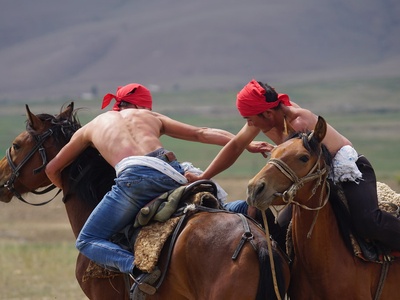
Kyrgyz
A Turkic-speaking group sharing language and cultural ties with Kyrgyzstan; largely Sunni Muslim and found mainly in northeastern highland and border communities.
Tatar
A small Turkic-speaking community, often Urban and Russian-educated. Historically merchants, craftsmen, and professionals; many are Muslim but culturally Russified.
Turkmen
A very small Turkic minority with roots linking to Turkmenistan; mostly Sunni Muslim and often bilingual in Russian or Tajik.
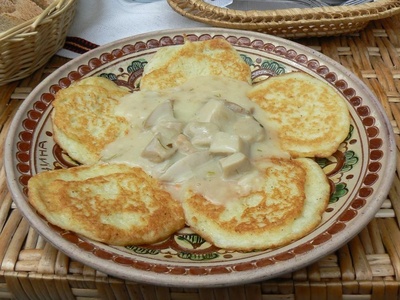
Ukrainian
A tiny Slavic group present since Soviet times; Russian commonly used in daily life. Many left after the Soviet collapse; those remaining are largely Orthodox Christian.
Kazakh
A small Turkic-speaking community with pastoral and agricultural traditions; Sunni Muslim and culturally close to Kazakhstan.
Armenian
A small Christian minority (Armenian Apostolic Church) with historical merchant and artisan presence in urban centers; numbers declined after independence.
Azerbaijani
A small Turkic-speaking community, mostly Shi’a and Sunni Muslim depending on background; active in commerce and culturally linked to Azerbaijan.
Jewish
A tiny remnant of historic Bukharan and Ashkenazi Jewish communities; most emigrated after the Soviet collapse. Those who remain maintain Jewish religious and cultural traditions.
Korean (Koryo‑saram)
Descendants of Koreans deported in the Soviet era. Small community engaged in commerce and industry; culturally integrated but preserving Korean heritage and language among elders.
German
Very small remnant of Volga and Soviet-era German communities; many emigrated in the 1990s. Remaining individuals often Russian-speaking and Christian.
Roma (Gypsies)
A small itinerant/traditional community with distinctive cultural practices, languages, and music; generally Sunni Muslim or secular, with close-knit family networks.
Uyghur
A small Turkic-speaking community with cultural and family ties to Xinjiang; primarily Muslim and involved historically in trade and crafts.
Pamiri (umbrella)
Collective name for several Eastern Iranian mountain peoples of the Pamirs with distinct languages, Ismaili Shi’a faith, and strong local cultural traditions; often treated separately by scholars though frequently recorded as “Tajik” in census.
Shughni
One of the largest Pamiri peoples speaking Shughni, primarily Ismaili Shi’a Muslims. Notable for unique oral traditions, mountaineering livelihood, and distinct material culture.
Rushani
A Pamiri group with its own Eastern Iranian language and Ismaili Shi’a practice. Known for mountain agriculture and strong local clan ties.
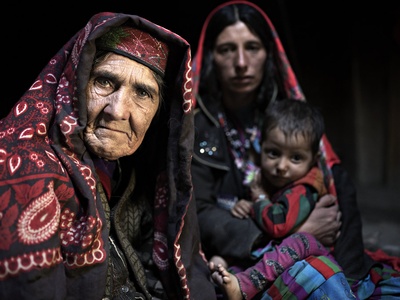
Wakhi
Speakers of Wakhi living in high valleys; historically semi-nomadic, Ismaili or Sunni depending on area, with cross-border links to Afghanistan and Pakistan.
Ishkashimi
A small Pamiri people with a distinct Eastern Iranian language; traditionally pastoral and agrarian, mostly Ismaili Shi’a, culturally tied to local highland life.
Yazgulyam
A very small, linguistically distinct mountain people speaking Yazgulyam; Ismaili Shi’a, with unique traditions and heavy reliance on valley agriculture.
Bartangi
Small highland group speaking Bartangi; Ismaili Shi’a community with traditional mountain lifeways, distinct dialect and folklore.
Munji
A tiny Eastern Iranian-speaking group historically linked to the Munjan valley in Afghanistan and Tajik borderlands; Ismaili or Sunni variants and distinct linguistic heritage.
Yaghnobi
Descendants of ancient Sogdians speaking Yaghnobi, a living East Iranian language. Sunni Muslim and known for preserving pre-Islamic cultural elements and distinct agrarian traditions.