The best winter jacket brands in Europe come from Norway (Helly Hansen, Norrøna, Bergans), Sweden (Fjällräven, Haglöfs, Didriksons), Switzerland (Mammut), Germany (Vaude, Ortovox, Jack Wolfskin), Italy (Moncler, Save The Duck, Colmar) and Britain (Rab, Barbour). The right one depends on where the jacket will be worn. A 6 °C drizzle in Amsterdam and a −13 °C night in Rovaniemi need different coats.
This guide covers 25 European brands by country, which of them are still European-owned, one or two jackets from the brands sold on Amazon, a January climate table for 14 cities and the tax-free shopping rules for visitors who buy their coat in Europe.
Best winter jacket brands in Europe: the short list
| If you need | Brand to look at | Jacket in this guide |
|---|---|---|
| A coat for wet, mild cities (London, Paris, Amsterdam) | Rains (Denmark), Barbour (UK) | Rains Long Jacket, Barbour Ashby |
| Warmth for Lapland, northern Norway or an Alpine resort | Fjällräven (Sweden), Helly Hansen (Norway) | Fjällräven Kiruna, Helly Hansen Tromsoe |
| One insulated jacket for a mixed trip | Mammut (Switzerland) | Mammut Albula |
| A down layer that packs small | Rab (UK) | Rab Microlight Alpine |
| No animal down | Save The Duck (Italy) | Save The Duck Isabel |
| A budget jacket | Decathlon (France) | Sold in Decathlon stores, not on Amazon |
| Luxury down | Moncler, Herno (Italy) | Sold through the brands’ own stores |
Which European winter jacket brands are still European-owned?
A Norwegian or Swedish name on the label no longer means a Norwegian or Swedish owner. Five of the best-known European outdoor clothing brands have been bought by American or Chinese groups, three of them since 2023, and a sale of a sixth, Mammut, is pending:
| Brand | Founded | Owner today |
|---|---|---|
| Helly Hansen | Oslo, Norway, 1877 | Kontoor Brands (US), since June 2025 |
| Haglöfs | Sweden, 1914 | LionRock Capital (Hong Kong), since December 2023 |
| Peak Performance | Åre, Sweden, 1986 | Amer Sports, controlled by an Anta-led consortium (China) |
| Jack Wolfskin | Frankfurt, Germany, 1981 | Anta Sports (China), since May 2025 |
| Napapijri | Aosta, Italy, 1987 | VF Corporation (US), since 2004 |
| Mammut | Switzerland, 1862 | Jacobs Capital (UK); a sale to CPE (China) was signed in July 2026 |
Sources: Kontoor Brands, Amer Sports, Napapijri, Mammut.
The rest of the brands in this guide are still owned in Europe. Several are family firms: Norrøna by the fourth generation of the Jørgensen family, Vaude by the von Dewitz family, Schöffel since 1804, Colmar by the Colombo family in Monza, Herno by the Marenzi family and Barbour by the fifth generation of the Barbour family. Fjällräven belongs to the Swedish group Fenix Outdoor. Salewa belongs to the Oberalp Group in Bolzano, and Ortovox to Germany’s Schwan-Stabilo.
Norwegian and Swedish winter jacket brands
Scandinavian city jackets are built for wet snow and short days: most are waterproof or water-repellent, and many carry reflective details.
Helly Hansen (Norway, 1877) started in sailing gear and later moved into ski and workwear. Its city parkas use synthetic insulation, which keeps working in sleet better than down does.
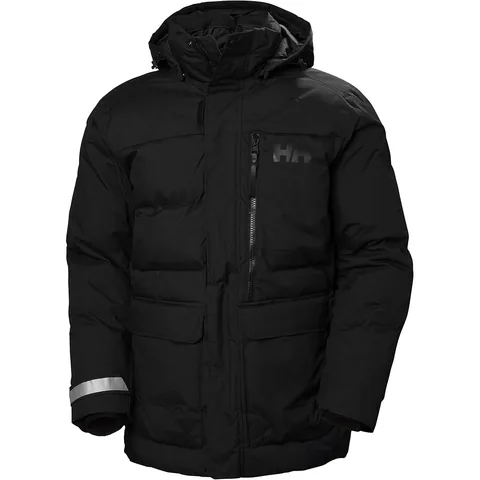
Helly Hansen Tromsoe (men's)Mid-range
A hooded insulated jacket from the Norwegian sailing and ski brand, built for wet, windy Oslo and Bergen winters.
- Insulated, waterproof, windproof and breathable, with a hood
- Zippered waist and chest pockets; about 35 in hem length
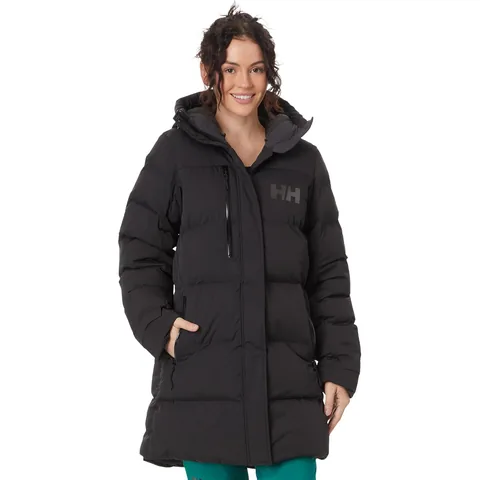
Helly Hansen Adore Puffy Parka (women's)Premium
A synthetic-fill parka for cold, dark city winters in Oslo, Stockholm or Copenhagen, with fold-up reflectives for short days.
- Heavy synthetic insulation with a PFC-free water-repellent finish
- Fold-up reflectives, adjustable hood, YKK zippers; regular fit
Norrøna (Norway, 1929) made the trollveggen jacket in 1979, the first Gore-Tex jacket made in Europe (Norrøna). Its lofoten and lyngen lines are ski and mountain shells. Bergans (Norway, 1908) began with the external-frame backpack and now makes down jackets and shells. Neither has an official Amazon listing in the US; both sell through their own web stores.
Fjällräven (Sweden, 1960) builds most of its winter jackets from G-1000, a waxable polyester and cotton fabric, and fills its parkas with PrimaLoft synthetic insulation.
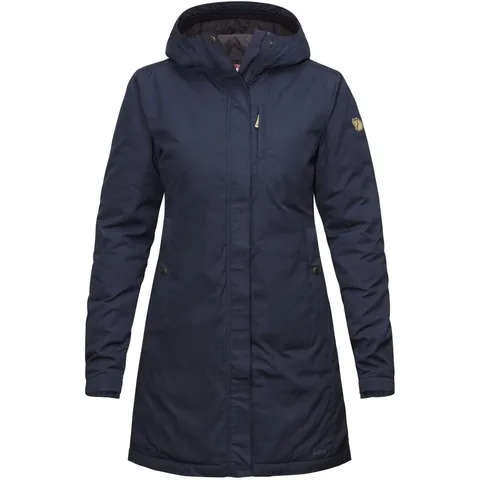
Fjallraven Kiruna Padded Parka (women's)Premium
A padded G-1000 parka from the Swedish outdoor brand for steady cold in Stockholm, Oslo or the Lapland towns.
- G-1000 Original shell: 65% recycled polyester, 35% organic cotton
- PrimaLoft Black padding, fixed adjustable hood, two-way zipper
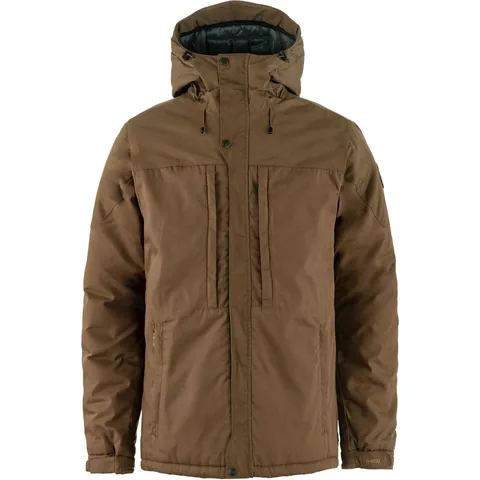
Fjallraven Skogso Padded Jacket (men's)Premium
A hip-length padded jacket for real cold from Swedish Lapland to the Norwegian coast, and still plain enough for city streets.
- G-1000 jacket filled with PrimaLoft Black Insulation RISE
- Adjustable hood, glove-friendly zip pullers, four pockets
Haglöfs (Sweden, 1914) is known for its L.I.M (“less is more”) lightweight down and Gore-Tex jackets. Didriksons (Sweden, 1913) started on the west coast in Grundsund and still focuses on waterproof and windproof coats, and children’s winter jackets. Peak Performance (Sweden, 1986) came out of the ski town of Åre; its Helium down jacket dates from 2008.
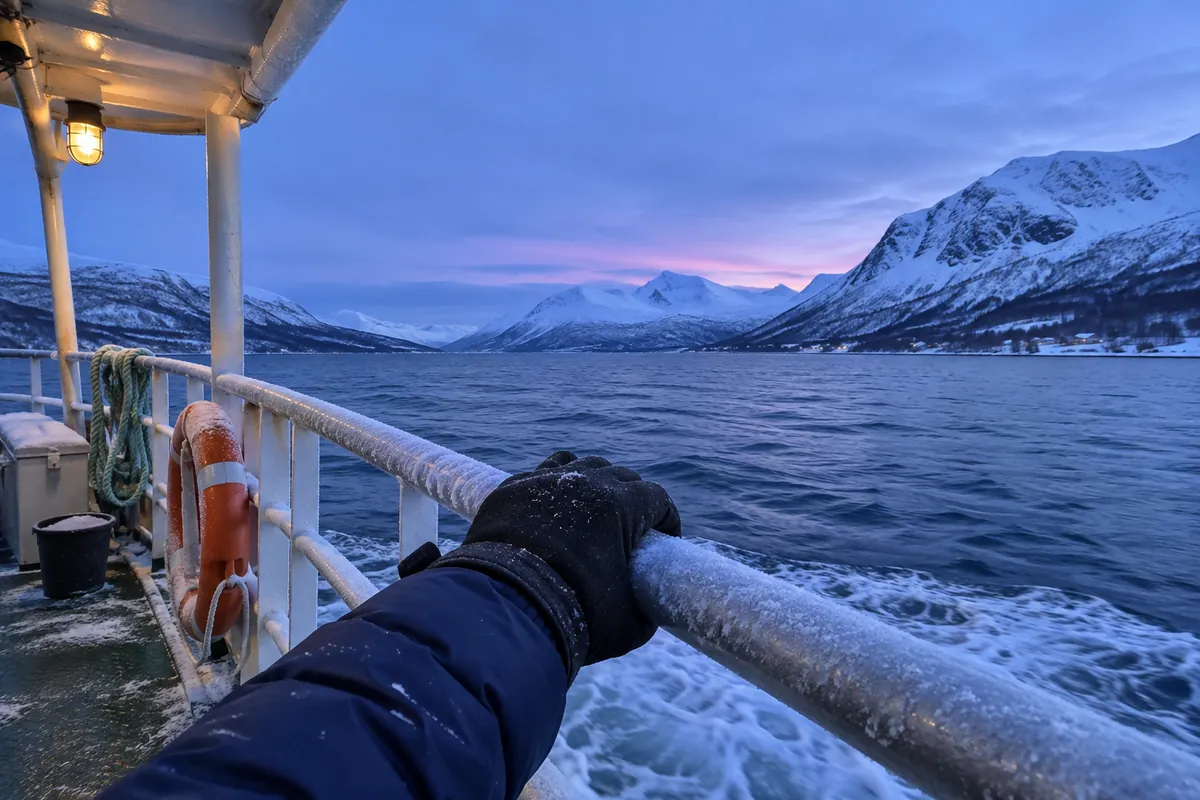
In January 2013 I flew from Milan to Tromsø for a northern lights story wearing the wool coat I wore to the office. On the fjord boat the crew handed out padded overalls before we left the harbor, and I kept mine on for the whole four hours. A city coat that is fine in Milan stops working below freezing in wind on open water.
Alpine brands from Switzerland, Germany and Italy
Mammut (Switzerland, 1862) began as a rope maker in Dintikon and now makes mountaineering shells and insulated jackets. The Albula is a synthetic puffy that keeps its warmth when damp.
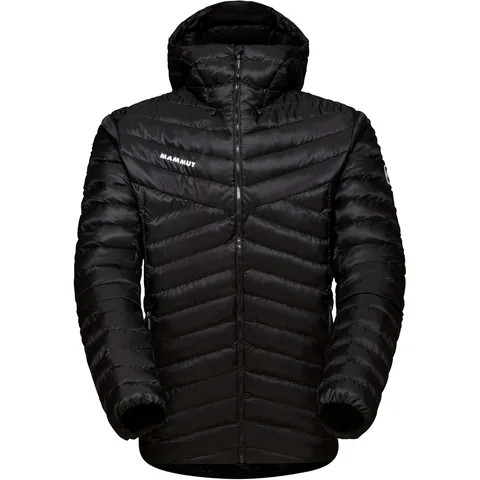
Mammut Albula Insulated Hooded Jacket (men's)Mid-range
A synthetic puffy from the Swiss alpine brand for cold Alpine town winters and commutes, and it keeps insulating when damp.
- Recycled synthetic fill insulates even when wet
- Water-repellent finish, adjustable hood, two zip pockets
Ortovox (Germany, 1980) started with avalanche transceivers and now makes merino layers and jackets insulated with Swisswool, wool from Swiss sheep (Ortovox). A merino base layer is the simplest way to make any coat on this list warmer.
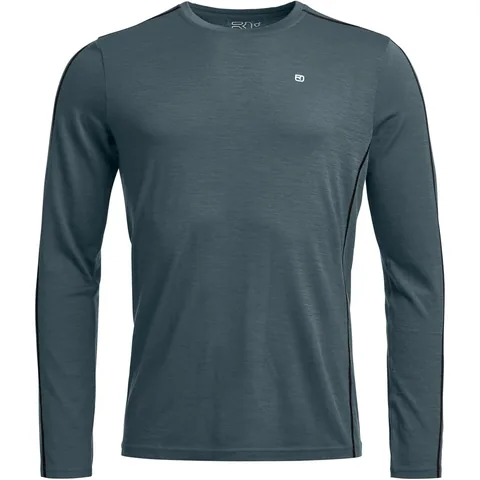
Ortovox 185 Rock'n'Wool Long Sleeve (men's)Budget
A merino base layer from the German mountain brand to wear under any coat, warm on cold Alpine mornings and dry on train rides.
- 100% merino wool long-sleeve base layer
- Machine washable; about 8.8 oz in size medium
Vaude (Germany, 1974) is a family company that still makes part of its range in Tettnang, near Lake Constance, and reports that it cut emissions 51% against 2019 (Vaude). Jack Wolfskin (Germany, 1981) is best known for 3-in-1 jackets with a Texapore waterproof outer and a zip-in fleece.
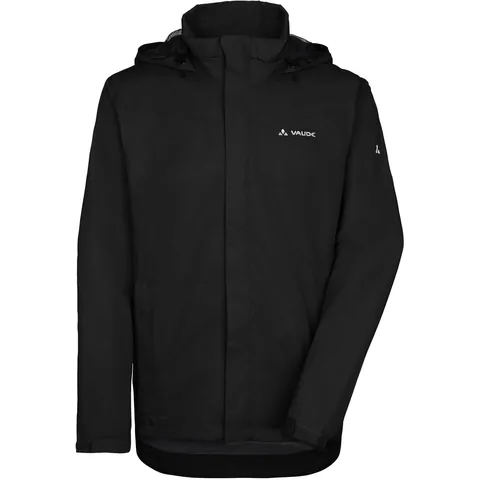 VAUDE Escape Bikeight Rain ShellBudgetCheck price on Amazon
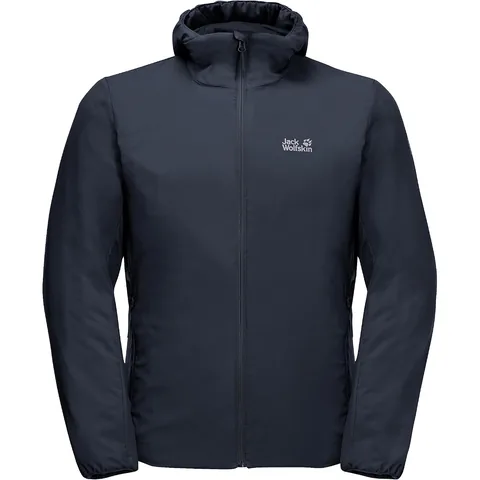 Jack Wolfskin Atmos Softshell (men's)Mid-rangeCheck price on Amazon
Schöffel (Germany, 1804) makes ski, insulated and down jackets from Schwabmünchen in Bavaria. Salewa was founded in Munich in 1935 and has been based in Bolzano, South Tyrol, under the Oberalp Group since 1990; its waterproof shells go over a down or fleece layer.
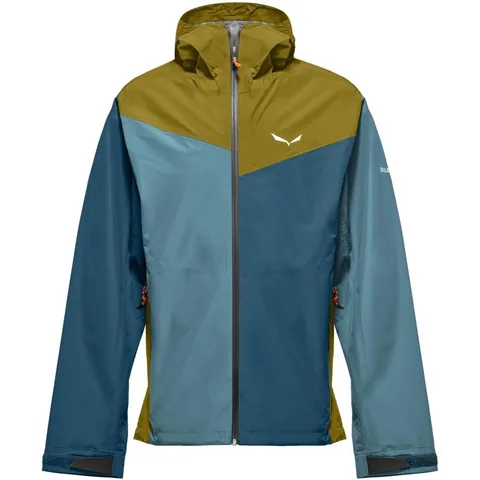
Salewa Puez Aqua 4 PTX Shell (men's)Budget
A packable waterproof shell from the Bolzano-based brand, a storm layer for the Dolomites and Alps that sits over insulation.
- Powertex 2.5-layer shell, 10,000 mm waterproof rating, sealed seams
- Breathability of 10,000 g/m2/24h; waterproof front zip
Colmar (Italy, 1923) has made ski jackets in Monza since the 1920s, including the stretch ski jacket made for the Italian champion Zeno Colò (Colmar).
Italian down jacket brands: Moncler, Herno, Save The Duck and Napapijri
Italian winter jackets are city coats first. In Milan, where I worked for ten years, a dark quilted down jacket is close to a winter uniform from December to February.
Moncler was founded in 1952 in Monestier-de-Clermont, near Grenoble in France, as a maker of mountain sportswear, and is now a Milan company listed on the Italian stock exchange. Herno (Italy, 1948) began with raincoats and now makes down jackets and technical city outerwear. Both sell through their own stores and selected department stores, at the luxury end of the market.
Save The Duck (Italy, 2012) uses no animal down. Its jackets are filled with PLUMTECH, a synthetic insulation, and the company has been a certified B Corp since 2019 (B Lab).
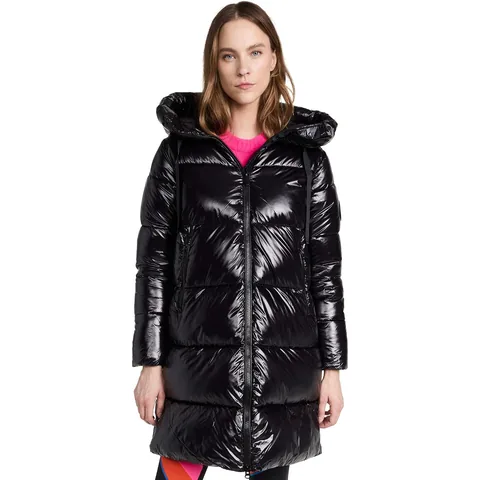
Save The Duck Isabel Jacket (women's)Premium
A glossy quilted puffer from the Italian brand that works for winter evenings in Milan, Paris or Vienna.
- Quilted technical satin shell with 100% polyester fill
- Wind resistant, water repellent; hood with grosgrain ties, lined
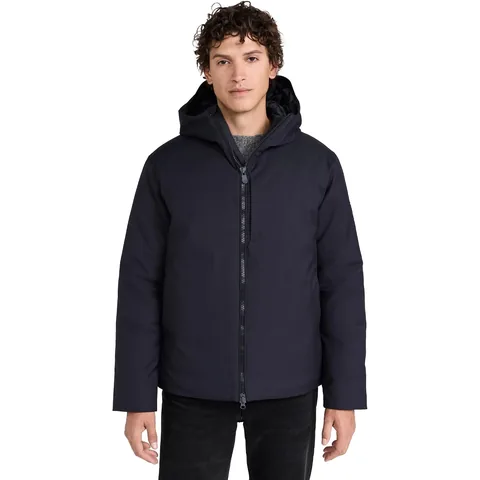 Save The Duck Barnaby Jacket (men's)Mid-rangeCheck price on Amazon
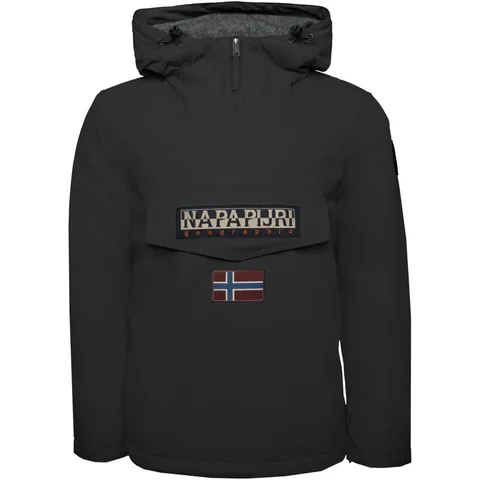 Napapijri Rainforest Winter Jacket (men's)Mid-rangeCheck price on Amazon
Napapijri (Italy, 1987) comes from Aosta, below the Mont Blanc massif. Its Skidoo anorak dates from 1990, and its Rainforest pull-on jacket is a roomy cold-weather city coat.
British, Danish, French and Spanish brands
Rab (UK, 1981) started with hand-made sleeping bags in Sheffield and is still best known for down. Its parent company, Equip Outdoor Technologies, became a certified B Corp in March 2026. The Microlight Alpine uses 700-fill water-resistant down and packs small, which makes it a good travel jacket for a dry cold trip or a warm layer under a shell.
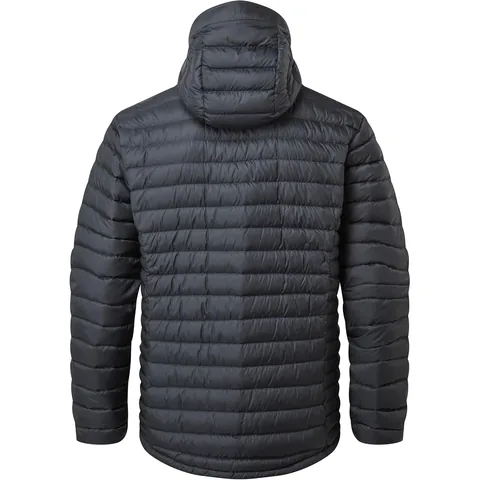 Rab Microlight Alpine Down Jacket (men's)Mid-rangeCheck price on Amazon
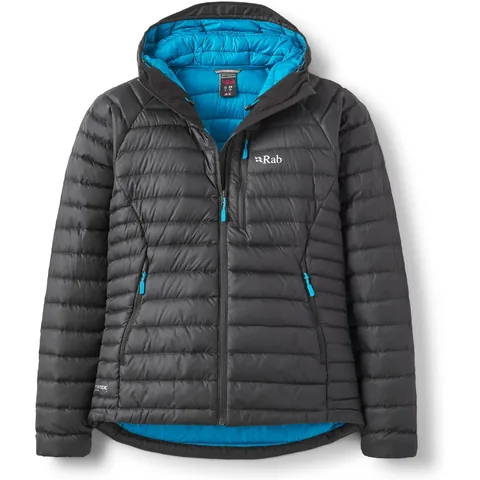 Rab Microlight Alpine Down Jacket (women's)Mid-rangeCheck price on Amazon
Montane (UK, 1993) makes light, breathable mountain smocks for active use rather than city coats.
Barbour (UK, 1894) is a family company from South Shields known for waxed cotton jackets, which shed rain and can be re-waxed for decades, and for quilted jackets that sit under a raincoat or alone on a dry day.
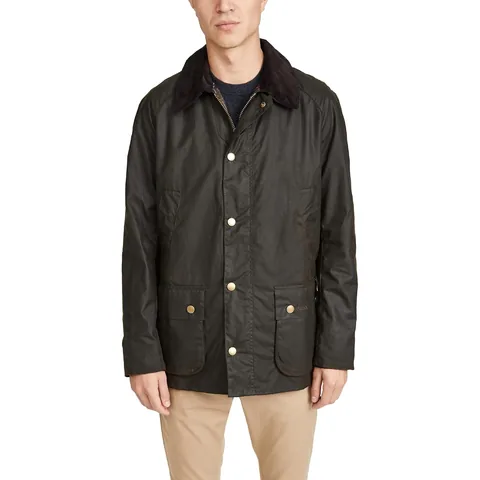
Barbour Ashby Wax Jacket (men's)Premium
A waxed cotton jacket from the British heritage label, the classic coat for wet British winters and for countryside walks.
- Heavyweight waxed cotton with corduroy collar, cotton/polyester lining
- Flap and welt front pockets, double back vent, 30.25 in long
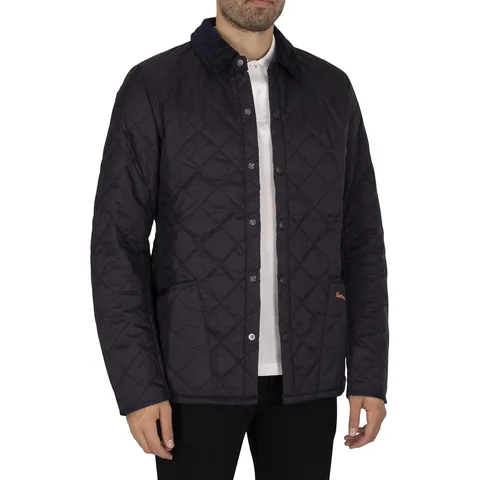
Barbour Liddesdale Quilted Jacket (men's)Mid-range
A quilted jacket from the British heritage label for dry cold days, or under a raincoat on wet ones in London and Edinburgh.
- Wind-resistant synthetic outer with a corduroy collar
- Snap-close front and box-diamond quilting
Rains (Denmark, 2012) makes long, plain waterproof coats in coated polyester, built for Copenhagen bike commutes. They block all rain but do not breathe, so they go over a warm layer rather than replacing one.
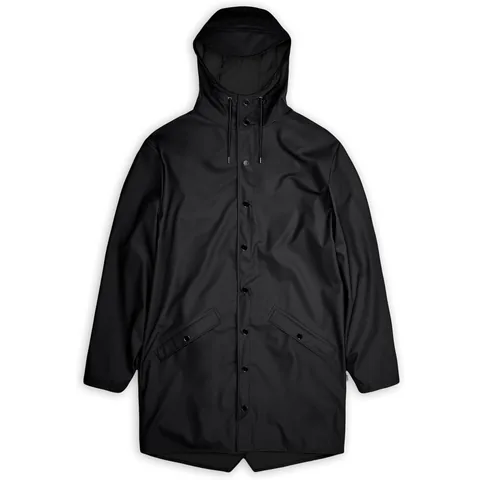
RAINS Long JacketBudget
A long, clean-lined rain coat from the Danish brand for wet Copenhagen, Amsterdam and London winter commutes over a warm layer.
- Waterproof, windproof 100% polyester with a PU coating
- Long cut with snap closure, drawstring hood with brim, six pockets
Aigle (France, 1853) began with rubber boots and makes parkas and rainwear. Decathlon (France, 1976) sells budget jackets under its own labels: Quechua for hiking, Forclaz for trekking down and Wedze for skiing. Its stores are in most European cities, which makes it the place to buy a forgotten warm layer on arrival. Ecoalf (Spain, 2009) makes jackets from recycled PET bottles and nylon and was the first Spanish fashion brand to become a certified B Corp.
What jacket to wear in Europe in winter, city by city
Europe’s winter is several different winters. London and Paris rarely fall below freezing but get rain about one day in three in January. Berlin, Prague and Vienna sit near 0 °C and are drier. Rome and Barcelona have January highs of 12 to 14 °C. Only Lapland, the Alps and the far north are properly cold, so the best winter jackets for Europe depend on where you go.
| City | January high / low | Wet days (≥1 mm) | Jacket |
|---|---|---|---|
| London | 8.6 / 3.5 °C (47 / 38 °F) | 11 | Waterproof coat over a sweater |
| Paris | 7.6 / 3.2 °C (46 / 38 °F) | 10 | Waterproof coat over a sweater |
| Amsterdam | 6.2 / 1.2 °C (43 / 34 °F) | 12 | Waterproof insulated jacket, hood |
| Berlin | 3.6 / −1.4 °C (38 / 29 °F) | 10 | Insulated coat |
| Prague | 3.2 / −1.6 °C (38 / 29 °F) | 6 | Insulated coat |
| Vienna | 3.5 / −1.3 °C (38 / 30 °F) | 9 | Insulated coat |
| Rome | 12.0 / 3.4 °C (54 / 38 °F) | 7 | Wool coat or light puffer |
| Barcelona | 14.2 / 6.2 °C (58 / 43 °F) | 4 | Light jacket and a scarf |
| Stockholm | 1.0 / −2.9 °C (34 / 27 °F) | 9 | Insulated parka |
| Oslo | 0.1 / −4.7 °C (32 / 24 °F) | 10 | Insulated parka |
| Reykjavik | 3.2 / −1.7 °C (38 / 29 °F) | 15 | Waterproof shell over a down layer |
| Tromsø | −1.0 / −5.3 °C (30 / 22 °F) | 15 | Insulated waterproof parka |
| Rovaniemi | −7.3 / −13.5 °C (19 / 8 °F) | 11 | Heavy parka, insulated trousers |
| Zermatt | 0.8 / −7.4 °C (33 / 19 °F) | 6 | Ski jacket or parka |
Source: WMO 1991-2020 climate normals (NOAA archive); Berlin from DWD and Prague from CHMI daily data. Rome is measured at Ciampino and Barcelona at the airport.
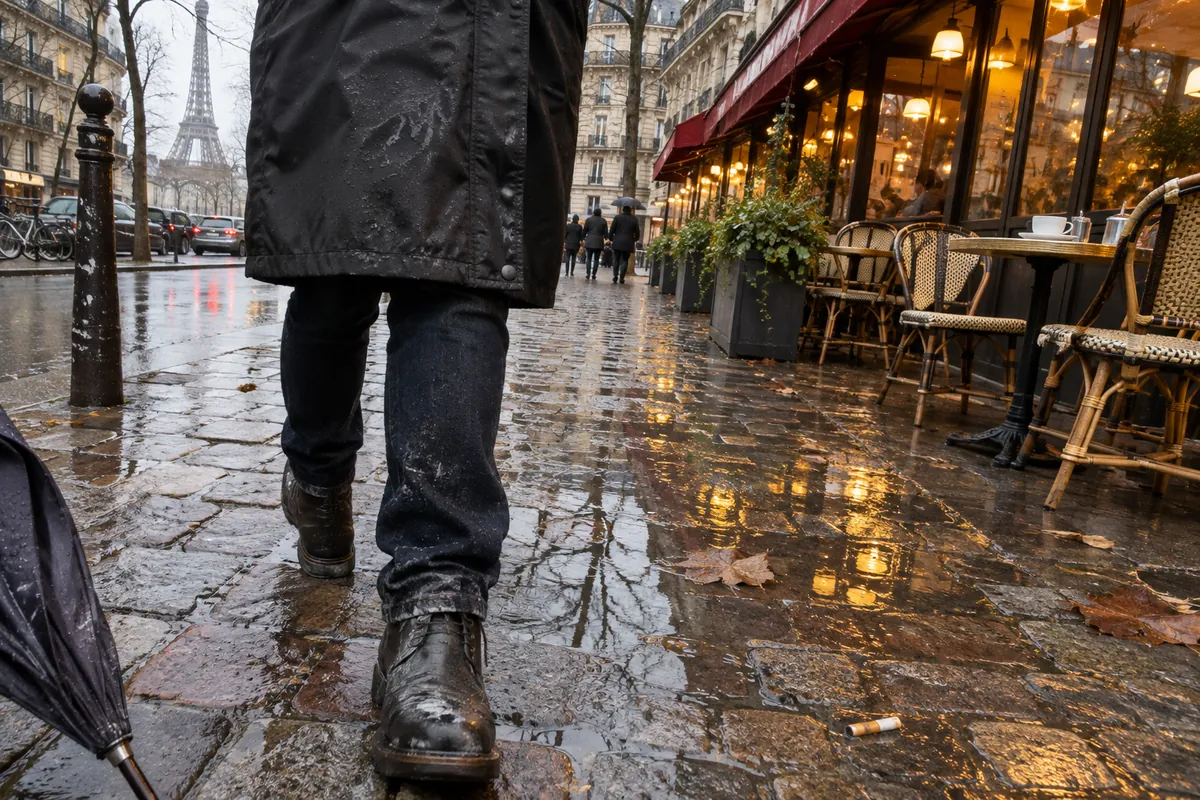
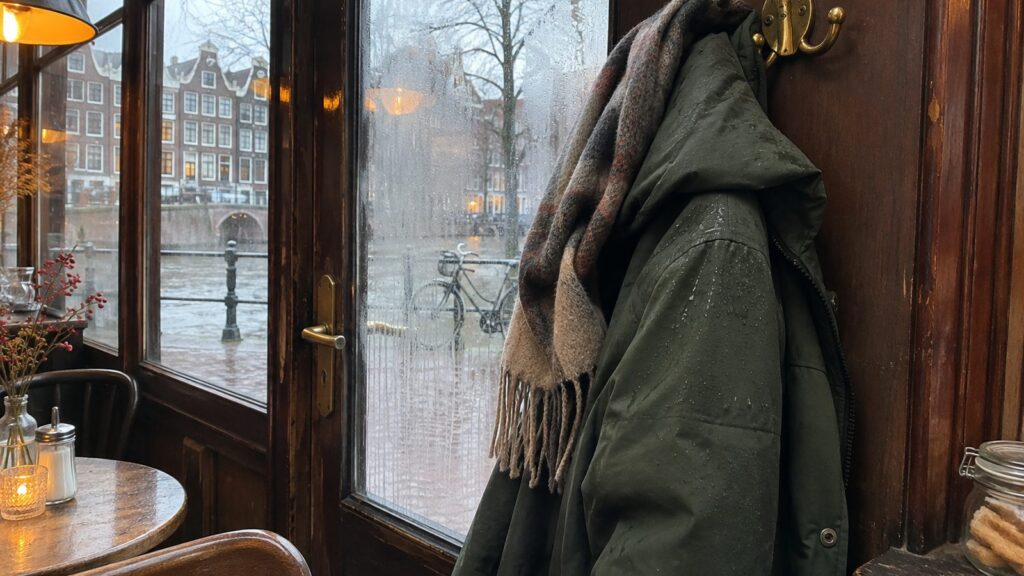
For London, Paris and Amsterdam, water matters more than warmth. Untreated down with no shell soaks through in a day of drizzle and goes flat; water-resistant down like Rab’s handles a shower, not a wet day. On a February 2013 weekend in Amsterdam, my light down jacket was wet at the shoulders by lunch, and I spent the afternoon in museums waiting for it to dry. A waterproof coat from Rains, Barbour or Helly Hansen over a sweater handles these cities better than a heavy puffer, and the sweater comes off in heated shops, trains and museums.
In the Nordic countries and the Alps, layer. Visit Norway advises a thin wool base layer, a fleece or wool mid layer and a down jacket and trousers on top for northern Norway. The UK’s Met Office gives the same advice for British winters: several thin layers trap more warm air than one thick one. On r/onebag, travelers packing for a month in Europe make the same point: one coat plus a fleece or wool layer covers more temperatures than two coats (thread). On r/Norway, locals add waterproof trousers for the coast, where wind drives rain in sideways.
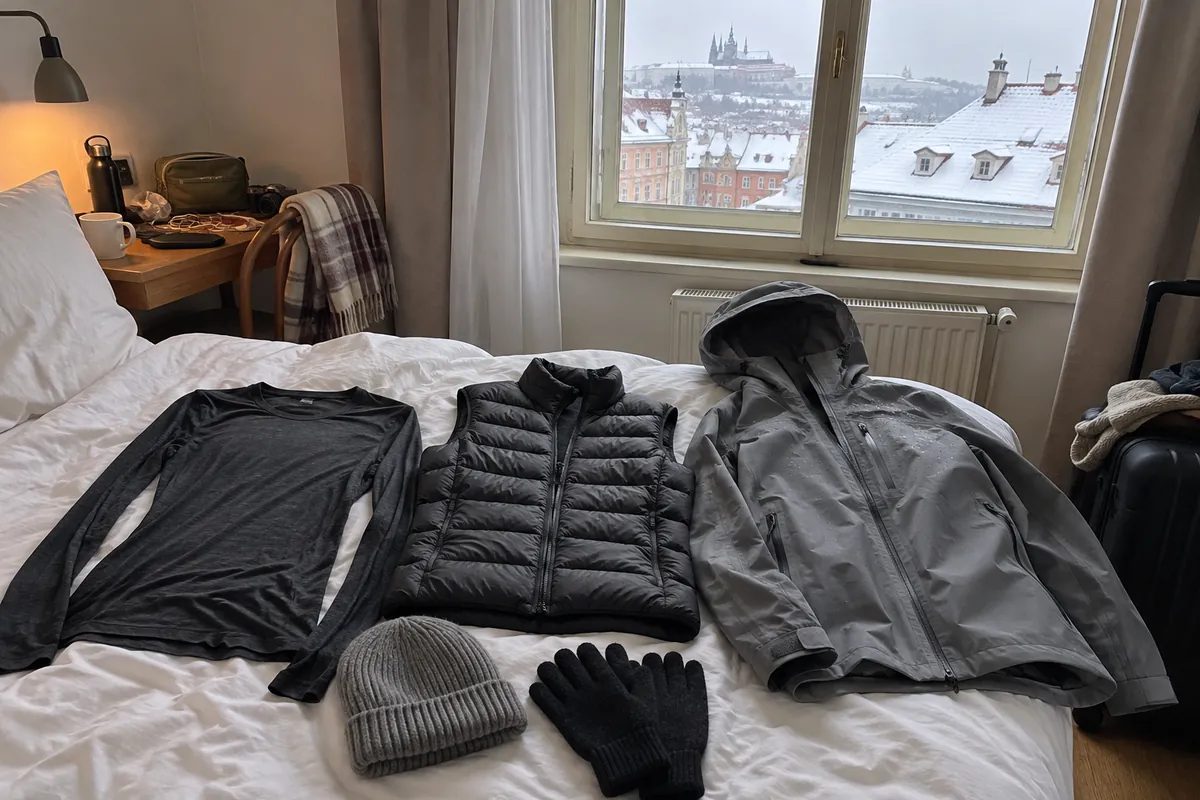
For a winter coat on a Europe city trip, skip the expedition parka. A coat built for −30 °C is too hot on the metro and in every café, and it fills a suitcase. For a city trip, one jacket plus layers is enough. The checklist below covers the rest of a winter kit for Europe.
Outer layer (pick one)
- Waterproof coat for London, Paris, Amsterdam
- Insulated jacket for Berlin, Prague, Vienna, the Alps
- Padded parka for Lapland, Tromsø, Oslo
- Wool coat or light puffer for Rome, Barcelona
Under the coat
- Merino base layer
- Packable down jacket or vest
- Fleece or wool sweater comes off indoors
Extras
- Hat, gloves and a scarf
- Waterproof trousers Norway coast, Iceland
- Waterproof boots with grip wet cobbles, ice
- Technical wash and re-proofing spray PFAS-free finishes wear off
How to read a winter jacket label
Down fill power and the EU standard
Fill power measures how much space a fixed amount of down takes up: the higher the number, the more air it traps per gram. US and Asian labels follow the IDFB test, which uses a 30 g sample and reports cubic inches per ounce. European labels may follow EN 12130, which uses a 20 g sample and allows three different ways of preparing the down before the test (IDFL). Two jackets labeled 700 under different methods are not directly comparable.
Fill power is also only half the story. A 700-fill jacket with a thin layer of down is colder than a 600-fill jacket with twice as much. For down from audited farms, look for the Responsible Down Standard, which bans live plucking and force-feeding and is checked by independent certifiers (Textile Exchange).
Synthetic insulation (PrimaLoft, PLUMTECH and the polyester fills in the Helly Hansen and Mammut jackets) is heavier than down for the same warmth but keeps insulating when wet. For London, Amsterdam, Bergen or Reykjavik, that trade is worth it.
PFAS-free water repellency in 2026
Water-repellent finishes on jackets used to rely on PFAS, the “forever chemicals”. Europe is phasing them out:
- France banned the sale of clothing and footwear containing PFAS from 1 January 2026, with exceptions for protective gear such as firefighters’ clothing (French Ministry of Economy).
- Denmark banned PFAS in consumer clothing, footwear and waterproofing sprays from 1 July 2026, naming rain jackets and hiking boots; shops may sell old stock until 1 January 2027 (Danish EPA).
- The EU restricted PFHxA, one PFAS group, in clothing sold to the public from 10 October 2026 (EUR-Lex). A ban on all PFAS is still going through the EU’s REACH process.
New jackets sold in France and Denmark must now carry PFAS-free finishes, and brands selling across Europe are moving the same way; the Helly Hansen Adore already has one. These finishes wear off sooner, so plan to wash the jacket with a technical cleaner and re-proof it once or twice a winter. The waterproof membrane underneath is not affected; only the outer fabric stops beading.
Buying a winter jacket in Europe: tax-free shopping
Visitors who live outside the EU can claim back VAT on a coat bought in Europe. Ask the shop for a tax-free form at the till, carry the jacket unworn in your luggage and get the form stamped by customs when you leave the EU, within three months of purchase (one month for Norway).
| Country | Minimum purchase for a VAT refund |
|---|---|
| France | Over €100 in the same store, bought over a maximum of 3 days |
| Germany | Over €50 |
| Italy | Over €70 per invoice |
| Spain | No minimum |
| Sweden | SEK 200 per item |
| Norway (not in the EU) | NOK 250 before VAT per invoice; export within one month |
| United Kingdom | No tax-free shopping since 2021 |
Sources: European Commission, French Ministry of Economy, German Customs, Skatteverket, Norwegian Customs, GOV.UK.
Sweden, Norway and Denmark each use their own krone or krona rather than the euro; our list of European countries that don’t use the euro has the rest. Buying a coat on arrival only works if the first day is mild enough to get from the airport to the shop, so for Lapland or northern Norway in January, bring a warm jacket with you.
Winter jacket FAQ
Are Canada Goose, Arc'teryx, The North Face and Patagonia European brands?
No. Canada Goose (1957) and Arc'teryx (1989) are Canadian, and The North Face (1966) and Patagonia (1973) are American. Arc'teryx belongs to Amer Sports, the same group as Sweden's Peak Performance. Canada Goose, Arc'teryx.
What is the difference between a waterproof and a water-resistant jacket?
A waterproof jacket has a membrane or coating and taped seams that stop rain under pressure; its rating, in millimeters, comes from a hydrostatic head test (EN ISO 811). A water-resistant or water-repellent jacket only has a surface finish that makes light rain bead off. It wets through in steady rain, so it suits dry cold, not a wet day in London.
Should I wear my winter coat on the plane?
Yes. A winter coat is the bulkiest item in a winter bag, so wearing it through the airport frees space in the suitcase, and it works as a blanket on a cold cabin. Check your airline's cabin bag rules if you plan to carry it rather than wear it. A packable down jacket can also go in its own stuff sack under the seat in front.
Which European brand makes the warmest winter jacket?
No brand is warmest across its range. Warmth comes from how much insulation a jacket holds, not the label. For deep cold, look at expedition models such as Fjällräven's Expedition Down Jacket or Rab's heavier down jackets, which carry far more down than the light city and travel jackets in this guide. For Lapland at −15 °C, add insulated trousers.