TLDR
- The indigenous language is Kalinago (also called Island Carib or Igneri). It died out on Dominica around 1918–1920.
- Kalinago was Arawakan, not Cariban, despite the “Carib” label. A related branch lives on as Garifuna in Central America.
- Kwéyòl is the island’s living heritage language. It’s a French-based creole with Amerindian and African influence, but it isn’t strictly indigenous.
- Kokoy is an English-based variety brought in the 19th century by immigrants from Antigua and Montserrat.
- Today’s Kalinago Territory speaks English and Kwéyòl. Recovery work centers on culture, names and vocabulary, not fluent speakers.
Table of Contents
- Three questions people blur together
- The languages of Dominica at a glance
- Kalinago: the indigenous language that disappeared
- Timeline: from pre-contact to the 1920s
- Kwéyòl: living, heritage, not indigenous
- Kokoy: the northeastern outlier
- The Kalinago Territory today
- Kwéyòl phrases and Kalinago words to know
- How many people speak what?
Three questions people blur together
Most pages on this topic treat “indigenous,” “native” and “heritage” as one word. They aren’t. Dominica has three separate stories:
- Which language is indigenous? Kalinago, spoken by the Kalinago people before and during European contact.
- Which language is living? Kwéyòl, plus English as the official language and Kokoy in a few communities.
- Which one is being revived? Not the language itself so much as its vocabulary, place names and cultural practice.
Keep those apart and the rest of this makes sense.
The languages of Dominica at a glance
| Language | Origin | Status | Speakers | Where spoken |
|---|---|---|---|---|
| Kalinago (Island Carib, Igneri) | Arawakan, with Cariban-influenced vocabulary | Extinct on Dominica since about 1918–1920 | None on the island | Formerly across Dominica; Kalinago Territory on the east coast |
| Kwéyòl (Dominican Creole French) | French-based creole with Amerindian and African influence | Living; heritage language | 43,000 (1998 figure) to about 56,000, depending on the source | Island-wide, strongest in rural areas |
| Kokoy | English-based variety, brought by 19th-century immigrants from Antigua and Montserrat | Living, small community | No reliable count | Northeast villages |
| English | Colonial, British rule from the 18th century | Official language | Near-universal | Island-wide |
Kalinago: the indigenous language that disappeared
The Kalinago language goes by several names. Island Carib is the one linguists use most. Igneri shows up in older sources. It was spoken by the Kalinago people, whom Europeans called “Caribs.”
Here’s the correction most summaries miss. Despite the name, Island Carib was an Arawakan language, not a Cariban one. Cariban vocabulary entered it through contact with mainland Carib-speaking groups, which is why older writers filed it under the wrong family. The label stuck even after the classification was fixed.
The language faded on Dominica as French, then British, rule pushed Kalinago speakers toward Kwéyòl and English. By roughly 1918–1920, the last speakers on the island were gone. Taíno followed a similar path on Hispaniola, and Haiti’s indigenous language and what happened to Taíno covers that story.
It didn’t vanish from the planet entirely. After the British deported Black Caribs from St. Vincent in 1797, their descendants carried a related Arawakan language to the coast of Central America. That’s Garifuna, spoken today in Honduras, Belize, Guatemala and Nicaragua. UNESCO recognized the language, dance and music of the Garifuna as part of the world’s intangible cultural heritage. Garifuna is a relative of Kalinago, not a replacement for it, and it is not spoken on Dominica.
Timeline: from pre-contact to the 1920s
- Before 1400s: Arawakan-speaking peoples live across the Lesser Antilles. The Kalinago become the dominant group on Dominica, which they call Waitukubuli.
- 1493: Columbus sights the island on a Sunday and names it Dominica.
- 1690: The French establish a permanent settlement. Kwéyòl begins to form from French, African languages and Amerindian influence.
- 1763: Britain takes control of the island. English becomes the language of administration.
- 1800s: Immigrants from Antigua and Montserrat bring the English-based speech that becomes Kokoy.
- 1903: The British set aside land on the northeast coast, then called the Carib Reserve and now the Kalinago Territory.
- About 1918–1920: The last Kalinago speakers die. The language is gone from the island.
- 1978: Dominica becomes independent. English stays official and Kwéyòl keeps its place in daily life.
Kwéyòl: living, heritage, not indigenous
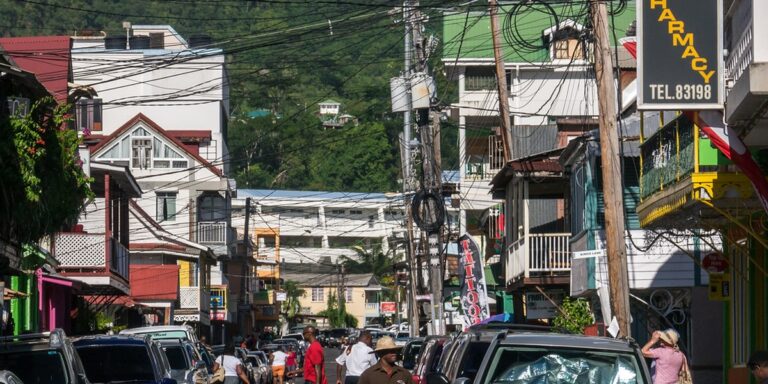
Kwéyòl (Dominican Creole French, also called Patwa) is what you’ll hear in the market in Roseau, at a village bus stop, or from grandparents telling someone off. It’s a French-based creole closely related to the creoles of Martinique, Guadeloupe and Saint Lucia, with Amerindian and African influence in its vocabulary.
It’s a heritage language in the sense that it carries the island’s history. It’s not indigenous, because it formed after Europeans and enslaved Africans arrived. Calling it indigenous is the most common error in short summaries, and it quietly erases the Kalinago.
Kwéyòl gets a public showcase every year on Creole Day (Jounen Kwéyòl), part of the island’s Independence and heritage celebrations in late October. People wear madras and wob dwiyèt, and the language takes over radio and school events for the day.
Kokoy: the northeastern outlier
Kokoy is the least documented of the three. It’s an English-based variety brought in the 19th century by immigrants from Antigua and Montserrat, and it survives mostly in northeastern communities, a region where Kwéyòl dominates the rest of the island.
Expect to see Kokoy mislabeled as a Kalinago dialect. It isn’t. Its roots are in the English-speaking Caribbean, and it has no link to the Kalinago language. No source we found gives a recent speaker count.
The Kalinago Territory today
About 3,000 Kalinago people live in the territory on Dominica’s northeast coast. In daily life they speak English and Kwéyòl, like most of their neighbors. Nobody there speaks Kalinago as a first language, because nobody has for a century.
What exists instead is cultural and partial language recovery:
- Place names and the island’s own name. Waitukubuli is the Kalinago name for Dominica, and it’s the name given to the island’s long-distance hiking trail.
- Craft traditions. Basket weaving with larouma reed and canoe building continue, and the Kalinago Barana Autê cultural village near the Crayfish River shows them to visitors.
- Cultural events. The community’s festivals and dance groups keep Kalinago vocabulary in use, in songs and names.
Be realistic about what that means. This is revitalization of identity and a small set of words, not a revived speech community. Anyone telling you otherwise is selling a tour.
Kwéyòl phrases and Kalinago words to know
A few Kwéyòl phrases you’ll hear. Spelling varies by writer, so treat these as one common version.
| Kwéyòl | Meaning |
|---|---|
| Bonjou | Good morning / hello |
| Sa ka fèt? | How’s it going? |
| Mwen byen | I’m fine |
| Mèsi | Thank you |
| Pa ni pwoblèm | No problem |
And the Kalinago words:
- Waitukubuli: the Kalinago name for Dominica, usually translated as “tall is her body.”
- Kalinago: the people’s own name for themselves.
- Larouma: the reed used in traditional basket weaving, a word still in everyday use in the territory.
How many people speak what?
Speaker counts for Kwéyòl are a mess. One figure from 1998 puts speakers at about 43,000. Newer estimates say about 56,000. Both are from reference sources that don’t show their method, and neither is recent. We’d rather show you both than pick one.
Dominica’s population is roughly 72,000, so both numbers imply that a large share of the island speaks Kwéyòl. They also come from sources that lump together fluent and partial speakers. For a side-by-side view of every language spoken on the island, see Languages Spoken in Dominica: The Complete List.
For Kokoy there’s nothing reliable. For Kalinago the number is zero on the island.
The short version of Indigenous Languages in Dominica: one language is indigenous, it’s gone, and its closest living relative is a thousand miles west. What remains on the island is Kwéyòl, English and Kokoy, plus a Kalinago community working to keep its name, its crafts and its vocabulary alive.