Indonesia sits along the Pacific Ring of Fire, where tectonic plates meet and shape dramatic landscapes, ecosystems, and local livelihoods. Volcanoes here influence everything from soil fertility to air travel, and many communities live in their shadow with long cultural ties and practical preparedness.
There are 20 Active volcanoes in Indonesia, ranging from Agung to Tambora. For each entry you’ll find below the key facts organized as Island/Province,Coordinates (lat, long),Elevation (m), making it easy to scan locations, positions, and heights — you’ll find below.
How is a volcano classified as “active” in Indonesia?
A volcano is generally considered active if it has erupted in recent history or shows ongoing signs of unrest such as seismic activity, gas emissions, or thermal anomalies; Indonesia’s monitoring agency (PVMBG) combines historical records and real-time monitoring to set status and alerts.
Can visitors safely see these volcanoes and where do I check current warnings?
Many volcanoes are visitable with local guides or permits when alert levels allow, but conditions change quickly; always check PVMBG updates and local authority notices, follow official access restrictions, and hire experienced guides for routes and safety information.
Active Volcanoes in Indonesia
| Name | Island/Province | Coordinates (lat, long) | Elevation (m) |
|---|---|---|---|
| Merapi | Java/Yogyakarta | -7.54,110.44 | 2,930 |
| Semeru | Java/East Java | -8.12,112.92 | 3,676 |
| Anak Krakatau | Sunda Strait/Lampung | -6.10,105.42 | 338 |
| Agung | Bali/Bali | -8.34,115.51 | 3,031 |
| Rinjani | Lombok/West Nusa Tenggara | -8.41,116.46 | 3,726 |
| Bromo | Java/East Java | -7.94,112.95 | 2,329 |
| Sinabung | Sumatra/North Sumatra | 3.17,98.39 | 2,460 |
| Kerinci | Sumatra/Jambi | -1.70,101.27 | 3,805 |
| Kelud | Java/East Java | -7.93,112.22 | 1,731 |
| Tambora | Sumbawa/West Nusa Tenggara | -8.25,118.00 | 2,850 |
| Karangetang | Siau/Sulawesi | 2.37,125.40 | 1,784 |
| Dukono | Halmahera/North Maluku | 1.68,127.88 | 1,335 |
| Soputan | North Sulawesi | 1.11,124.78 | 1,785 |
| Ibu | Halmahera/North Maluku | 1.53,127.63 | 1,435 |
| Gamalama | Ternate/North Maluku | 0.81,127.37 | 1,715 |
| Ruang | Sangihe/North Sulawesi | -1.37,125.38 | 725 |
| Batur | Bali/Bali | -8.24,115.37 | 1,717 |
| Slamet | Java/Central Java | -7.22,109.22 | 3,428 |
| Sangeang Api | Sumbawa/West Nusa Tenggara | -8.22,119.07 | 1,949 |
| Lokon-Empung | North Sulawesi | 1.37,124.87 | 1,580 |
Images and Descriptions
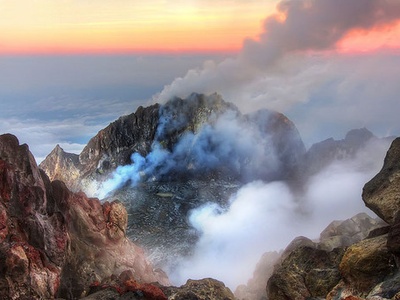
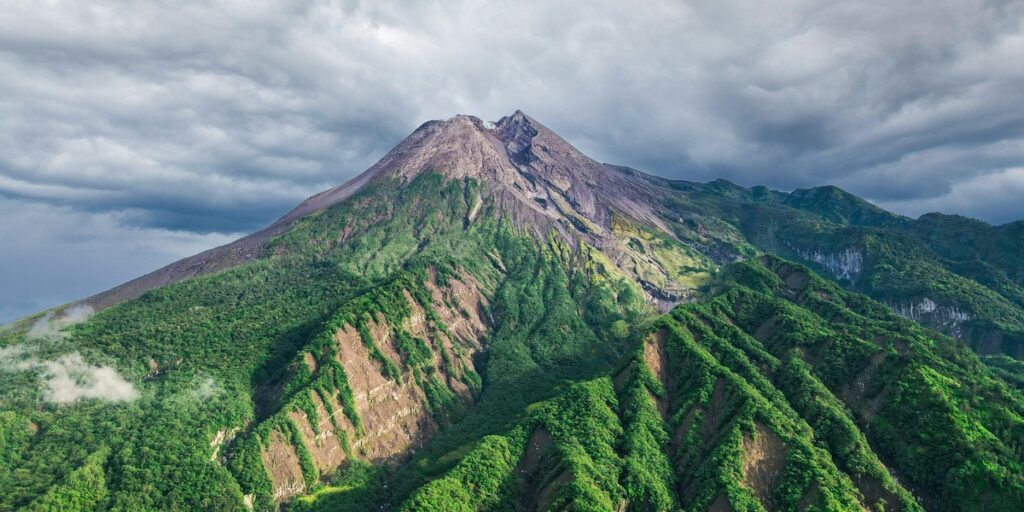
Merapi
One of Indonesia’s most active and dangerous volcanoes near Yogyakarta; summit 2,930 m. Last significant eruptions in 2023 with frequent dome growth and pyroclastic flows. Currently monitored with alert levels and regular activity; major hazard to nearby settlements.

Semeru
Semeru is Java’s highest active volcano (3,676 m) near Lumajang. Its 4 December 2021 eruption produced deadly pyroclastic flows; it remains actively degassing with intermittent eruptions. Monitored closely for ash and avalanches; popular but hazardous for hikers.
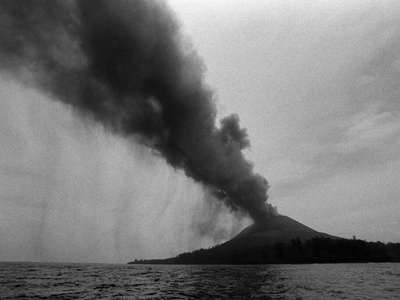
Anak Krakatau
Anak Krakatau is the post-1883 volcanic child rebuilding in the Sunda Strait; elevation ~338 m. It erupted repeatedly after the 2018 flank collapse, with activity through 2023. Currently shows ongoing eruptive episodes and frequent ash emissions, closely monitored.
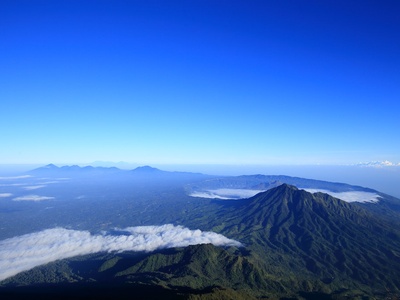
Agung
Mount Agung dominates eastern Bali at 3,031 m and erupted strongly in 2017–2019. Last eruptions in 2019 produced ash plumes and evacuation alerts. It remains active with fumarolic activity and occasional warnings for air traffic and local communities.
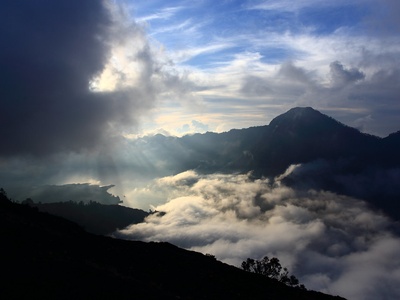
Rinjani
Mount Rinjani (Barujari cone) on Lombok reaches 3,726 m. Small eruptions and dome activity from the Barujari cone occurred into 2016. The volcano is monitored for phreatic and magmatic activity; popular trekking routes are closed during unrest.
Bromo
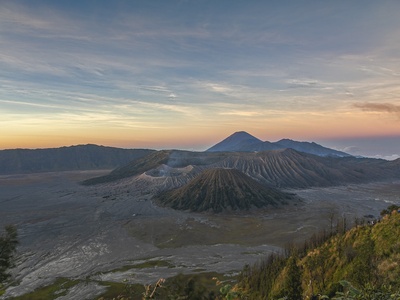
Bromo sits in the Tengger caldera of East Java at 2,329 m and frequently emits ash and steam. Last notable eruptions were in 2016, with intermittent activity since. It is heavily visited but remains a monitored and potentially hazardous volcanic site.
Sinabung
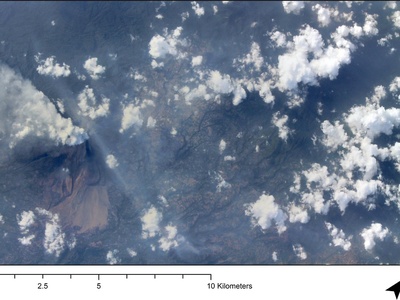
Mount Sinabung in North Sumatra (2,460 m) has been highly active since 2010 with repeated explosive eruptions and pyroclastic flows. Its last major eruptions were in 2021; it remains on alert with frequent ash emissions and danger to nearby villages.
Kerinci
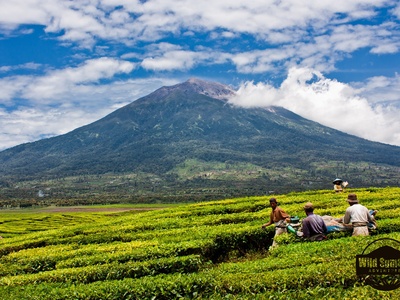
Mount Kerinci is Sumatra’s highest volcano at 3,805 m on the Jambi–West Sumatra border. It produced eruptions in the 20th century and occasional emissions more recently; last recorded activity was around 2009. It remains monitored for ash and lava flows.
Kelud
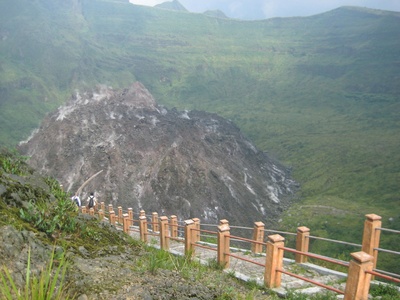
Kelud in East Java (1,731 m) is known for explosive Plinian eruptions; its last large eruption was 2014. The volcano remains closely watched for phreatic activity and sudden explosive events; reservoirs and population centers are at risk.
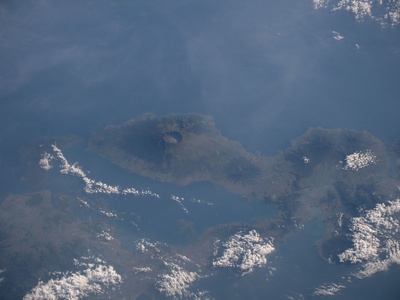
Tambora
Iconic Tambora on Sumbawa (2,850 m) produced the massive 1815 eruption. Its last minor activity was in 1967. The huge caldera remains active on geologic timescales; scientists monitor gas emissions and seismicity for future eruptions.

Karangetang
Karangetang (Api Siau) on Siau Island reaches 1,784 m and erupts frequently with lava flows and explosions. Its last eruptive episodes occurred around 2019; it remains one of Indonesia’s most persistently active volcanoes with regular alerts and evacuations.
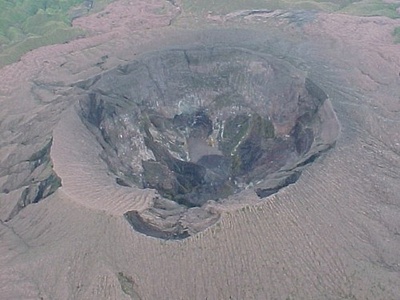
Dukono
Dukono in northern Halmahera (1,335 m) is nearly continuously active, producing ash plumes and small explosions. Ongoing eruptive activity was noted through 2021; it poses repeated aviation and local ashfall hazards and is closely monitored.
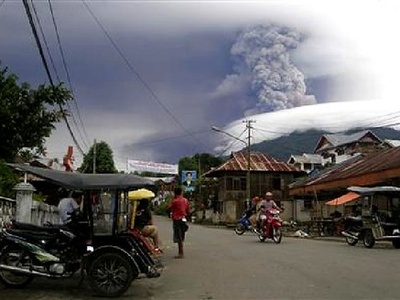
Soputan
Soputan in North Sulawesi (1,785 m) has produced frequent Strombolian to explosive eruptions; last major activity was recorded in 2018. It remains active with ash emissions and occasional pyroclastic activity, requiring regular monitoring for local safety.
Ibu
Ibu on Halmahera (1,435 m) has frequent explosive and effusive episodes, with activity noted into 2022. It regularly sends ash plumes that impact nearby communities and shipping routes; it is under constant PVMBG surveillance.
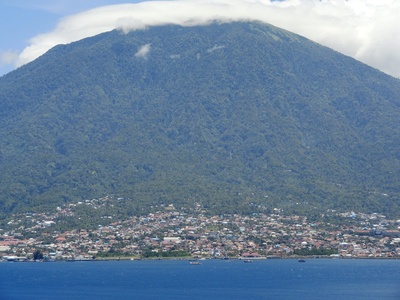
Gamalama
Gamalama rises above Ternate in North Maluku at 1,715 m and has a long history of eruptions; last recorded activity occurred around 2016. The volcano remains capable of explosive events and is monitored due to nearby populations.

Ruang
Ruang, a small island volcano in the Sangihe group (725 m), produced destructive eruptions in 2002. Its last major eruption was 2002, and it remains considered active with potential for explosive behavior and tsunami-generating events.
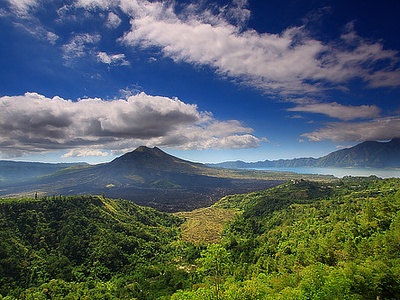
Batur
Mount Batur in central Bali (1,717 m) is an active caldera volcano with frequent eruptions and fumarolic activity; last eruptions were recorded around 2000. Its scenic crater is popular with tourists but remains hazardous during unrest.
Slamet
Mount Slamet in Central Java (3,428 m) is one of Java’s tallest and active stratovolcanoes; last eruptive episodes were observed in 2014. It is monitored for ash emissions and lahars due to its size and nearby communities.
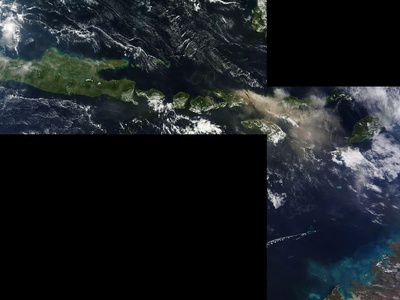
Sangeang Api
Sangeang Api off northern Sumbawa (1,949 m) produced explosive eruptions in 2014 and intermittent activity since. It regularly sends ash that affects aviation and nearby islands; PVMBG maintains active monitoring.
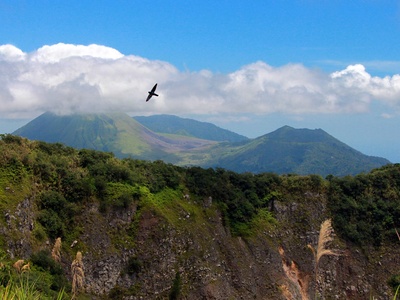
Lokon-Empung
Lokon-Empung in North Sulawesi (1,580 m) has frequent Strombolian eruptions and ash plumes; significant activity occurred through 2015. The volcano is closely monitored and can produce hazardous ashfalls and ballistic ejecta affecting nearby communities.