

Table of Contents
- TLDR
- Airports in Ukraine at a glance
- The ten main international airports
- Other airports that made the news
- How people reach Ukraine now
- What reopening would take
Not a single commercial flight has taken off or landed at any of the airports in Ukraine since 24 February 2022. Civilian airspace closed that morning and has stayed closed. The country had around 20 airports with scheduled service before the invasion, and today none of them sells you a ticket.
That changes how you should read any older guide. Most pages still ranking for this topic list passenger counts from 2017 or transfer tips for airports that no longer take passengers. This one pairs the codes and facts with what happened to each airport.
TLDR
- Ukrainian airspace is closed to civilian flights. No scheduled passenger service operates anywhere in the country.
- Lviv and Boryspil (Kyiv) are the two airports most often named as first to reopen. No date is set.
- Crimea’s airports are officially Ukrainian but run by Russia, and you can’t fly into them legitimately.
- To get into Ukraine today, you fly to Rzeszów (Poland), Chisinau (Moldova) or Suceava (Romania) and continue by train, bus or car.
- Check your government’s travel advice before you go: the UK Foreign Office and the US State Department both advise against travel to large parts of the country.
Airports in Ukraine at a glance
The table covers the ten international airports that carried most of the country’s passenger traffic before 2022. Status reflects the situation at the time of writing and can change after a single strike, so treat it as a snapshot.
| Airport | City | IATA | ICAO | Status |
|---|---|---|---|---|
| Boryspil International | Kyiv | KBP | UKBB | Closed |
| Zhuliany International | Kyiv | IEV | UKKK | Closed |
| Lviv Danylo Halytskyi International | Lviv | LWO | UKLL | Closed |
| Odesa International | Odesa | ODS | UKOO | Closed, damaged |
| Kharkiv International | Kharkiv | HRK | UKHH | Closed, damaged |
| Dnipro International | Dnipro | DNK | UKDD | Destroyed |
| Zaporizhzhia International | Zaporizhzhia | OZH | UKDE | Closed, damaged |
| Ivano-Frankivsk International | Ivano-Frankivsk | IFO | UKLI | Closed |
| Chernivtsi International | Chernivtsi | CWC | UKLN | Closed |
| Uzhhorod International | Uzhhorod | UDJ | UKLU | Closed |
“Closed” means the airport is sitting idle under the airspace ban. “Damaged” and “destroyed” mean strikes put runways, terminals or both out of use on top of that.
The ten main international airports
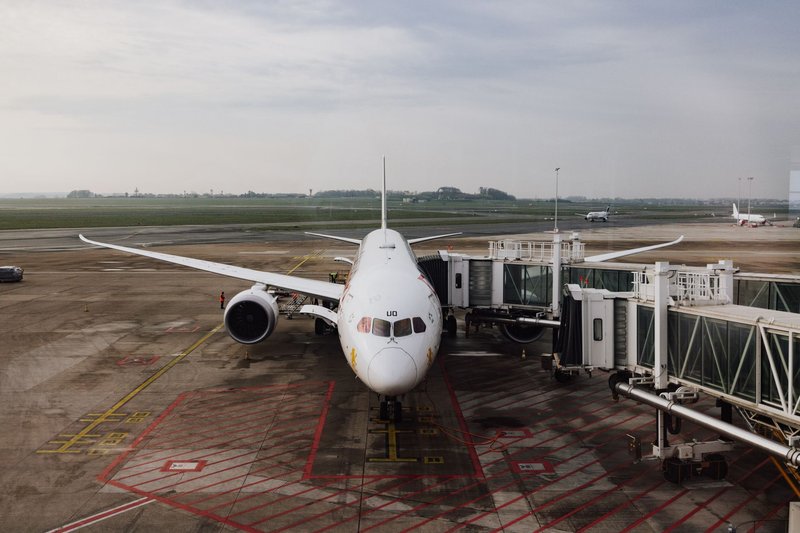
Boryspil (KBP), Kyiv
Boryspil sits about 30 km east of Kyiv and was the country’s gateway: the biggest airport, the home hub of Ukraine International Airlines, and the one place with real long-haul connections. It runs three passenger terminals (B, D and F) and two parallel runways, the longer one at 4,000 metres. Terminal D handled most international traffic.
It’s also one of the two airports officials have repeatedly named as a first candidate to reopen, mainly because its size and its rail and road links to Kyiv make it the obvious restart point.
Zhuliany (IEV), Kyiv
Zhuliany is the opposite of Boryspil: a small city airport inside Kyiv’s southwestern districts, a short taxi from the center. A new terminal opened in 2012 ahead of the European football championship, and the airport leaned on low-cost carriers. Its single runway is about 2,300 metres, enough for narrowbodies and not much more.
It’s closed like everything else. Its location inside the capital makes any future reopening a different security question from Boryspil’s.
Lviv (LWO)
Lviv’s Danylo Halytskyi airport is the western anchor. Its modern terminal also dates from 2012, and by 2019 it was handling around 2.7 million passengers a year, which made it the country’s second-busiest airport after Boryspil. The airport sits about 6 km from the old town, so the transfer was always short.
Its value now is geographic. Lviv is roughly 70 km from the Polish border, which is why it keeps appearing in reopening talk. An airport that close to the EU border could restart without routing aircraft anywhere near the front line.
Odesa (ODS)
Odesa served the Black Sea coast and was a seasonal favorite for charter and low-cost flights. The runway is about 2,800 metres. Russian missiles hit the airport in 2022, and the city remains under regular attack, so any restart has a harder security case than the western airports.
Kharkiv (HRK)
Kharkiv’s terminal, built for the 2012 football tournament, was designed for the second-largest city in the country. The city sits about 30 km from the Russian border, and the airport took damage from shelling and strikes through the war. It’s among the least likely to see flights again soon.
Dnipro (DNK)
Dnipro opened a new terminal in 2017, a big upgrade for an industrial city of around a million people. Russian missiles struck the airport in March 2022, and it has been hit again since. Of the ten, Dnipro is the one most often described as destroyed.
Zaporizhzhia (OZH)
Zaporizhzhia was a mid-sized regional airport with modernization plans on the table before the invasion. The city is still under Ukrainian control but sits close to the front line in the south, and the airport has been hit repeatedly. Reopening depends on the front line moving, not on paperwork.
Ivano-Frankivsk (IFO)
Ivano-Frankivsk is a regional airport serving the Carpathian foothills and the ski and hiking areas around them, with a runway of about 2,500 metres. It took strikes on the first day of the invasion and again afterward. Its western position means the physical damage is limited compared with the east.
Chernivtsi (CWC)
Chernivtsi is a small airport in the far southwest, close to the Romanian border. It was one of the quieter airports on the list, a domestic and seasonal operation. That location makes it a plausible later-stage reopening candidate, though nobody has put it at the front of the queue.
Uzhhorod (UDJ)
Uzhhorod sits on the Slovak border and has one of the shortest runways among the international airports, well under 2,000 metres, which capped it to small aircraft even in peacetime. It was a niche field, and its main appeal was the border: Slovakia is a few kilometers away.
Other airports that made the news
The ten above aren’t the whole picture. A few other Ukrainian airfields have their own stories.
Hostomel (GML, UKKM). The Antonov Airport near Kyiv was the target of the first big Russian airborne assault on 24 February 2022. The Antonov An-225 Mriya, the largest aircraft ever built, was destroyed in its hangar there during the fighting. Ukrainian forces regained the field in late March 2022. The runway is 3,500 metres, long enough for the cargo giants Antonov flew.
Kherson (KHE) and Mykolaiv (NLV). Both airports in southern Ukraine took heavy damage. Kherson’s Chornobaivka airfield was occupied in 2022 and became a repeated target after Ukrainian forces regained the city.
Mariupol (MPW). Occupied by Russia since spring 2022 and heavily damaged.
Donetsk (DOK) and Luhansk (VSG). Donetsk’s Sergey Prokofiev International airport was destroyed in the 2014 to 2015 fighting, only a few years after its new terminal opened for the 2012 tournament. Both Donetsk and Luhansk are under Russian-backed control and have been out of Ukrainian service since 2014.
Crimea: Simferopol (SIP) and Sevastopol-Belbek (UKS). Under international law these are Ukrainian airports. In practice Russia has run them since its 2014 annexation, and Russian civilian flights used Simferopol until airspace restrictions closed it in 2022. Ukraine treats flying there as a violation of its airspace and sovereignty, and you shouldn’t try it.
How people reach Ukraine now
With the airports closed, the realistic route is overland, and there’s a well-worn path.
From Poland. Rzeszów-Jasionka (RZE) in southeastern Poland has become the main entry airport for aid, journalists and visitors. From there, it’s about 90 km to Przemyśl, the border railway town. Trains run from Przemyśl to Kyiv and Lviv, with the Kyiv service usually overnight. Cross-border buses and shared vans also run from Rzeszów. Lublin (LUZ) is a second option, and on days when Rzeszów is shut during Russian strikes on western Ukraine, people reroute through Krakow or Warsaw.
From Moldova. Chisinau (KIV) is the standard way into Odesa. Buses connect the two cities, and the land crossing near Palanca is commonly used. Border waits vary a lot, so plan for several hours rather than one.
From Romania. Suceava (SCV) in northern Romania is the nearest airport to the Siret-Porubne crossing, and from the border you connect by bus or train toward Chernivtsi and onward to Kyiv.
Three rules that apply everywhere:
- Check your government’s advice first. The UK and US both publish regularly updated warnings, and travel insurance often excludes Ukraine.
- Air-raid alerts are routine. The alert apps and shelter signs aren’t optional extras; they decide whether a train runs on time.
- Border rules change. Foreign nationals can generally enter by land, but requirements and wartime restrictions shift, so confirm them with the Ukrainian embassy or the border service before you commit.

What reopening would take
There’s no date, but the outline is clear from what’s been said publicly. Lviv and Boryspil are the two candidates named most often, with Lviv’s distance from the front line and Boryspil’s capacity as the main arguments.
Three things would have to line up first.
Airspace safety. Airlines and insurers need a credible guarantee that aircraft won’t be hit by missiles or drones. European aviation regulators have kept Ukrainian airspace on their conflict-zone warning lists since the invasion, and carriers follow those warnings.
Insurance. War-risk coverage for aircraft on the ground and in the air is the quiet blocker. Without it, no airline can operate, whatever the government says.
Airport readiness. Even the undamaged airports have been idle for years. Navigation equipment, runway surfaces, security systems and staff all need recertification before a first commercial flight.
The most likely shape of a restart is small: a handful of flights, probably from the western airports to nearby EU hubs, rather than the 2019 network of dozens of routes. If you’re researching airports in Ukraine for a future trip, the practical move today is to bookmark Lviv and Boryspil, follow the airspace announcements, and plan the land route in the meantime.


