Table of Contents
- TLDR
- The Only Country: Dominica
- Why Purple Barely Exists on Flags
- The Coat-of-Arms Loophole: El Salvador and Nicaragua
- The Closest True Match: Spain’s Forgotten Republic
- Red, Yellow, and Purple Flags at a Glance
TLDR
Dominica is the only current country whose flag is genuinely red, yellow, and purple. The purple comes from the sisserou parrot at its center, not a painted stripe. El Salvador and Nicaragua get lumped into this search because their coats of arms contain a rainbow, and rainbows always pass through violet — but that’s a decoration on a badge, not a flag color. If you want a true red-yellow-purple flag, the closest thing history ever produced was Spain’s, and Spain hasn’t flown it since 1939.
The Only Country: Dominica
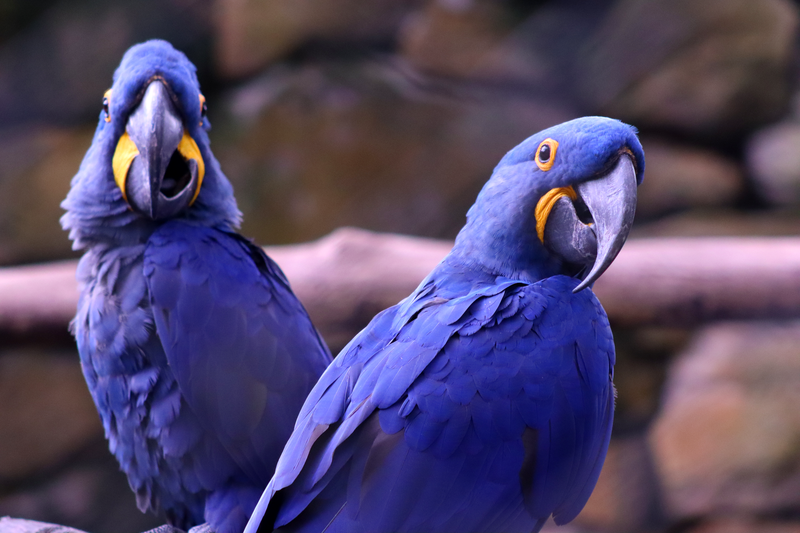
Search “purple flag” long enough and you’ll land on Dominica. Its flag is a green field cut by a cross of yellow, black, and white, with a red disc in the center. Inside that disc sits a sisserou parrot, ringed by ten green stars for the island’s ten parishes.
The parrot is where the purple lives, and it isn’t a stylized flourish — the bird itself has a genuinely violet breast and head. The sisserou is found nowhere on Earth except Dominica’s rainforest interior, which is why the national government put it front and center rather than a generic parrot silhouette. That makes Dominica’s flag one of the very few sovereign-state flags anywhere that contains purple at all, let alone as a load-bearing color next to red and yellow. This unique design is what makes Dominica stand out among countries with purple and black flags.
The rest of the palette carries its own logic. Green stands for the island’s forest cover, the tricolor cross nods to the Christian faith practiced across Dominica, and the red disc represents social justice. Purple is the outlier in that list — it’s there because the parrot is purple, full stop, not because purple meant something the designers needed to symbolize.
Why Purple Barely Exists on Flags

Flags are old technology, and old technology gets built with whatever dye you can make cheaply and in bulk. Red came from ochre or madder root. Yellow came from saffron, turmeric, or weld. Blue came from indigo or woad. Purple, historically, came from crushing thousands of Mediterranean sea snails to extract a few drops of Tyrian dye, a process so labor-intensive that the resulting cloth was reserved for emperors and cardinals. A dye that costly never became a practical option for something meant to be mass-produced, run up flagpoles, and replaced after a few years of weather damage.
That production problem calcified into a design convention. Vexillology — the study of flags — treats a narrow, high-contrast palette (red, blue, white, yellow, green, black) as the working standard, partly because those colors read clearly at a distance and reproduce consistently across fabric, paint, and print. Purple sits outside that standard palette not because any country banned it, but because centuries of flag-makers simply never had an affordable way to use it. Dominica’s flag gets around the problem because the color is there naturally — nobody had to dye a purple stripe, they just had to paint a bird accurately. To see other nations’ approaches to this rare color, check out the complete list of countries with purple flags for more examples.
The Coat-of-Arms Loophole: El Salvador and Nicaragua
Two more countries turn up in almost every “purple flag” search: El Salvador and Nicaragua. Both deserve an asterisk.
Their flags are built around a horizontally striped field — blue-white-blue for both, a shared inheritance from the old United Provinces of Central America — with a circular coat of arms sitting in the white band. That coat of arms shows a triangle enclosing volcanoes rising from the sea, and above it, an actual rainbow arcing across the top. A rainbow, by definition, runs through violet on its way from blue to red, so yes, technically, purple appears somewhere on these flags.
But it appears inside a miniature emblem, not as one of the flag’s field colors. This is the distinction the top search results tend to blur: a color appearing anywhere on a flag is a much looser bar than a color that functions as one of the flag’s primary design elements. Nobody describes the American flag as “brown” because the eagle on the reverse of the Great Seal has brown feathers somewhere in its heraldic depiction. By that same standard, calling El Salvador or Nicaragua’s flag “a purple flag” overstates what’s actually there — a thin band of violet inside a rainbow, inside a badge, inside a much larger blue-and-white field.
The Closest True Match: Spain’s Forgotten Republic
If you’re after a flag where red, yellow, and purple were genuinely equal, load-bearing stripes — not an incidental detail — you have to go back to a flag no country flies anymore. Between 1931 and 1939, the Second Spanish Republic flew a horizontal tricolor of red, yellow, and purple in three equal bands, replacing the traditional red-yellow-red of the Spanish monarchy.
The purple wasn’t decorative. It stood for Castile and León, referencing a legendary banner carried by the Comuneros, a group of Castilian townspeople who rebelled against the crown in the 16th century. Adopting that color into the national flag was a deliberate political statement: this new republic, unlike the monarchy it replaced, was going to represent Spain’s regions rather than just the crown. The flag lasted the length of the Republic itself — it came down for good when Francisco Franco’s forces won the Spanish Civil War in 1939 and restored the red-yellow-red design.
It’s a genuinely stranger and more interesting answer than “Dominica has a purple parrot,” and it’s the one detail that every generic “purple flags” listicle skips, probably because the flag belongs to history rather than a current member of the UN.
Red, Yellow, and Purple Flags at a Glance
| Flag | Status | Where purple appears | What it means |
|---|---|---|---|
| Dominica | Current country | Sisserou parrot at center | The parrot’s natural plumage color; national bird, endemic to the island |
| Second Spanish Republic | Historical (1931–1939) | Full horizontal stripe | Represented Castile and León; symbol of regional inclusion under the Republic |
| Nicaragua | Current country | Rainbow within the coat of arms | Decorative element of the rainbow, not a primary flag color |
| El Salvador | Current country | Rainbow within the coat of arms | Same rainbow motif, shared from the United Provinces of Central America emblem |
Dominica stays the honest, current answer to “which country has a red, yellow, and purple flag.” Everything else on this list either belongs to the past or only qualifies if you’re willing to count a rainbow tucked inside a coat of arms — which, depending on how strict you want to be about what actually counts as a flag color, is either a fun bit of trivia or a technicality dressed up as an answer.