Quick answer
Portuguese is the official language of Guinea-Bissau, but it’s the language almost nobody grew up speaking. That job belongs to Kriyol (also spelled Kriol or Crioulo), a Portuguese-based creole that functions as the country’s real lingua franca, understood by roughly 90% of the population as either a first or second language. Layer beneath that a dozen-plus indigenous languages — Fula, Balanta, Mandinka, Papel, and Manjak among the largest — and you get a country where the “national language” printed on the passport is, for most people, a second or third one.
Table of Contents
- The Official Language Nobody Grew Up With
- Kriyol: The Language That Actually Runs the Country
- The Indigenous Languages Behind the Ethnic Map
- Language at a Glance
- Will English Get You By?
- The Details Most Guides Skip
The Official Language Nobody Grew Up With
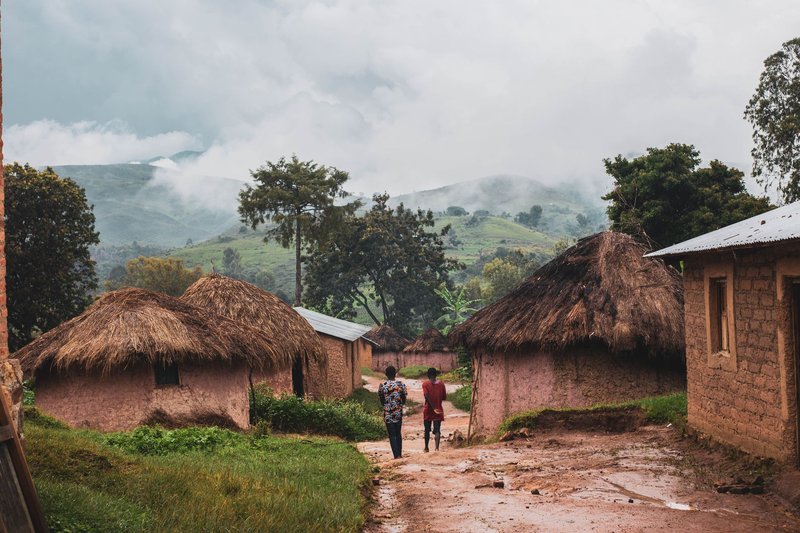
Portugal ruled Guinea-Bissau for roughly five centuries before independence in 1974, and Portuguese remains the language of the constitution, the courts, and the national assembly. It’s also, by most estimates, spoken as a home language by only a small sliver of the population — a figure some linguists put in the low single digits. Add in everyone who picked it up through school or government work and you’re looking at somewhere between a quarter and a third of the country with working fluency, concentrated almost entirely in Bissau and other urban centers.
That gap between “official” and “actually used” isn’t unique to Guinea-Bissau, but it’s unusually wide here. Compare it to Senegal or Mali, former French colonies where French at least dominates the education system and urban media. In Guinea-Bissau, Portuguese never fully displaced anything — it sits on top of a linguistic landscape that kept functioning in its own languages the entire time. The CIA World Factbook lists Portuguese as the sole official language, but its own demographic breakdown makes clear it’s a minority tongue at home.
Kriyol: The Language That Actually Runs the Country
If you learn ten words before visiting, learn them in Kriyol, not Portuguese. It’s what you’ll hear in the market in Bissau, in a shared taxi, at a wedding, on the radio. Linguists studying the creole through projects like APiCS Online classify it as a Portuguese-lexified creole — meaning most of its vocabulary traces back to Portuguese, but the grammar, rhythm, and idiom are something else entirely, shaped by the Atlantic and Mande languages that were already here when Portuguese ships first anchored off the coast in the 15th century.
Kriyol grew up in the trading posts and mixed settlements along the coast, spoken between Portuguese traders, enslaved and free Africans, and the mixed-heritage families that resulted from centuries of contact. It became the language of the independence movement in the 1960s and 70s — Amílcar Cabral’s PAIGC used it deliberately to unite fighters who didn’t share a first language — and that history still gives it a kind of populist prestige that official Portuguese doesn’t carry.
A few phrases worth knowing:
| Kriyol | Meaning |
|---|---|
| Kuma ku bu sta? | How are you? |
| N sta bon, obrigadu | I’m fine, thank you |
| Bon dia | Good morning |
| Kantu i kusta? | How much does it cost? |
| Nha nomi i… | My name is… |
Say even one of these in a Bissau market and the reaction tends to be immediate — not polite tolerance, genuine delight. Portuguese gets you served. Kriyol gets you a conversation.
The Indigenous Languages Behind the Ethnic Map
Beneath Kriyol sits a genuinely diverse set of indigenous languages, each tied to a specific ethnic group and region. None of them are dying out in favor of Kriyol so much as coexisting with it — most Bissau-Guineans grow up trilingual at minimum, with a home language, Kriyol for wider communication, and some Portuguese from school.
Fula (Pular) — spoken by around a quarter of the population, mostly in the northern and eastern interior. Fula speakers here are part of the much larger Fula-speaking world that stretches from Senegal to Cameroon, and many are semi-nomadic cattle herders whose language carries a rich vocabulary for livestock and grazing land that Kriyol simply doesn’t have.
Balanta — the single largest ethnic group by population, concentrated in the rice-growing regions south of Bissau. Balanta communities are known for a decentralized, stateless social structure that historically made them harder for both Portuguese colonizers and later governments to administer — a trait that shows up in how fiercely the language has held on.
Mandinka — connects Guinea-Bissau to the broader Mande cultural sphere that runs through Mali, Guinea, and Senegal. Mandinka speakers here often have trading ties across borders, and the language shares enough with Mandinka spoken elsewhere in West Africa that a Bissau-Guinean trader can do business in Bamako.
Papel — spoken in and around the Biombo region near Bissau itself, by a matrilineal society where land and lineage pass through women. It’s one of the languages most exposed to Kriyol and Portuguese given its proximity to the capital.
Manjak (Mandjak) — centered on the Cacheu region in the north, home to communities known for elaborate hand-woven textiles. Manjak has a significant diaspora presence in Portugal and France, which means the language now exists in migrant neighborhoods thousands of miles from Cacheu.
Language at a Glance
| Language | Est. Speakers | Where You’ll Hear It |
|---|---|---|
| Kriyol (Guinea-Bissau Creole) | ~90% (first or second language) | Markets, homes, radio, informal politics, everyday conversation |
| Fula (Pular) | ~25% (ethnic group) | Northern/eastern interior, herding communities |
| Balanta | ~20% (ethnic group) | Rice-growing south, largest single ethnic group |
| Mandinka | ~13% (ethnic group) | Border trade, cross-regional Mande networks |
| Portuguese | Official; small home-language share | Government, courts, formal schooling, national media |
| Papel | ~7% (ethnic group) | Biombo region, near Bissau |
| Manjak | ~7% (ethnic group) | Cacheu region, textile-producing communities |
These percentages come from a mix of census data and linguistic surveys, and they don’t always agree — Guinea-Bissau hasn’t run a full language census in years, and multilingualism makes clean counting difficult anyway. Treat them as a reasonable snapshot, not a precise ledger.
Will English Get You By?
Short answer: not really, and don’t plan around it. English shows up in a handful of Bijagós Islands ecolodges that cater to European and North American birdwatchers, and among some younger Bissau residents who’ve studied abroad, but outside those pockets you’re working with Portuguese or Kriyol.
Here’s the part that surprises people: French is often more useful than English in a pinch. Guinea-Bissau is wedged between Senegal and Guinea, both French-speaking, and cross-border traders frequently code-switch into French. The country even joined the Organisation internationale de la Francophonie in 1979 — a genuinely unusual move for a Portuguese-speaking nation, driven almost entirely by geography rather than colonial history.
Practically, that means: download an offline Portuguese translator before you land, learn the Kriyol basics above, and don’t expect menus or signage in English anywhere outside a Bissau hotel lobby. Guides who work with foreign tourists — especially in the Bijagós — are your best bet for cobbling together a shared language on the fly.
The Details Most Guides Skip
Two things rarely make it into a standard country profile. First, Guinea-Bissau has its own sign language, Guinea-Bissau Sign Language, used within the country’s Deaf community and distinct from Portuguese Sign Language — a reminder that the language map here isn’t just spoken languages layered on top of each other.
Second, the Portuguese-versus-Kriyol balance is actively shifting, and not in the direction you’d expect from a former colony. Linguists call it decreolization: as more households get Portuguese-language television and more kids go further in Portuguese-medium schools, Kriyol is absorbing more Portuguese vocabulary and structure over time, particularly in Bissau. At the same time, UNESCO’s education office has documented the opposite pressure in schools — kids taught informally in Kriyol or a home language in early grades, then dropped into Portuguese-only textbooks by upper primary, with mother-tongue instruction falling off sharply as they advance. The Bissagos Islands are the exception: it’s the only part of the Portuguese-speaking world where an African mother tongue is built into the regular secondary curriculum.
None of this is settled. Guinea-Bissau’s language mix is still being negotiated in classrooms, radio booths, and market stalls, which is exactly why a single number for “how many people speak Portuguese” keeps shifting depending on who’s counting and how. For a visitor, the practical upshot doesn’t change: learn Kriyol greetings, keep Portuguese as backup, and don’t be surprised when the language you hear the most isn’t the one on any official form.