
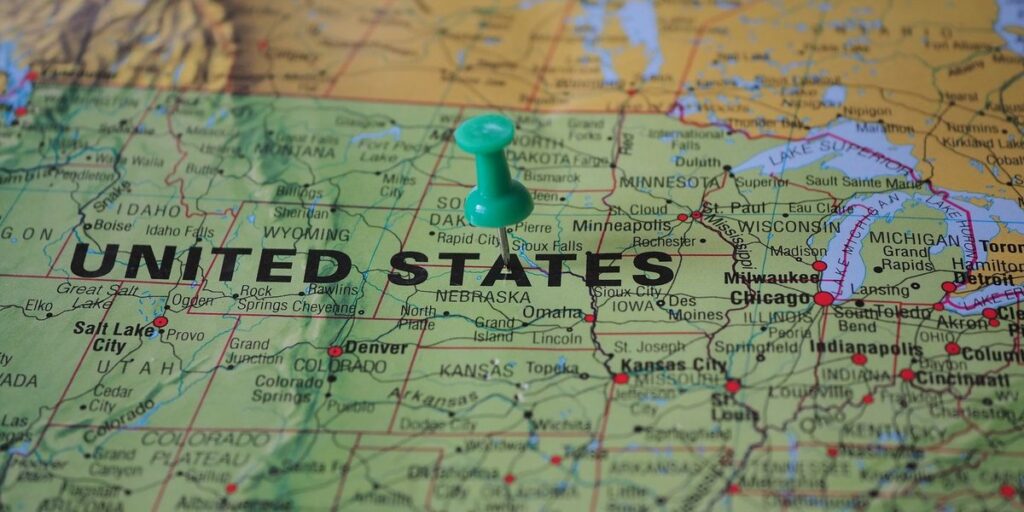
The United States doesn’t have one English. It has dozens. And the differences between them go far beyond saying “y’all” or “you guys” — they reach into grammar, rhythm, vowel shifts, and entire ways of structuring a sentence.
Linguists have identified somewhere between 24 and 30 distinct dialect regions in the US, depending on how granular you want to get. Most people experience this as a vague awareness that people “sound different” in other parts of the country. This guide breaks down what’s actually happening — and why it matters whether you’re a traveler, a language learner, or just someone curious about how a shared language fractures across 3,000 miles.
Table of Contents
- A Brief History of American Dialects
- The Major Dialect Regions
- Northern American English
- Southern American English
- Midland English
- Western American English
- Dialects You Probably Don’t Hear Enough About
- AAVE: African American Vernacular English
- Appalachian English
- Chicano English
- Hawaiian Pidgin
- How Dialects Are Changing Today
- Which Dialect Do You Speak?
- FAQ
A Brief History of American Dialects {#history}
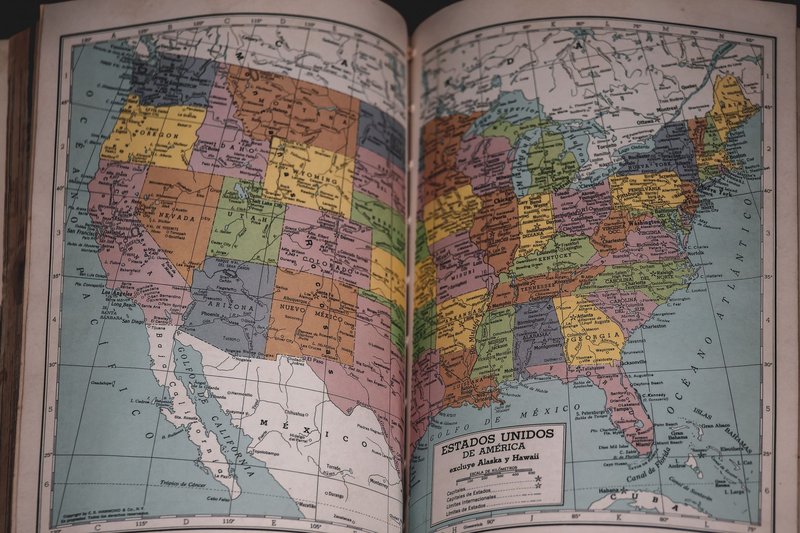
American dialects didn’t develop randomly. They have direct roots in immigration patterns, trade routes, and geographic isolation.
The earliest English settlers came from different regions of Britain — and they brought different varieties of the language with them. Settlers in Virginia and the Carolinas largely came from southern England. New England settlers included a heavy concentration from East Anglia. These starting points mattered: regional speech patterns in the US today still echo 17th-century England in ways most speakers are unaware of.
Isolation reinforced the differences. Before railroads and national broadcasting, communities in Appalachia, coastal South Carolina, or the rural Midwest could go generations with minimal outside contact. Each region’s English evolved on its own track. Then came industrialization, mass migration, and eventually radio and television — forces that pushed dialects toward a standard but never fully flattened them.
The Linguistic Atlas of the United States, which has been documenting American speech since the 1930s, offers some of the most detailed evidence of just how persistent these regional differences are, even now.
The Major Dialect Regions {#major-regions}
Northern American English {#northern}
The North isn’t uniform, but the most striking feature shared across it is the Northern Cities Vowel Shift — a chain shift first documented by linguist William Labov in cities like Chicago, Cleveland, Detroit, and Buffalo. The vowel in “bat” moves toward “bee-yat.” The vowel in “bus” moves toward the sound in “boss.” The result is that a sentence like “it’s in the bag” can sound to outsiders like “it’s in the beg.”
This shift is strongest in the industrial Great Lakes corridor. It doesn’t apply uniformly to all Northern speech — New England has its own flavor, with the famous non-rhotic accent (dropping the “r” after vowels) that makes “car” sound like “cah” in Boston.
The New York City dialect is its own thing entirely: non-rhotic like Boston, but with distinct vowel qualities, a strong /æ/ tensing rule (the word “bad” gets a pronounced drawl that “back” doesn’t), and a rhythm that linguists call “fast and clipped” compared to Southern speech.
Southern American English {#southern}
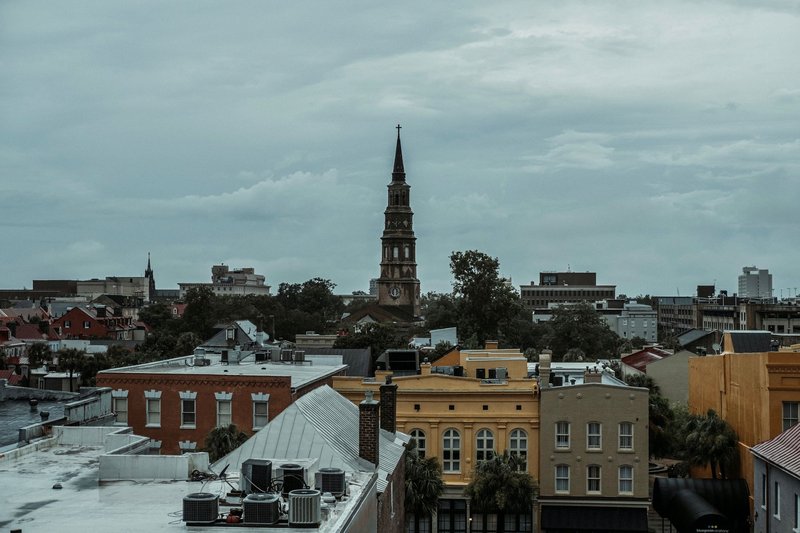
Southern American English is arguably the most recognized dialect in the country — and the most misunderstood.
The signature feature is the Southern Vowel Shift, which runs in the opposite direction from the Northern one. The vowel in “bid” moves toward “bed.” The vowel in “bed” moves toward “bad.” The result is a kind of cascading drawl where single-syllable words become two syllables: “pen” becomes “pay-in,” “time” becomes “tah-eem.”
Beyond vowels, Southern English has distinctive grammar: “might could” as a double modal (“you might could try that”), “fixing to” as a near-future marker (“I’m fixing to leave”), and “fixin’s” to describe side dishes. These aren’t sloppy English — they’re systematic features that follow consistent rules within the dialect.
Southern English isn’t monolithic either. The Coastal South (Charleston, Savannah) has prestige features and historical depth. The Gulf South (Alabama, Mississippi, Louisiana) blends French Creole influence. Texas Southern English has its own cowboy-adjacent flavor that doesn’t quite match Georgia.
Midland English {#midland}
The Midland — Pennsylvania through Kansas, roughly — is often described as “standard” American English, but that’s an oversimplification. It lacks the extreme vowel shifts of the North and South, which makes it sound neutral to most ears. Broadcasters and voice actors have historically been trained toward a Midland standard.
But Midland English has its own features. The merger of the vowels in “cot” and “caught” is widespread here (and throughout most of the US west of the Appalachians), so those words are pronounced identically. The “pin-pen merger” — where “pin” and “pen” sound the same before nasal consonants — is common in the South Midland and bleeds into parts of the actual South.
Pennsylvania adds its own wrinkle: the Pennsylvania Dutch influence in central PA produces constructions like “the car needs washed” (without the “to be”), which sounds jarring to speakers from other regions.
Western American English {#western}
The West is the most linguistically mixed region, in part because it was settled last and by people from everywhere else. The cot-caught merger is nearly universal. Rhotic pronunciation (saying the “r” clearly) is standard.
California has developed its own identifiable features. The California Vowel Shift is a real thing: words like “dude” and “food” have fronted vowels, so they’re produced further forward in the mouth. The stereotypical “Valley Girl” speech is an exaggerated version of features found across younger Californian speakers of all backgrounds.
The Pacific Northwest and Mountain West are sometimes described as “General American” but that’s largely because they haven’t been studied as intensively. Research is catching up — and finding features that make them distinct from the Midland.
Dialects You Probably Don’t Hear Enough About {#underrepresented}
AAVE: African American Vernacular English {#aave}
African American Vernacular English is one of the most studied and most misrepresented dialects in the country. It’s a fully systematic variety of English with rules that differ from Standard American English in consistent, predictable ways.
The feature most people recognize is habitual “be”: “She be working late” means she regularly works late — it’s not a grammatical error, it’s a grammatical distinction that Standard American English doesn’t make. AAVE marks habitual action with “be”; “She is working late” means right now, not as a pattern.
AAVE also uses copula deletion — dropping forms of “to be” in contexts where Standard English requires them: “He tall” instead of “He is tall.” This mirrors patterns found in Arabic and many West African languages, which points to the creole roots of early African American speech.
AAVE isn’t regional in the same way Northern or Southern English is — it’s spoken across the country with variation. But it’s also not monolithic: AAVE in Atlanta sounds different from AAVE in Chicago or Detroit. And it has had an outsized influence on American English broadly, from vocabulary (cool, lit, flex) to rhythm to phonology.
Appalachian English {#appalachian}
Appalachian English preserves features from earlier forms of English that have disappeared elsewhere. The a-prefixing construction — “I went a-hunting,” “she kept a-crying” — was common in 16th-century English and survived in the mountains of eastern Kentucky, West Virginia, and western North Carolina while dying out in the rest of the English-speaking world.
The dialect uses “holler” to mean a small valley, “yonder” for a direction, and “reckon” for “think” or “suppose” — all words that sound archaic to outside ears but are in active daily use. Double modals (“might could,” “used to could,” “might oughta”) appear here too, independently of Southern English.
Appalachian English has been stigmatized heavily, with speakers often labeled as uneducated or backward. That stigma is entirely a social construct: the dialect is internally consistent, historically rooted, and no less “correct” than any other variety.
Chicano English {#chicano}
Chicano English developed in Mexican American communities in the Southwest and California, and it’s not simply Spanish-inflected English. It’s a native dialect — meaning it’s spoken by people who are native English speakers, not by Spanish speakers learning English. Mexican Americans are one of the many ethnic groups in North America whose distinct cultural heritage has shaped the regional speech around them.
Features include rising intonation at the end of statements (making them sound like questions to outside ears), particular vowel qualities, and syntax influenced by Spanish. But the key point is that Chicano English speakers aren’t “speaking English with a Spanish accent” — they’re speaking a distinct dialect of English that happens to share some phonological territory with Spanish.
Chicano English has influenced American English broadly, especially in California. Terms like “no worries,” certain uses of “homes,” and aspects of code-switching culture have entered mainstream American speech through this route.
Hawaiian Pidgin {#hawaiian-pidgin}
Hawaiian Pidgin (technically called Hawaii Creole English) developed on sugar and pineapple plantations in the 19th century, when workers from Japan, China, the Philippines, Portugal, Korea, and Hawaii itself needed a common language. What started as a pidgin — a simplified contact language — evolved over generations into a full creole with native speakers.
It has its own grammar, phonology, and vocabulary. “Brah” (friend), “da kine” (a flexible placeholder term, like “whatchamacallit”), “stoked” (used earlier and more broadly than on the mainland) — these are Pidgin. Word order follows different rules from Standard English: “I stay eating” marks progressive aspect in a way that has no parallel in mainland dialects.
Hawaii Creole English has official recognition as a language in Hawaii, and the debate over its status — language vs. dialect vs. slang — reflects larger political questions about what counts as “real” language.
How Dialects Are Changing Today {#changing}
Two forces are pulling in opposite directions.
The first is dialect leveling: regional accents are softening in some populations, particularly among younger, educated, mobile speakers who consume national media and move between cities. Certain prestige features are spreading at the expense of local ones.
The second is divergence: in working-class urban communities and tight-knit regional communities, dialects are often intensifying rather than fading. The research of linguist William Labov consistently found that dialect features aren’t disappearing — they’re changing, sometimes getting stronger in specific communities even as they fade in others.
Social media adds a new variable. TikTok in particular has created a kind of dialect mixing that linguists are still working to understand. Some features — uptalk, vocal fry, certain AAVE syntax — spread rapidly through online speech. Others don’t. The mechanism isn’t simply “people hear it and copy it.” Identity matters: speakers adopt features that align with social groups they want to belong to, and reject features that don’t fit their self-image.
Remote work is having its own effect. When you spend eight hours a day on video calls with people from across the country, your speech patterns do shift — but not necessarily toward a single standard. Some research suggests people are developing more flexible registers, moving between dialects fluidly rather than abandoning their home variety.
Which Dialect Do You Speak? {#quiz}
A few quick tells that reveal where your English is from:
The cot-caught test: Say “cot” and “caught” out loud. Do they sound the same or different? If they’re the same, you’re probably from the Midwest, West, or some of the South. If they’re clearly different, you’re likely from the Northeast, Mid-Atlantic, or a smaller pocket of the South.
The pin-pen test: Do “pin” and “pen” sound identical to you? If yes, your dialect has the Southern nasal merger — you’re likely from the South or South Midland.
The bag/beg test: Does “bag” have a tense, elongated vowel — almost like “bay-ag”? You might be from the Northern Cities corridor.
The needs washed test: Does “the dishes need washed” sound right to you? If yes, you’re probably from Pennsylvania, Ohio, or nearby parts of the Midland.
The “you” test: What do you say to address a group? “You guys” points North and West. “Y’all” points South. “Yinz” or “yuns” points to Pittsburgh. “You’uns” points to Appalachia.
FAQ {#faq}
How many dialects does the US have? Estimates range from 24 to 30 distinct regional varieties, depending on how finely you draw the lines. The Linguistic Atlas projects provide the most comprehensive mapping.
Is American English becoming more uniform? Partially. Mobile, educated speakers are converging toward a looser standard. But working-class and tight-knit community dialects are often holding steady or intensifying. The picture is more complicated than “everyone’s starting to sound the same.”
Is AAVE a dialect or a separate language? By the technical linguistic definition, it’s a dialect of English — mutually intelligible with Standard American English, sharing most of its grammar. But the line between dialect and language is political as much as linguistic (“a language is a dialect with an army and a navy,” as the saying goes). AAVE is a fully systematic, rule-governed variety with deep historical roots.
Does where you grow up determine your dialect, or who you spend time with? Both. You acquire your primary dialect from your community during childhood — peers matter more than parents after a certain age. But dialects are surprisingly malleable throughout life, especially for people who move or spend significant time in different linguistic environments.
Are some American dialects “more correct” than others? No. Standard American English is a prestige dialect with institutional backing — schools, broadcasting, government. That gives it social power. It doesn’t make it linguistically superior. Every dialect in this guide follows consistent internal rules. The grammar of Appalachian English isn’t broken Standard English; it’s a different system.