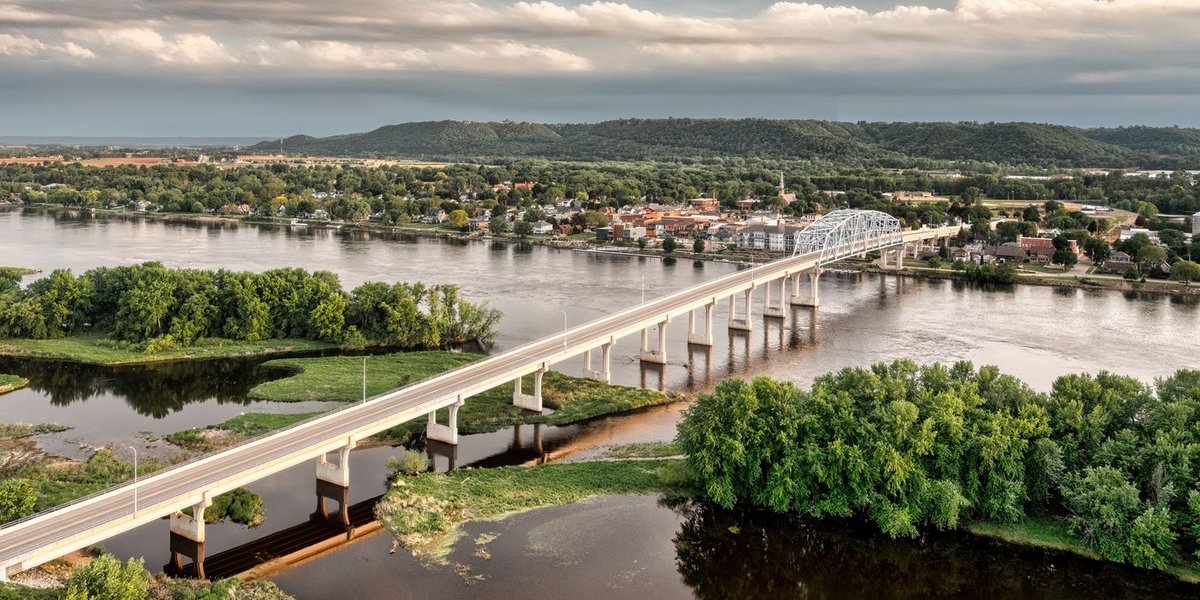
The Illinois-Iowa border is the Mississippi River, start to finish. No surveyor’s line, no fence. Every bordering town sits on one bank or the other, and most have a twin across the water connected by a bridge you can drive in a few minutes.
Most lists name Davenport and Moline and stop. This one walks the whole line north to south and pairs each Illinois town with its Iowa counterpart, with the bridge between them.
Contents
- Quick answers
- East Dubuque and Dubuque
- Savanna and Sabula
- Fulton and Clinton
- The Quad Cities
- Muscatine and the Illinois shore
- Gulfport and Burlington
- Fort Madison and Niota, with Nauvoo down the road
- Hamilton and Keokuk
- Tolls, taxes and time zones
- Crossing life: commuters and casinos
Quick answers
The biggest Illinois-Iowa border towns are the Quad Cities group: Davenport and Bettendorf in Iowa, Rock Island, Moline and East Moline in Illinois. Upriver, Dubuque and East Dubuque are the other well-known pair. Downriver, the pairs get smaller and the bridges get lonelier.
| Illinois side | Iowa side | Bridge | Cost | Reason to cross |
|---|---|---|---|---|
| East Dubuque | Dubuque | Julien Dubuque Bridge (US 20) | Toll | Bluff-top views and Dubuque’s riverfront |
| Savanna | Sabula | Savanna-Sabula Bridge (Route 64) | Check current status | An island town you can’t reach any other way |
| Fulton | Clinton | Gateway Bridge (US 30) | Free | Fulton’s Dutch windmill |
| Rock Island, Moline, East Moline | Davenport, Bettendorf | Government, Centennial, I-74, I-80, I-280 | Free | The biggest metro on the river |
| Rural Rock Island County | Muscatine | Muscatine Bridge (Route 92) | Toll | Farm country and a pearl-button history |
| Gulfport | Burlington | Great River Bridge (US 34) | Free | Snake Alley |
| Niota | Fort Madison | Fort Madison Toll Bridge | Toll | A rare double-deck swing bridge |
| Hamilton | Keokuk | Keokuk-Hamilton Bridge (US 136) | Free | The last Iowa town on the river |
East Dubuque and Dubuque
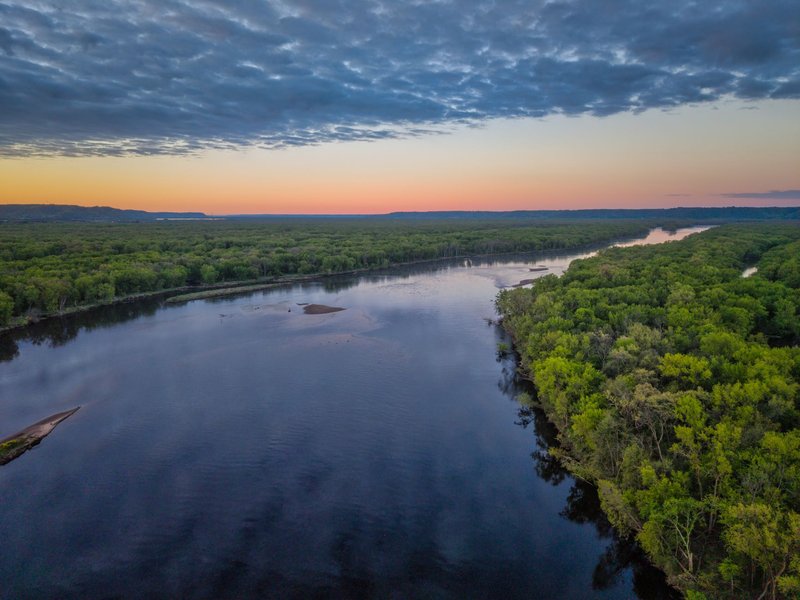
This is the top of the line. Dubuque is a city of roughly 59,000 sitting under limestone bluffs, with a restored riverfront, a historic cable-car incline (the Fenelon Place Elevator) and a downtown that looks like a 19th-century river town because it was one. East Dubuque, Illinois, is a town of under 2,000 people on the far bank.
The Julien Dubuque Bridge carries US 20 between them and charges a toll. The Illinois side is mostly a quick stop for gas, food and the river view back at Dubuque’s skyline. Plan to spend your time on the Iowa bank.
Savanna and Sabula
Sabula, Iowa, is a town of about 500 people built on an island, which makes it one of the few places in the Midwest where “going into town” involves a causeway and a river. Savanna, Illinois, sits on the opposite bank, with about 2,800 residents and a long railroad history.
The Savanna-Sabula Bridge carries Route 64 and has been a headache for engineers for years. Check the Illinois Department of Transportation and the Iowa DOT for its current status before you plan a drive. Closures here mean a long detour to the nearest crossing in Clinton or Dubuque.
Fulton and Clinton
Clinton, Iowa, has about 24,000 people and a working riverfront, with towboats pushing barges past the downtown. Fulton, Illinois, is smaller, around 3,500 people, and has one landmark worth the trip: De Immigrant, a working Dutch windmill brought over from the Netherlands.
The Gateway Bridge on US 30 links them and is free. The river here is tied into the lock-and-dam system that the U.S. Army Corps of Engineers runs to keep barges moving.
The Quad Cities
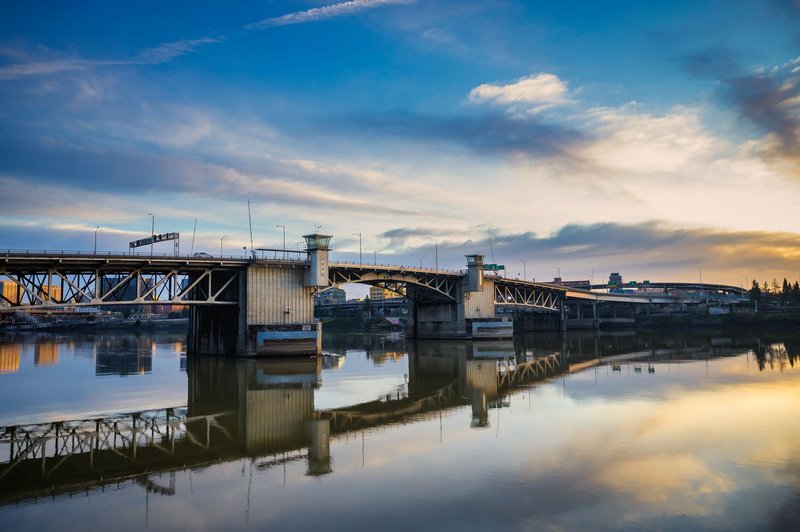
Here’s the quirk: at the Quad Cities, the Mississippi flows east to west. That puts Iowa on the north bank and Illinois on the south, which is the opposite of what most people picture. Rock Island, Moline and East Moline sit in Illinois. Davenport and Bettendorf sit in Iowa. The metro area is home to roughly 380,000 people and spans both states.
The cities, in short:
- Davenport, Iowa (about 100,000): the largest city in the cluster, with a big riverfront park and a casino downtown.
- Bettendorf, Iowa (about 39,000): suburban, upscale, and the Iowa end of the I-74 bridge.
- Rock Island, Illinois (about 37,000): home to the Arsenal Island military installation in the middle of the river.
- Moline, Illinois (about 43,000): headquarters of Deere & Company, the farm-equipment maker.
- East Moline, Illinois (about 21,000): an industrial town on the Illinois bank.
The bridges are the best part. The Government Bridge crosses Arsenal Island, carrying road and rail traffic and opening for river traffic. The Centennial Bridge links Davenport and Rock Island. The I-74 bridge, rebuilt as twin spans in the last few years, ties Bettendorf to Moline. Further west, the I-80 and I-280 crossings carry the interstate traffic around the metro. All five are free to cross.
Muscatine and the Illinois shore
Muscatine, Iowa (about 23,000), was once the pearl-button capital of the United States, built on freshwater mussel shells pulled from the river. The Muscatine Bridge on Route 92 is a toll crossing, and it lands in quiet Illinois farm country rather than in a mirror-image town. Unlike the pairs above, Muscatine has no real Illinois twin. Come for the river views and the button-history museum on the Iowa side.
Gulfport and Burlington
Burlington, Iowa (about 24,000), is the draw here. It has Snake Alley, a one-block brick street with five curves that earned the “crookedest street” title in the 1890s, and a downtown that climbs a bluff. Gulfport, Illinois, on the other bank, is tiny. The Great River Bridge on US 34 is free and connects them.
Illinois river towns like Oquawka and Keithsburg lie to the north and south along the Henderson and Mercer County shore. They’re quiet, but they’re the ones you’ll find if you drive the Illinois bank on the river road.
Fort Madison and Niota
Fort Madison, Iowa, sits on a bend of the river and has a bridge you’ll remember: the Fort Madison Toll Bridge is a double-deck swing-span, with cars on the top level and trains below, and it’s among the longest of its kind. It lands in Niota, Illinois, which is a small village with one or two streets of buildings.
The real Illinois attraction in this area is farther south on Route 96. Nauvoo, Illinois, is a town of roughly 1,000 people known for its Latter-day Saint history, with restored 1840s buildings on a bluff above the river. There’s no bridge to Nauvoo from Iowa, so most visitors drive in from Fort Madison or Keokuk.
Hamilton and Keokuk
At the bottom of the Iowa-Illinois line sits Keokuk, Iowa (about 10,000), the southernmost city in Iowa, perched on a bluff below a lock and dam. Hamilton, Illinois, is across the river, with about 3,000 people. The Keokuk-Hamilton Bridge (US 136) is free.
From here the river keeps going south into Missouri, and the Iowa-Illinois border ends where the three states meet, a convergence point similar to the one detailed in Where Tennessee and Missouri Touch: The Border Towns.
Tolls, taxes and time zones
A few practical points apply to every crossing.
- Time zone: None. Illinois and Iowa are both on Central Time, so crossing the river doesn’t change your clock.
- Tolls: The Julien Dubuque, Muscatine and Fort Madison bridges charge tolls. The Quad Cities bridges, the Gateway Bridge, the Great River Bridge and the Keokuk-Hamilton Bridge don’t.
- Sales tax: Rates differ by city and county in both states, so a purchase in Davenport and one in Moline can carry different totals. Check the local rate if you’re buying something expensive.
- Gas: Illinois generally taxes fuel more heavily than Iowa, so Iowa pumps are often cheaper. Prices shift, so compare before you cross to fill up.
Crossing life
Thousands of people live on one side of the river and work on the other, especially in the Quad Cities, where the bridges function as city streets. A Moline resident can work in Davenport and shop in Bettendorf without thinking about the state line.
Riverboat-style casinos also sit on both banks in places like Davenport and Rock Island, and gaming rules differ between the states. For visitors, that means the better move is to pick the side that has what you want and cross when you need to.
If you’re planning a drive along the whole border, go north to south, take the toll bridges as part of the experience, and give yourself at least a long weekend. The river is the same all the way down. The towns on either side of it aren’t.