Paraguay is the only country in the Americas where most people speak an indigenous language. Not as a heritage hobby, not in a handful of remote villages — as the everyday language of roughly nine in ten Paraguayans. A taxi driver in Asunción will haggle in it. A grandmother will scold in it. A politician will campaign in it.
That language is Guaraní, and it gets almost all the attention, for good reason. But it’s one of around twenty indigenous languages still spoken inside Paraguay’s borders, and the other nineteen tell a more complicated story — some thriving, some down to a few hundred speakers, a couple hanging on by a thread. Most articles list their names and stop there. This one actually tells you who speaks them and how they’re doing.
Table of Contents
- The quick version
- Why Guaraní is the exception, not the rule
- Jopará: the language most Paraguayans actually speak
- The five language families
- Every indigenous language, family by family
- Is Guaraní actually safe? And which languages are dying?
- What this means if you’re visiting
The quick version {#the-quick-version}
If you only read one section, read this one.
- Paraguay has two official languages: Spanish and Guaraní, the only indigenous language with co-official national status anywhere in the Americas.
- Guaraní is spoken by roughly 90% of the population — including millions of non-indigenous Paraguayans. It became co-official in the 1992 Constitution and got real legal teeth with the 2010 Languages Law.
- There are about 19 other indigenous languages, spoken mostly by the ~2% of Paraguayans who are indigenous. Almost all of them live in the Gran Chaco, the vast scrubland covering the country’s western half.
- These languages fall into five families: Tupi-Guaraní, Mataco-Mataguayan (Matacoan), Guaicuruan, Mascoian, and Zamucoan.
- Several are endangered. Maskoy, Ayoreo, Aché, and others have small and in some cases shrinking speaker bases.
- Most Paraguayans don’t speak “pure” Guaraní day to day. They speak Jopará, a fluid Guaraní-Spanish mix.
Now the detail.
Why Guaraní is the exception, not the rule {#why-guarani-is-the-exception}
Across the Americas, the pattern after colonization was brutal and consistent: European languages displaced indigenous ones, which survived only in pockets. Quechua holds on in the Andes, Nahuatl in parts of Mexico, but none became the shared tongue of an entire mixed-race nation. Paraguay broke the pattern.
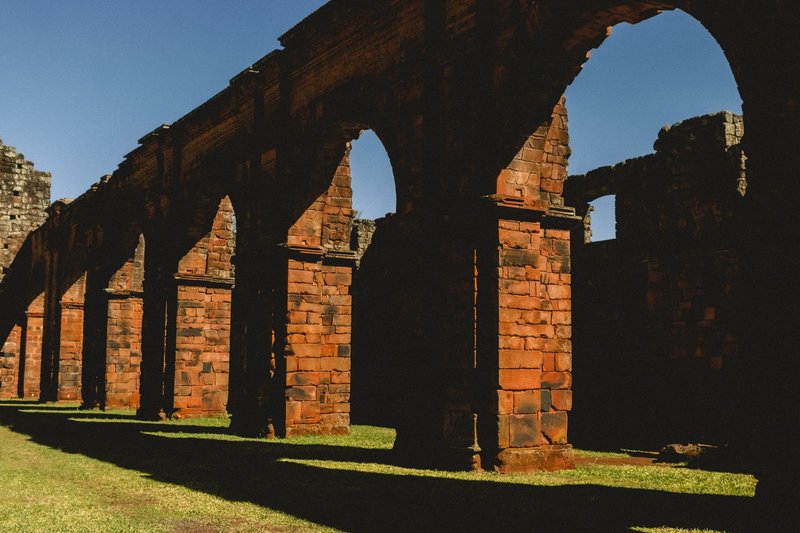
The reasons are specific to its history. Paraguay was landlocked, poor in the silver and gold that drew waves of Spanish settlers elsewhere, and dominated for over a century by Jesuit missions that — unusually — chose to evangelize in Guaraní rather than Spanish. The Jesuits standardized the language, wrote grammars and dictionaries, and printed religious texts in it. When you teach the faith in a language, you also legitimize and preserve that language. By the time the Jesuits were expelled in 1767, Guaraní was woven into how the colony actually functioned.
Then came the demographics. Spanish men, indigenous Guaraní women, and a population that grew up bilingual from the cradle. The mother’s language stuck. Spanish became the language of government and the written word; Guaraní stayed the language of home, intimacy, jokes, and the countryside — and it never left. That mestizo fusion is the same one that produced many of the ethnic groups across Latin America, but in Paraguay’s case the indigenous half of the equation kept its language largely intact.
It almost didn’t survive the 20th century, though. Under the dictatorship of Alfredo Stroessner (1954–1989), Guaraní was associated with the rural poor and actively discouraged in schools; children were sometimes punished for speaking it in class. That it came out the other side as a co-official language, written into the 1992 Constitution, is a genuine reversal. The 2010 Law of Languages went further, creating a body to standardize and promote it and requiring the state to operate in both tongues. UNESCO’s reporting on Paraguay’s bilingual education frames the country as a rare living model of a stable bilingual society.
Jopará: the language most Paraguayans actually speak {#jopara}
Here’s the thing the textbooks gloss over. When a Paraguayan switches into “Guaraní,” they’re usually not speaking the pure, standardized Guaraní you’d find in a grammar book. They’re speaking Jopará — a word that means “mixture” — which blends Guaraní grammar and core vocabulary with a steady stream of Spanish words, especially for modern concepts, numbers, and anything technical.
It’s not broken Guaraní and it’s not Spanish with an accent. It’s a continuum people slide along depending on who they’re talking to and what they’re talking about. Counting money? The numbers come out in Spanish. Talking about feelings or family or food? Guaraní does the heavy lifting. A single sentence can flip between the two without anyone noticing.
This matters because purists sometimes wring their hands over Jopará “diluting” real Guaraní. The opposite case is stronger: Jopará is why Guaraní stayed alive and useful. A language that refuses to borrow words for “internet” or “bus schedule” gets left behind. Jopará let Guaraní keep up with the 20th and 21st centuries. It’s the living, sweaty, functional version — and it’s what you’ll actually hear on the street in Asunción.
The five language families {#the-five-language-families}
Beyond Guaraní, Paraguay’s indigenous languages sort into five families. Geography is the quickest way to understand them: almost all of these communities live in the Gran Chaco, the hot, sparsely populated lowland that makes up about 60% of Paraguay’s territory but holds a tiny fraction of its people. The Chaco is where the linguistic diversity actually lives.
| Family | # of languages in Paraguay | Where | Rough scale |
|---|---|---|---|
| Tupi-Guaraní | Several (incl. Guaraní, Aché, Mbyá, Paĩ Tavyterã) | East + scattered | Guaraní huge; others small to moderate |
| Mataco-Mataguayan (Matacoan) | Nivaclé, Maká, Manjui | Central/western Chaco | Thousands |
| Guaicuruan | Toba Qom | Eastern Chaco | A few thousand |
| Mascoian | Enlhet, Enxet, Sanapaná, Angaité, Guaná, Toba-Maskoy | Central Chaco | Hundreds to thousands; some critical |
| Zamucoan | Ayoreo, Chamacoco (Ɨshɨr) | Northern Chaco | Low thousands |
The names get confusing because the same people, language, and spelling can appear three different ways across sources — Enxet vs. Lengua, Toba Qom vs. just Toba, Chamacoco vs. Ɨshɨr. That’s partly orthography catching up to languages that were oral for most of their history, and partly outsiders naming groups before asking them what they called themselves.
Every indigenous language, family by family {#every-language}
This is the part the reference pages skip. Here’s actual treatment of each, not a bare list of hyperlinks.
Tupi-Guaraní family
Guaraní (Paraguayan Guaraní) — The giant. Around 6 million speakers when you count Paraguay and neighboring border regions, co-official, taught in schools, and spoken by the non-indigenous majority. Everything above applies here.
Mbyá Guaraní — A distinct Guaraní variety spoken by the Mbyá people in eastern Paraguay (and across the border in Brazil and Argentina), with tens of thousands of speakers regionally. Crucially, Mbyá is not the same as the national Guaraní — it’s a separate ethnic and linguistic tradition, more conservative, tied to forest communities and their own spiritual practices.
Aché (Guayakí) — Spoken by the Aché, historically a hunter-gatherer people of the eastern forests with a tragic 20th-century history of being hunted and forcibly settled. Only a few thousand Aché remain, and the language is considered vulnerable.
Paĩ Tavyterã and Ava Guaraní — Further Guaraní-branch groups, each numbering in the thousands, each with its own variety distinct enough to matter to the people who speak it.
Mataco-Mataguayan (Matacoan) family
Nivaclé (Chulupí) — One of the larger Chaco indigenous languages, with well over ten thousand speakers in the central Chaco. Relatively healthy by Chaco standards, with active community use and some written materials.
Maká — Spoken by the Maká people, many of whom live near Asunción rather than deep in the Chaco — unusual for a Chaco group. A couple thousand speakers, and the proximity to the capital has made them one of the more visible indigenous communities to outsiders.
Manjui (Chorote) — Smaller, a few hundred speakers in the western Chaco near the Argentine and Bolivian borders. Considered endangered.
Guaicuruan family
Toba Qom (Qom) — Spoken by the Qom people in the eastern Chaco, with several thousand speakers in Paraguay and far more across the border in Argentina, where it appears on the full list of indigenous languages in Argentina alongside dozens of others. The Guaicuruan peoples were historically the formidable horseback nations of the Chaco who resisted colonization for centuries.
Mascoian family
This is the family with the most languages and some of the most precarious situations.
Enlhet and Enxet (formerly grouped as “Lengua”) — The two largest Mascoian languages, together totaling well over ten thousand speakers in the central Chaco, much of it in and around the Mennonite colonies that settled the region in the 20th century.
Sanapaná, Angaité, and Guaná — Smaller Mascoian languages, ranging from a few thousand down to communities where the language is barely spoken by anyone under fifty. Guaná in particular is critically endangered.
Toba-Maskoy (Maskoy) — Among the most endangered languages in the country, with very few fluent speakers left. The shift to Guaraní and Spanish has been nearly total for younger generations.
Zamucoan family
Ayoreo — Spoken in the northern Chaco by the Ayoreo, who include some of the last uncontacted indigenous people in South America outside the Amazon — small groups still living in voluntary isolation in the forest. The language has a few thousand speakers, but deforestation of their territory is an existential threat to both the people and the language. Survival International’s documentation of the Ayoreo covers their ongoing situation in detail.
Chamacoco (Ɨshɨr) — The other Zamucoan language, spoken along the upper Paraguay River in the north, with a couple thousand speakers. Considered vulnerable but with stronger intergenerational transmission than several of its neighbors.
Is Guaraní actually safe? And which languages are dying? {#is-guarani-safe}
Two different questions, two different answers.
Guaraní itself is not endangered. With millions of daily speakers, official status, school instruction, and the backing of the 2010 Languages Law, it’s one of the most secure indigenous languages on the planet. Paraguay’s pairing of Spanish and Guaraní even earns it a place among the countries with the most official languages, though it’s an outlier on that list for giving co-official rank to an indigenous tongue. The real debates around Guaraní are about quality — whether standardized written Guaraní is too academic and disconnected from the Jopará people actually speak, and whether school instruction is producing literate users or just box-ticking.
The other languages are a different story. Indigenous Paraguayans are roughly 2% of the population, and that small base is split across nineteen languages. The pattern across the Chaco is familiar to anyone who studies language death: the grandparents are fluent, the parents understand but answer in Guaraní or Spanish, and the kids don’t speak it at all. The Ethnologue endangerment framework classifies several Paraguayan languages as threatened, shifting, or moribund.
The most at-risk include Toba-Maskoy, Guaná, and Manjui, where fluent speakers are aging and few. Ayoreo faces a different kind of threat — not just language shift but the physical destruction of the forest its speakers depend on, as the Chaco is cleared for cattle ranching at one of the fastest deforestation rates in the world.
There’s an irony worth sitting with. The same Guaraní that proves indigenous languages can survive colonization is now, in everyday Paraguay, one of the languages crowding out the smaller indigenous tongues. A Chaco child is far more likely to grow up speaking Guaraní and Spanish than the language of their own grandparents.
What this means if you’re visiting {#if-youre-visiting}
You don’t need any of the minority languages to travel in Paraguay — but a little Guaraní goes a long way, further than your Spanish will in a lot of situations.
Learn a few words. Mba’éichapa (how are you), aguyje (thank you), che (a casual “hey/dude” that’s everywhere). Paraguayans light up when a foreigner makes the effort, because almost none do. It signals you see Guaraní as a real language and not a quaint relic, which is exactly the respect the language spent five hundred years earning.
If you make it into the Chaco — to the Mennonite colonies around Filadelfia, or the indigenous communities beyond — you’re stepping into the most linguistically diverse part of the country, where Guaraní is just one option among many. That’s where the real story of Paraguay’s languages lives: not in the tidy “two official languages” line, but in twenty of them, holding on at very different odds.