
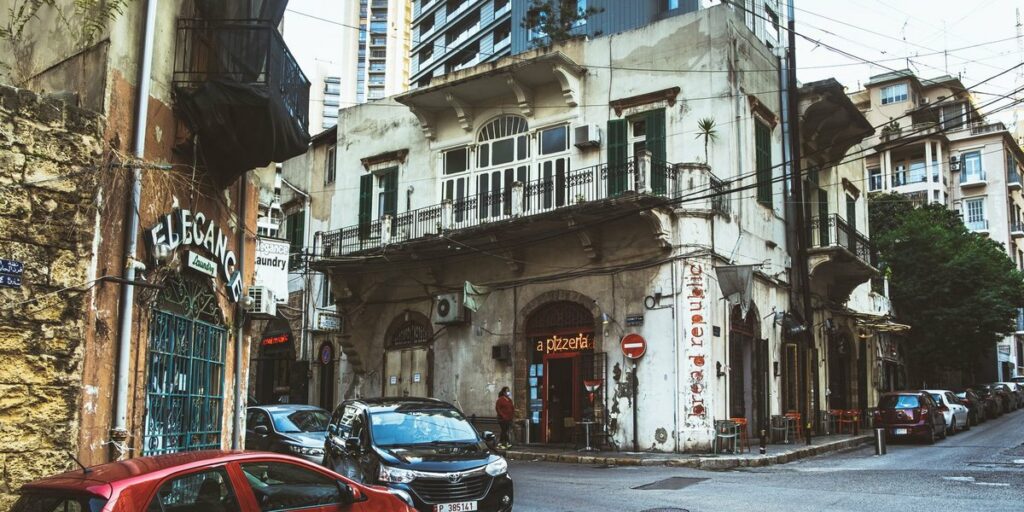
Walk into a café in Beirut and the greeting you’ll get is “Hi, kifak, ça va?” — three languages in three words: English hello, Lebanese Arabic “how are you,” French “all good?” That single phrase is the whole story of language in Lebanon. People here don’t pick one language and stick with it. They braid them together, often mid-sentence, without thinking about it.
The official language is Arabic. But “Arabic” in Lebanon means two different things, and on top of that most educated Lebanese speak French, English, or both. Here’s how it actually breaks down — and what you’ll really hear on the street.
Table of Contents
- The Quick Answer
- Arabic: Two Languages in One
- French: The Colonial Inheritance That Stuck
- English: The Rising Third
- Trilingual Code-Switching and Arabizi
- Minority Languages: Armenian, Syriac, Kurdish
- Regional Dialects
- Basic Phrases for Travelers
The Quick Answer
Lebanon’s official language is Arabic, but day-to-day life runs on a mix. Spoken Lebanese Arabic (a Levantine dialect) is what everyone uses at home and on the street. French is spoken by roughly 40% of the population and taught in most schools. English is spoken by around 30% and growing fast, especially among younger people and in business. Many Lebanese are comfortably trilingual and switch between all three in a single conversation. Minority communities also speak Armenian, Syriac, and Kurdish.
So the honest answer to “what language do they speak in Lebanon?” is: usually three at once.
| Language | Speaker share | Where you’ll hear it |
|---|---|---|
| Lebanese Arabic | Nearly everyone | Home, street, music, everyday talk |
| Modern Standard Arabic | Written/formal use | News, official documents, education |
| French | ~40% | Schools, business, older generations, signage |
| English | ~30% (rising) | Business, tech, universities, youth |
| Armenian | ~4% | Bourj Hammoud, Anjar, Armenian community |
| Syriac/Aramaic | Small, liturgical | Some churches, a few villages |
| Kurdish | Small | Kurdish minority communities |
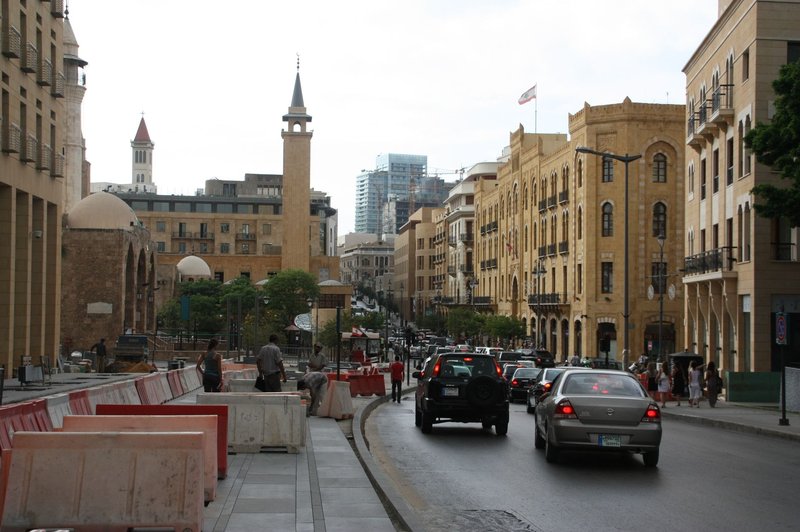
Arabic: Two Languages in One
This is the part that trips people up. When Lebanese people say they speak Arabic, they mean two distinct things, and the gap between them is bigger than most outsiders expect. Linguists call this situation diglossia.
Lebanese Arabic (a form of Levantine Arabic) is the living, spoken language. It’s what a mother uses with her kids, what you hear in pop songs, what gets shouted across a market. Nobody learns it formally — you absorb it. It has its own vocabulary, its own rhythm, and a heavy seasoning of French and English loanwords. “Merci” is the standard way to say thank you. “Ascenseur” is the elevator.
Modern Standard Arabic (MSA) is the formal register. It’s the Arabic of newspapers, TV news anchors, official speeches, school textbooks, and the written word. It’s shared across the entire Arab world, so a Lebanese newspaper reads the same as an Egyptian or Saudi one. But almost nobody speaks MSA conversationally — doing so in casual conversation would sound stilted, like quoting Shakespeare to order coffee.
The practical takeaway: if you learn textbook Arabic before visiting, you’ll be able to read signs and follow the news, but you’ll struggle to follow two friends chatting. The spoken dialect is a different animal. The BBC’s language overview of Arabic explains why the spoken-versus-written split matters so much across the Arab world.
French: The Colonial Inheritance That Stuck
France held a mandate over Lebanon from 1920 to 1943, and the language never left. Unlike a lot of post-colonial situations where the colonizer’s tongue faded, French dug in — partly because it became tied to education, social class, and the Christian communities, and partly because Lebanese culture genuinely embraced it.
Today French is woven into the fabric. Around 70% of Lebanon’s secondary schools use French as a primary language of instruction. Street signs in many areas appear in French. The Lebanese pound is still casually called the “lira,” but you’ll see “Banque” and “Pharmacie” on storefronts as often as their Arabic equivalents.
French skews older and more affluent, and it carries a certain cultural cachet. An older Beiruti from a traditional family might genuinely be more comfortable in French than in formal Arabic. The numbers tell the story: roughly 40% of the population speaks French to some degree, and Lebanon is a member of the Organisation internationale de la Francophonie, the global body of French-speaking nations.
English: The Rising Third
If French is the language of the past century, English is the language climbing fast right now. Among Lebanese under 30, in tech, in business, and in international universities like the American University of Beirut, English is increasingly the default second language over French.
Roughly 30% of the population speaks English, but that figure undersells the trend — it’s heavily concentrated in younger people and the professional class, and it’s growing every year. Walk into a startup in Beirut and the working language is probably English. A teenager texting friends is as likely to drop in English slang as French. Lebanon’s rise here mirrors a broader pattern across the region, where English keeps spreading among the young and the professional class — a trend you can trace across the English-speaking countries of Asia.
This creates a generational split worth knowing: an older shopkeeper may answer you in French, while their grandchild answers in English. Both are speaking “Lebanese.”
Trilingual Code-Switching and Arabizi
Here’s the thing that genuinely surprises first-time visitors: Lebanese people don’t keep their languages in separate boxes. They blend them in real time. A single sentence might start in Arabic, pivot to French for a phrase, and land on an English word — and everyone in the room follows effortlessly.
“Hi, kifak, ça va?” is the famous example, but it goes much deeper. You’ll hear things like “Yalla, let’s go, on y va.” Choosing which language to use for which word isn’t random; it signals education, social context, and sometimes just which word comes to mind first. This fluid switching is so characteristic that it’s become a marker of Lebanese identity itself.
Then there’s Arabizi — the Latin-script alphabet Lebanese use for texting and chat. Because Arabic has sounds with no English letter equivalent, people improvised with numbers. The “3” stands in for the throaty ʿayn sound, “7” for the hard h, “2” for the glottal stop. So “I love you” might come through as “ba7ebbak,” and “good morning” as “saba7 el khayr.” If you get a text from a Lebanese friend full of numbers, that’s not a typo — that’s Arabizi, and the whole region under 40 reads it fluently.
Minority Languages: Armenian, Syriac, Kurdish
Beyond the big three, Lebanon hosts several minority languages tied to specific communities. For a fuller breakdown of these older tongues, including native names and where they’re still spoken, see this list of indigenous languages in Lebanon.
Armenian is the most significant. Lebanon took in a large Armenian population after the 1915 genocide, and they built tight-knit communities — most famously Bourj Hammoud, a neighborhood just east of Beirut where Armenian shop signs, churches, and schools dominate, and the town of Anjar in the Beqaa Valley. Western Armenian is still spoken at home, taught in community schools, and used in local media. Roughly 4% of Lebanon’s population is Armenian.
Syriac (Aramaic) survives mainly as a liturgical language in some Maronite and Syriac Christian churches — a direct descendant of the Aramaic spoken in the region two thousand years ago. A handful of villages and religious communities keep it alive in worship, though it’s no longer an everyday spoken tongue.
Kurdish is spoken among Lebanon’s Kurdish minority, many of whom settled in Beirut over the past century.
Regional Dialects
Even within Lebanese Arabic, the way people speak shifts as you move around this small country. The Beiruti dialect is the “standard” you’ll hear in media and music. But head into the mountains and the Chouf region — the Druze heartland — and you’ll notice differences in pronunciation and vocabulary. The Beqaa Valley in the east has its own flavor, closer in some ways to Syrian Arabic. Northern Lebanon around Tripoli sounds different again. The same Levantine threads run south, too; neighboring Jordan’s ancient and living languages show how the wider region’s Arabic varies across borders.
These aren’t huge barriers — everyone understands everyone — but locals can often guess your village from a few sentences, the way an American might place a Boston accent.
Basic Phrases for Travelers
You don’t need fluency to travel in Lebanon — English and French will carry you in most cities. But a few words of Lebanese Arabic earn instant goodwill. Note that “thank you” is usually French, not Arabic, in everyday use.
- Hello — Marhaba (or just “Hi”)
- How are you? — Kifak? (to a man) / Kifik? (to a woman)
- Thank you — Merci (yes, the French word — it’s standard)
- Please — Min fadlak (to a man) / Min fadlik (to a woman)
- Yes / No — Eh / La
- Good — Mnih / Tayyeb
- How much? — Addaysh?
- Goodbye — Bye or Yalla bye (Arabic “yalla” + English bye, very Lebanese)
That last one captures the whole country in two words. Yalla bye.
The Takeaway
Lebanon doesn’t have a single language — it has a living conversation between four of them. Arabic is the foundation, split between the spoken Lebanese dialect everyone uses and the formal Modern Standard Arabic of news and schools. French is the cultivated inheritance of the older and wealthier set. English is the rising language of the young and the workplace. Armenian, Syriac, and Kurdish color the edges.
For a traveler, the practical reality is reassuring: you can get by easily in English or French almost anywhere, and Lebanese people are extraordinarily good at meeting you in whatever language you bring. Just don’t be surprised when the answer comes back in three of them at once.