Table of Contents
- TLDR
- Why city area depends on where you draw the line
- The 12 largest cities in Europe by area
- Why each city is so big
- Largest urban areas in Europe
- Largest by area vs largest by population
- FAQ
TLDR
Istanbul is the largest city in Europe by area at about 5,343 km² (2,063 sq mi), followed by Belgrade at about 3,227 km² and Moscow at about 2,511 km². London, Saint Petersburg and Sofia come next. All figures here use administrative city or municipality limits, not built-up area.
Why city area depends on where you draw the line
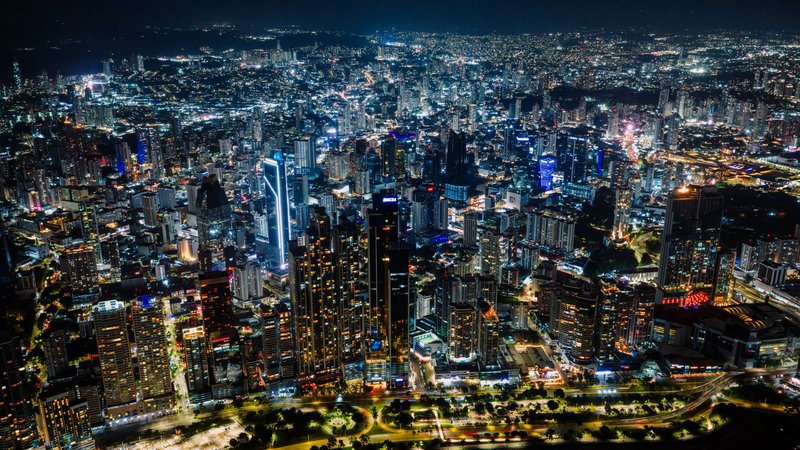
“How big is this city” has at least three answers. The administrative city is whatever the local government legally governs. The urban area is the continuous built-up footprint, which ignores borders. The metro area adds commuter towns and countryside tied to the core by jobs.
Most pages mix these without saying so, which is why you see Paris described as tiny in one list and enormous in another. Paris proper covers about 105 km². Its urban area is over 2,800 km².
This ranking uses one rule: the administrative city or municipality as it is currently drawn. Figures come from city statistics offices and national agencies such as TurkStat and the UK Office for National Statistics, cross-checked against Eurostat’s city data. Areas are rounded, and boundary changes or recounts can shift them by a few percent.
The 12 largest cities in Europe by area
| Rank | City | Country | Area (km²) | Area (sq mi) | Population (approx.) | Density (per km²) |
|---|---|---|---|---|---|---|
| 1 | Istanbul | Turkey | 5,343 | 2,063 | 15.7 million | 2,900 |
| 2 | Belgrade | Serbia | 3,227 | 1,246 | 1.7 million | 520 |
| 3 | Moscow | Russia | 2,511 | 969 | 13.0 million | 5,200 |
| 4 | London (Greater London) | United Kingdom | 1,572 | 607 | 8.8 million | 5,600 |
| 5 | Saint Petersburg | Russia | 1,439 | 556 | 5.6 million | 3,900 |
| 6 | Sofia | Bulgaria | 1,344 | 519 | 1.3 million | 950 |
| 7 | Rome | Italy | 1,285 | 496 | 2.75 million | 2,100 |
| 8 | Zaragoza | Spain | 973 | 376 | 0.68 million | 700 |
| 9 | Berlin | Germany | 891 | 344 | 3.7 million | 4,100 |
| 10 | Kyiv | Ukraine | 839 | 324 | 2.95 million | 3,500 |
| 11 | Hamburg | Germany | 755 | 292 | 1.9 million | 2,500 |
| 12 | Madrid | Spain | 604 | 233 | 3.4 million | 5,600 |
Population and density are rounded and come from the most recent census or official estimate available for each city, so treat density as a guide, not a measurement.
Two cut-offs to know. Istanbul straddles the Bosphorus, so part of that 5,343 km² is in Asia; about two thirds of its people live on the European side. Some Russian city districts, such as Sochi at around 3,500 km², are administratively “cities” that are really long coastal strips of mountains and villages, and we’ve left them out of the table because their boundaries are so unlike a continuous city.
Why each city is so big
1. Istanbul
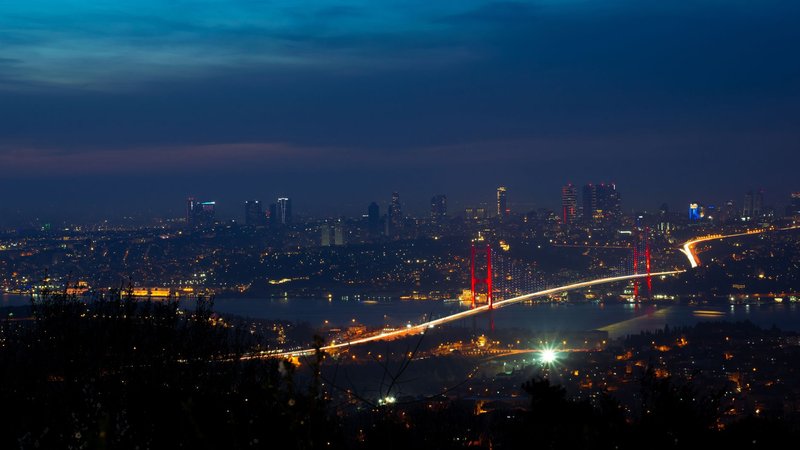
Istanbul’s metropolitan municipality was expanded in 2004 to match the entire province, so the “city” now includes forest, reservoirs, farmland and Black Sea coast far beyond the built-up core. The urban fabric occupies only a fraction of the 5,343 km².
2. Belgrade
Belgrade’s city limits take in ten urban and seven suburban municipalities, plus large stretches of farmland and forest along the Danube and Sava. Only a small slice of the 3,227 km² is dense city, which is why its density is the lowest of the top ten.
3. Moscow
Moscow was about 1,000 km² until 2012, when it absorbed a large area of Moscow Oblast to the southwest, roughly 2.4 times its previous size. The city now stretches well beyond the Moscow Ring Road, and the annexed part is still mostly towns, fields and woodland.
4. London
Greater London is a political region created in 1965 that merged the old County of London with chunks of Middlesex, Surrey, Essex, Kent and Hertfordshire. It includes green belt land, which is why Greater London is far bigger than the continuous urban London you can walk across.
5. Saint Petersburg
As a Russian federal city, Saint Petersburg’s borders include satellite towns such as Pushkin, Kronstadt and Peterhof, along with the Gulf of Finland shoreline. The compact historic centre is a very small part of the total.
6. Sofia
Sofia Capital Municipality covers the city plus 34 surrounding villages, and the Vitosha mountain nature park sits within its limits. That alone adds a lot of non-urban land.
7. Rome
Rome is Italy’s largest municipality by area. The comune includes huge stretches of the Roman countryside, the Tiber delta and the coastal district of Ostia, so large parts of it are farms and protected land.
8. Zaragoza
The Aragonese capital is the surprise on the list. Its municipality includes steppe-like farmland and irrigated plains along the Ebro, which gives it more area than Berlin with about one fifth of the people.
9. Berlin
Berlin’s modern size dates from the 1920 Greater Berlin Act, which merged dozens of towns and villages. About a third of the city is forest, lakes, parks and farmland, including the Grunewald and Müggelsee.
10. Kyiv
Kyiv spreads along both banks of the Dnipro, and its limits include islands, floodplain, forest and several satellite settlements. Population figures are uncertain after 2022.
11. Hamburg
Hamburg is a city-state, and its borders include port land, river islands on the Elbe and large green areas. The port alone occupies a significant share of the territory.
12. Madrid
Madrid’s municipality is dense and compact relative to the others, but it includes the El Pardo woodland north of the city. It makes the list because the cities below it are mostly in the 400 to 600 km² range.
Largest urban areas in Europe
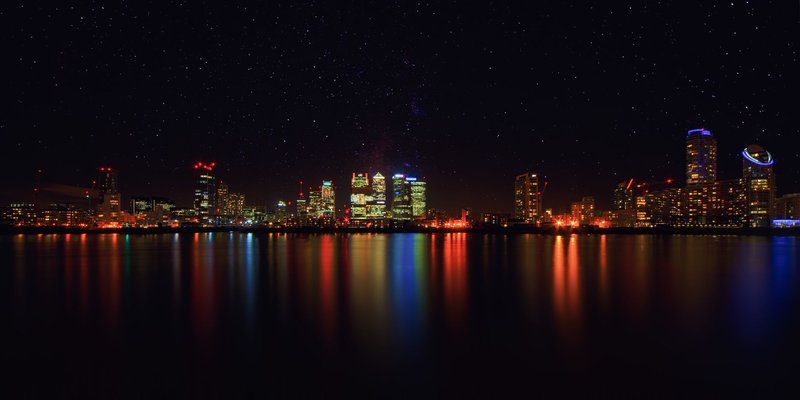
If you want the continuous built-up footprint instead, the ranking changes. The figures below are rounded estimates, because published urban-area numbers vary with the method and the year (Demographia, Eurostat and national agencies disagree by a few hundred km²).
| Urban area | Approx. built-up area (km²) |
|---|---|
| Moscow | 4,000 to 5,000 |
| Istanbul | 2,500 to 3,000 |
| Paris | 2,800 to 2,900 |
| London | 1,700 to 1,800 |
Moscow takes first place on this measure and Paris climbs from irrelevance to third. Istanbul drops from first to second or third because most of its administrative territory is not built over. Belgrade, which was number two, disappears from the top of the list entirely.
Largest by area vs largest by population
The two rankings barely overlap. Moscow is the only city in the top three by area that is also among the biggest by population. Belgrade has about 1.7 million people in an area larger than all of Greater London. Berlin has over three million in less than 900 km². Paris has about two million in 105 km².
Density tells you which kind of big a city is. London and Madrid are around 5,600 people per km². Zaragoza and Belgrade sit under 750. A city that’s huge on paper but sparse in people is usually one that annexed its surroundings.
FAQ
What is the largest city in Europe by area?
Istanbul, at about 5,343 km². It sits on two continents, so if you only count the European side, the answer changes and Belgrade or Moscow can take the lead depending on how you split Istanbul’s territory.
What is the largest city in Europe by area excluding Turkey?
Belgrade, at about 3,227 km², followed by Moscow at about 2,511 km².
Is London bigger than Paris?
Yes. Greater London covers roughly 1,572 km² against about 105 km² for the City of Paris. Their urban areas are much closer: roughly 1,750 km² for London and 2,850 km² for Paris, which puts Paris ahead.
Why does the area of Moscow differ between sources?
The city grew from about 1,000 km² to about 2,500 km² in 2012. Older sources still quote the smaller figure, and some include or exclude exclaves and the newly added territories differently.
Which European city has the most people?
Istanbul and Moscow lead the list, both with more than 13 million. That is a different question from this one, and the order is not the same as the area ranking above.