
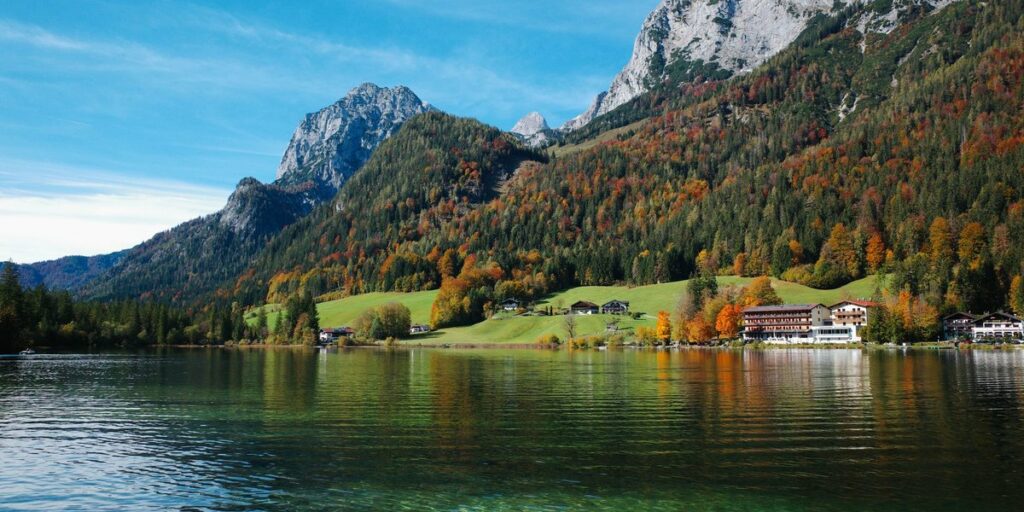
The United States holds more than 102,500 lakes large enough to map, and the spread between the biggest and the rest is almost comical. Lake Superior alone could swallow the next dozen lakes on this list and still have room left over. Most “lakes in the United States” rankings stop at surface area and call it a day, which hides the more interesting story: a 1,900-foot-deep volcanic crater in Oregon holds more water than lakes ten times its surface size, and a salt lake in Utah can double or halve in area depending on the snowpack.
This is the ranked breakdown — largest by area first, then the superlatives that area alone misses, then how these lakes formed and which states are absolutely lousy with them.
Table of Contents
- The largest lakes in the US, ranked by area
- The Great Lakes: five lakes, one inland sea
- The record-holders area can’t show you
- How American lakes formed
- Lakes by state: who has the most
- Quick answers
The largest lakes in the US, ranked by area
A note on the rules. The Great Lakes are shared with Canada, so the numbers below count their total surface area, not just the slice inside US borders. That’s the standard convention, and excluding Canada’s half would put Lake Michigan — the only Great Lake entirely within the US — at the top, which most people find misleading. Several of the states that border Canada owe that border partly to these lakes, since the international line runs straight through the water. Lake Michigan-Huron is sometimes counted as one lake hydrologically (they connect at the Straits of Mackinac and sit at the same elevation), but they’re listed separately here, the way almost everyone refers to them.
| Rank | Lake | State(s) | Surface area (sq mi) | Max depth (ft) |
|---|---|---|---|---|
| 1 | Lake Superior | MN, WI, MI | 31,700 | 1,332 |
| 2 | Lake Huron | MI | 23,000 | 750 |
| 3 | Lake Michigan | MI, WI, IN, IL | 22,400 | 925 |
| 4 | Lake Erie | MI, OH, PA, NY | 9,910 | 210 |
| 5 | Lake Ontario | NY | 7,340 | 802 |
| 6 | Great Salt Lake | UT | ~1,700 | 33 |
| 7 | Lake of the Woods | MN | 1,679 | 210 |
| 8 | Iliamna Lake | AK | 1,012 | 988 |
| 9 | Lake Okeechobee | FL | 730 | 12 |
| 10 | Lake Pontchartrain | LA | 630 | 65 |
The Great Lakes take the top five and it isn’t close. Drop to number six and you’ve fallen off a cliff: the Great Salt Lake’s roughly 1,700 square miles is barely a twentieth of Superior, and even that figure is a moving target (more on Utah’s shape-shifter below). Past the Great Lakes, the largest natural freshwater lake entirely inside the US is Iliamna in Alaska — a name most people in the lower 48 have never heard, sitting in a region with more brown bears than roads.
One honest caveat: if you counted reservoirs (human-made lakes behind dams), the list shifts. Lake Mead and Lake Powell on the Colorado River would crack the top tier by volume when full. This ranking sticks to natural lakes, since that’s what “lakes in the United States” usually means to the person searching it.
The Great Lakes: five lakes, one inland sea
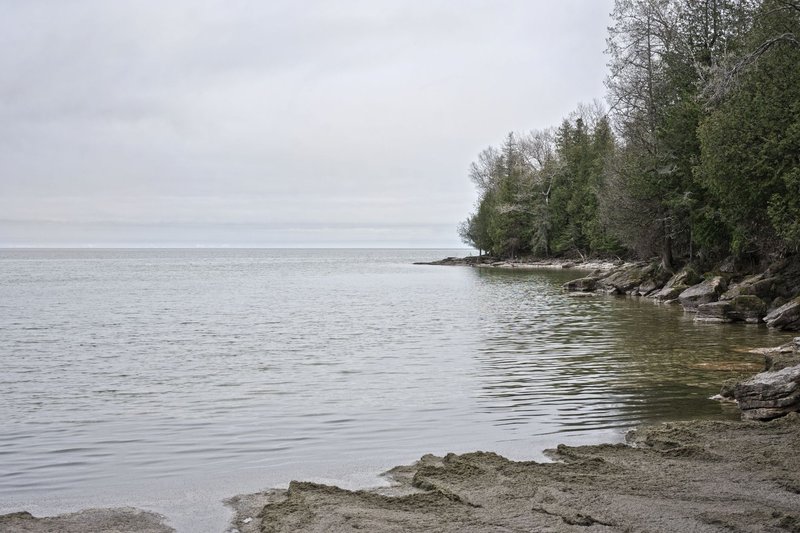
The five Great Lakes hold about 21% of the world’s surface fresh water and roughly 84% of North America’s. That’s not a typo. Together they cover about 94,000 square miles — an area larger than the entire United Kingdom — and you can’t see across any of them. People who grew up on the shore of Lake Michigan will tell you it behaves like an ocean: rip currents, surf advisories, freighters that vanish over the horizon. The U.S. Coast Guard runs search-and-rescue on them for a reason.
A trick to remember them west-to-east by name: HOMES (Huron, Ontario, Michigan, Erie, Superior), though geographically they flow from Superior down through Huron, Michigan, and Erie into Ontario, then out the St. Lawrence to the Atlantic. Each has its own personality:
- Superior is the giant — coldest, deepest, and clearest, with water that stays frigid year-round and visibility down to about 27 feet.
- Huron has the most islands of any lake on Earth (around 30,000), including Manitoulin, the largest island in any freshwater lake anywhere.
- Michigan is the only one entirely in the US and the one with the surprise beaches — Sleeping Bear Dunes towers 450 feet over the water.
- Erie is the shallowest and warmest, which makes it the most productive for walleye fishing and, unfortunately, the most prone to summer algae blooms.
- Ontario is the smallest by area but deeper than Erie, and it’s the one Niagara Falls drains into.
They were carved by glaciers, which is the throughline for most of the lakes on this list.
The record-holders area can’t show you
Surface area is the headline number, but it’s a lousy way to find the most extreme lakes. Three records that a ranked-by-area table buries completely:
Deepest: Crater Lake, Oregon — 1,943 feet
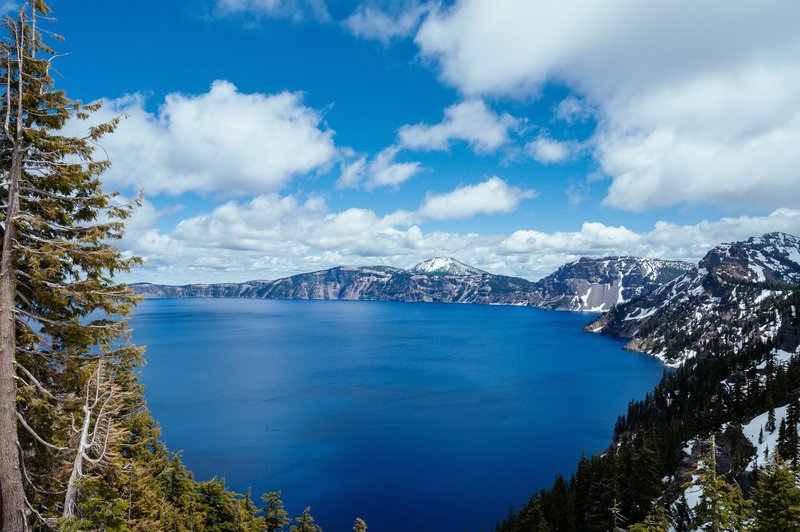
Crater Lake is the deepest lake in the United States and the ninth-deepest on the planet, and it sits inside the collapsed caldera of a volcano — Mount Mazama — that blew its top about 7,700 years ago. There are no rivers feeding it or draining it. Every drop comes from rain and snow, which is why the water is some of the clearest anywhere measured: scientists have lowered a white disk and tracked it to over 100 feet down. The lake’s blue is so saturated it looks edited. It isn’t.
Largest freshwater lake entirely in the US: Lake Michigan
If you set aside the lakes shared with Canada, Lake Michigan wins outright at 22,400 square miles. It’s the technicality that trips up trivia — Superior is bigger, but half of Superior is Canadian.
The shape-shifter: Great Salt Lake, Utah
The Great Salt Lake is the largest saltwater lake in the Western Hemisphere, but its “size” is a question with no fixed answer. It’s a terminal lake — water flows in, none flows out, and it leaves only by evaporation. So its surface area swings wildly with drought and snowmelt, from over 3,300 square miles in wet decades down to historic lows near 950 square miles in 2022. It’s saltier than the ocean — in places saltier than the Dead Sea — which is why you bob like a cork and nothing but brine shrimp and algae live in it.
How American lakes formed
Most lists skip this, and it’s the part that actually explains the map. Nearly every major US lake fits one of four origin stories:
Glacial. The big one. During the last ice age, advancing glaciers gouged out basins and retreating ones left behind dammed valleys and meltwater. This is why Minnesota and the upper Midwest are riddled with lakes and why the Great Lakes exist at all — they’re flooded glacial troughs. If a lake is in the northern tier of states, glaciers probably made it.
Volcanic. Crater Lake is the textbook case: a caldera lake formed when a volcano collapsed and the bowl filled with water. Rarer, but it produces the deepest and bluest ones.
Tectonic. Lake Tahoe, straddling the California–Nevada line, sits in a basin formed by faulting — blocks of crust dropped down between mountain ranges. At 1,645 feet deep, Tahoe is the second-deepest lake in the country, and it holds enough water to cover all of California 14 inches deep.
Reservoirs. Human-made, behind dams. Lake Mead (behind the Hoover Dam) and Lake Powell are the famous ones. They’re “lakes” in every practical sense — boating, fishing, water supply for tens of millions — but they didn’t exist before the 20th century.
There’s a fifth, smaller category worth a mention: oxbow and sinkhole lakes, like Florida’s, where a limestone landscape collapses and fills. Lake Okeechobee sits in a shallow basin on porous Florida bedrock, which is why it’s enormous in area but barely 12 feet deep — you could wade a long way out. It’s a reminder that depth and area rarely track together; some of the most shallow lakes in the world sprawl across enormous footprints while measuring just a few feet down.
Lakes by state: who has the most
Here’s where the listicles and the encyclopedias usually disagree, because “most lakes” depends entirely on how you count.
- Most lakes overall: Alaska, by a landslide. The state has more than 3 million lakes, most of them small, unnamed, and frozen half the year. No other state is close.
- Most named lakes: Minnesota, the self-styled “Land of 10,000 Lakes.” The actual count of lakes 10 acres or larger is closer to 11,842, so the license plates undersell it.
- Wisconsin and Michigan round out the glacial-lake heavyweights, each with around 15,000 inland lakes on top of their Great Lakes coastline.
- Florida leads the Southeast with roughly 30,000 lakes, almost all of them sinkhole or basin lakes on flat limestone terrain.
The pattern is the ice age, again. Draw a line across the country where the glaciers stopped and you’ve basically drawn the lake-density map. South and west of that line — the unglaciated Plains and the arid Southwest — natural lakes get scarce, which is exactly why the West relies so heavily on reservoirs.
Quick answers
What is the largest lake in the United States? Lake Superior, at 31,700 square miles total (shared with Canada). The largest lake entirely within US borders is Lake Michigan.
What is the deepest lake in the United States? Crater Lake, Oregon, at 1,943 feet — followed by Lake Tahoe at 1,645 feet.
What is the biggest freshwater lake in America? Lake Superior, which is also the largest freshwater lake in the world by surface area.
How many lakes are in the US? More than 102,500 lakes large enough to be mapped, though counting the smallest ponds pushes the number into the millions, most of them in Alaska.
What’s the largest lake that isn’t a Great Lake? The Great Salt Lake by area in wet years, though its size fluctuates. By a stable measure, Lake of the Woods and Iliamna Lake are the largest non-Great-Lake natural lakes.
The takeaway: rank by area and you get a list of five Great Lakes and a long drop. But the lakes worth a detour — Crater’s impossible blue, Tahoe’s clarity, the Great Salt Lake’s float-without-trying brine — earn their fame on depth, water, and weirdness, not surface area. Plan around those.