
Ask “what’s the richest city in Europe?” and you’ll get four different answers depending on who you ask. London, if you count total economic output and the sheer number of millionaires living there. Monaco, if you care about wealth per person. Zurich, if average salary is your yardstick. Luxembourg City, if you go by GDP per capita. They can’t all be number one — and yet, by their own honest measure, each of them is.
That’s the problem with most “richest cities” lists. They pick one metric, rank by it, and never tell you which one. So a city of 38,000 people ends up next to a metro region of 14 million, as if they’re competing in the same weight class.
This list ranks differently. Below you’ll find Europe’s 15 wealthiest cities sorted by total economic muscle, but every entry tells you where it wins and where it loses across four lenses: total GDP, GDP per capita, average salary, and how densely millionaires are packed in. By the end you’ll know not just which cities are rich, but which kind of rich — and which one fits whatever question brought you here.
Table of Contents
- How “Richest” Actually Gets Measured
- The Quick Verdict
- 1. London, United Kingdom
- 2. Paris, France
- 3. Zurich, Switzerland
- 4. Frankfurt, Germany
- 5. Geneva, Switzerland
- 6. Amsterdam, Netherlands
- 7. Munich, Germany
- 8. Milan, Italy
- 9. Madrid, Spain
- 10. Dublin, Ireland
- 11. Stockholm, Sweden
- 12. Luxembourg City, Luxembourg
- 13. Oslo, Norway
- 14. Monaco
- 15. Copenhagen, Denmark
- The Tax-Haven Cluster Nobody Names Out Loud
How “Richest” Actually Gets Measured
Four metrics, four very different leaderboards. Here’s what each one tells you and why it matters.
Total GDP measures the whole economic output of a city and its surrounding metro area. This is the “big” number — it rewards size. London and Paris dominate here because tens of millions of people generate a lot of activity, even if any individual one of them isn’t especially rich. Use this when you care about a city’s overall economic weight, not the lifestyle of the average resident.
GDP per capita divides that output by the population. Now the giants fall and the small powerhouses rise. A financial micro-state with 130,000 people and a banking sector punching ten times its weight will crush a sprawling capital here. This is closer to “how productive is the average person,” though it’s skewed by commuters and corporate accounting. The same tension shows up wherever you run the numbers; even when you rank the richest cities in Croatia, the answer flips depending on whether you mean total output or output per person.
Average salary is the most relatable number — what people actually take home. Swiss cities win this almost every time, with Zurich and Geneva paying gross averages north of €100,000, though the cost of a one-bedroom apartment will mug you on the way home.
Millionaire density comes from Henley & Partners’ annual wealth reports, which count resident high-net-worth individuals. This is the metric the citizenship-by-investment crowd watches. London has the raw numbers; Monaco has the concentration, with roughly one in three residents holding a million dollars or more.
No single number is “correct.” A city can lead one and lag another, and the most interesting cities are the ones that win categories nobody expects. Where the metrics conflict, this list flags it.
The Quick Verdict
If you just want the headline answers before the deep dive:
| Question | Winner |
|---|---|
| Biggest total economy | London |
| Highest GDP per capita | Luxembourg City |
| Highest average salary | Zurich |
| Most millionaires (raw count) | London |
| Densest millionaire population | Monaco |
| Best all-rounder | Zurich |
The full ranking below is ordered by total economic output. But “richest” depends entirely on which row of that table you mean.
1. London, United Kingdom
London is the richest city in Europe by almost every measure that counts size. Its metropolitan economy produces well over €800 billion a year, and the wider region accounts for nearly a quarter of the entire UK economy from a footprint smaller than a Welsh county.
The wealth is overwhelmingly financial. The City of London and Canary Wharf together form one of the two largest financial centers on the planet, alongside New York. Add insurance at Lloyd’s, the legal industry that orbits the courts, a tech cluster in the east, and the global art and luxury market in Mayfair, and you get a concentration of high-margin work that’s hard to match.
By Henley’s count, London is home to more than 200,000 dollar millionaires — more than any other European city by a wide margin, including a few thousand people worth over $100 million. Brexit dented its banking dominance and several thousand wealthy residents have left in recent years, but the raw scale still puts it first.
Where it loses: per capita, London is unremarkable for a financial capital. Spread that enormous GDP across 14 million people and the average looks ordinary. The wealth is real, but it’s concentrated in postcodes most Londoners can’t afford to live in.
2. Paris, France
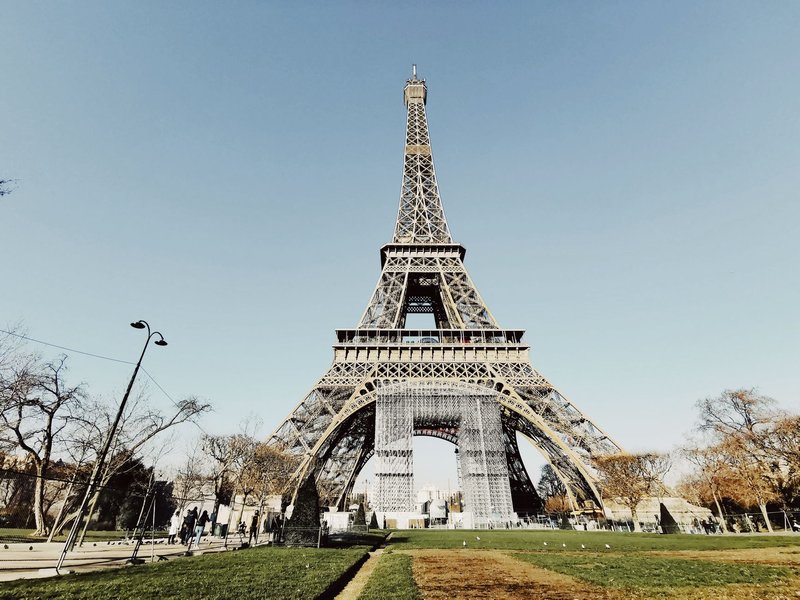
Paris is the only city in Europe that genuinely rivals London on total output, and on some measures the Île-de-France region edges ahead. It’s a more diversified economy than London’s — less dependent on finance, more spread across luxury goods, aerospace, pharmaceuticals, tech, and a tourism industry that pulls in tens of millions of visitors a year.
The luxury sector alone is a quiet juggernaut. LVMH, Kering, Hermès, and L’Oréal are headquartered in or around the city, and the global market for handbags, champagne, and couture is essentially run from a few arrondissements. La Défense, the business district just west of the city, houses more corporate headquarters than any comparable European cluster.
Paris consistently ranks among the top three European cities for resident millionaires, with roughly 160,000 of them. Where it trails London is in ultra-high-net-worth density, and where it trails the Swiss cities is in average salary — French taxes and a different wage structure mean the typical Parisian earns considerably less than the typical Zuricher, even though the city as a whole is enormous.
3. Zurich, Switzerland
Here’s where total-GDP ranking starts to mislead you. Zurich’s metro economy is a fraction of London’s, but ask “where do people actually earn the most,” and Zurich wins Europe outright.
Average gross salaries in the Zurich area run well above €100,000, the highest of any major European city. This is the home of UBS, the headquarters of much of Swiss private banking, and a hub for insurance giants like Zurich Insurance and Swiss Re. It’s also a serious tech and pharma center — Google’s largest engineering office outside the US sits here, and the universities feed a steady pipeline of high-paid talent.
Per capita, Zurich is one of the wealthiest cities on earth. Millionaire density is extraordinary too: Henley counts over 100,000 millionaires in a metro area of under 1.5 million people. The catch, predictably, is cost. Zurich routinely ranks among the most expensive cities in the world, so that six-figure salary buys a lifestyle that’s comfortable rather than lavish. If you want the best ratio of pay to genuine spending power in Europe, Zurich is the answer.
4. Frankfurt, Germany
Frankfurt is small for its influence — barely 750,000 people in the city proper — but it’s the financial capital of the eurozone, and that gives it weight far beyond its size. The European Central Bank sits here, along with the German federal bank, the country’s main stock exchange, and the European offices of most major international banks.
The result is a per-capita and salary profile that punches well above what the population would suggest. Frankfurt’s average salaries are among the highest in Germany, and millionaire density is strong thanks to the banking concentration. The airport — one of the busiest in Europe — and a major logistics and trade-fair industry round out an economy that’s more diversified than the “banking town” reputation implies.
What Frankfurt lacks is the glamour and ultra-wealth depth of London or Geneva. It’s a working financial city: efficient, prosperous, and slightly boring in the way that very rich, very functional places often are.
5. Geneva, Switzerland
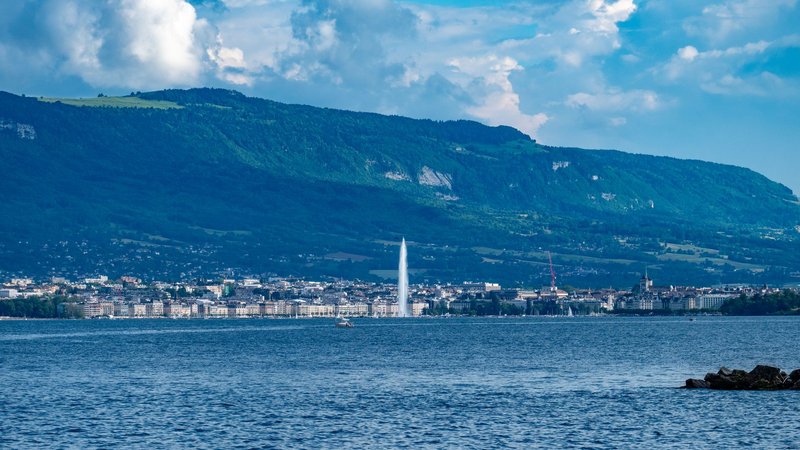
Geneva is the global capital of three things at once: private banking, international diplomacy, and luxury watchmaking. That combination makes it one of the densest concentrations of wealth in the world.
The private banking industry here manages a staggering share of the world’s offshore wealth, with institutions like Pictet and Lombard Odier dating back centuries. The UN’s European headquarters, the Red Cross, the WHO, and dozens of other organizations fill the city with well-paid international staff. And the watch industry — Patek Philippe, Rolex, Vacheron Constantin — anchors a luxury sector that exports billions.
Average salaries rival Zurich’s, GDP per capita is among the highest in Europe, and millionaire density is extreme for a city of just 200,000. Geneva’s smaller size keeps its total GDP modest, which is exactly why it sits below the giants on this list and above almost everyone on the per-capita ones.
6. Amsterdam, Netherlands
Amsterdam’s wealth is built on a 400-year-old habit of moving goods and money efficiently. The Dutch invented the modern stock exchange here, and the city remains a major financial center, home to the European headquarters of countless multinationals drawn by the favorable corporate tax climate and English-fluent workforce.
The economy is genuinely diversified: finance, tech (Booking.com and Adyen are homegrown giants), trade through the nearby port of Rotterdam, a thriving creative sector, and tourism. Schiphol airport is one of Europe’s busiest hubs, knitting the city into global trade.
Salaries and per-capita output are high without reaching Swiss extremes, and millionaire numbers have grown fast — the Netherlands is one of the few European countries where the wealthy population is expanding rather than fleeing. For a city of under a million, Amsterdam carries outsized economic clout.
7. Munich, Germany
Munich is Germany’s richest city by per-capita measures, and it’s the one place on this list where industrial wealth, not finance, drives the numbers. BMW is headquartered here. So is Siemens, Allianz (one of the world’s largest insurers), and a dense cluster of engineering, aerospace, and tech firms.
That industrial base produces the highest average incomes in Germany and a millionaire density that rivals Frankfurt’s, built on engineers, executives, and the family-business owners — the Mittelstand — who quietly run much of the German economy. Bavaria as a region consistently outperforms the rest of the country economically, and Munich is its engine.
The downside is the same one chasing every wealthy German city: housing costs that have climbed faster than almost anywhere else in the country. Munich is rich, livable, and increasingly hard to afford — a familiar story by now.
8. Milan, Italy
Milan is the financial and industrial heart of Italy and, by a wide margin, its richest city. While the rest of the country struggles with stagnant growth, Milan generates a per-capita output far above the Italian average, anchored by the national stock exchange, the headquarters of major banks, and a fashion and design industry that defines the global luxury calendar.
The fashion houses — Prada, Armani, Versace, Dolce & Gabbana — aren’t just brands here, they’re a real economic sector employing tens of thousands and pulling in buyers and tourists year-round. Add design, publishing, and a growing tech scene, and Milan looks more like a northern European wealth hub than a Mediterranean one.
Italy’s recent flat-tax scheme for wealthy foreign residents has made Milan a magnet for relocating millionaires, and Henley’s data shows the city’s high-net-worth population climbing while other European cities lose theirs. It’s the closest thing Southern Europe has to a Zurich.
9. Madrid, Spain
Madrid is the economic capital of Spain and one of the largest metro economies in Southern Europe. As the seat of government and home to the country’s biggest banks, energy companies, and corporate headquarters, it concentrates a huge share of Spanish wealth and high-paid work.
The city has become a genuine destination for international wealth in recent years, partly because the Madrid regional government has kept taxes lower than the rest of Spain, abolishing wealth tax at the regional level. That’s pulled in affluent residents from Latin America and elsewhere in Europe, and the millionaire population has grown accordingly.
Madrid won’t match the per-capita figures of the Swiss or German cities — Spanish salaries are lower across the board — but on total economic size and trajectory, it earns its place. It’s the rare large European city where the wealthy population is growing rather than shrinking.
10. Dublin, Ireland
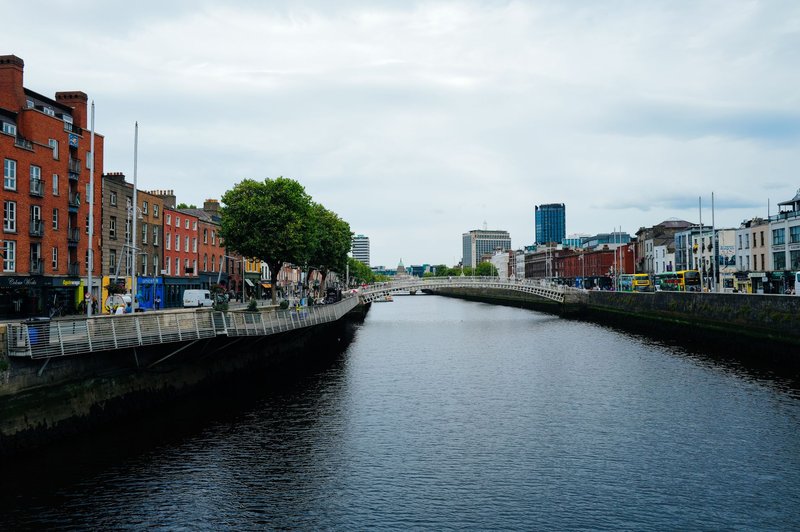
Dublin’s per-capita GDP is, on paper, one of the highest on earth — and it’s also the most misleading number on this list. Ireland’s low corporate tax rate made Dublin the European headquarters of Apple, Google, Meta, Microsoft, and Pfizer, and the profits those companies book here inflate the national output far beyond what residents actually experience.
Strip out the accounting distortion and Dublin is still genuinely wealthy. The tech and pharma clusters employ tens of thousands of well-paid workers, salaries are among the highest in the EU, and the city’s millionaire population has grown sharply as the multinational economy matured. The “modified” GDP measures economists use to filter out the corporate-tax effect still leave Ireland near the top of Europe.
The honest read: Dublin’s headline per-capita figure is inflated, but the underlying prosperity — high wages, a young high-earning workforce, a fast-growing wealthy class — is real.
11. Stockholm, Sweden
Stockholm is the wealthiest city in the Nordics by total output and one of Europe’s most productive tech economies per capita. This is the city that produced Spotify, Klarna, Skype, and a startup density that, relative to population, rivals anywhere outside Silicon Valley.
Beyond tech, Stockholm anchors Swedish finance, telecoms (Ericsson), and a strong industrial base. Average salaries are high, the millionaire population is substantial for the city’s size, and the surrounding region accounts for a third of Sweden’s entire economy.
Sweden’s high taxes mean take-home pay doesn’t match the Swiss cities, and the country’s wealthy have historically been more mobile because of it. But on innovation output and per-capita productivity, Stockholm sits comfortably in Europe’s top tier.
12. Luxembourg City, Luxembourg
If GDP per capita is your metric, Luxembourg City is the richest place in Europe, full stop. The country posts a per-capita output higher than any other in the EU, and the capital is where nearly all of it is generated.
The engine is finance — specifically, fund management. Luxembourg is the second-largest investment fund center in the world after the US, administering trillions in assets through a regulatory and tax framework built precisely for that purpose. The European Investment Bank and several EU institutions are based here too, filling the city with high-earning international professionals.
A huge share of the city’s workforce commutes in daily from France, Belgium, and Germany, which inflates the per-capita figure (the output is divided by residents, not the people producing it). But even adjusting for that, Luxembourg City is extraordinarily wealthy: tiny, multilingual, and quietly running a chunk of the world’s investment plumbing.
13. Oslo, Norway
Oslo’s wealth rests on a foundation no other European city has: oil. Norway’s North Sea petroleum reserves funded a sovereign wealth fund now worth well over a trillion euros — the largest in the world — and Oslo is where that money is managed and where the energy industry’s headquarters sit.
The result is a city with very high average salaries, strong per-capita output, and a quality of life that consistently ranks near the top of global surveys. The wealth is unusually evenly distributed by European standards; Norway’s social model means the gap between rich and ordinary is narrower here than almost anywhere else on this list.
Oslo’s millionaire count is modest compared to the financial capitals, partly because of that egalitarian structure and partly because Norway’s wealth tax has pushed some of its richest residents to relocate abroad in recent years. But by salary and broad-based prosperity, few cities compete.
14. Monaco
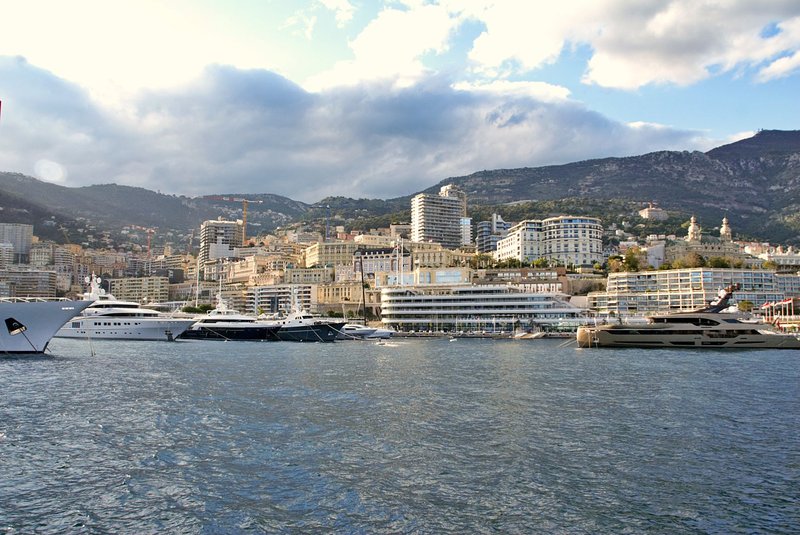
By total GDP, Monaco barely registers — it’s a city-state of 38,000 people on two square kilometers. By wealth density, it’s the richest place in Europe and arguably the world, with no real competition.
Roughly one in three residents is a dollar millionaire. The reason is simple and entirely deliberate: Monaco levies no personal income tax, which has made it the relocation destination of choice for European fortunes for over a century. The harbor fills with superyachts, the Grand Prix runs through streets lined with the highest real-estate prices on the planet, and the average property sells for prices that make central London look reasonable.
Monaco produces little in the conventional sense — there’s no industry, no tech sector, no manufacturing. Its economy is wealth itself: banking, real estate, tourism, and gaming serving an ultra-rich resident base. It’s the purest expression of the per-capita-versus-total distinction this whole list is built around. Last on size, first on concentration.
15. Copenhagen, Denmark
Copenhagen rounds out the list as one of the wealthiest and most consistently livable cities in Europe. Denmark posts high per-capita output, and the capital concentrates the country’s finance, shipping (Maersk, the world’s largest container line, is headquartered here), pharmaceuticals (Novo Nordisk, now one of Europe’s most valuable companies), and a strong tech and design sector.
Average salaries are high, though Denmark’s famously steep taxes mean take-home pay lands below the Swiss cities. What you get in exchange is the infrastructure and public services that keep Copenhagen near the top of every quality-of-life ranking — a different kind of wealth, measured in time and ease rather than just euros.
Novo Nordisk deserves a special mention: the diabetes and weight-loss drug maker has grown so large that its success measurably moves Denmark’s national economic figures, an unusual amount of influence for a single company over an entire country’s prosperity.
The Tax-Haven Cluster Nobody Names Out Loud
Look back over the top of this list and a pattern emerges that most rankings skip past. The cities that dominate the per-capita and millionaire-density metrics — Monaco, Luxembourg City, Geneva, Zurich, increasingly Madrid and Milan — share a common trait: favorable tax treatment for wealth and the businesses that manage it.
This isn’t an accident of geography. Monaco has no income tax. Luxembourg built a fund-administration empire on regulatory design. Switzerland’s lump-sum taxation deals draw foreign fortunes. Madrid abolished its regional wealth tax; Italy offers a flat tax to relocating millionaires. The map of Europe’s densest wealth is, to a striking degree, a map of where the rules were written to attract it.
Total-GDP rankings hide this, because size is mostly about population. The same gap opens up further east, too: in the richest cities in Poland, the leader by total GDP isn’t always the one with the highest output per person. But once you sort by how rich the people are — per capita, by salary, by millionaire concentration — the leaderboard turns into a tour of Europe’s tax-advantaged jurisdictions. That’s the real answer to “which is the richest city in Europe”: it depends on whether you’re measuring the size of the economy or the wealth of the residents, and the two questions point at completely different maps.
So which city is richest? London, if you mean the biggest economy. Luxembourg City, by output per person. Zurich, by what people earn. Monaco, by how tightly the millionaires are packed. Pick your metric, and you’ve picked your winner.