Between 2018 and 2022 many suburban counties in North Carolina saw an overall violent crime decline of roughly 10%, and several towns report violent-crime figures well under 100 incidents per 100,000 residents. For people choosing where to live, safety affects property values, family stability, emergency-response outcomes, and everyday community life.
This piece highlights ten cities chosen for consistently low crime rates, clear public-safety resources, and quality-of-life factors that matter to families and professionals. The list is organized into four practical categories—Public Safety & Policing; Community & Demographics; Healthcare, Emergency Services & Infrastructure; and Education, Economy & Quality of Life—with a short snapshot for each place that includes population, recent crime-rate context, notable programs, and local tradeoffs. You’ll see data points (population from the 2020 Census or recent estimates, violent/property crime rates where available, police staffing or EMS notes) and sources such as the FBI Crime Data Explorer and municipal dashboards.
Here are ten of the safest cities in North Carolina profiled by what makes them work for residents who prioritize safety.
Public Safety & Policing
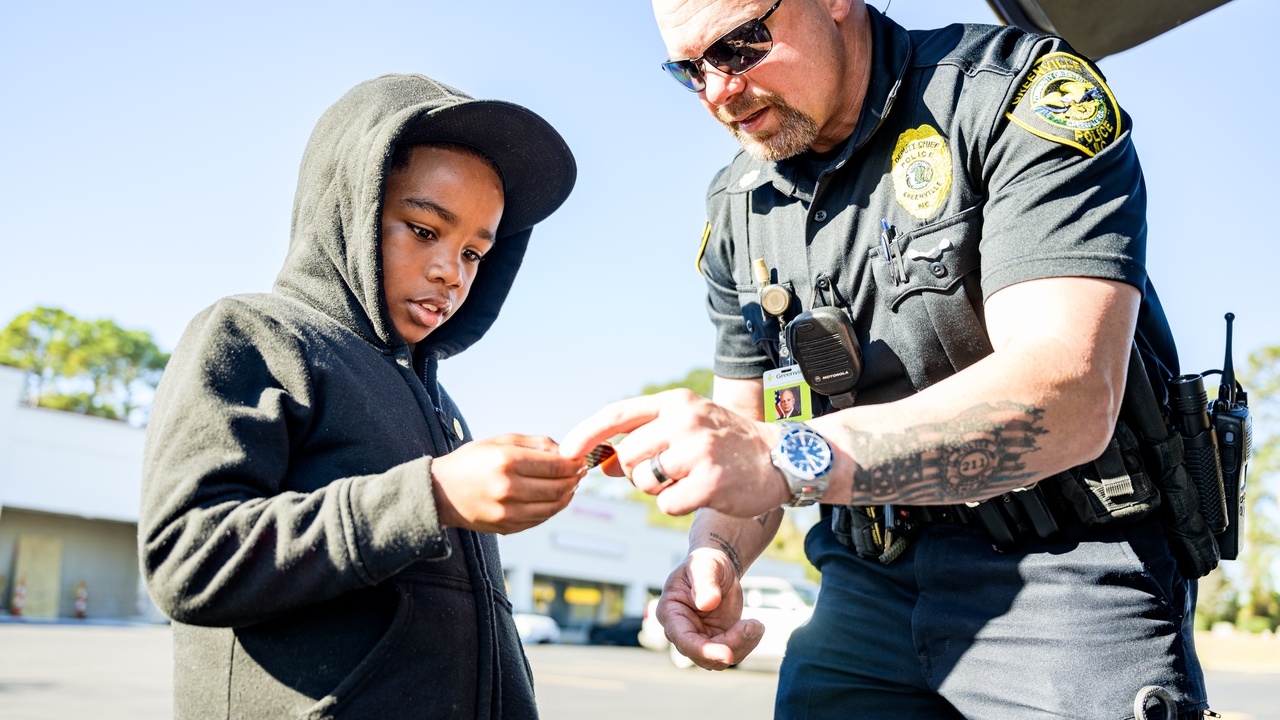
Local policing models that emphasize neighborhood partnerships, clear crime reporting, and predictable response times are strongly correlated with low violent and property crime. Departments that publish crime dashboards and staffing ratios make it easier for residents to evaluate risk and for city leaders to allocate resources efficiently.
Key indicators to watch include community policing programs (citizen academies, neighborhood-watch support), violent and property crime rates per 100,000 residents (FBI/UCR or state SBI), and police-to-population staffing or average response-time figures published by municipal departments.
1. Cary — Consistently low violent crime and community policing
Cary recorded a 2020 Census population of 174,721 and consistently posts one of the lowest violent-crime rates among North Carolina municipalities of its size. In recent FBI Crime Data Explorer releases Cary’s violent crime rate has been near the lower end of Wake County cities (roughly around 100–140 incidents per 100,000 residents in recent years depending on the dataset).
The Cary Police Department runs neighborhood-watch support, a long-standing Citizen Police Academy, and school-safety partnerships that help keep business corridors and residential streets calm. Higher median household income and stable commuter profiles (many residents commute to Research Triangle Park) support property values but also introduce traffic and growth pressures.
2. Apex — Suburban growth with low crime rates
Apex has grown rapidly—U.S. Census 2020 recorded about 58,780 residents and recent estimates show steady growth since then. Despite expansion, Apex maintains low violent- and property-crime figures relative to peers, with violent crime often reported well under 150 incidents per 100,000 in municipal and county data.
Apex Police hosts community events, safe-route programs for schools, and visible downtown patrols that keep evening foot traffic active and safe. Good school rankings and a lively Main Street combine to make the town center a focal point for informal surveillance and civic life.
3. Morrisville — Compact size, targeted policing, and low incident counts
Morrisville’s 2020 Census population is roughly 29,630, and its compact geography—close to RDU Airport and major employment centers—helps concentrate public-safety resources. Recent local reports show low overall incident counts and violent-crime rates typically among the lowest in Wake County suburbs.
The town’s police budget emphasizes targeted patrols around mixed-use nodes and employer corridors, which supports a large number of tech and airport workers who favor safe, walkable neighborhoods. Proximity to RDU also means police and EMS coordination is strong for incidents involving commuters or travelers.
Community & Demographics
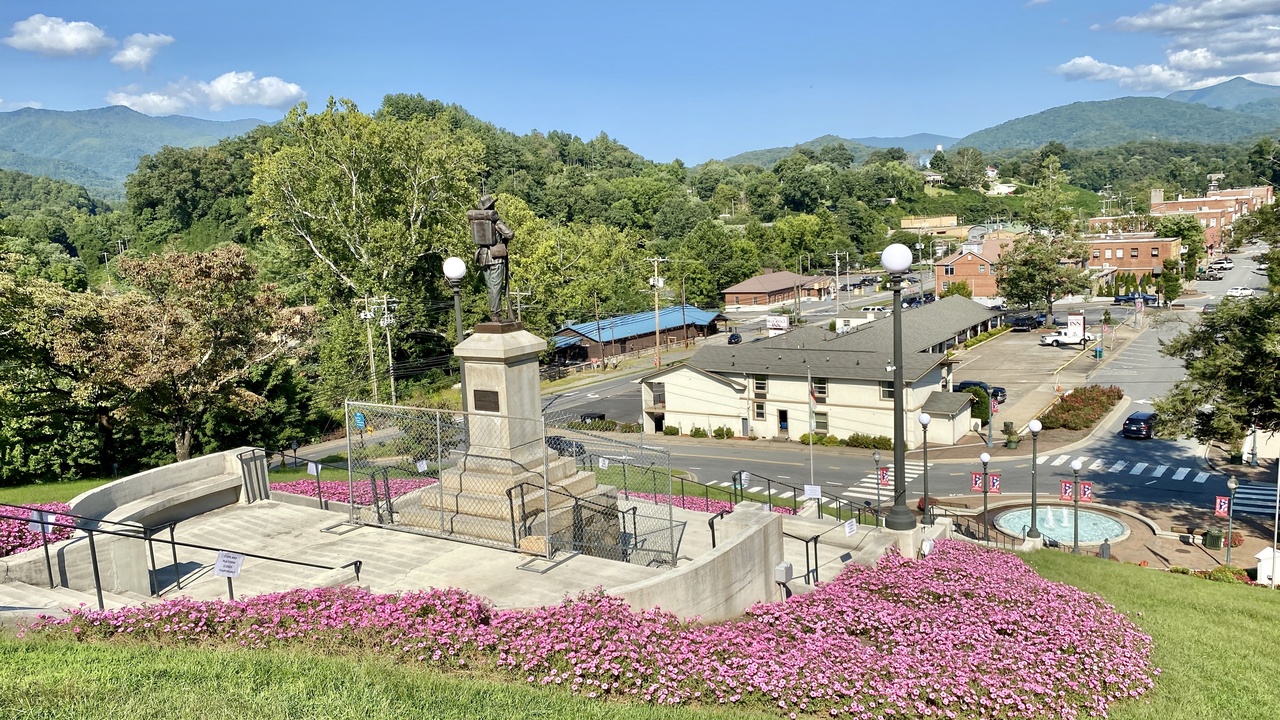
Demographics and civic life shape safety just as much as policing. Stable populations, younger-family concentrations, active homeowner associations, and high school-completion rates are all associated with lower crime. Thoughtful local planning—good lighting, compact downtowns, and parks—reduces opportunities for offending while increasing positive street life.
When evaluating towns, look at median age, percentage of households with children, voter turnout or civic-group activity, and school graduation rates as proxies for social cohesion. Local festivals, farmers markets, and HOA-funded safety investments are small but meaningful indicators of a vigilant community.
4. Holly Springs — Young families and civic engagement
Holly Springs’ 2020 Census population is about 40,467 and the town skews young, with a median age in the mid-30s driven by families with children. School ratings in the Wake County system are above average, and median household income is higher than county averages—both factors that correlate with lower property and violent crime.
The town invests in parks, rec programming, and volunteer neighborhood-watch groups; those outlets reduce late-night disorder and increase passive surveillance. Holly Springs’ growth does bring traffic concerns, but civic engagement remains high and local police publish regular community-safety updates.
5. Davidson — Town governance, college influence, and low reported crime
Davidson is a small college town (Davidson College enrollment roughly 1,900–2,000 students) with a 2020 town population near 12,444. The college’s public-safety operations coordinate closely with town police, and campus policing, late-night escort programs, and active downtown businesses produce steady foot traffic that discourages crime.
Davidson’s violent-crime counts are low in municipal reports, and the integrated campus–town approach (joint safety messaging, coordinated events) is a practical model for small towns that host higher-activity institutions.
6. Wake Forest — Growing suburb with established neighborhoods
Wake Forest’s 2020 Census population sits near 43,000 and the town has seen steady in-migration to new subdivisions alongside older historic neighborhoods. Town planning emphasizes sidewalks, street lighting, and neighborhood associations—features that long-term residents credit with reducing burglaries and street-level incidents.
Police-community programs, HOA patrols, and school-district engagement correlate with Wake Forest’s relatively low crime rates compared with fast-growing Sunbelt suburbs. Growth brings infrastructure needs, but long-established civic groups keep community ties strong.
Healthcare, Emergency Services & Infrastructure
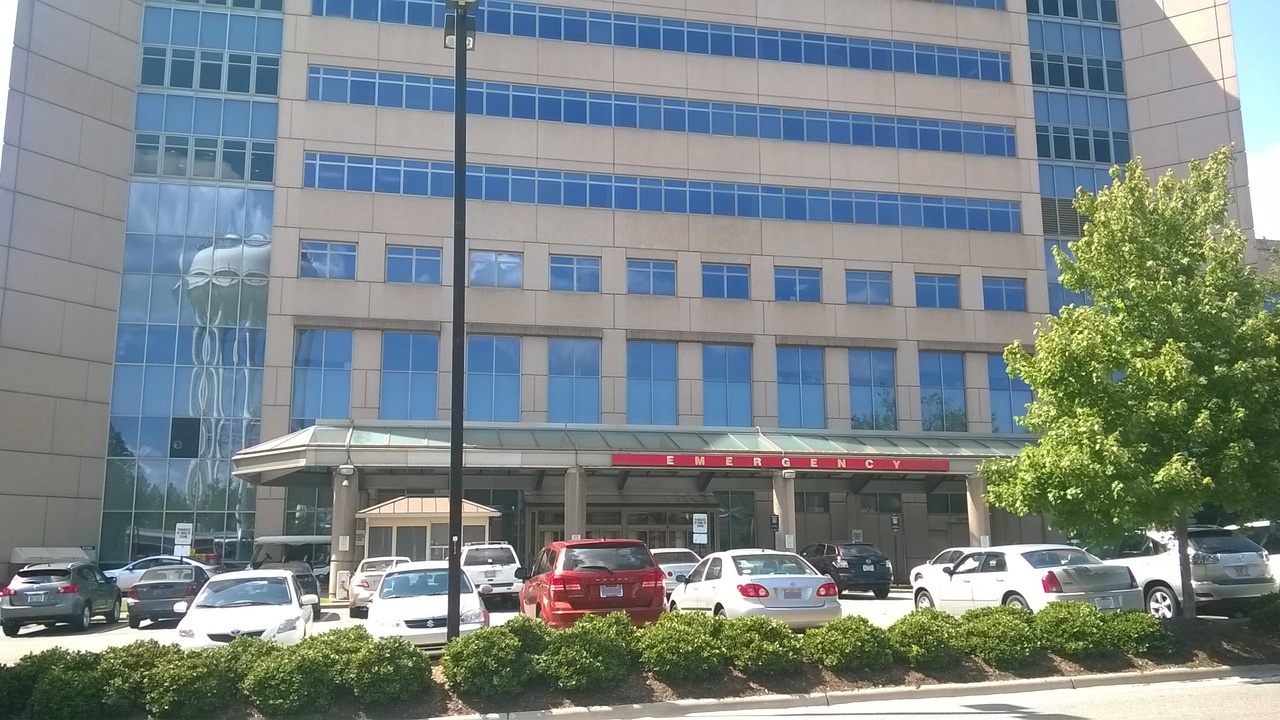
Safety extends beyond policing. Proximity to trauma centers, reliable EMS response, and well-staffed fire departments reduce fatalities from accidents and violent incidents. Infrastructure—adequate street lighting, safe intersections, and resilient roads—also lowers risk for pedestrians and drivers.
When comparing places, note distance to the nearest Level I or II trauma center, published EMS response-time averages if available, and county public-health rankings. Hospitals and EMS capacity often appear on county health department pages or hospital fact sheets.
7. Chapel Hill — Medical access and university-backed public safety
Chapel Hill (2020 population about 61,960) benefits from immediate access to UNC Hospitals, a major academic medical center with Level I trauma services in nearby Chapel Hill/Chapel Hill–Durham facilities. That proximity shortens critical transport time for severe injuries and serious medical events.
The University of North Carolina’s public-safety unit works in tandem with town police on large events, campus escorts, and targeted outreach. UNC Hospitals publishes bed counts and service-line information on its site, and county EMS reports show the region’s rapid ambulance coordination—an important complement to low violent-crime rates in town.
8. Pinehurst — Small town safety with strong emergency services
Pinehurst (roughly 16,000 residents at the 2020 Census, with sizable tourist inflows during golf season) pairs small-town policing with well-equipped local EMS and nearby hospital access. The village’s public-safety teams publish response-time goals and collaborate with regional medical centers for higher-acuity cases.
Local investment in roadway safety, pedestrian crossings near village centers, and medical-clinic availability keeps both residents and visitors safer—especially important when participant-heavy events like tournaments increase local demand on EMS and hospital services.
Education, Economy & Quality of Life

Good schools, steady employment, and maintained public spaces are strong allies for public safety. Higher median household income, low local unemployment, and reputable school districts reduce some drivers of property and violent crime, while well-lit parks and active downtowns increase informal surveillance.
Review school rankings (Niche, U.S. News), local employer lists, and median-home-price trends to understand the economic context that underpins safety. Public-space maintenance—benches, lighting, frequent trash pickup—may sound small, but it matters for perceived and actual safety.
9. Cornelius — Waterfront living with low crime and strong schools
Cornelius (2020 Census population about 30,174) offers lakefront neighborhoods around Lake Norman, higher-than-average median household income, and school districts that rank well for the Charlotte metro. Local marine patrols and community safety initiatives help manage seasonal visitors and waterfront activity.
Crime statistics for Cornelius typically show lower violent crime compared with the metro average, and strong school performance supports family-oriented neighborhoods and active daytime foot traffic around parks and Main Street districts.
10. Huntersville — Growing suburb with economic stability and low incident rates
Huntersville’s 2020 Census population was about 58,098 and the town functions as a Charlotte bedroom community with local business parks and easy highway access. Median household income and commuter employment in Charlotte help create stable residential neighborhoods with comparatively low crime rates.
The Huntersville Police Department emphasizes community engagement—business-watch programs and regular outreach—and local employers contribute to daytime activity that reduces empty, unsupervised spaces. Good schools and reasonable commute times add to the town’s overall safety profile.
Summary
- These places share common traits: active community policing and transparency, strong school systems, nearby medical and EMS resources, and economic stability that reduces some crime drivers.
- Smaller towns and college towns often outperform larger suburbs on a per-capita basis when they combine engaged residents with coordinated campus, police, and health systems.
- Practical next steps: check the FBI Crime Data Explorer and local police dashboards, visit neighborhoods at different times of day, and talk to residents about response times and community programs.
- Consider safety alongside other priorities—housing cost, commute, and schools—so you pick a community that fits your full set of needs when evaluating the safest cities in North Carolina.