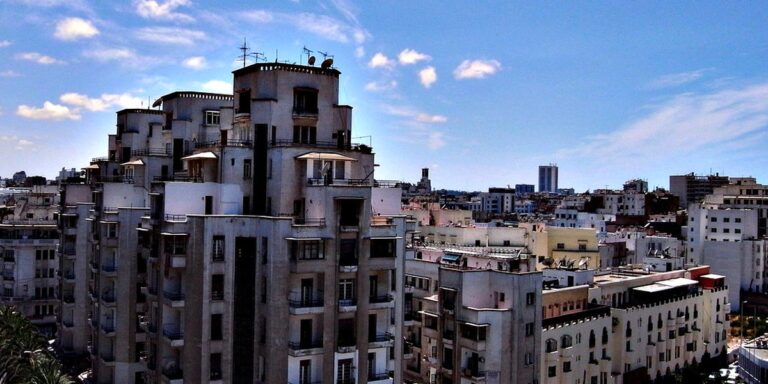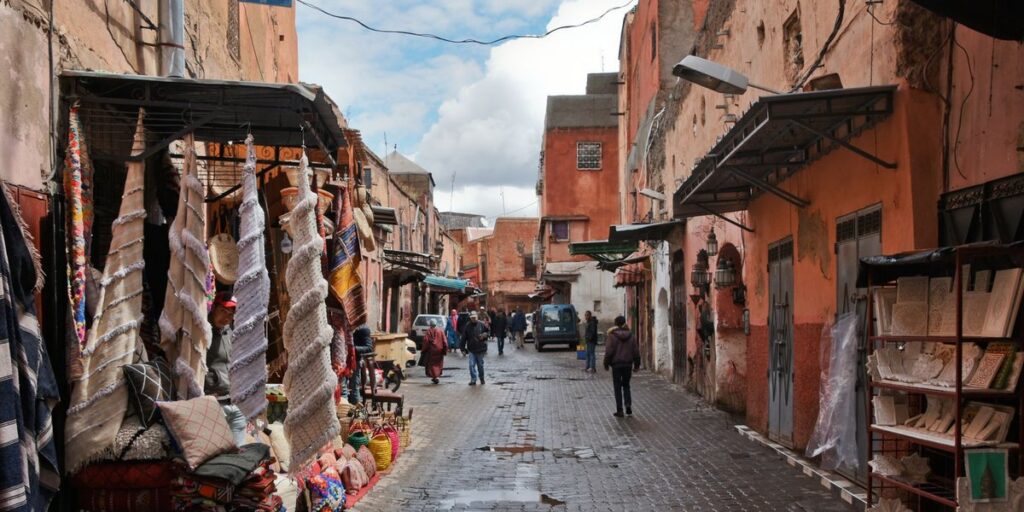
Morocco has nine UNESCO World Heritage Sites, and every one of them is cultural. There are no natural or mixed sites. The list runs from the Medina of Fez, inscribed in 1981, to Rabat, added in 2012, and none has been added since. You can check the official roster on UNESCO’s Morocco page.
Most competing lists give you the nine names and a paragraph of history each. This one adds what you need to plan a trip: how long each site takes, how to reach it, when to go, and which sites pair into a single route.
Contents
- The nine sites at a glance
- Medina of Fez (1981)
- Medina of Marrakesh (1985)
- Ksar of Ait-Ben-Haddou (1987)
- Historic City of Meknes (1996)
- Archaeological Site of Volubilis (1997)
- Medina of Tetouan (1997)
- Medina of Essaouira (2001)
- Portuguese City of Mazagan, El Jadida (2004)
- Rabat, Modern Capital and Historic City (2012)
- Two routes that cover all nine
- When to go
- Morocco’s tentative list
The nine sites at a glance
| Site | Location | Inscribed | Why it qualifies |
|---|---|---|---|
| Medina of Fez | Fez | 1981 | Largest and best-preserved medieval Arab medina, a living center of learning |
| Medina of Marrakesh | Marrakesh | 1985 | Almoravid-founded imperial city with a Koutoubia minaret that shaped Moroccan architecture |
| Ksar of Ait-Ben-Haddou | Near Ouarzazate | 1987 | Fortified earthen village on the old caravan route |
| Historic City of Meknes | Meknes | 1996 | 17th-century Sultan Moulay Ismail’s imperial capital, blending Islamic and European design |
| Archaeological Site of Volubilis | Near Meknes | 1997 | Best-preserved Roman ruins in Morocco, with mosaics still in place |
| Medina of Tetouan | Tetouan | 1997 | Andalusian refugee city, the best-preserved example of its type |
| Medina of Essaouira | Essaouira | 2001 | 18th-century fortified port planned on European lines in a North African setting |
| Portuguese City of Mazagan | El Jadida | 2004 | Early Portuguese bastion fortress, a rare surviving example of the Renaissance military model |
| Rabat, Modern Capital and Historic City | Rabat | 2012 | Layered capital from the Almohad era to the French-planned modern city |
Dates are the year of inscription, not the year each place was founded. That distinction trips up a lot of pages. Fez is sometimes listed as 1985 and Tetouan’s year gets misquoted; the table above uses the inscription years on the UNESCO list.
Medina of Fez (1981)
Fez was Morocco’s first inscription, and it remains the benchmark. Fez el-Bali, the old walled medina, was founded in the late 8th century under Idris I and expanded by his son Idris II. Inside are thousands of alleys (the figure usually cited is more than 9,000), and cars cannot enter. Donkeys and handcarts do the hauling. UNESCO’s entry on Fez describes it as one of the world’s largest car-free urban areas.
What to see: The Al-Quaraouiyine complex, founded in 859 by Fatima al-Fihri and often described as one of the oldest continuously operating educational institutions in the world. The Bou Inania Madrasa, one of the few religious buildings here that non-Muslims can enter. The Chouara tannery, best viewed from the leather-shop terraces above it, where staff will press a sprig of mint into your hand against the smell. The Attarine Madrasa for tilework.
How long: Two full days. One day gets you the highlights; the second lets you get lost on purpose, which is the only way the medina makes sense.
Getting there: Fez has an international airport and a train station on the Tangier–Casablanca–Marrakesh corridor. Fez to Meknes by train is under an hour. Hire a licensed guide for the first day. The medina has no real street grid, and phone maps lose the thread.
Medina of Marrakesh (1985)
Marrakesh was founded around 1070 by the Almoravids and served as the capital of successive dynasties. The medina has a different feel from Fez: more open, more theatrical, and organized around the square of Jemaa el-Fnaa, which UNESCO also recognizes for its oral and intangible heritage.
What to see: The Koutoubia Mosque and its minaret, about 77 meters tall, which became the template for the Giralda in Seville and the Hassan Tower in Rabat. The Saadian Tombs, sealed off for centuries and rediscovered in 1917. The Bahia Palace, the El Badi Palace ruins, and the Ben Youssef Madrasa. The souks north of the square are worth a morning, preferably before the tour groups arrive.
How long: Two days. Three if you want the Majorelle Garden and a hammam without rushing.
Getting there: Marrakesh has the country’s busiest tourist airport and a train line to Casablanca (around three hours) with connections to Rabat, Meknes, Fez and Tangier. The September 2023 earthquake damaged parts of the medina’s walls and some historic buildings, so check which monuments are open before you commit your schedule.
Ksar of Ait-Ben-Haddou (1987)
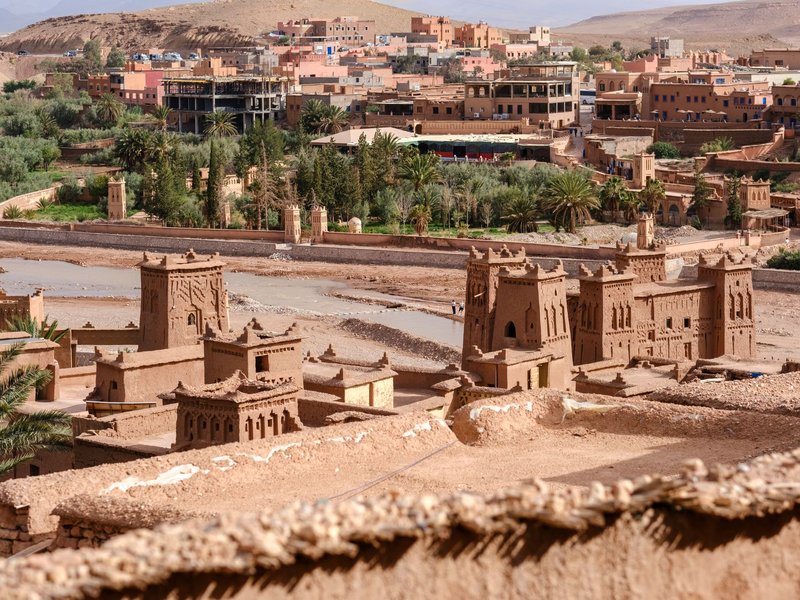
A ksar is a fortified village, and Ait-Ben-Haddou is the textbook example: a cluster of rammed-earth houses and tower-like kasbahs stacked up a hillside on the former caravan route between the Sahara and Marrakesh. The red-brown walls are pre-Saharan building tradition at its most coherent, and the earth needs constant repair after rain. Most families have moved to the newer village across the river, so only a handful of households live inside now.
You may recognize it. Gladiator, Game of Thrones and Lawrence of Arabia all used the site or its neighbors, and Ouarzazate, 30 km away, has the film studios to prove it.
What to see: Climb to the agadir (collective granary) at the top for the view over the palm-lined river valley. Wander the lanes in the late afternoon when the earth turns orange. Entry to the ksar itself is free; some residents ask for a small fee to enter their house.
How long: Half a day, or an overnight in the area if you want sunrise and sunset light.
Getting there: From Marrakesh, plan for about four hours by road over the Tizi n’Tichka pass, roughly 180 km. Most visitors come by rental car, private driver or a guided desert tour that stops here. The nearest airport is Ouarzazate.
Historic City of Meknes (1996)
Meknes is the one most itineraries skip, and that is a mistake. The city owes its look to Sultan Moulay Ismail, who ruled from 1672 to 1727 and turned it into an imperial capital with miles of walls, gates and stables. His ambition outran his budget in places, but the scale is real.
What to see: Bab Mansour, widely regarded as the grandest gate in Morocco. The Mausoleum of Moulay Ismail, one of the few active religious sites in the country that non-Muslim visitors may enter. Heri es-Souani, the royal granaries and stable complex with its vast vaulted storerooms. The medina, quieter and less hassle than Fez.
How long: One day, or half a day if you are using it as a base for Volubilis.
Getting there: Meknes is on the main train line, under an hour from Fez and about two and a half hours from Casablanca. Distances in the city are walkable, though the imperial quarters are spread out enough to justify a petit taxi.
Archaeological Site of Volubilis (1997)
Volubilis was the southwestern edge of the Roman Empire, the capital of the province of Mauretania Tingitana. The site stands in olive country, and in spring the ruins sit in wildflowers. What makes it special is the mosaics: many remain where the Romans laid them, in the houses of the wealthy. Look for the House of Orpheus, the Labors of Hercules and the Dionysus mosaics. The triumphal arch honoring Caracalla dates to 217 AD and stands over the main street.
The Romans left in the late 3rd century, but the town kept going. Local rulers lived here, and Idris I, founder of the Idrisid dynasty, was acclaimed in the area in 788 before he moved on to found Fez.
What to see: The mosaics, the arch, the basilica, the capitol and the oil presses scattered around the site. Bring a hat; there is little shade.
How long: Two to three hours on site. Ticket prices are modest (roughly 70 dirhams for foreign visitors at last check; confirm locally). Official guides wait at the entrance and add real value because the signage is thin.
Getting there: Volubilis is about 30 km from Meknes. Hire a grand taxi for the round trip (agree the price and wait time first), or take a taxi to the nearby town of Moulay Idriss Zerhoun, then a short onward ride. Combine it with Moulay Idriss, a pilgrimage town stacked over two hills.
Medina of Tetouan (1997)
Tetouan is the northern outlier and the least visited of the medina sites, which is its appeal. Andalusian refugees fled Spain after the Reconquista and rebuilt the town at the end of the 15th century. Its whitewashed alleys, wooden doors and house plans carry that influence directly. Tetouan later became the capital of the Spanish protectorate in northern Morocco (1913–1956), and the Spanish-built Ensanche district sits next door to the old town.
What to see: The medina’s seven gates (Bab el-Okla is the main one), the Souk el-Hout, the leather and blacksmith quarters, and the Royal Palace façade on Hassan II Square. The Archaeological Museum covers the Roman site of Lixus and Mauretanian finds.
How long: Half a day to a full day.
Getting there: Tetouan is roughly an hour from Tangier by road, with frequent buses and shared taxis. Chefchaouen is about the same distance in the other direction, so many visitors combine them.
Medina of Essaouira (2001)
Essaouira is a planned town. In the 1760s Sultan Sidi Mohammed ben Abdallah commissioned a port on this Atlantic headland, and a French engineer, Théodore Cornut, laid out the grid. The result is a rare combination: straight, regular streets inside a North African fortified medina, with a seafront battery and cannon along the ramparts. The Portuguese had used the offshore island earlier, and the city was long known as Mogador.
It feels different from the inland medinas. The wind is constant, the light is bright, and the harbor is full of blue fishing boats.
What to see: The Skala de la Ville (the sea bastion with cannons), the Skala du Port, the harbor at dawn, the woodworking workshops specializing in thuya, and the broad beach just south of town. Orson Welles filmed parts of Othello here around 1949 to 1951.
How long: One to two days. It is a place to slow down.
Getting there: Essaouira is about 175 km from Marrakesh. Buses (CTM and Supratours) take roughly three hours. The airport has limited flights.
Portuguese City of Mazagan, El Jadida (2004)
Mazagan is the Portuguese fortress at El Jadida, built in the early 16th century (the main fortification dates to 1514) as a stronghold on the Atlantic trade route. Its star-shaped bastions and ramparts are among the earliest surviving examples of the Renaissance military design that Portugal exported around the world. The Portuguese held it until 1769, then abandoned it and the town became Moroccan.
What to see: The ramparts walk, the Portuguese cistern (a vaulted underground hall with a thin layer of water that reflects the roof, used as a location in Orson Welles’s Othello), the Church of the Assumption, and the Bastion of the Holy Spirit.
How long: Two to three hours. It pairs well with a sunset on the ramparts.
Getting there: El Jadida is about 90 km southwest of Casablanca, usually 1.5 hours by road. Trains and buses run from Casablanca, and the fortress is a short walk from the El Jadida station area.
Rabat, Modern Capital and Historic City (2012)
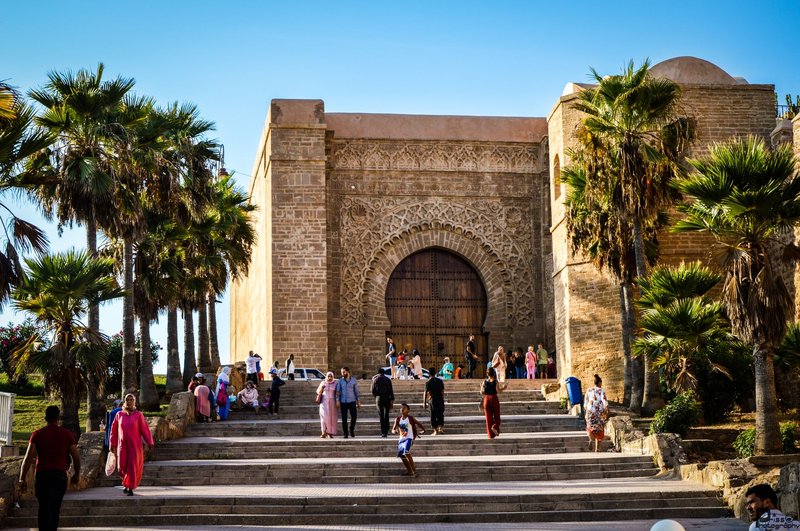
Rabat is the entry on this list that most pages shortchange. Its full UNESCO name, Rabat, Modern Capital and Historic City: a Shared Heritage, explains why: the inscription covers several layers at once. UNESCO’s entry on Rabat lists the Almohad-era Hassan Tower and Kasbah of the Udayas, the Chellah necropolis, and the 20th-century Ville Nouvelle designed under the French protectorate.
What to see: The unfinished Hassan Tower, begun in the late 12th century and never completed, with its forest of stumpy columns. The Mausoleum of Mohammed V next to it. The blue-and-white lanes of the Kasbah of the Udayas, looking over the Bou Regreg estuary. Chellah, a Roman and Merinid site where storks nest on the minaret. The Art Deco and Moorish Revival buildings along Avenue Mohammed V.
How long: One full day. Rabat is easier than Fez or Marrakesh: calm, walkable, and with a tram.
Getting there: Rabat is on the high-speed and conventional rail lines, roughly an hour from Casablanca and about three hours from Fez. It makes an easy base for a day trip to Meknes or an overnight on the way north or south.
Two routes that cover all nine
Morocco’s heritage sites cluster into three zones, and two easy trips cover most of them. The route you pick depends on whether you want imperial cities or the coast and desert. For more historic places across the country, see 15 Historical Places in Morocco Worth the Detour.
Northern imperial route (5 to 6 days): Rabat, Meknes, Volubilis, Fez. Start in Rabat for a day. Take the train to Meknes, spend a day there with a half-day at Volubilis, then continue to Fez for two days. Add Tetouan as a detour by road from Fez or on the way to Tangier.
Southern route (5 to 7 days): Marrakesh, Ait-Ben-Haddou, Essaouira. Two days in Marrakesh, a long day (or overnight) to Ait-Ben-Haddou and Ouarzazate, back to Marrakesh, then three hours to Essaouira. Add Mazagan on a drive toward Casablanca.
Do both in about two weeks and you have all nine. Fly in to Casablanca or Marrakesh and out of another city to avoid backtracking.
When to go
Spring (March to May) and autumn (late September to November) are the sweet spot. Marrakesh and Ait-Ben-Haddou can pass 40 degrees Celsius in July and August, and Fez isn’t far behind. Essaouira stays cool in summer thanks to the Atlantic wind, which is why the Moroccans head there. Winter is mild on the coast but cold at night in Fez, Meknes and the High Atlas, and snow can close the Tizi n’Tichka pass.
Ramadan changes opening hours and meal availability across the country. Monuments are still open, but restaurants may be closed until sunset. Check the dates for the year you travel.
Morocco’s tentative list
Beyond the nine inscribed sites, Morocco maintains a tentative list of properties it intends to nominate. Sources differ on the count; at last check it was about 13 or 14 entries, and the list changes. Candidates include natural sites such as Talassemtane National Park in the Rif mountains and the Khnifiss Lagoon on the Atlantic coast, plus the Dakhla region in the south. Being on the tentative list is a prerequisite for nomination, not a guarantee of inscription, so none of these count as World Heritage Sites yet.
If a natural site is eventually inscribed, it will be the first non-cultural one in the country’s list.