Oceania stretches across the vast Pacific, from the continental sweep of Australia and New Zealand to remote reef atolls and volcanic islands. That spread creates distinct regions with different histories, languages and environmental challenges, so listing them helps make sense of the diversity.
There are 7 Regions of Oceania, ranging from Australasia to Polynesia. For each region you’ll find below Member countries/territories,Area (km2),Population.
How are these regions defined and why do different lists disagree?
Regions are typically defined by a mix of geography (island groups and proximity), cultural and linguistic ties, and administrative groupings used by organizations like the UN or Pacific regional bodies. Different lists reflect different purposes — political, biogeographical or cultural — so definitions can vary depending on the source.
Which region covers the most land and which has the largest population?
Australasia accounts for the lion’s share of land area and population because it includes Australia (and often New Zealand); most other regions are collections of much smaller islands. Population density and totals vary widely across Melanesia, Micronesia and Polynesia, but Australia dominates both area and overall population in the region.
Regions of Oceania
| Region name | Member countries/territories | Area (km2) | Population |
|---|---|---|---|
| Oceania | Australia, New Zealand, Papua New Guinea, Fiji, Solomon Islands, Vanuatu, Samoa, Tonga, Kiribati, Palau | 8,525,989 | 43,000,000 |
| Australia and New Zealand | Australia, New Zealand | 7,960,000 | 31,000,000 |
| Australasia | Australia, New Zealand, Papua New Guinea | 8,423,000 | 40,000,000 |
| Melanesia | Papua New Guinea, Solomon Islands, Vanuatu, Fiji, New Caledonia | 540,000 | 11,500,000 |
| Micronesia | Federated States of Micronesia, Palau, Marshall Islands, Kiribati, Nauru, Guam, Northern Mariana Islands | 3,200 | 530,000 |
| Polynesia | Samoa, Tonga, Tuvalu, Cook Islands, French Polynesia, American Samoa, Niue, Tokelau, Wallis and Futuna | 8,700 | 680,000 |
| Pacific Islands | Fiji, Papua New Guinea, Solomon Islands, Vanuatu, Samoa, Tonga, Kiribati, Micronesia, Palau, Marshall Islands | 550,000 | 12,000,000 |
Images and Descriptions
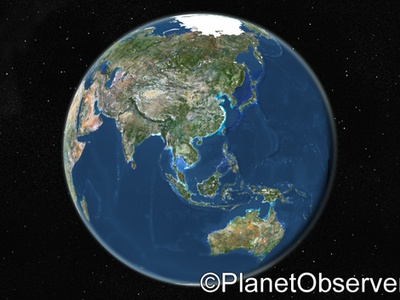
Oceania
The broad region of Pacific islands plus Australia and New Zealand, notable for vast ocean distances, huge ecological diversity, and varied cultures. Encompasses independent states and overseas territories from continental Australia to tiny atoll nations, important for climate and maritime issues.
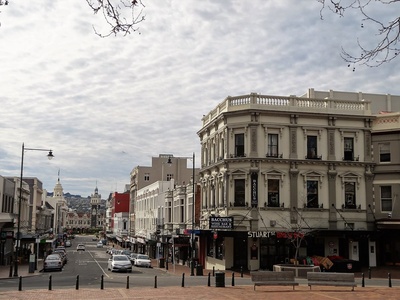
Australia and New Zealand
A UN subregion grouping the two largest landmasses in Oceania. Economically dominant with major urban centers, unique biodiversity, and shared political and cultural ties; a focus of regional diplomacy, trade, and scientific research in the Pacific.

Australasia
A biogeographic and cultural term covering Australia, New Zealand, and often New Guinea. Used in ecology and anthropology to describe shared flora, fauna, and historical links, reflecting close economic and cultural ties across these large southern landmasses.
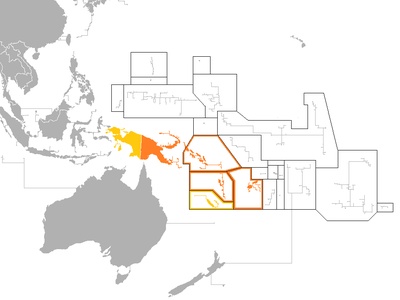
Melanesia
Subregion from New Guinea east to Fiji, known for extraordinary cultural and linguistic diversity and high island biodiversity. Contains large islands (PNG) and colonial territories (New Caledonia), with rich indigenous traditions and important natural resources.
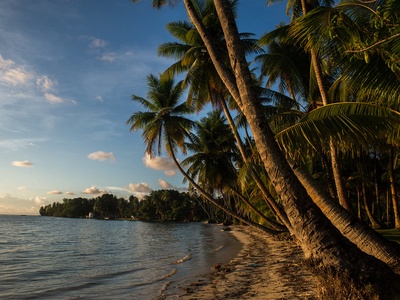
Micronesia
A western‑Pacific cluster of small islands and atolls north of the equator. Noted for compact land areas, dispersed populations, strategic WWII history, and challenges like sea‑level rise and limited natural resources across many jurisdictions.

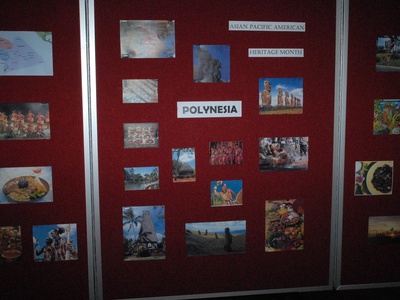
Polynesia
A vast triangle of Pacific islands with shared linguistic and cultural roots stretching from Hawaii to Easter Island and New Zealand. Famous for deep‑sea voyaging heritage, widespread cultural links, and significant cultural impact across Oceania.
Pacific Islands
Common umbrella for island nations of Melanesia, Micronesia, and Polynesia (often excluding Australia and New Zealand). Used in diplomacy and development contexts to describe shared maritime identity, climate vulnerabilities, and regional cooperation.