
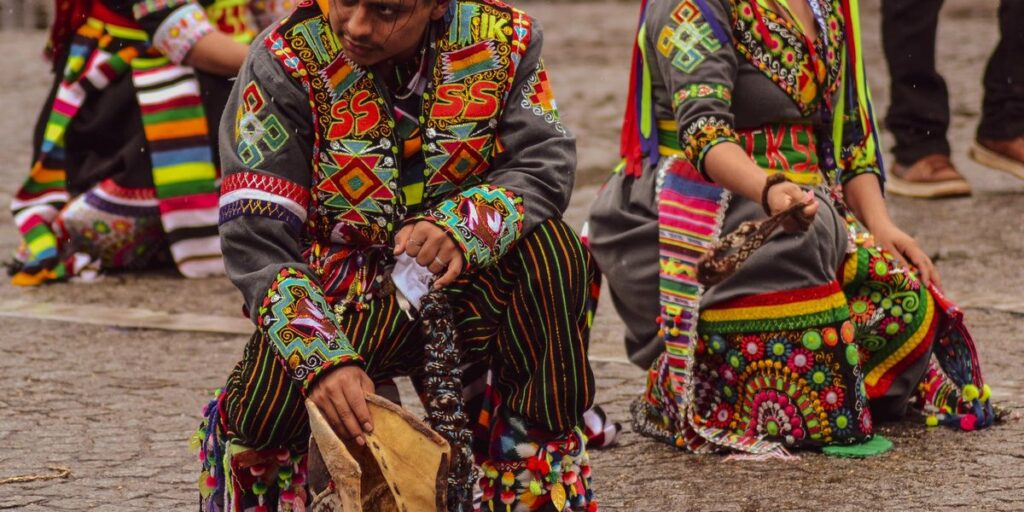
Ask “what do South Americans look like” and you’ll get a useless answer, because there isn’t one. A blond Argentine of Italian descent, a Quechua-speaking farmer in the Bolivian highlands, and an Afro-Colombian fisherman on the Pacific coast are all South Americans, and none of them is the exception. The continent’s ethnic makeup is the product of four collisions: the people who were already here, the Europeans who arrived after 1492, the Africans brought in chains, and the waves of immigrants who came after independence. Everything else is the math of how those four mixed.
Here’s the map of who lives where, with numbers, plus the vocabulary you need to read any of it.
Table of Contents
- The four foundational streams
- The vocabulary: Mestizo, Mulatto, Pardo, Zambo
- Country-by-country breakdown
- The Indigenous peoples worth knowing by name
- How the slave trade and colonization built this map
- A note on the numbers
The four foundational streams {#the-four-streams}
Before you can make sense of any single country, you need the four ingredients. Almost every person in South America descends from some combination of these.
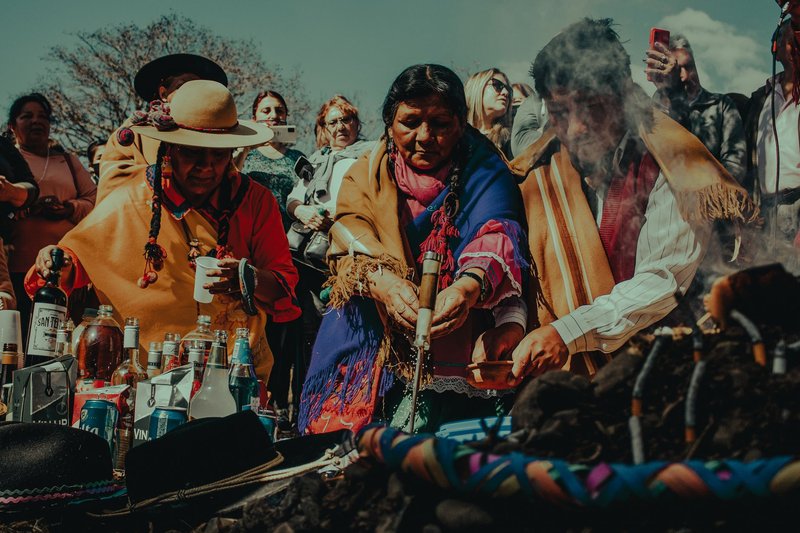
Indigenous peoples. The original inhabitants, here for at least 15,000 years. They were never one people — hundreds of distinct nations with their own languages, from the Andean empires to small Amazonian groups. Colonization, disease, and forced labor devastated them, but they didn’t vanish. In Bolivia and Peru they’re still a plurality or near-majority.
Europeans. Spanish and Portuguese colonizers first, from the 1500s. Then, after independence in the 1800s, a second and much larger wave: Italians, Germans, Spaniards again, Portuguese, and others who came as free immigrants chasing land and work. This second wave is why Argentina and Uruguay look the way they do.
Sub-Saharan Africans. Brought across the Atlantic as enslaved people, overwhelmingly to Brazil, which received more enslaved Africans than any other country on earth — roughly 4.8 million, according to the Trans-Atlantic Slave Trade Database, compared to about 388,000 brought to the entire United States. Their descendants are concentrated in Brazil and along the Caribbean and Pacific coasts of Colombia and Venezuela.
Post-independence immigrants. After the 1800s, alongside the European wave, came Japanese to Brazil and Peru (Brazil has the largest Japanese diaspora in the world), Levantine Arabs to several countries, and others. Smaller in number but visible in the demographic mix.
Mix those four over five centuries and you get the categories below.
The vocabulary: Mestizo, Mulatto, Pardo, Zambo {#the-vocabulary}
These terms get thrown around without definition constantly, and they’re the key to every census table on the continent. They describe mixed ancestry, and they’re not interchangeable.
- Mestizo — mixed European and Indigenous ancestry. This is the largest single category across Spanish-speaking South America. A mestizo majority is the default in Venezuela, Colombia, Ecuador, Paraguay, and Chile.
- Mulatto — mixed European and African ancestry. Most common where the African presence was heaviest: Brazil, coastal Colombia, Venezuela.
- Pardo — a broader Brazilian term, usually translated as “brown,” covering mixed ancestry of any combination — European, African, and Indigenous together. It’s a census category in Brazil specifically, and it’s now the largest group there.
- Zambo — mixed African and Indigenous ancestry. The smallest of the four, found mainly in coastal Ecuador, Colombia, and parts of Peru.
One thing to hold onto: these are social and census categories, not biology. Where one country draws a line between “mestizo” and “white,” another might not, which is part of why the numbers below should be read as approximate rather than precise. The same four streams and the same vocabulary structure the picture across the rest of the region too, and a wider survey of the ethnic groups in Latin America shows how these categories repeat from Mexico down through Central America.
Country-by-country breakdown {#country-by-country}
Here’s the continent at a glance. Figures are approximate and drawn from national censuses and survey data, which use different methods and self-identification, so treat them as the shape of each country rather than exact counts.
| Country | Dominant group(s) | Approximate makeup |
|---|---|---|
| Brazil | Pardo / White | ~45% Pardo, ~43% White, ~10% Black, plus Asian and Indigenous |
| Argentina | European | ~85%+ European descent, small mestizo and Indigenous minorities |
| Uruguay | European | ~88% European descent, ~8% mixed, ~5% Afro-Uruguayan |
| Colombia | Mestizo | ~50% mestizo, ~37% white, ~10% Afro-Colombian, ~4% Indigenous |
| Venezuela | Mestizo | ~52% mestizo, ~44% white/other, smaller Afro and Indigenous shares |
| Peru | Indigenous / Mestizo | ~60% mestizo, ~25% Indigenous (Quechua, Aymara), ~6% white, ~4% Afro |
| Ecuador | Mestizo | ~72% mestizo, ~7% Indigenous, ~7% Montubio, ~7% Afro, ~6% white |
| Bolivia | Indigenous / Mestizo | ~larger Indigenous share than anywhere; Quechua and Aymara plurality, plus mestizo |
| Chile | Mestizo / European | mostly mestizo and European; Mapuche the largest Indigenous group |
| Paraguay | Mestizo | ~95% mestizo; Guaraní language spoken nationwide |
| Guyana | South Asian / African | ~40% Indo-Guyanese, ~30% Afro-Guyanese, plus mixed and Indigenous |
| Suriname | South Asian / Maroon | Indo-Surinamese, Maroon, Creole, Javanese — the most ethnically split country |
A few patterns jump out of that table.
The Andean countries hold the Indigenous heart of the continent. Bolivia and Peru have the largest Indigenous populations, both in raw numbers and as a share. This is the legacy of the Inca and pre-Inca civilizations that were densest in the highlands. In Bolivia, the high-altitude geography that protected Indigenous communities from the worst of the colonial economy also helped preserve their numbers.
The Southern Cone is Europe transplanted. Argentina and Uruguay received a flood of European immigrants — Italians above all — between roughly 1870 and 1930. So many came that they overwhelmed the smaller pre-existing population. This is why Buenos Aires feels more like a southern European capital than an Andean one, and why an Argentine surname is as likely to be Italian as Spanish.
Brazil is its own demographic universe. It’s the only country where “Pardo” is the largest group, and the only one where the African legacy is foundational rather than coastal. Brazil’s 2022 census recorded Pardos as the plurality for the first time, edging out the white population. The country’s racial vocabulary, history, and self-identification simply don’t map cleanly onto its Spanish-speaking neighbors.
The Guianas don’t fit the pattern at all. Guyana and Suriname were British and Dutch colonies, and after slavery ended, the colonizers imported indentured laborers from India and Indonesia. The result: countries where South Asian populations are the largest single group, with cultural and culinary worlds closer to the Caribbean and South Asia than to Lima or Santiago.
The Indigenous peoples worth knowing by name {#indigenous-peoples}
“Indigenous” is a census bucket, not an identity. The people inside it belong to specific nations, and a handful are large or distinct enough that you should know them.
- Quechua — the largest Indigenous group on the continent, descendants of the Inca and the peoples the Inca absorbed. Spread across Peru, Bolivia, and Ecuador. Quechua (Runasimi) is still spoken by millions and is an official language in Peru and Bolivia.
- Aymara — Andean highlanders centered on Lake Titicaca, straddling the Bolivia–Peru border. A pre-Inca civilization that kept its language and identity through Inca and Spanish rule both. Bolivia’s former president Evo Morales is Aymara.
- Guaraní — the Indigenous people of Paraguay and neighboring regions. What makes them remarkable is linguistic: Guaraní is co-official with Spanish in Paraguay and spoken by the large majority of the population, including non-Indigenous Paraguayans. It’s the rare case where the Indigenous language became the national one — and Guaraní isn’t alone, since Paraguay is home to a whole family of Indigenous languages beyond the one everybody speaks.
- Mapuche — the largest Indigenous group in Chile, also present in Argentina. Famous for something almost no other Indigenous group on the continent managed: they fought the Spanish to a standstill and remained largely independent for some 300 years, into the 1880s.
- Shipibo-Conibo — an Amazonian people of the Peruvian rainforest, known internationally for their geometric textile and pottery designs and their ayahuasca traditions. A reminder that the Andean groups are only half the Indigenous story; the Amazon basin holds hundreds of distinct peoples.
How the slave trade and colonization built this map {#history}
The distribution above isn’t random. It’s the fossil record of three forces.
Colonization concentrated Europeans where the wealth was. The Spanish built their colonial economy on Andean silver — Potosí in Bolivia was, for a time, one of the richest cities on earth — and on Indigenous labor. Where there were dense Indigenous populations to exploit and minerals to extract, the Spanish stayed and mixed, producing the mestizo majorities of the Andes and the north.
The transatlantic slave trade put Africans where the plantations were. Sugar, and later coffee, ran on enslaved labor, and those crops grew on the tropical coasts and in Brazil. That’s why the African-descended population today is heaviest in Brazil and along the Caribbean and Pacific lowlands of Colombia, Venezuela, and Ecuador — not in the cool highlands. Geography drew the map. Britannica’s overview of the continent’s population and settlement history traces how these colonial economies still shape where people live.
Disease did the demographic damage that everything else is built on top of. The European arrival brought smallpox, measles, and influenza to populations with no immunity. Estimates vary, but the Indigenous population of the Americas may have fallen by as much as 90% in the first century and a half of contact. The pre-Columbian continent was far more densely Indigenous than today’s map suggests; what survived, and where, was shaped as much by which communities the epidemics spared as by anything the Spanish or Portuguese decided.
The post-independence immigration waves of the 1800s and early 1900s then poured a fresh European layer onto the south, where the colonial-era Indigenous population had been thinner to begin with. Stack those forces and you get exactly the table above: Indigenous in the high Andes, African on the tropical coasts, European in the temperate south, and mixed-ancestry majorities almost everywhere in between.
A note on the numbers {#a-note-on-numbers}
Treat every percentage here as a sketch, not a measurement. Most of these figures come from self-identification on national censuses, and how people identify shifts with politics, pride, and how the question is worded. Brazil’s Pardo share has grown partly because more people now claim a mixed identity they might once have downplayed. Mestizo and white blur into each other differently in every country. Some censuses don’t ask about race at all.
What’s solid is the shape of the continent: a few overlapping streams of ancestry, distributed by the brutal logic of colonial economics and the accident of which geographies favored which arrivals. Knowing the four streams and the four mixed-ancestry terms gives you the key to read any of it — and to understand why the person next to you on a bus in Montevideo and the person next to you on a bus in La Paz come from such different histories on the same continent.