Ask “what’s the biggest country in Europe by population” and you get a fight before you get an answer. Russia or not Russia? Does Turkey count? European Russia alone or the whole thing? The number changes by tens of millions depending on where you draw the line, and most ranked lists never tell you which line they picked.
So here’s the ranking, the rules behind it, and the part the static tables skip: who’s growing, who’s shrinking, and why the order won’t look the same in ten years.
Table of Contents
- The quick ranking
- How we counted (and the Russia/Turkey problem)
- The top 10, country by country
- Biggest movers: who’s rising, who’s falling
- Population density tells a different story
- Common questions
TLDR
Russia is the most populous country in Europe, around 144 million, if you count its full population. Drop the Asian portion and count only European Russia (~111 million) and it still leads. After that: Germany (~84M), the United Kingdom (~69M), France (~66M), and Italy (~59M) round out the top five. Turkey (~86M) would slot in second if you count it as European, which most geographers don’t.
The quick ranking
Top 15 countries in Europe by population, 2026 estimates:
| Rank | Country | Population (2026 est.) | Yearly change | Density (/km²) |
|---|---|---|---|---|
| 1 | Russia* | ~144,000,000 | −0.2% | ~9 |
| 2 | Germany | ~84,000,000 | +0.1% | ~235 |
| 3 | United Kingdom | ~69,500,000 | +0.5% | ~287 |
| 4 | France | ~66,500,000 | +0.2% | ~123 |
| 5 | Italy | ~58,700,000 | −0.3% | ~195 |
| 6 | Spain | ~48,800,000 | +0.4% | ~97 |
| 7 | Poland | ~37,800,000 | −0.2% | ~121 |
| 8 | Ukraine | ~33,000,000 | −2.5% | ~55 |
| 9 | Romania | ~18,900,000 | −0.4% | ~82 |
| 10 | Netherlands | ~18,000,000 | +0.4% | ~434 |
| 11 | Belgium | ~11,800,000 | +0.3% | ~388 |
| 12 | Czechia | ~10,700,000 | +0.1% | ~136 |
| 13 | Greece | ~10,300,000 | −0.3% | ~78 |
| 14 | Portugal | ~10,200,000 | +0.1% | ~111 |
| 15 | Sweden | ~10,600,000 | +0.4% | ~26 |
*Russia’s figure is its total national population. European Russia alone is roughly 111 million — still enough for the top spot. Turkey (~86M) is excluded as transcontinental-Asian; counted as European it would rank second. Ukraine’s figure reflects wartime displacement and is the hardest number on this list to pin down.
How we counted
This is where the lists diverge, so here’s the rulebook for this one.
Russia gets counted in full, but European Russia is flagged. About three-quarters of Russians live west of the Ural Mountains, the conventional Europe-Asia divide. That’s roughly 111 million people in European Russia. Even using that conservative slice, Russia stays at number one. Use the full 144 million and the lead is enormous. Either way, the answer to “most populous country in Europe” is Russia.
Turkey is left out. Geographically, only about 3% of Turkey’s land sits in Europe (Eastern Thrace, including part of Istanbul), and the vast majority of its ~86 million people live in Asia Minor. Most geographic authorities classify it as Asian or transcontinental. If you do count it as European — some lists do, especially ones built around culture or sport — it would be the second-most populous country in Europe, ahead of Germany. We flag it rather than rank it.
The EU is its own ranking. Several of the top names — Russia, the UK (post-Brexit), and Ukraine — aren’t EU members. Inside the European Union, Germany is the most populous member state (~84M), followed by France, Italy, Spain, and Poland. That distinction matters because EU population determines voting weight in the Council of the EU under the qualified-majority rules, so “most populous in Europe” and “most populous in the EU” are genuinely different questions with different answers.
Figures are 2026 estimates drawn from national statistics offices and UN projections. Populations move daily; treat these as scan-and-cite numbers, not census-exact ones. Ukraine’s total is the least certain on the page because of wartime emigration and the difficulty of counting people in occupied or contested areas. The UN World Population Prospects is the standard reference for the longer-range projections behind the trend section below.
The top 10
1. Russia — ~144 million
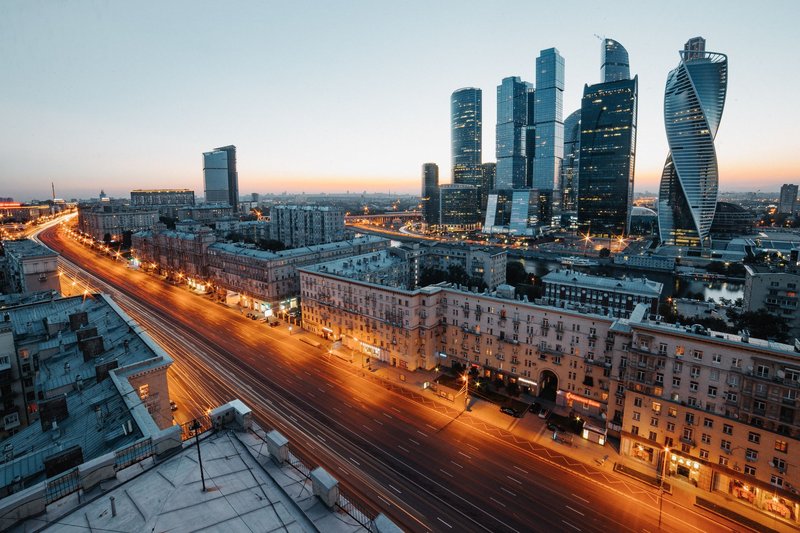
The largest by a wide margin, however you slice the continental boundary. Moscow alone holds over 12 million people, and St. Petersburg adds another 5.6 million — the two biggest cities in Europe sit inside Russia. The trajectory points down: low birth rates, high mortality among working-age men, and emigration have pushed the country into sustained natural decline, which the government has spent years trying to reverse with limited success.
2. Germany — ~84 million
Europe’s largest economy and its most populous country once you exclude Russia. Germany’s population would be shrinking on births alone — deaths have outnumbered births for decades — but immigration has kept the headline number flat to slightly rising. Berlin, Hamburg, and Munich anchor a famously decentralized urban map; unlike France or the UK, Germany has no single dominant megacity.
3. United Kingdom — ~69.5 million
The fastest grower in the top five, driven almost entirely by migration. London accounts for roughly 9 million of the total and pulls in arrivals from across the world. The Office for National Statistics projects the UK to keep climbing through the 2030s, on track to overtake Germany as Western Europe’s largest population sometime in the next couple of decades if current trends hold.
4. France — ~66.5 million
For years France had the strongest fertility in Western Europe, which is why it’s edged ahead of Italy and stayed there. That advantage has narrowed — French birth rates have slipped recently — but the country still grows modestly. Paris and its surrounding Île-de-France region hold around 12 million, making it one of the densest population clusters on the continent.
5. Italy — ~58.7 million
Italy is the cautionary tale of the list: one of the lowest birth rates in the world and a steadily shrinking, aging population. It peaked above 60 million in the mid-2010s and has been sliding since. Rome is the largest city, but Italy’s population is spread across a dense web of mid-sized cities rather than concentrated in one capital, and the demographic decline is sharpest in the rural south.
6. Spain — ~48.8 million
Spain has quietly become a growth story, rebounding from stagnation thanks to immigration from Latin America and elsewhere. Madrid and Barcelona are the anchors. Like Italy, Spanish-born fertility is very low, so nearly all of the recent gain traces back to new arrivals rather than births.
7. Poland — ~37.8 million
The most populous country in Central Europe and the EU’s fifth-largest member. Poland’s numbers have been gently declining on low fertility and historical emigration west, though the arrival of millions of Ukrainians since 2022 has complicated the count — many are recorded as temporary, not permanent, residents. Warsaw is the largest city and one of the few in the region that’s growing.
8. Ukraine — ~33 million
The hardest entry on this list. Pre-2022 Ukraine had around 41 million people; war, mass emigration, and territory outside government control have cut the functional population dramatically, with estimates ranging widely. Kyiv remains the largest city. Whatever the precise figure, Ukraine has seen the steepest population drop of any country in Europe this decade.
9. Romania — ~18.9 million
Romania’s population has fallen for years, driven by emigration to Western Europe after EU accession opened the labor market. Bucharest is the largest city and a regional economic hub, but much of the country, especially rural areas, has emptied as working-age Romanians moved abroad.
10. Netherlands — ~18 million
Small in area, large in people — the Netherlands is the most densely populated country in this top 10 by a wide margin (over 430 people per square kilometer). The Randstad conurbation linking Amsterdam, Rotterdam, The Hague, and Utrecht forms one continuous, intensely developed urban region, and the Dutch sit at the crowded heart of the broader belt of ethnic groups in Northern Europe that the density numbers crowd together. Steady immigration keeps the population rising.
Biggest movers
The ranking above is a snapshot. The interesting part is the motion underneath it.
Falling fastest:
- Ukraine — by far the steepest decline, a wartime collapse with no modern peacetime parallel on the continent.
- Italy — a slow-motion, decades-long shrink that demography textbooks now use as the model case for low fertility.
- Romania, Poland, Greece — emigration plus low birth rates; Eastern and Southern Europe are losing people to the West and to time.
Still rising:
- United Kingdom and France — the two big Western European growers, the UK on migration, France on a (fading) fertility edge.
- Spain and the Netherlands — both growing almost entirely through immigration rather than births.
The throughline: native birth rates are below replacement across nearly all of Europe. Where a country’s population is growing, immigration is doing the heavy lifting. Where it’s shrinking, the arrivals aren’t enough to offset the births that never happened. That single dynamic — migration versus low fertility — is reshuffling the bottom half of this ranking faster than the static tables let on.
Population density
Raw population and how crowded a country actually feels are two different things, and the gap is huge.
Russia tops the population list and sits near the very bottom on density — about 9 people per square kilometer, because so much of its land is empty Siberian expanse (most of it Asian, technically). The Netherlands is the inverse: 17th-ish in raw population but the most crowded country on the continent at over 430 per square kilometer. Belgium isn’t far behind. And it’s worth remembering that population works in both directions — at the far end of the scale, the world’s smallest countries by population pack only a few thousand people into similarly tight footprints, which is its own kind of density story.
So if the question behind “largest countries in Europe” is really “where do the most people live in the least space,” the answer flips entirely. Density rewards the small, flat, urbanized northwest — the Low Countries and the UK — not the giants. Worth knowing before you cite a single number to settle an argument.
Common questions
What is the most populous country in Europe? Russia, at roughly 144 million total — or about 111 million counting only European Russia west of the Urals. It leads either way.
Is Turkey a European country? Geographically, only about 3% of it is in Europe. Most authorities classify Turkey as transcontinental or Asian, which is why it’s flagged rather than ranked here. Counted as European, its ~86 million would rank second.
What is the most populous country in the EU? Germany, at around 84 million. Russia, the UK, and Ukraine all rank high in Europe but aren’t EU members.
Which European country is shrinking the fastest? Ukraine, due to the war and resulting emigration. Among countries at peace, Italy and several Eastern European states are in long-term decline driven by low birth rates and emigration.
Are these numbers exact? No — they’re 2026 estimates from national statistics offices and UN projections, meant for quick reference. Ukraine’s figure in particular carries a wide margin of uncertainty.