Table of Contents
- The Quick Version
- Why a Country This Small Has This Much History
- 1. Guaita, the First Tower
- 2. Cesta, the Second Tower
- 3. Montale, the Third Tower
- 4. Basilica di San Marino
- 5. Palazzo Pubblico
- 6. San Francesco Church and Museum
- 7. The City Walls and Porta di San Francesco
- 8. Cava dei Balestrieri
- 9. Piazza della Libertà
- 10. Museo di Stato
- A One-Day Itinerary That Actually Works
- Getting Up There: Parking, the Cable Car, and Tickets
The Quick Version
If you’ve got one day: ride the cable car up from Borgo Maggiore, hit the three towers in order (Guaita, Cesta, Montale), duck into the Basilica for the relics of the saint the whole country is named after, and swing by Palazzo Pubblico for the changing of the guard. That’s the historical core of San Marino covered in about four hours, with time left for lunch on Contrada del Collegio and a walk along the old walls.
Everything below is the “why it matters” that most guides skip in favor of just telling you where to point your camera.
Why a Country This Small Has This Much History
San Marino’s founding story starts with a stonemason. Marinus, a Christian from the Dalmatian island of Rab, was working on the fortifications of nearby Rimini when Emperor Diocletian’s persecutions made staying dangerous for anyone practicing his faith. He climbed Monte Titano and started a small religious community there in 301 AD — a date the republic still marks as its national day, September 3.
That founding matters for more than trivia value. San Marino has never been conquered, absorbed, or occupied for any extended stretch since, which makes it the oldest continuously sovereign state in the world still operating under its original constitution, the Statutes of 1600. Everything on this list — the towers, the walls, the churches — exists because a tiny republic on a limestone ridge kept defending the same patch of rock for seventeen centuries. In 2008, UNESCO inscribed San Marino’s historic center and Mount Titano as a World Heritage Site, recognizing it as a rare surviving example of a self-governing medieval city-state.
1. Guaita, the First Tower
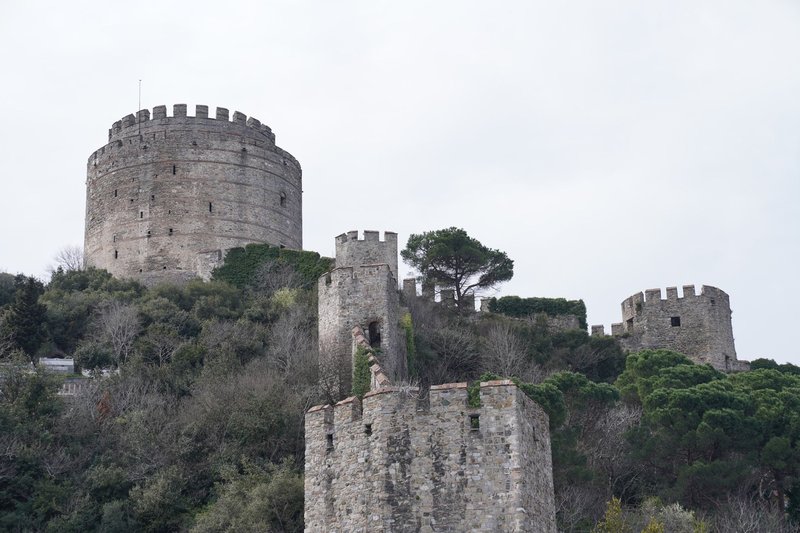
Guaita is the oldest of San Marino’s three towers, built in the 11th century on the lower of Monte Titano’s three peaks. For most of its history it did double duty as fortress and prison — the last inmates were held here until the 1970s, which is a strange thing to sit with when you’re standing in the same stone courtyard.
The tower has a double ring of walls and a small well cut into the rock, a detail that mattered enormously during a siege. Today it’s the backdrop for San Marino’s ceremonial ranks: ceremonies for the Captains Regent, the republic’s two co-heads of state, still happen here on state occasions.
Visiting tip: Guaita is the tower most people photograph but skip climbing into. Pay the entry fee and go inside — the walk along the parapet gives you the clearest view down to Borgo Maggiore and, on a clear day, out to the Adriatic.
2. Cesta, the Second Tower
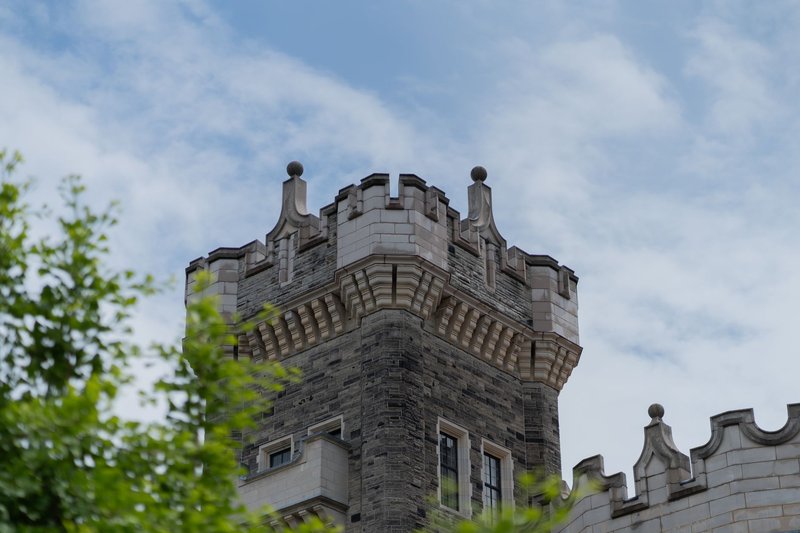
Cesta sits on the highest of Monte Titano’s three peaks, built in the 13th century directly on top of the ruins of an earlier Roman-era fort. That layering — medieval defense stacked on classical ruins — is a pattern you see across San Marino’s old city, and Cesta is where it’s most visible.
Inside, the tower now houses the Museum of Ancient Weapons, a collection of medieval and Renaissance armor, crossbows, and pikes that’s more substantial than the small footprint suggests. The crossbow pieces aren’t decorative afterthoughts — San Marino’s militia used them well into the modern era, which is part of why the crossbow shows up again a few stops down this list.
Visiting tip: The connecting path from Cesta to Montale is called the Passo delle Streghe, the Witches’ Passage, cut into the exposed rock face. It’s narrow, a little exposed, and by far the most atmospheric stretch of walking in the whole city.
3. Montale, the Third Tower
Montale is the smallest and most private of the three, sitting on the southernmost of Monte Titano’s peaks. It’s not open to the public — no museum, no ticket booth, no interior to walk through — but that’s part of what makes it interesting. It functioned historically as a watchtower and, for a period, a holding cell, and its isolation kept it structurally closer to its original medieval form than either of the more-visited towers.
Visiting tip: Don’t skip it just because you can’t go inside. The Witches’ Passage ends at a viewpoint just below Montale that’s quieter than the crowds at Guaita, and it’s the best angle for photographing all three towers in a single frame from below.
4. Basilica di San Marino
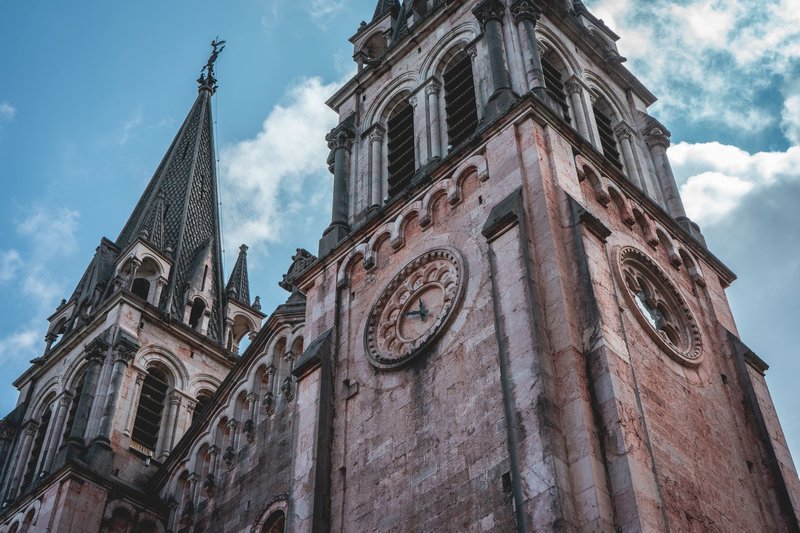
The neoclassical basilica standing today was built between 1826 and 1838, but it occupies the site of a much older church, one built where Marinus himself is said to have died and been buried. His relics rest beneath the main altar, and a reliquary bust holding what’s said to be his skull is displayed inside — the physical link between the legend on Monte Titano and the country it produced.
This is also the emotional center of San Marino’s national holiday. Every September 3, the Captains Regent and the Grand and General Council process here for a solemn mass, a ceremony that’s been part of the calendar for centuries.
Visiting tip: Go in the late morning when the light through the front doors hits the altar directly — and go quietly. It’s a working parish church, not a museum piece, even with tourists moving through it all day.
5. Palazzo Pubblico
Palazzo Pubblico is San Marino’s town hall and seat of government, and the building you see now — neo-Gothic, with crenellated towers and a clock face — dates to 1894, replacing an earlier 14th-century palace on the same spot. It’s still functioning government real estate: the Captains Regent, elected jointly every six months in a system that’s run continuously since the Middle Ages, hold office here, and the Grand and General Council meets in the chamber upstairs.
The changing of the guard happens in the piazza out front at set times, and it’s worth timing your visit around it rather than treating it as background noise while you’re eating gelato.
Visiting tip: When the council isn’t in session, the chamber is open to visitors, and the frescoed interior is a bigger payoff than the plain stone exterior suggests.
6. San Francesco Church and Museum
Built in the mid-14th century, San Francesco is the oldest religious building complex still standing in San Marino, older than the current basilica by five centuries. The adjoining convent now houses a small pinacoteca — a picture gallery — with Renaissance and Baroque religious paintings that most day-trippers walk straight past on their way to the towers.
Visiting tip: This is the stop for anyone who actually wants the “deep history” this republic promises rather than just the postcard shots. It’s rarely crowded, and the ticket is usually bundled with the towers and other state museums.
7. The City Walls and Porta di San Francesco
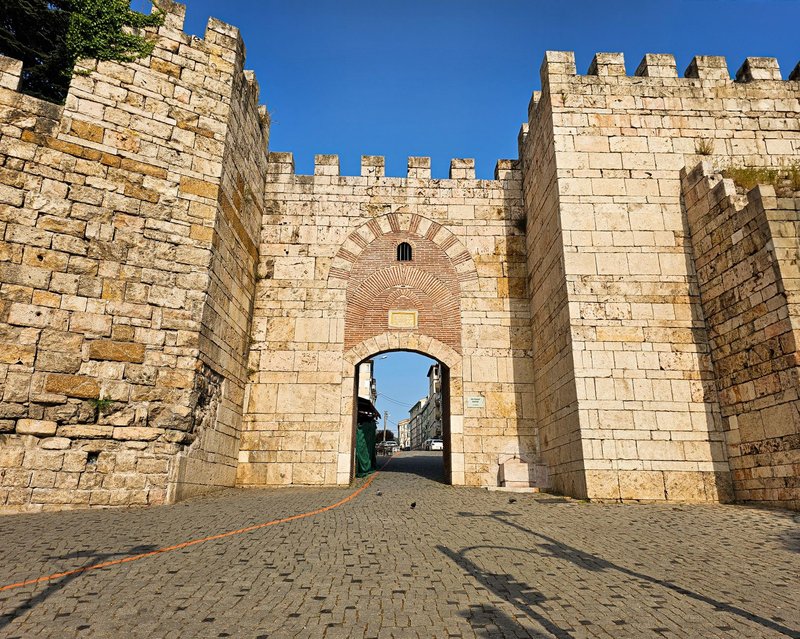
San Marino’s old city is still ringed by three lines of defensive walls, built up in phases as the settlement grew from a hilltop refuge into a fortified town. Porta di San Francesco is the main historic gate, and walking through it is the moment the city stops feeling like a tourist strip and starts feeling like the fortress it actually was.
A second gate, Porta della Rupe, is cut directly through the exposed rock on the western side — less photographed, more interesting structurally, since it shows how the builders worked with the mountain instead of just on top of it.
Visiting tip: Walk the wall line rather than cutting straight through the center. It adds maybe twenty minutes and shows you the defensive logic of the whole city at once — where the drops are sheer, where the gates cluster, where a siege would have actually been fought.
8. Cava dei Balestrieri
This one gets skipped by almost every list, and it shouldn’t. Cava dei Balestrieri is a former stone quarry converted into an open arena, and it’s the home of San Marino’s crossbow tradition — the Palio delle Balestre, a competition held during Medieval Days in late July and again around the September 3 national celebration.
The crossbow isn’t costume-drama flavor here. San Marino’s militia used crossbowmen as a core defensive force for centuries, and the republic still maintains ceremonial crossbow corps today. The quarry itself, with its cut rock walls, is a reminder that most of San Marino’s fortifications were built from stone taken right out of the mountain they sit on.
Visiting tip: If your visit doesn’t line up with a competition date, the arena is still worth a look for the setting alone — it’s one of the few spots in the old city that isn’t full of souvenir shops.
9. Piazza della Libertà
The square in front of Palazzo Pubblico is the republic’s civic heart, anchored by a Statue of Liberty — not the New York one, a separate marble figure gifted to San Marino by an Austrian noblewoman in 1876. The guard ceremonies happen here, the square fills for national celebrations, and on an ordinary afternoon it’s simply the best vantage point for photographing Palazzo Pubblico’s towers against the sky.
Visiting tip: Come back in the early evening once the day-trip buses have cleared out. The square empties fast after 5 p.m., and it’s a completely different, quieter place.
10. Museo di Stato
San Marino’s State Museum holds the republic’s archaeological and historical collections, spanning prehistoric finds from Monte Titano through medieval and early modern artifacts. It’s the least visually dramatic stop on this list and also the one that ties the rest of it together — the context for why a stonemason’s hilltop refuge turned into a functioning state that outlasted empires around it.
Visiting tip: Save it for last, after you’ve already seen the towers and the basilica. The exhibits land harder once you’ve walked the places they’re describing.
A One-Day Itinerary That Actually Works
Start at Borgo Maggiore and take the cable car up — it’s faster than the walk and gives you an aerial preview of the walls and towers before you’re standing under them. From the upper station, head first to Piazza della Libertà and Palazzo Pubblico; if you time it right, you’ll catch the guard ceremony.
From there: Basilica di San Marino, then San Francesco Church, then the walk out to Cesta and its weapons museum. Cross the Witches’ Passage to the Montale viewpoint, double back, and finish at Guaita. Cava dei Balestrieri and Museo di Stato fit in on the way back down if you’ve still got energy, or as a slower add-on if you’re staying overnight in Borgo Maggiore or nearby San Marino City.
Realistically, that’s four to six hours of walking with stops, longer if you sit down for lunch on Contrada del Collegio, which you should.
Getting Up There: Parking, the Cable Car, and Tickets
Cars aren’t allowed into San Marino’s historic center — it’s a restricted zone, and there’s no getting around it by pleading with a local. Park in one of the numbered lots (P1 through P6) that ring the old walls; several are free, and the ones closest to the gates fill first on weekends and in peak summer months.
If you’re coming from Rimini, the easier route is the shuttle bus to Borgo Maggiore and then the Funivia, San Marino’s cable car, which covers the steep climb to the old city in about two minutes flat. A one-way or round-trip ticket runs a few euros, and it beats the alternative switchback drive by a wide margin.
For the towers, museums, and Basilica, look for the combined ticket covering multiple state attractions — it’s cheaper than paying per site if you’re planning to see more than two or three of the places on this list, and it’s sold at the ticket booth by Guaita as well as at the tourist office in Piazza. Opening hours shift seasonally, running longer in summer and trimming down in the winter months, so it’s worth checking the current hours before you build your itinerary around a specific tower.
San Marino rewards the visitor who treats it as more than a photo op between Italian coastal stops. The historic center’s UNESCO listing specifically credits the site for illustrating “the continuity of a small city state” — and once you’ve walked the walls and stood inside a tower that held prisoners into the 1970s, that continuity stops being an abstract line in a nomination file and starts feeling like the actual point of coming here.