On a July afternoon the South Rim reads 84 F while Phantom Ranch, a vertical mile below, averages 106 F. On a January dawn the same rim drops to 18 F. What to pack for Grand Canyon National Park depends less on the month than on how far below the rim you plan to go, and in fall 2026 on which trails and taps are still open.
What to pack for Grand Canyon: one core bag, four places that change it
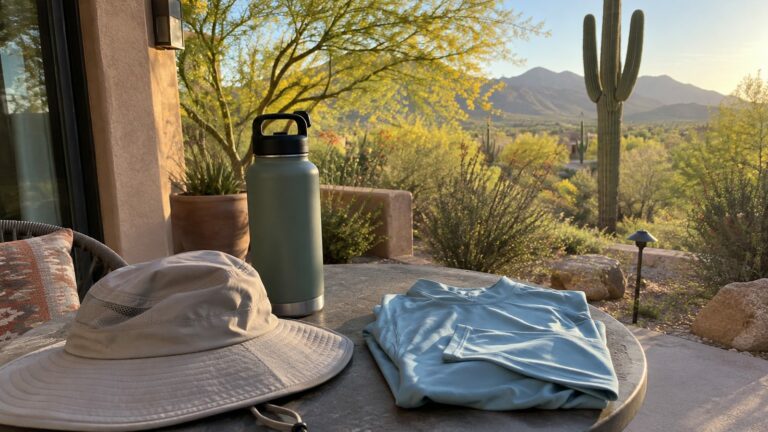
- Core bag, any month: a warm layer you can stuff in a daypack, a wide-brim hat, SPF lip balm, a refillable bottle or reservoir, a headlamp, salty snacks and a card for the entrance gate (the gates take no cash).
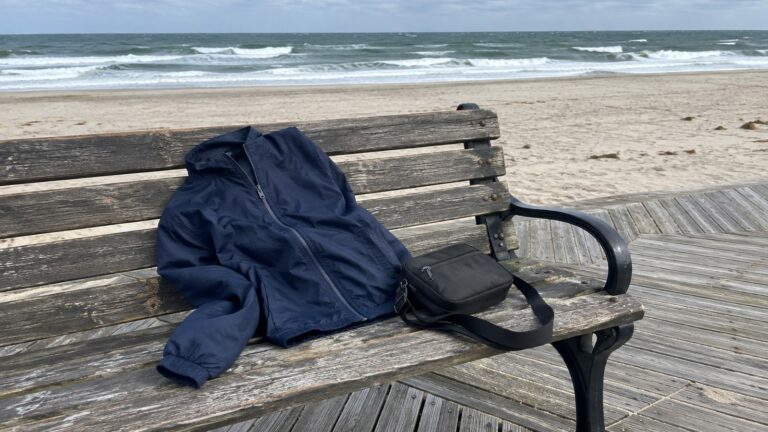
- South Rim viewpoints only: add a real jacket, a beanie and light gloves from October to April. Sunrise and sunset are the coldest, windiest hours.
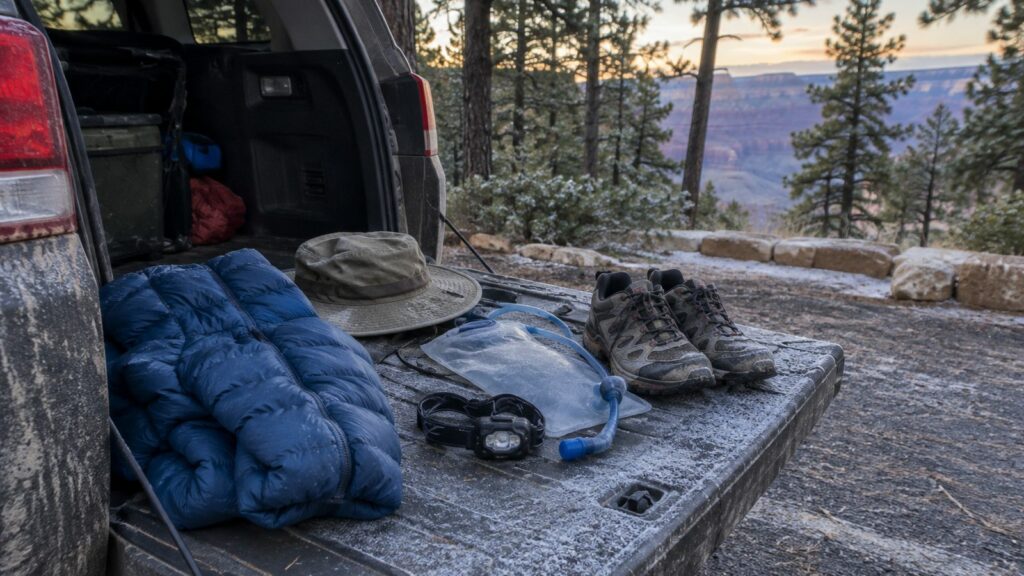
- Below the rim on Bright Angel or South Kaibab: add hiking shoes, poles, electrolytes and twice the water you think you need. From November to March, add slip-on traction.
- North Rim: add everything you would need for a day with no store, no fuel and no water, because in 2026 it has none of the three.
- Grand Canyon West and the Skywalk: pack light. Bags and cameras go in a locker, and outside food is not allowed.
- Elevation
- South Rim about 7,000 ft, North Rim about 8,000 ft, Phantom Ranch about 2,400 ft Source
- Trail water (fall 2026)
- Only the Bright Angel and South Kaibab trailhead tanks are on; stations below the rim are off Source
- Inner canyon closures
- Phantom Ranch, North Kaibab Trail and South Kaibab below Tip-Off closed since the Aug 29 flood Source
- North Rim services
- No lodging, fuel, store or water in 2026; vehicles barred Dec 1 to May 14 Source
- Skywalk
- Bags and cameras go in free lockers; closed shoes required, booties issued Source
- Drones
- Launching or flying a drone anywhere in the park is prohibited Source
- Entrance gates
- Card payment only, no cash Source
- Plugs
- Type A and B, 120 V (standard US outlets) Source
Fall 2026 closures that change your bag
A flood on August 29, 2026 closed Phantom Ranch, the North Kaibab Trail, Bright Angel Campground and the South Kaibab Trail below Tip-Off. The park has given no reopening date. Rim-to-rim and rim-to-river hikes are off for now, so treat the corridor trails as day hikes that turn around partway down.
Water is the bigger change. Since August 13 the park has been on water restrictions, and the stations at Mile-and-a-Half Resthouse, Three-Mile Resthouse and Havasupai Gardens are off. The only potable water on the trails comes from the black tanks at the Bright Angel and South Kaibab trailheads. Every liter you drink below the rim has to leave the rim on your back.
The North Rim reopened on May 15, 2026, but the 2025 Dragon Bravo fire destroyed Grand Canyon Lodge. There is no lodging, no gas station, no general store and no running water on that side this year. Fill the tank and the bottles at Jacob Lake, 44 miles north.
Check the park’s current conditions page the week you travel. Closures here change faster than packing lists do.
Grand Canyon weather by month, rim and river
| Month | High °F / °C | Low °F / °C | Rain days | What to wear |
|---|---|---|---|---|
| Jan | 41 / 5 | 18 / -8 | 3 | Warm coat, hat, gloves, traction for icy trails |
| Feb | 45 / 7 | 21 / -6 | 3 | Insulated jacket, layers; icy trails |
| Mar | 51 / 10 | 25 / -4 | 3 | Layers and a coat; snow melts by midday |
| Apr | 60 / 15 | 32 / 0 | 2 | Jacket plus tee; cold mornings, sun by noon |
| May | 70 / 21 | 39 / 4 | 2 | Light layers and a fleece for evenings |
| Jun | 81 / 27 | 47 / 8 | 1 | T-shirt, sun hat; cool nights on the rim |
| Jul | 84 / 29 | 54 / 12 | 5 | Shorts, sun shirt; storm shell for afternoons |
| Aug | 82 / 28 | 53 / 12 | 5 | Light clothes and rain shell; storms common |
| Sep | 76 / 24 | 47 / 8 | 3 | Tee by day, fleece at night; storms fade |
| Oct | 65 / 18 | 36 / 2 | 3 | Fleece and jacket; mornings near freezing |
| Nov | 52 / 11 | 27 / -3 | 2 | Warm coat; snow possible, short days |
| Dec | 43 / 6 | 20 / -7 | 2 | Heavy coat, hat, gloves, traction |
The table above is the South Rim, where most visitors stand. The canyon floor runs 15 to 25 degrees warmer, and the North Rim runs 6 to 8 degrees colder than the South Rim through its season.
| Month | South Rim high / low | Phantom Ranch high / low | North Rim high / low |
|---|---|---|---|
| Jan | 41 / 18 F | 56 / 36 F | closed |
| Apr | 60 / 32 F | 82 / 56 F | closed |
| Jul | 84 / 54 F | 106 / 78 F | 77 / 46 F |
| Oct | 65 / 36 F | 84 / 58 F | 59 / 31 F |
This gap explains most bad packing at the Grand Canyon. A hiker dressed for a 41 F rim in January overheats by the second mile of Bright Angel. A hiker dressed for an 84 F rim in July descends into air that passes 100 F by late morning.
South Rim viewpoints, shuttles and sunrise
Most visitors spend their whole trip on the South Rim: Mather Point, the 7-mile Rim Trail to Hermits Rest, the free shuttle on Hermit Road and the 23-mile Desert View Drive out to the Watchtower. The Rim Trail is paved or hard-packed for most of its length, so walking shoes work fine up top.
What catches people out is the altitude. At 7,000 ft the air is thin and dry, the sun burns faster than at sea level and the temperature drops hard the moment the sun goes down. A 65 F October afternoon at Yavapai Point turns into a 36 F night, and the wind across the open rim makes it feel colder.
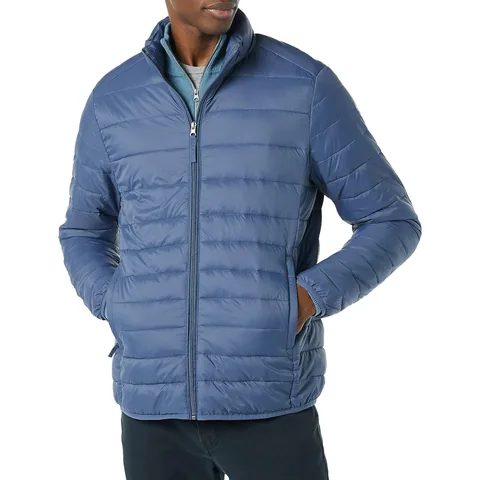
Amazon Essentials Packable PufferBudget
South Rim sits at 7,000 ft with January lows near 18 F and wind at sunrise and sunset; a packable layer helps.
- Packable, lightweight puffer jacket
- Water-resistant shell for light wind and drizzle
For sunrise, plan to stand still in the dark for 30 to 45 minutes. A beanie and light gloves matter more than an extra layer on your legs. At Yavapai Point on a January morning in 2014, at around 15 F, my phone went from 60% to dead before the first light reached the far rim, and it only came back after twenty minutes in an inside pocket. Keep the phone and any power bank against your body, not in an outer pocket.
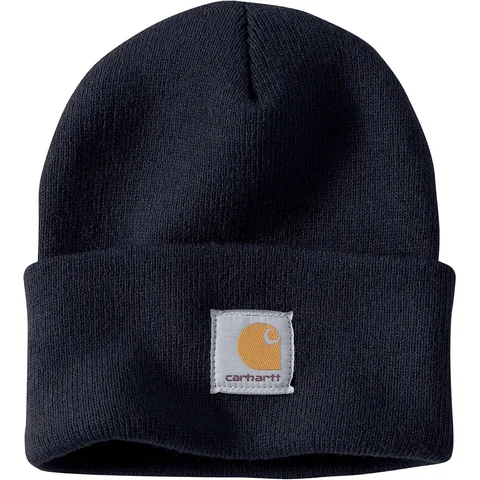 Carhartt Watch Cap BeanieBudgetCheck price on Amazon
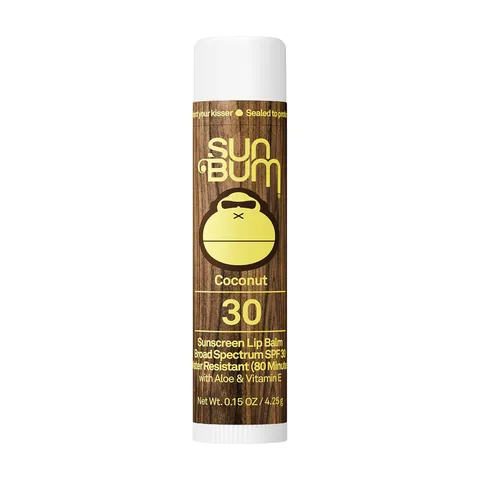 Sun Bum SPF 30 Lip BalmBudgetCheck price on Amazon
The walk back from a sunset viewpoint to a lodge or the shuttle stop is often in full dark. Grand Canyon is an International Dark Sky Park, and the rangers ask for red light at the night-sky programs at Mather Point and Desert View. A headlamp with a red mode covers both the walk and the stars.
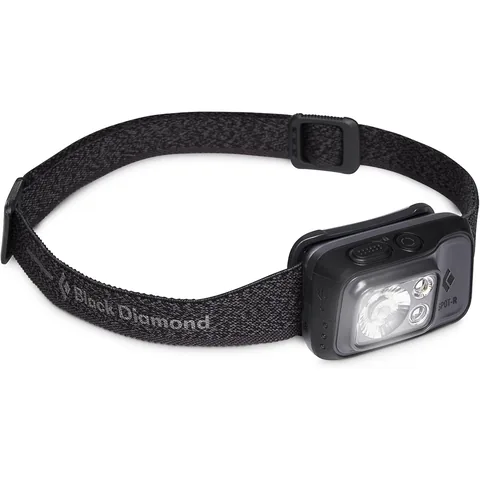
Black Diamond Spot 400-RMid-range
Walks back from sunset viewpoints are dark, and the park is an International Dark Sky Park; red mode protects night vision.
- Up to 400 lumens, dimmable, IP67 waterproof
- Rechargeable battery with red night-vision mode and a lock mode
The dry air is the other South Rim surprise, especially from April to June before the monsoon. Lip balm with SPF and a small moisturizer take up almost no room.
Below the rim on Bright Angel and South Kaibab
A day hike down either corridor trail is the best way to see the canyon from inside, and it is where packing mistakes turn into rescues. The park’s hiking advice comes down to one line: going down is optional, coming up is mandatory, and the climb out takes about twice as long as the descent.
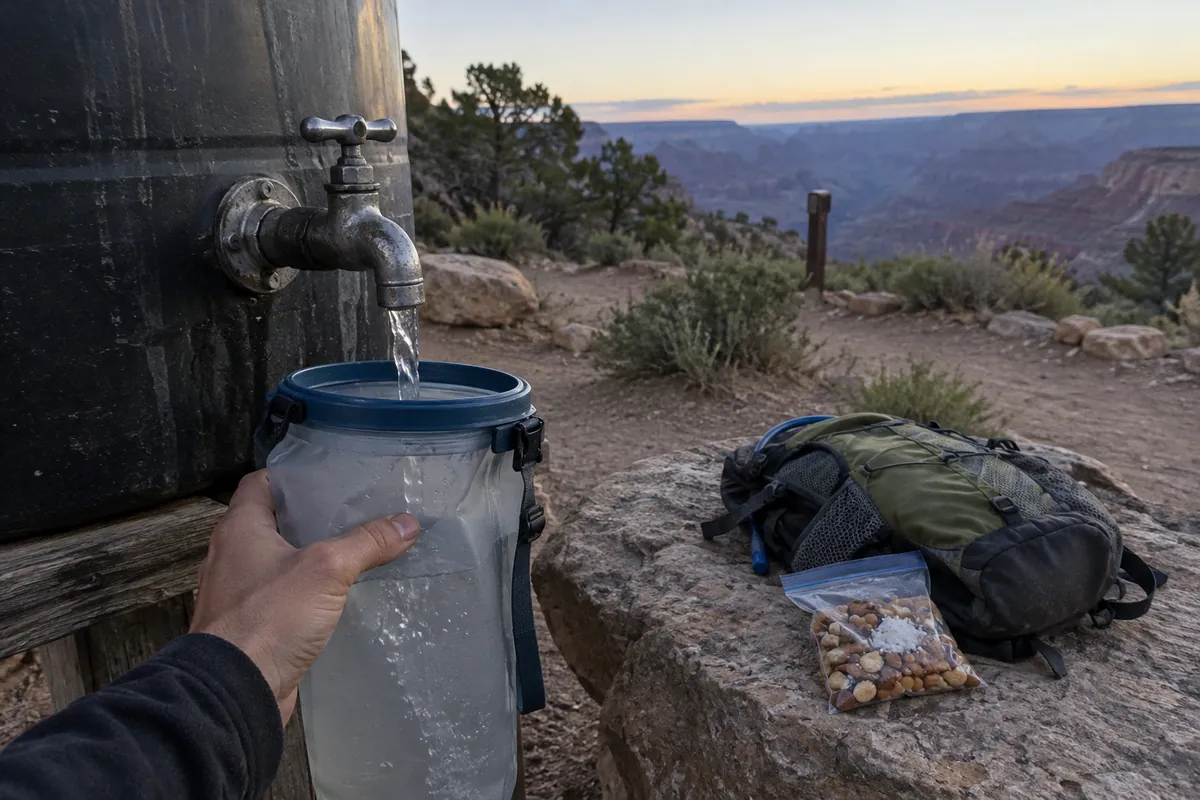
The National Park Service says hikers in the heat can lose one to two quarts of water an hour, and it advises against strenuous hiking below the rim from 10 a.m. to 4 p.m. in summer. Start before sunrise, turn around early and carry all your water from the trailhead tank. A 2 or 3 liter reservoir is easier to drink from steadily than a bottle you have to stop for.
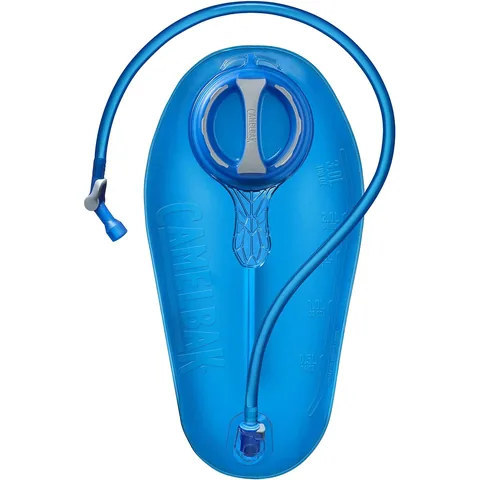
CamelBak Crux ReservoirMid-range
Inner-canyon summer heat costs 1-2 quarts of water an hour; hands-free sipping keeps you drinking on the trail.
- Delivers 20% more water per sip with a big bite valve
- On/off lever seals the tube; leak-proof cap opens one-handed
Water alone is not enough. Drinking a lot without eating salt leads to hyponatremia, a low blood-sodium state that looks like heat exhaustion. The park says to eat salty snacks with your water on any hike over 30 minutes and to eat about twice what you normally would. Pretzels, crackers and electrolyte stick packs weigh almost nothing.
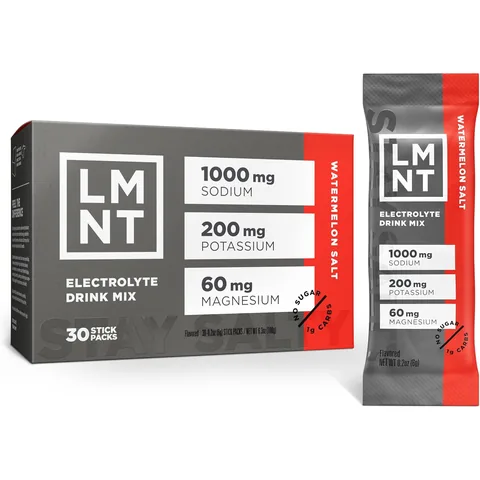
LMNT Electrolyte MixMid-range
NPS says to eat salty snacks and replace salt on hot inner-canyon hikes; stick packs weigh almost nothing.
- Each stick pack has 1000 mg sodium, 200 mg potassium and 60 mg magnesium
- Zero-sugar drink mix; stir one stick into a water bottle
My own lesson here came in May 2013, on a press trip from Milan. I set off down Bright Angel at 1 p.m. for Mile-and-a-Half Resthouse with a single one-liter bottle. The descent took 45 minutes. The climb back took almost two hours, and the bottle was empty before I reached the second tunnel.
On Reddit, in r/grandcanyon and r/hiking, the advice that comes up most is the same: about a gallon of water per person for a hot day, salty food rather than fatty food, and a warm layer for the rim even when the forecast down in the canyon is hot.
The trails themselves are steep dirt and rock, with loose gravel on the switchbacks. Running shoes with worn tread slide on the way down. A low hiking shoe with a firm sole and good grip is enough; heavy boots are not necessary for a day hike.
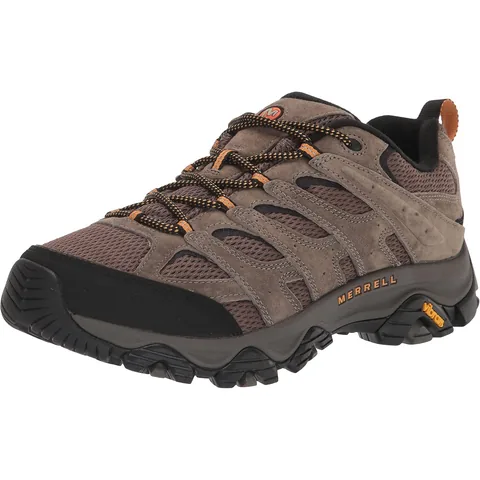
Merrell Moab 3 Hiking ShoePremium
Bright Angel and South Kaibab are steep dirt and rock with loose gravel on the switchbacks; sneakers slide on the way down.
- Low-cut hiking shoe for trail comfort without boot weight
- Cushioned midsole and grippy outsole for rocky trails
Bright Angel drops about 1,100 ft just to Mile-and-a-Half Resthouse, and long descents push your toes into the front of the shoe, and that is where blisters start. Merino socks that fit snugly and a pair of trekking poles take a lot of the strain off knees and toes on the way down, and give you two extra points of contact on the way up.
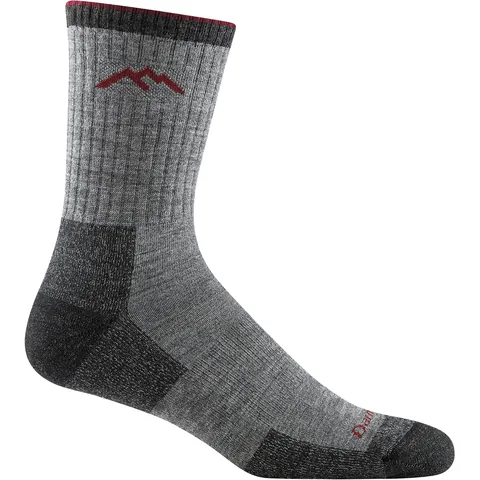 Darn Tough Hiker SocksMid-rangeCheck price on Amazon
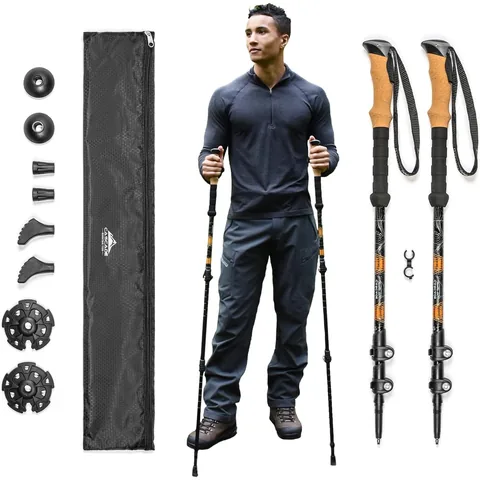 Cascade Mountain Tech Trekking PolesBudgetCheck price on Amazon
There is almost no shade on South Kaibab and little on Bright Angel below the first tunnels. Long sleeves with UPF and a hat with a full brim protect more skin than sunscreen does, and they do not wash off with sweat.
 Columbia PFG Sun HoodieMid-rangeCheck price on Amazon
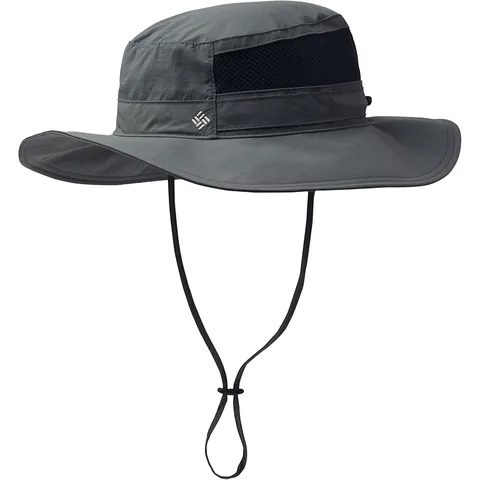 Columbia Bora Bora BooneyMid-rangeCheck price on Amazon
Ice on the upper trail from November to March
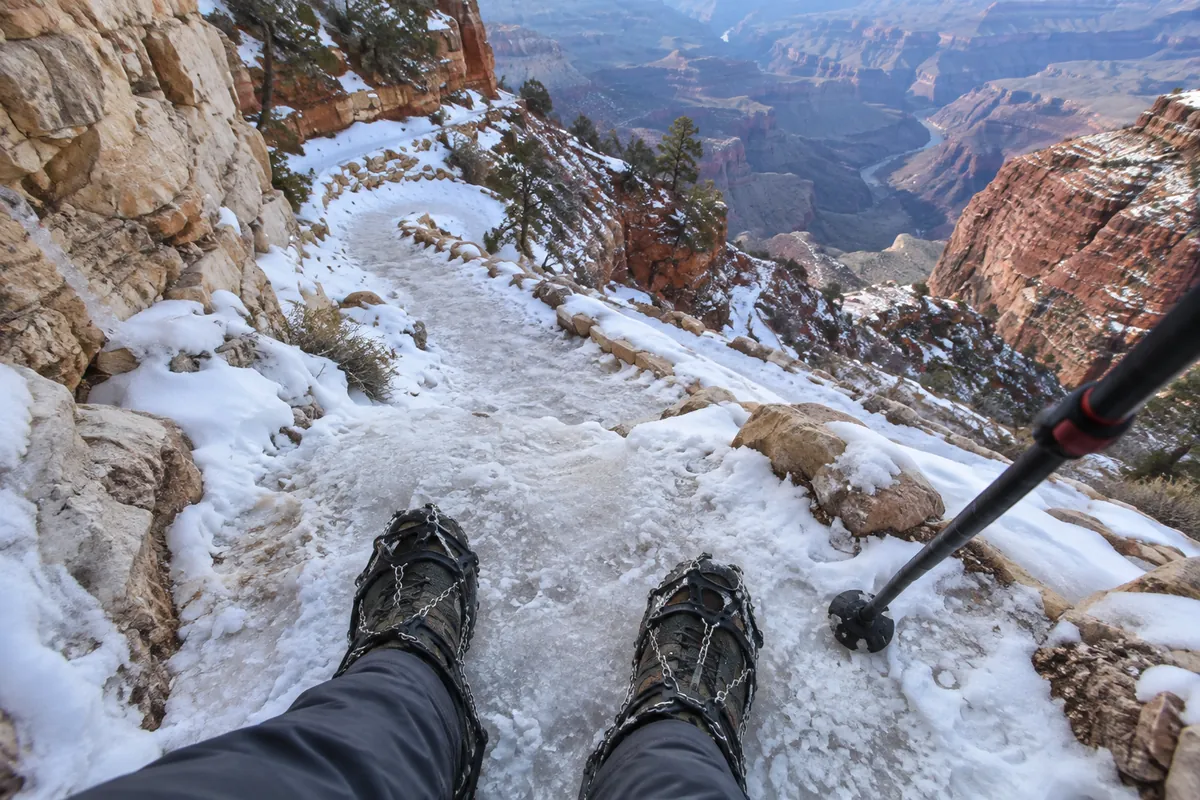
In winter the first three miles of Bright Angel hold packed snow and ice, and the Chimney section of South Kaibab stays icy all season. The park recommends slip-on traction devices and trekking poles for any winter descent. Chain-style traction slips over the hiking shoes you already have and comes off in seconds once you reach dry rock.
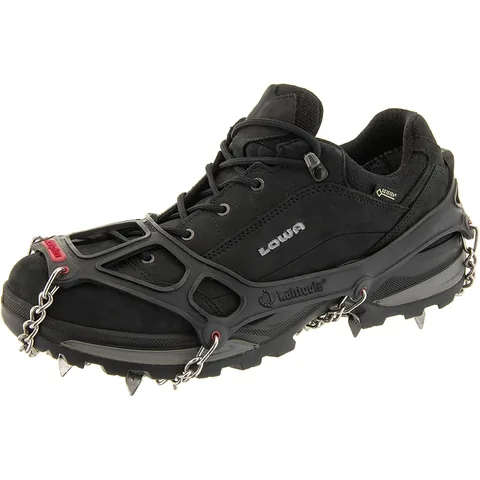
Kahtoola MICROspikesPremium
Bright Angel and South Kaibab pack down to ice in winter; NPS recommends slip-on traction on rim-to-canyon trails.
- 12 stainless-steel spikes per foot, 8 at the forefoot and 4 at the heel
- Elastomer harness slips over hiking shoes and boots
The North Rim in 2026: carry everything
The North Rim sits about 1,000 ft higher than the South Rim and gets a fraction of the visitors. It is open from May 15 until the first heavy snow or November 30, whichever comes first, and vehicles are barred from December 1 to May 14. The Cape Royal and Point Imperial roads close from October 15 to November 3, 2026 for repairs.
After the Dragon Bravo fire, the 2026 season has no lodge, no store, no fuel and no water on the North Rim. Demotte Campground, outside the park boundary, runs first-come through October 31; the North Rim campground itself is set to reopen on May 15, 2027.
That changes the bag more than the weather does. Bring all the food and water for the day, a full tank from Jacob Lake and a way to treat water if you plan to hike. The park also warns that the waterline across the canyon can break suddenly, so a squeeze filter that weighs two ounces earns its place.
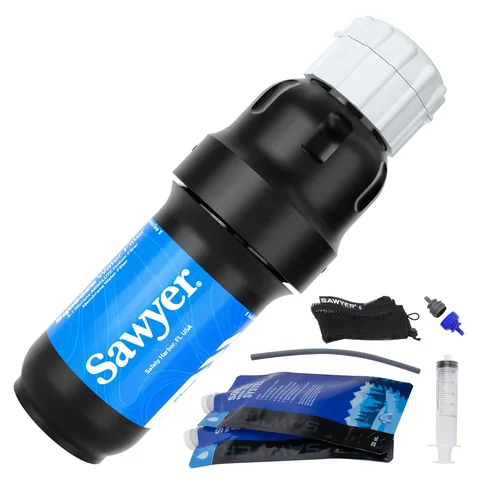
Sawyer Squeeze FilterMid-range
Most 2026 trail water stations are off, the North Rim has none and the park says the waterline can break without warning.
- 0.1 micron inline filter weighs 2 oz and removes bacteria and protozoa
- Threads onto standard 28 mm bottles or the included pouches
North Rim nights are cold even in July, with lows in the mid 40s. In October expect lows just under freezing. Pack the same warm layer you would bring to the South Rim in winter.
Grand Canyon West and the Skywalk
Grand Canyon West is not part of the national park. It sits on Hualapai land, about two and a half hours from Las Vegas, at about 4,000 ft. That makes it warmer than the South Rim in every season, and it has its own rules.
Purses, backpacks and cameras are not allowed on the Skywalk glass. Free lockers at the entrance hold them while you walk out. Closed shoes are required, and staff hand out cloth booties to pull over them so the glass does not scratch. The official Skywalk page says no phones either, while the official FAQ says phones are allowed at your own risk, so be ready to leave yours in the locker. Outside food and drinks are not allowed anywhere at Grand Canyon West.
On a September 2016 day trip from Las Vegas I left my camera in a locker at the Skywalk and walked out in booties pulled over sneakers.
Bring sunscreen, a hat and closed shoes, and leave the daypack in the car.
Grand Canyon in every month: what to pack
If you are driving in from Las Vegas, pack for a much colder day than the Strip.
Grand Canyon in January
The coldest month. Highs reach 41 F and nights fall to 18 F on the South Rim. Pack an insulated jacket, a beanie, gloves and slip-on traction if you will step below the rim. Days are short, so sunrise and sunset sit close to breakfast and dinner, and the crowds are at their lowest.
Grand Canyon in February
Still winter at 7,000 ft, with highs in the mid 40s and lows around 21 F. Snow can fall on any day and then melt off the paved rim walk by noon. Keep the traction devices in the daypack, and add a waterproof layer for wet snow.
Grand Canyon in March
A month of two climates. The rim warms to around 51 F with nights near 25 F, while Phantom Ranch reaches the low 70s. Dress in layers you can peel off as you descend, and expect ice on the top switchbacks well into the month.
Grand Canyon in April
Mornings are at freezing and afternoons are T-shirt weather at about 60 F. Pack a warm jacket for sunrise, a sun hat for midday and sunscreen, since the dry air and altitude burn skin fast.
Grand Canyon in May
The driest stretch of the year begins. Rim highs reach 70 F and lows drop to 39 F, while the canyon floor passes 90 F. Pack light layers and a fleece, and if you hike below the rim, start at dawn. The North Rim opens on May 15.
Grand Canyon in June
The hottest dry month. Rim days near 81 F still cool to 47 F at night, but the inner canyon passes 100 F. Bring sun clothing, a full-brim hat, a large reservoir and electrolytes, and plan every hike for before 10 a.m.
Grand Canyon in July
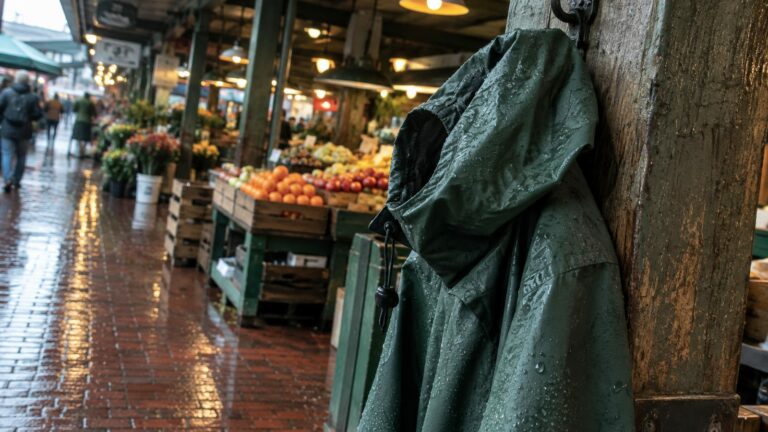
Monsoon season starts. Mornings are clear and calm; by early afternoon thunderstorms build over the canyon with lightning, hail and flash floods. Pack a rain shell, and get off exposed points and back from the edge when thunder starts.
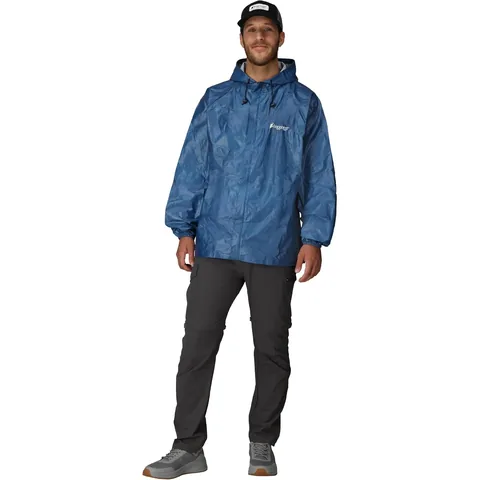
Frogg Toggs Ultra-Lite2 Rain JacketBudget
Monsoon storms hit July to mid-September with sudden downpours and lightning; a packable shell fits in a day pack.
- Lightweight waterproof, breathable rain jacket
- Packs small enough for a day pack
Grand Canyon in August
The wettest month on the rim, with about 2.25 inches of rain on average, most of it from afternoon storms. Highs sit around 82 F. A packable shell, quick-dry clothes and a dry bag for the phone are the core of an August bag.
Grand Canyon in September
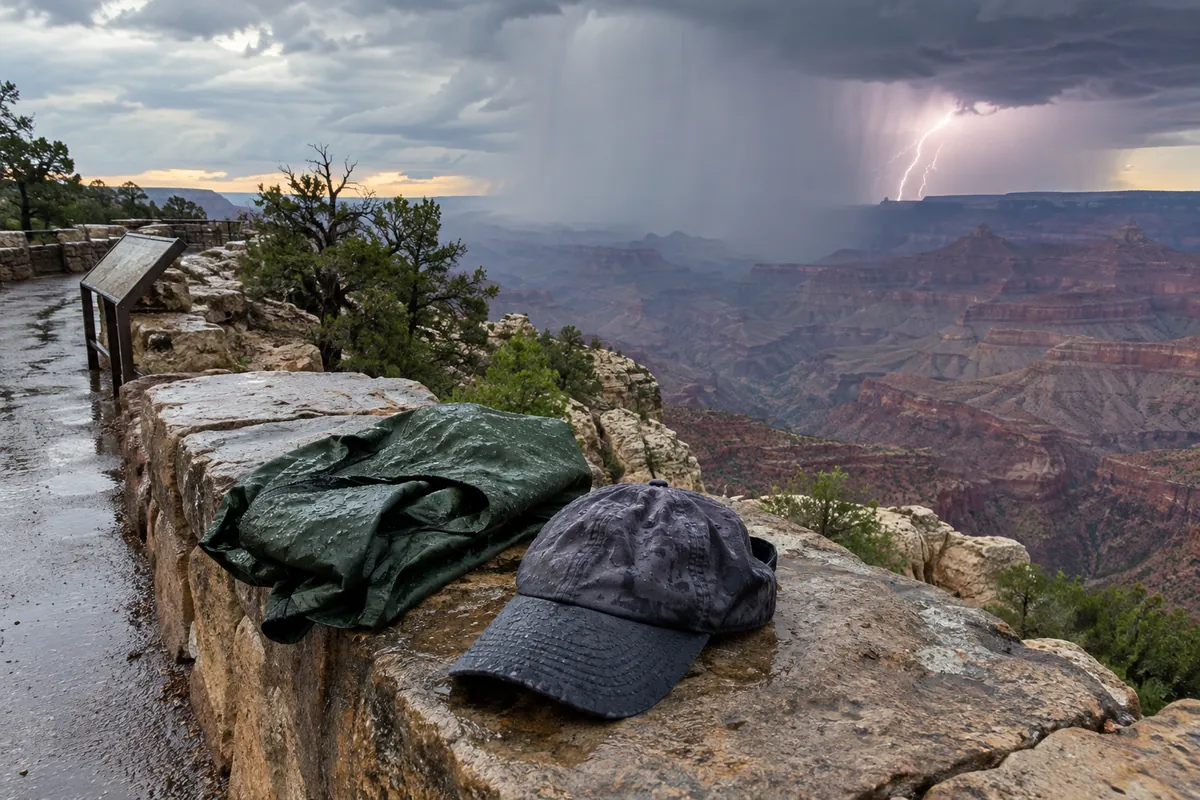
Storms fade through the month and the rim cools to around 76 F by day and 47 F at night. Pack a T-shirt for midday and a fleece for evenings. The canyon floor still reaches the high 90s, so summer heat rules apply below the rim.
Grand Canyon in October
Rim afternoons around 65 F give way to mornings near freezing, so a puffer and a beanie earn their place at sunrise. The North Rim loop roads close from October 15 to November 3 in 2026.
Grand Canyon in November
Winter returns. Highs drop to the low 50s and lows to 27 F, with the first snow possible. Pack a warm coat, gloves and traction for the upper trails. The North Rim closes to cars on December 1 or earlier if snow arrives first.
Grand Canyon in December
Short days, highs in the low 40s and nights around 20 F. Pack a heavy coat, a hat, gloves, traction and a thermos. Hermit Road opens to private cars from December through February, so you can drive to the western viewpoints instead of waiting for the shuttle.
Your Grand Canyon packing list
Use this packing list for Grand Canyon South Rim trips with a day hike. Remove the trail items if you are staying on the rim, and add the North Rim items above if you are crossing to that side.
Layers
- Packable insulated jacket rim mornings below freezing Oct to Apr
- Fleece or wool midlayer
- Lightweight rain shell July to mid-September storms
- UPF sun hoodie
- Knit beanie
- Light gloves sunrise and winter
- Hiking pants or shorts, no jeans on trails
Trail
- Hiking shoes with grip
- Merino hiking socks, 2 pairs per hike
- Slip-on traction, Nov to Mar
- Trekking poles
- Daypack with a 2-3 liter reservoir
- Water filter North Rim and below the rim
- Electrolyte packets
- Salty snacks: pretzels, crackers, nuts
Sun and dry air
- Wide-brim hat with a chin strap
- SPF lip balm
- Sunscreen and sunglasses
- Moisturizer for the dry air
Night and tech
- Headlamp with red mode
- Power bank kept in an inside pocket
- Offline map of the park, downloaded before you arrive
Documents
- Card for the entrance gate (no cash)
- Park pass or America the Beautiful pass
- Backcountry permit if you camp below the rim
What to leave at home
- Jeans on the trail. Cotton holds sweat and stays wet; the park warns against it for winter hikes, and in summer it chafes on a long climb.
- Heavy boots for a rim-only trip. The Rim Trail is paved or hard-packed. Save the weight for the corridor trails.
- A drone. Flying one anywhere in the park is prohibited.
- Firewood or charcoal for a hike-in camp. Fires are banned in the backcountry; a backpacking stove is fine. In 2026 the Mather and Desert View campgrounds also have campfires banned under the water restrictions.
- A case of bottled water. The rim has refill stations and the park would rather you refill.
- A big camera bag for the Skywalk. It goes into a locker anyway.
If you are adding other parks, see our list of national parks in Arizona for Petrified Forest and Saguaro, and the travel power bank guide if you will be shooting sunrise in the cold.
Grand Canyon packing questions
Do you need a permit to hike the Grand Canyon?
Not for a day hike. Any overnight trip below the rim, camping outside the developed campgrounds and North Rim winter camping need a backcountry permit from the park. Apply well ahead for spring and fall, which fill first. Check the NPS permits page for the current lottery dates.
How old do you have to be to ride a mule at the Grand Canyon?
Riders on the South Rim mule trips must be at least 9 years old and 57 inches tall, weigh under 200 to 225 pounds depending on the trip and follow instructions in English. Trips to Phantom Ranch are booked by lottery and are not running while Phantom Ranch is closed after the August 2026 flood.
Is April a good month to visit the Grand Canyon?
Yes for the South Rim, with a caveat. April averages 60 F at midday and right at freezing overnight, so you need a warm jacket at sunrise and a T-shirt by lunch. The North Rim stays closed to cars until May 15. Below the rim April runs about 82 F, ten degrees cooler than May.