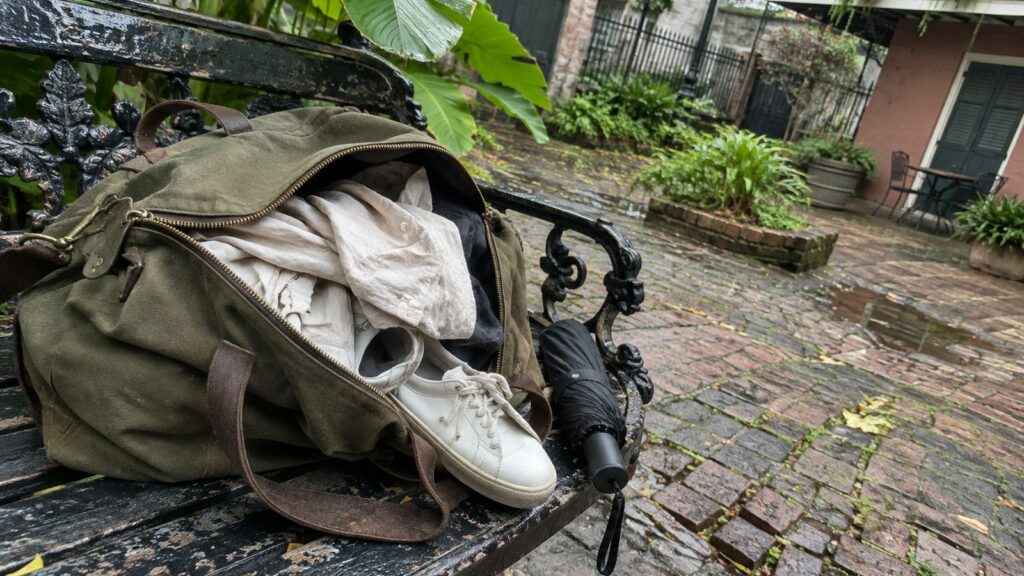
The mistake most first-timers make in New Orleans is packing for the temperature and ignoring the water. Rain falls on 13 to 15 days a month from June through August, the humidity rarely lets clothes dry overnight, and Quarter gutters hold water for hours after a storm. Shoes and fabric matter more here than the outfit.
What to pack for New Orleans depends on what fills the trip: usually a long weekend, one big dinner, one day out of the Quarter and at least one late night. The list below follows those days, then shows what changes month by month, from cool Mardi Gras nights in February to the storm-season afternoons of August.
What to pack for New Orleans: the three-day version
Day 1 (arrival and the Quarter): closed-toe walking shoes, breathable shirt or dress, a zipped crossbody bag, a thin layer for air-conditioned bars and a compact umbrella from May to October.
Mid-trip (Garden District, a swamp tour, the big dinner): a hat, insect repellent, sunscreen and one dressier outfit. Men heading to Galatoire’s, Commander’s Palace or Arnaud’s need a collared shirt, long pants and, at Galatoire’s after 5 p.m., a jacket.
Last day (checkout and the flight): a spare outfit kept dry, a zip bag for anything still damp and room for the pralines and hot sauce you will buy on Decatur Street.
For a longer stay, the packing list for New Orleans grows by one shirt and one set of underwear per extra day. From May to September, with nights near 75°F, most people change before dinner.
New Orleans weather by month
These figures are the 1991-2020 normals for Louis Armstrong International Airport, published by NOAA’s National Centers for Environmental Information.
| Month | High °F / °C | Low °F / °C | Rain days | What to wear |
|---|---|---|---|---|
| Jan | 64 / 18 | 47 / 8 | 10 | Jeans, sweater, light jacket; chilly damp evenings |
| Feb | 68 / 20 | 51 / 11 | 9 | Layers and a jacket; Mardi Gras nights run cool |
| Mar | 75 / 24 | 56 / 13 | 8 | Light layers; sleeves by day, sweater at night |
| Apr | 81 / 27 | 62 / 17 | 7 | Short sleeves, light pants; rain shell for showers |
| May | 88 / 31 | 69 / 21 | 7 | Breathable cottons, hat; hot and humid by afternoon |
| Jun | 93 / 34 | 75 / 24 | 13 | Lightweight, quick-dry; sweat-proof, rain jacket |
| Jul | 94 / 34 | 77 / 25 | 15 | Thinnest fabrics, sandals; heat index runs far higher |
| Aug | 94 / 34 | 77 / 25 | 13 | Loose linen/cotton, AC sweater; stormy afternoons |
| Sep | 90 / 32 | 74 / 23 | 10 | Still hot and humid; umbrella, quick-dry layers |
| Oct | 83 / 28 | 65 / 18 | 7 | Warm days, cool nights; light layer after dark |
| Nov | 73 / 23 | 55 / 13 | 7 | Jeans and a jacket for evenings; mild days |
| Dec | 66 / 19 | 49 / 9 | 9 | Sweater and coat at night; dress up for holiday dining |
Three facts shape the bag. January, the coldest month, still reaches 64°F on an average afternoon, so a heavy winter coat is dead weight. July and August both peak near 94°F with nights around 77°F, and the heat index regularly climbs past 100°F. And the wettest stretch is midsummer: July alone averages close to 9 inches of rain, mostly in short, hard storms after 2 p.m.
Atlantic hurricane season runs June 1 to November 30 and peaks around September 10, according to the National Hurricane Center. A named storm does not mean a canceled trip, but in August and September it does mean packing medication and a phone battery in the carry-on, in case a flight change keeps you an extra night.
Day 1: landing at MSY and walking the French Quarter
Most visitors drop their bags and walk straight into the Quarter, and that first afternoon sets the rules for the rest of the trip. Sidewalks are narrow, slate and brick slabs tilt at odd angles and the curbs on Bourbon Street are often wet even when it hasn’t rained. On Reddit’s r/AskNOLA, locals advise closed-toe shoes in the Quarter after dark: no dress code requires them, but puddles and broken glass do. The same threads suggest bike shorts under dresses, because chafing in this humidity can end a walking day early. Save sandals for the hotel pool.
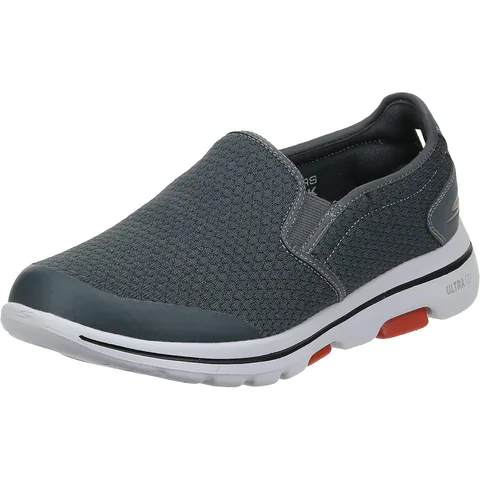
Skechers GOwalk 5 Slip-OnMid-range
Uneven Quarter sidewalks and puddles call for closed-toe shoes that dry fast; the knit upper is also machine washable.
- Knit mesh upper with slip-on double-gore stretch
- Lightweight cushioning; machine washable
What you wear on top depends on the month, but the fabric rule holds from May to October: loose cotton, linen or a technical shirt that dries fast. Polyester fashion fabrics trap heat and stay damp, and an anti-chafe stick covers whatever the bike shorts don’t.
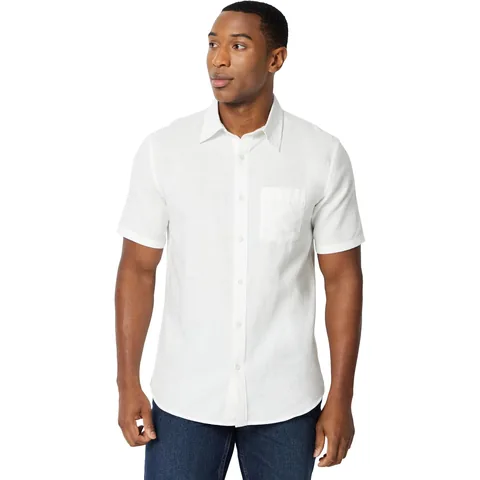 Amazon Essentials Linen ShirtBudgetCheck price on Amazon
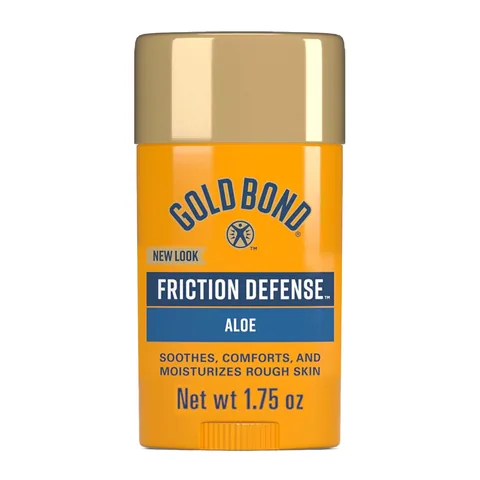 Gold Bond Friction DefenseBudgetCheck price on Amazon
Bars, shops and hotel lobbies run the air conditioning hard. A light cardigan or overshirt that rolls into a bag covers the jump from 92°F on Royal Street to 68°F inside a cocktail lounge.
Drinks are allowed on the street, but in a plastic cup, never glass. Bars hand out go-cups at the door. If you want something that keeps a drink cold through a slow walk to Frenchmen Street, a lidded insulated tumbler fits most go-cup pours.
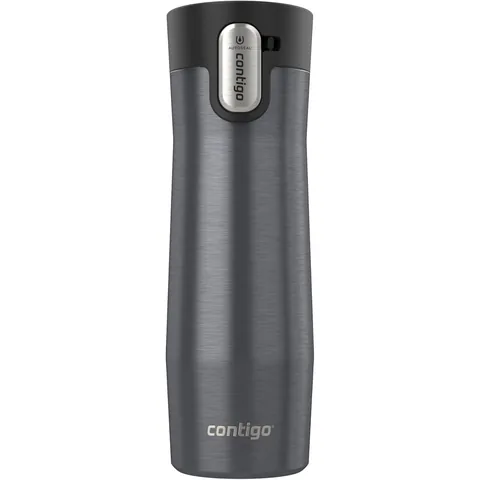
Contigo West Loop MugMid-range
Street drinks must be in plastic or paper, not glass; a lidded insulated mug keeps a go-cup cold in the heat.
- Autoseal lid locks between sips
- Vacuum insulation; easy-clean lid, top-rack safe
Keep the bag small and zipped. A crossbody that sits in front of you is what the city’s own Mardi Gras guide recommends for crowds, and it works the rest of the year on Bourbon Street on a Saturday night.
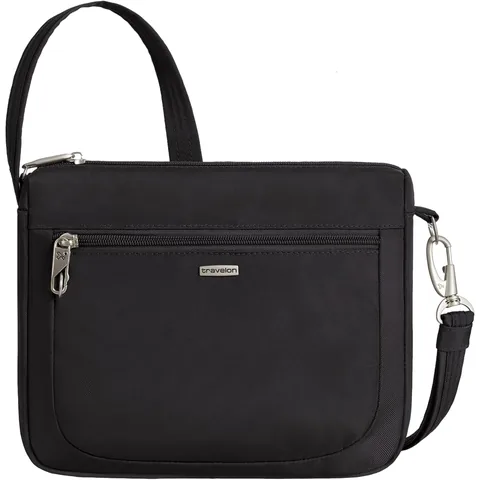
Travelon Anti-Theft CrossbodyMid-range
Mardi Gras crowds make cross-body bags the recommended way to carry your phone and cards hands-free on the parade route.
- RFID-blocking card and passport slots inside
- Front and rear zippered pockets, tethered key clip

Day 2: the streetcar to the Garden District and a jacket-required dinner
The St. Charles streetcar runs from the edge of the Quarter through the Garden District and Uptown. Drivers carry no change, so board with exact fare, a Jazzy Pass or the Le Pass app on your phone. Passes cover buses, streetcars and the Algiers ferry.
The Garden District is where the sidewalks get worse. Live oak roots have pushed the slate up into ridges and ramps, and after rain the low spots hold water for hours.
Lafayette Cemetery No. 1, the usual Garden District stop, is closed to the public during repairs, according to the City of New Orleans. Check before you plan a morning around it. St. Louis Cemetery No. 1, near the Quarter, is open only through the official tour run by Cemetery Tours New Orleans, and no food or drink is allowed inside.
Dinner is where New Orleans dresses up. Three of the old-line restaurants publish rules:
| Restaurant | What men need | What is not allowed |
|---|---|---|
| Galatoire’s | Collared shirt and long pants; jacket after 5 p.m. and all day Sunday in the main rooms | Tank tops, flip-flops, athletic wear |
| Commander’s Palace | Business attire, jacket preferred, collared shirt, closed-toe shoes | Shorts, flip-flops, T-shirts, sweatshirts, ripped jeans, hats |
| Arnaud’s | Collared shirt in the main dining room, jacket encouraged | Shorts, T-shirts, flip-flops |
Galatoire’s lends jackets, but the loaners come in whatever sizes are on the rack. On an October press trip in 2018, a colleague of mine arrived on a Friday evening in a polo and spent dinner in a borrowed blazer two sizes too big. If the dinner matters to you, bring your own. A packable travel blazer survives a carry-on and doesn’t show creases after a night on a hanger.
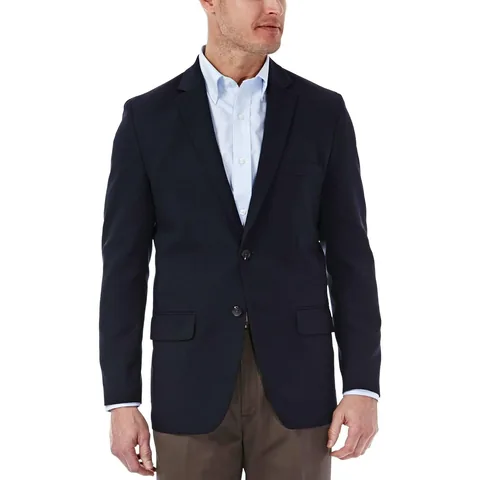
Haggar Travel Stretch BlazerPremium
Galatoire's requires jackets after 5pm and all day Sunday, and Commander's Palace prefers them; a stretch blazer packs for both.
- Stretch polyester, tailored fit, two buttons
- Side vents with flap and chest welt pockets
Women have no published rules beyond “no flip-flops” and “nothing athletic”, but these dining rooms run dressy. A wrinkle-resistant dress or tailored pants with a blouse fit in, and the dress shoes should be ones you can walk two blocks in on broken pavement.
Day 3: a swamp boat in the morning, Frenchmen Street at night
Swamp tours launch 20 to 45 minutes outside the city and spend 90 minutes to two hours on the water. Covered boats give shade; airboats do not, and their engines are loud enough that operators hand out ear protection. Bring your own foam earplugs if you’d rather not share. Mosquitoes are worst from late spring into fall and at dusk.
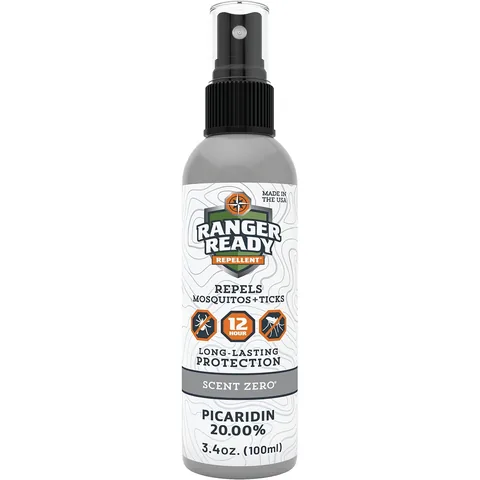 Ranger Ready Picaridin SprayBudgetCheck price on Amazon
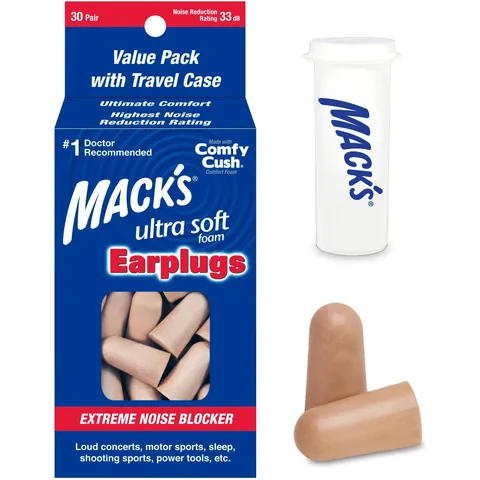 Mack's Foam EarplugsBudgetCheck price on Amazon
Airboats have no shade. Pack a brimmed hat with a chin cord, because a loose one won’t survive an airboat at speed, and a sunscreen stick that goes on without greasy hands.
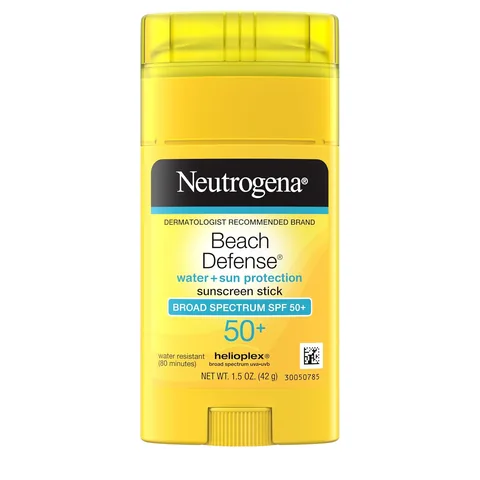
Neutrogena Beach Defense StickBudget
Airboats and the Jazz Fest infield have almost no shade, and a stick reapplies without greasy hands.
- Broad spectrum SPF 50, 1.5 oz stick
- Water-resistant up to 80 minutes
Back in town, Frenchmen Street runs late and casual. Shorts and sneakers are fine in the music clubs. The only thing to add is the light layer from day 1, because the clubs are small, crowded and very cold inside, then the walk home is warm and humid again.
Checkout day: damp clothes and a dry outfit
By day 3 at least one outfit will be damp, either from a storm or from sweat that never dried in a humid room. Roll wet things into a zip bag or a wet/dry pouch so they don’t soak the rest of the suitcase, and keep one clean outfit separate for the flight. Most hotels in the Quarter and the CBD hold bags after checkout, so you can still spend the afternoon on Magazine Street.
What to wear in New Orleans, month by month
The three-day list above holds all year. These are the changes each month brings.
What to wear in New Orleans in January
Days reach about 64°F and nights drop near 47°F, with the damp chill that comes off the river. Pack jeans, a sweater and a light insulated jacket. January brings the Sugar Bowl to the Caesars Superdome, and football fans should check the stadium bag rules below before packing a backpack.
What to wear in New Orleans in February
February is Mardi Gras month. In 2027, parades roll every night from February 3 and Fat Tuesday falls on February 9. Afternoons near 68°F turn into parade nights in the low 50s, and you stand still for hours. Bring a fleece or packable puffer, closed-toe shoes that can take spilled beer, and purple, green and gold if you want to match the crowd.
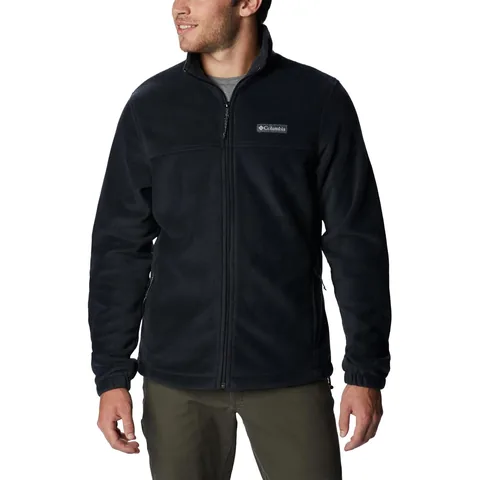
Columbia Steens Mountain FleeceMid-range
Mardi Gras night parades in early February run chilly and damp, and a fleece layers under a shell without bulk.
- 100% polyester MTR filament fleece
- Full zip with collar and two zippered pockets
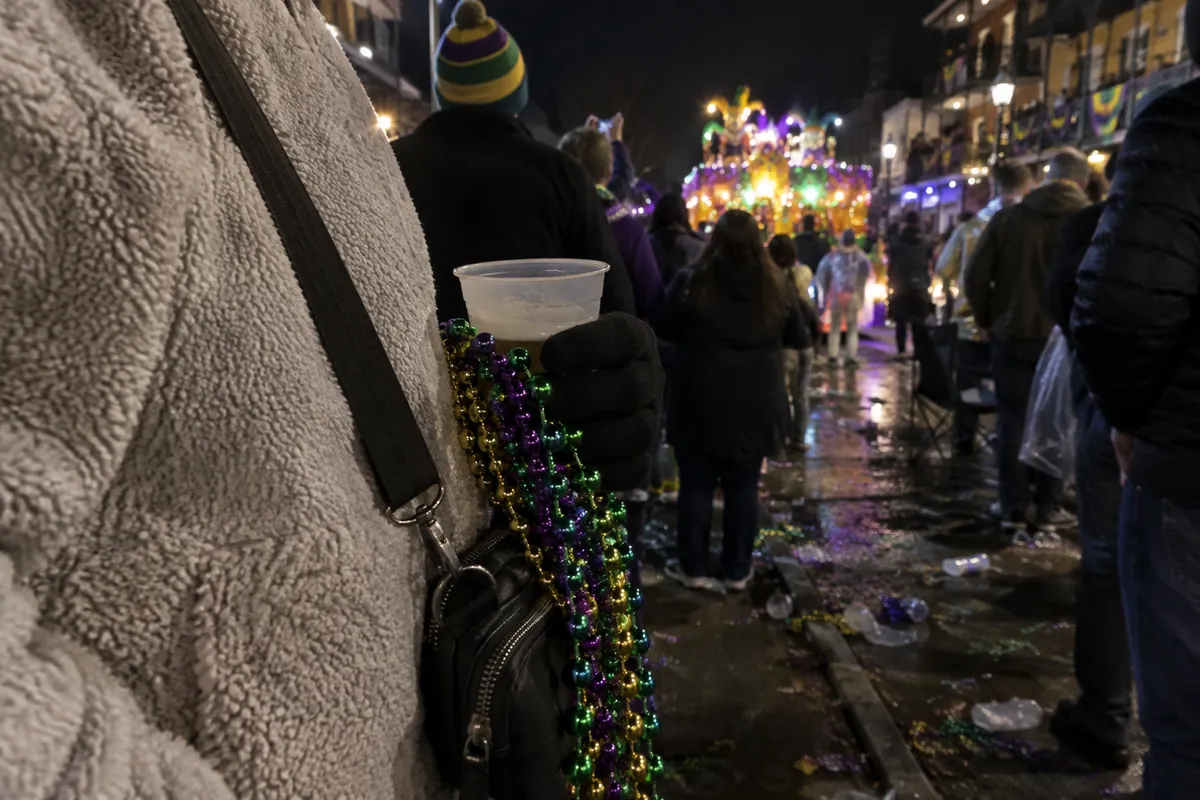
In February 2012 I watched a night parade on St. Charles Avenue with a tote on one shoulder and both hands full of beads, which is how my phone ended up on the neutral ground. A family on a ladder found it. I’ve worn a zipped crossbody to every parade since.
What to wear in New Orleans in March
Highs around 75°F and lows in the mid-50s make March the easiest month to dress for. Short sleeves by day, a sweater after dark. St. Patrick’s Day parades in the Irish Channel throw cabbages and potatoes along with beads, so keep a tote bag in your pocket.
What to wear in New Orleans in April
April averages 81°F in the afternoon and is the start of festival season: French Quarter Festival runs April 8-11, 2027, and Jazz Fest’s first weekend begins April 22. Light pants, short sleeves, a rain shell and shoes you don’t mind getting muddy. Festival bag and chair rules are below.
What to wear in New Orleans in May
Jazz Fest closes on May 2, 2027, and the heat arrives with it. Highs near 88°F and lows near 69°F mean breathable cotton and linen, a wide-brim hat and sunscreen for any outdoor afternoon. Start carrying the umbrella this month.
What to wear in New Orleans in June
June is the first true summer month, at 93°F with 13 rain days, and the start of hurricane season. Pack quick-dry clothes, two shirts per day if you sweat easily and a packable rain jacket. Leave denim at home.
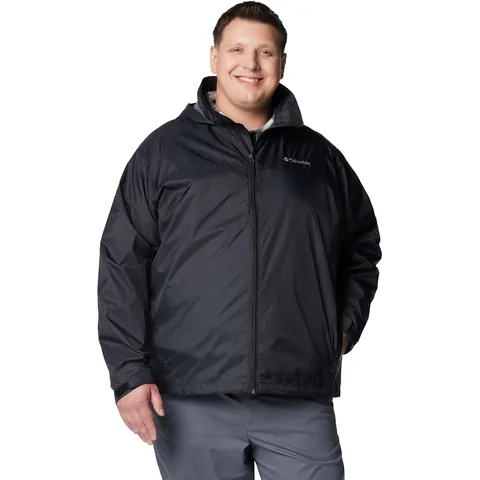 Columbia Glennaker Lake IIMid-rangeCheck price on Amazon
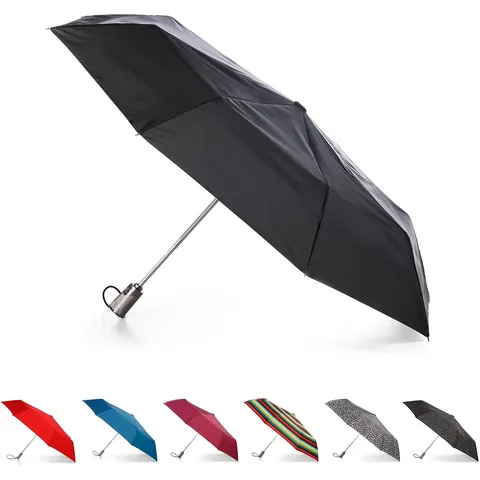 totes Titan UmbrellaMid-rangeCheck price on Amazon
What to wear in New Orleans in July
July is the hottest and wettest month, with about 15 days of rain and nights that stay near 77°F. Essence Festival fills the Superdome and downtown hotels in early July. Wear your thinnest fabrics, carry a layer for air-conditioned interiors and plan walking for the morning, before the storms.
What to wear in New Orleans in August
August matches July for heat, and the storms keep coming. Loose linen or cotton, a hat, bug spray for any evening near the water and a dry bag for your phone if you’ll be out when the afternoon rain hits.
What to wear in New Orleans in September
September cools only slightly, to about 90°F, and it is the peak of hurricane season. Pack as for August, plus the carry-on essentials for a possible flight change. Saints home games begin at the Superdome, with their clear-bag rule, and Southern Decadence fills the Quarter over Labor Day weekend.
What to wear in New Orleans in October
October is dry, with seven rain days and highs near 83°F. Shorts by day, a light jacket for evenings and something for Halloween: the Krewe of BOO! parade rolls in late October, and costumes are the norm on Frenchmen Street on Halloween night.
What to wear in New Orleans in November
November brings highs near 73°F and lows in the mid-50s. Jeans and a jacket work for evenings; days can still be warm enough for short sleeves.
What to wear in New Orleans in December
December averages 66°F by day and 49°F at night. Pack a sweater, a coat you can wear over dinner clothes and one outfit for a Réveillon dinner, the holiday menus many old-line restaurants serve all month. New Year’s Eve fireworks over the river mean a long cold wait on the levee.
Bag rules for Mardi Gras, Jazz Fest and the Superdome
Big events set their own limits, and they are stricter than most visitors expect.
Mardi Gras parade routes: the city’s Mardi Gras safety page bans tents, canopies, generators, confetti guns and unattended coolers. Ladders are allowed if they are free-standing, no taller than 6 feet and at least 6 feet back from the curb. Drinks go in plastic, not glass.
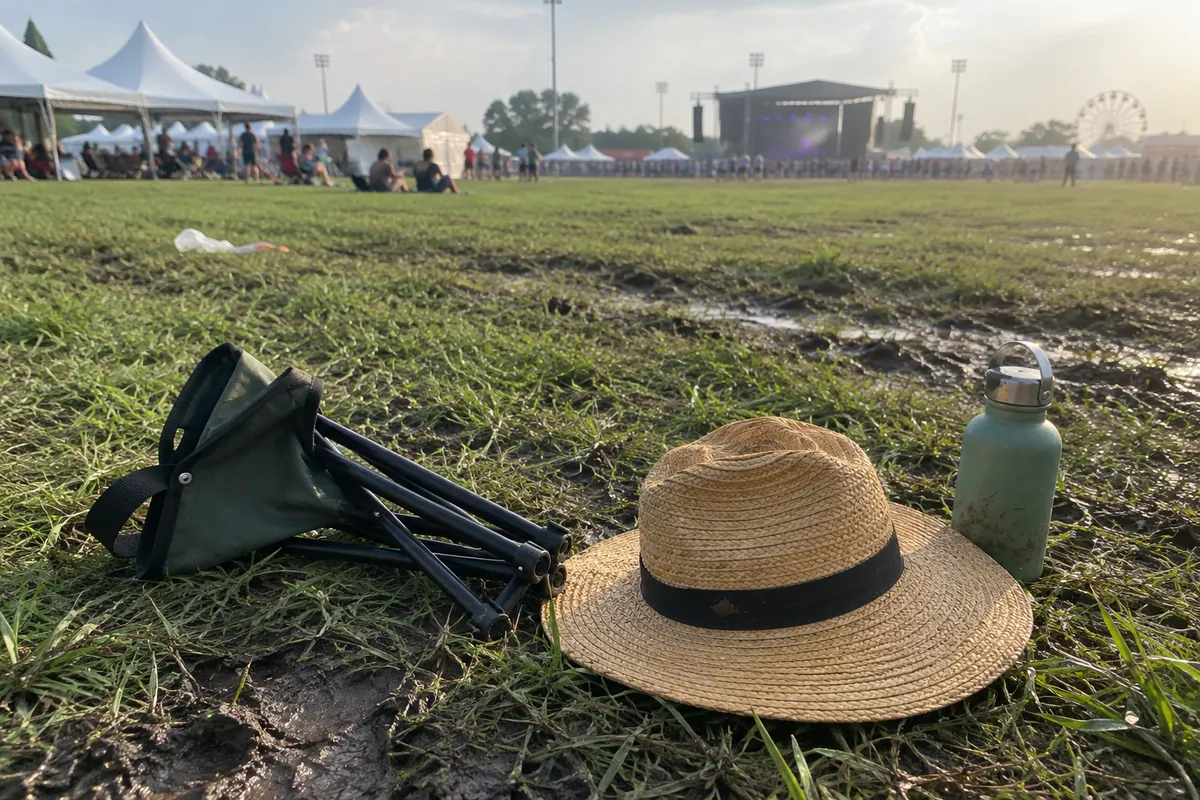
Jazz Fest: the 2026 guidelines allowed bags up to 17 x 12 x 10 inches, soft coolers no bigger than a 12-pack and single collapsible chairs or stools. Every bag is searched. Check the current year’s rules before you pack. The infield is mostly open to the sun, with a few trees and some stages under tents.
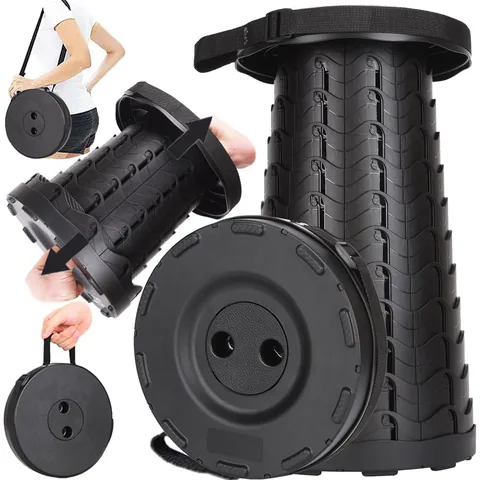
Fishboy Collapsible StoolMid-range
Jazz Fest permits single collapsible chairs and stools, and the infield offers little shade or seating between sets.
- Telescoping segmented stool, supports up to 400 lbs
- Collapses down to carry in a bag
In April 2024, after an overnight storm, the infield was mud by noon. My canvas sneakers never came clean, and the next weekend I went back in rubber-soled shoes I could rinse under a hose.
Caesars Superdome: for Saints games and other NFL events, bags must be clear and no larger than 12 x 6 x 12 inches, or a one-gallon clear plastic bag, or a clutch up to 4.5 x 6.5 inches. Backpacks and fanny packs are refused. Other events at the dome, including the Sugar Bowl and Essence, set their own rules, so check the stadium’s policy page for your event.
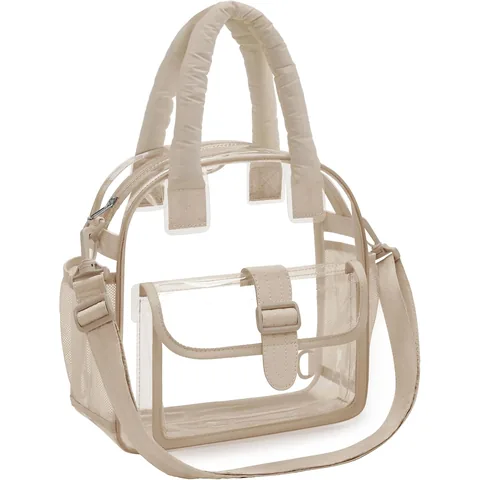
BAGSMART Clear Crossbody BagBudget
Caesars Superdome events only admit clear bags up to 12x6x12 inches; this one fits and has a shoulder strap.
- PVC clear bag, about 11 x 5 x 11 inches
- Zip main pocket, magnetic closure, shoulder strap
The New Orleans checklist to print
Everything above as one New Orleans packing list. The packing list generator builds a printable version for your dates.
Clothes
- One shirt or top per day, plus one spare cotton, linen or quick-dry from May to October
- Bike shorts or slip shorts for under dresses chafing
- Light cardigan or overshirt for air conditioning
- Jeans or long pants, October to April
- Fleece or light insulated jacket, November to March
- Blazer, collared shirt and long pants for an old-line restaurant
- One dressy outfit with walkable shoes
- Costume or purple, green and gold for Mardi Gras or Halloween
- Swimsuit if the hotel has a pool
- Extra underwear and socks
Shoes
- Closed-toe walking shoes with a grippy sole
- Rubber-soled shoes you can rinse, for festivals
- Dinner shoes you can walk two blocks in
- Flip-flops for the hotel only
Rain and sun
- Packable rain jacket, May to October
- Compact umbrella
- Sunscreen stick
- Brimmed hat with a chin cord
- Sunglasses
Bags
- Zipped crossbody bag
- Clear bag for Superdome events
- Zip bags for damp clothes and your phone
- Foldable tote for parade throws
Health and toiletries
- Anti-chafe stick
- Insect repellent
- Foam earplugs
- Anti-frizz hair product
- Prescription medication in the carry-on
- Pain reliever and antacid
Festivals and nights out
- Collapsible stool for Jazz Fest
- Lidded insulated cup for go-cup drinks
- Refillable water bottle
Documents and tech
- Photo ID for bars and clubs
- Phone with the Le Pass app for streetcars
- Small bills for streetcar fare and tipping musicians
- Phone battery pack
What New Orleans visitors overpack
- A winter coat. The coldest month averages 64°F in the afternoon. A light insulated jacket covers December to February.
- Heels and thin sandals. Root-heaved sidewalks, cemetery paths and parade crowds punish both.
- Formal wear for every night. Only the old-line restaurants care. Frenchmen Street, po’boy shops and most bars are casual.
- Denim in summer. Jeans take a day to dry in July humidity and stick on the walk between bars.
- Glass bottles and big bags for events. Parades, Jazz Fest and the Superdome all restrict them.
Plugs, streetcar fares and cemetery rules
- Plugs
- Type A and B, 120 V. US plugs fit; visitors from abroad need an adapter. Source
- Streetcar and bus fare
- Exact fare, a Jazzy Pass (1, 3, 7 or 31 days) or the Le Pass app. Drivers carry no change. Source
- St. Louis Cemetery No. 1
- Open only on the official tour or with a family pass. No food or drink inside. Source
- Lafayette Cemetery No. 1
- Closed to the public during repairs. Check before planning a visit. Source
- Drinks on the street
- Allowed in plastic go-cups. No glass on the street or at parades. Source
- Hurricane season
- June 1 to November 30, peaking around September 10. Source
New Orleans packing questions
How do I keep my hair from frizzing in New Orleans?
Expect frizz from May to October, when humidity stays high day and night. Pack an anti-humidity serum or spray and a few hair ties or clips, and plan styles that survive damp air, such as braids, buns or a sleek ponytail. Heat styling rarely lasts past the first walk outside, so a smaller styling kit saves space.
Do I need bug spray in New Orleans in winter?
Usually not in the city. Mosquitoes slow down from December to February, when nights fall into the 40s and 50s. Bring repellent anyway if you book a swamp tour or plan evenings near the water in March or November, because a warm week brings them back quickly.
How much walking should I expect in New Orleans?
Plan on several miles a day. The French Quarter is about 13 blocks long, and a day that adds Frenchmen Street, the riverfront and the Garden District easily passes 15,000 steps. The city is flat, but heat, humidity and uneven sidewalks make those miles harder, so pack the shoes you have already broken in.