TLDR
- Safest overall by crime data: Ridgefield, Connecticut. NeighborhoodScout’s December 2025 list puts it first at 1.9 crimes per 1,000 residents, about 1 chance in 510 of being a victim. LawnStarter’s list puts Zionsville, Indiana first, with Ridgefield second.
- Safest by a broader definition (disasters, finances, traffic): WalletHub’s 2025 ranking is led by Warwick, Rhode Island, followed by Overland Park, Kansas and Burlington, Vermont.
- Safest large cities (250,000+ residents): Irvine, California and Virginia Beach, Virginia come up most often, with Henderson, Nevada close behind.
- Why the lists disagree: they measure different things. Crime-only lists reward small, wealthy suburbs. WalletHub rewards mid-size cities with low disaster and financial risk.
Contents
- The top 10 safest cities by crime rate
- Why the rankings disagree
- Safest large cities
- Safest mid-size cities
- Safest small towns and suburbs
- Safest cities by region
- Which safe city fits you
- Safety versus affordability
- How to read crime data without getting fooled
- FAQ
The top 10 safest cities by crime rate
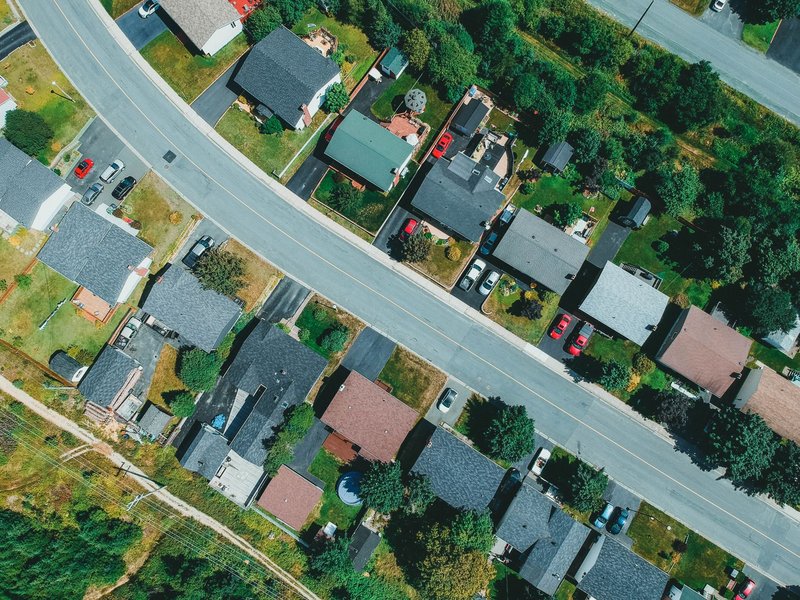
The cleanest answer to “safest” is the one built on FBI crime reports alone. NeighborhoodScout’s 2025 list, published through Stacker in December 2025, covers cities with at least 25,000 residents and ranks them on combined violent and property crime.
| Rank | City | State | Crimes per 1,000 residents | Chance of being a victim |
|---|---|---|---|---|
| 1 | Ridgefield | Connecticut | 1.9 | 1 in 510 |
| 2 | Franklin | Massachusetts | 2.9 | 1 in 344 |
| 3 | Lake in the Hills | Illinois | 3.1 | 1 in 321 |
| 4 | Marshfield | Massachusetts | 3.3 | 1 in 300 |
| 5 | Arlington | Massachusetts | 3.4 | 1 in 292 |
| 6 | Fulshear | Texas | 3.6 | 1 in 276 |
| 7 | Zionsville | Indiana | 3.6 | 1 in 275 |
| 8 | Lexington | Massachusetts | 3.7 | 1 in 270 |
| 9 | Muskego | Wisconsin | 3.8 | 1 in 265 |
| 10 | Rexburg | Idaho | 3.9 | 1 in 253 |
Source: NeighborhoodScout, based on FBI crime statistics, published December 2025.
Three things stand out. Massachusetts places four towns in the top ten. Fulshear and Lake in the Hills are newer exurbs of Houston and Chicago, not old-money enclaves. And Rexburg, home of Brigham Young University-Idaho, is a college town, which doesn’t fit the usual picture of a safe place at all.
Why the rankings disagree
Search for the safest cities and you’ll get three different top fives. None of them is wrong. They answer different questions.
NeighborhoodScout counts crimes reported to police and divides by population. Ridgefield wins.
LawnStarter also uses FBI data, but it weights each offense by the average prison time served for it, then rolls everything into a “Danger Index.” Murder counts for far more than a stolen bike. Zionsville, Indiana comes out first with a violent crime rate of zero per 1,000 residents, ahead of Ridgefield and Franklin. Its top ten includes New Jersey townships (Bergenfield, Mount Olive, Bernards) and Buckingham Township in Pennsylvania, none of which appear in NeighborhoodScout’s.
WalletHub doesn’t rank on crime alone. It scores more than 180 cities on 41 indicators across home and community safety, natural disaster risk, and financial safety, including things like traffic fatalities, unemployment, and the share of residents without insurance. In its 2025 ranking, Warwick (RI), Overland Park (KS), Burlington (VT), Juneau (AK), and Yonkers (NY) lead the list. Casper (WY) is sixth and South Burlington (VT) seventh.
The result is predictable. Crime-only lists favor small, high-income suburbs where almost nothing gets reported. WalletHub favors mid-size cities that are stable on every axis, including the ones where a flood, a layoff, or an uninsured medical bill is the more realistic threat. If you’re asking “will my car be broken into,” read the first two. If you’re asking “will my life be disrupted,” read WalletHub.
Safest large cities

Large-city rankings are where the crime-only lists fall silent, because the top 50 contains no big cities at all. The usual cutoff for “large” is 250,000 residents, and the field thins out fast.
Irvine, California is the consistent winner. Its violent crime rate runs around 84 per 100,000 residents, a figure that rivals small suburbs and sits far below the national rate of roughly 359 per 100,000 recorded for 2024. Irvine is a master-planned city of about 316,000, which helps: wide streets, low density, and few of the bar districts and transit hubs that generate reported incidents.
Virginia Beach, Virginia is the East Coast counterpart, a sprawling city of roughly 450,000 that keeps showing up in the bottom tier of violent crime among its size peers.
Henderson, Nevada sits just outside Las Vegas and routinely ranks near the top for lowest crime cost per capita among large cities, alongside Irvine, Virginia Beach, Honolulu, and El Paso.
If you want a major metro, expect a trade-off. The safest large cities are mostly suburban in character, not walkable downtowns.
Safest mid-size cities
Mid-size cities, roughly 50,000 to 250,000 residents, are where WalletHub’s picks live, and they give you more urban life than a commuter suburb does.
- Warwick, Rhode Island: WalletHub’s No. 1 in 2025 and No. 3 in its 2024 list. Next to Providence, with an airport and a coastline.
- Overland Park, Kansas: A Kansas City suburb of nearly 200,000, strong on financial stability and low in violent crime.
- Burlington and South Burlington, Vermont: Both rank near the top. South Burlington has been first or close to it for several years, and the pair share a lake and a university-driven economy.
- Casper, Wyoming: Wyoming’s second-largest city, ranked in WalletHub’s top seven in 2024 and 2025. Low density helps. Wide-open land keeps natural-disaster scores low.
- Boise, Idaho: Made WalletHub’s 2024 top five.
- Yonkers, New York: Fifth in 2025. It borders the Bronx, which makes its placement the most surprising on the list.
Safest small towns and suburbs
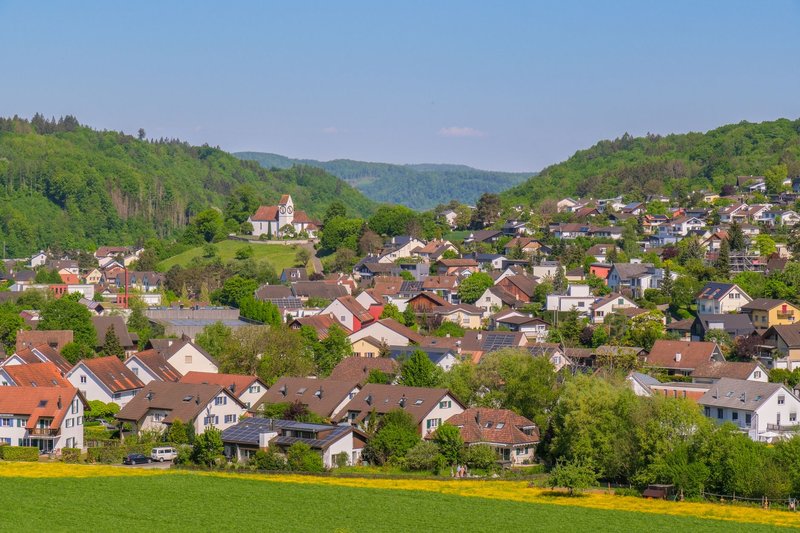
For under 50,000 residents, the crime-only lists are the right tool, and the answers cluster in a few patterns.
- Commuter towns around Boston: Franklin, Marshfield, Arlington, Lexington, Milton, and Needham all land in NeighborhoodScout’s top 15.
- Indianapolis and Chicago suburbs: Zionsville and Lake in the Hills, plus Oswego, Illinois at No. 12.
- Exurbs in growth corridors: Fulshear, Texas, west of Houston, and Muskego, Wisconsin, near Milwaukee.
- Northern New Jersey and the Hudson Valley: Bergenfield, Mount Olive Township, and Bernards Township in New Jersey, plus Harrison in New York, show up on LawnStarter’s list.
A caution on small towns: with populations in the low tens of thousands, a single violent incident moves a city’s rate noticeably. A small town can drop ten places in a year without anything changing about daily life there.
Safest cities by region
Every list favors the Northeast, so split the picture by region to see where else the data points.
| Region | Strong picks |
|---|---|
| Northeast | Ridgefield CT, Franklin MA, Lexington MA, Warwick RI, Burlington VT, Bergenfield NJ |
| Midwest | Zionsville IN, Lake in the Hills IL, Muskego WI, Rocky River OH, Overland Park KS |
| South | Fulshear TX, Independence KY, Virginia Beach VA |
| West | Irvine CA, Henderson NV, Boise ID, Rexburg ID, Casper WY, Juneau AK |
The South has the thinnest showing across the major lists. That’s largely a function of the underlying data. Larger Southern cities tend to have higher property crime and violent crime rates than comparable Northeast and Midwest suburbs, and the very safest Southern towns are small enough to miss the 25,000-resident cutoff.
Which safe city fits you
Families: Lexington, Franklin, Zionsville, and Needham pair low crime with schools that are a main reason people move there. Overland Park and Irvine do the same at larger scale.
Retirees: Look at mid-size cities with healthcare and flat terrain. Warwick, Overland Park, and Henderson all fit, and Henderson adds no state income tax.
Remote workers: Burlington, VT and Boise offer walkable centers and outdoor access. Both are the kind of place where a 20-minute drive puts you in the woods.
Students and young adults: Rexburg is the surprise, but it comes with a catch. The population skews heavily toward one university and one religious community, which suppresses crime and shapes the town’s culture.
Safety versus affordability
Almost no top-ten list comments on price, and that is a gap that matters. The cheapest-to-live-in cities on this page and the safest cities aren’t the same set.
Ridgefield, Lexington, Needham, Milton, and Arlington sit in the Boston and New York commuter belts, where home prices run well above the national median. Rexburg, Independence (KY), Casper, and Muskego cost far less to buy into, and they still rank in the upper tier for safety. If your budget is the constraint, the second group is where the crime data and your wallet agree.
How to read crime data without getting fooled
A few caveats separate a useful ranking from a misleading one.
Reporting gaps. Agencies report to the FBI voluntarily. When the FBI moved to a new reporting system in 2021, many departments dropped out of the national data for a period, and rates for some cities came out artificially low. The FBI’s Crime Data Explorer lets you check whether a specific agency reported a full year.
Per-capita math. A rate per 1,000 residents penalizes cities with large daytime populations (commuters, tourists, students) and flatters bedroom communities. Most of the towns on the top-ten list are bedroom communities.
The FBI’s own warning. The FBI cautions against using its data to rank communities, because crime is shaped by factors the numbers don’t capture, including population density, economic conditions, and police practices. The Bureau of Justice Statistics publishes victimization surveys that fill in unreported crime.
Trends over snapshots. National violent crime fell in 2024 to levels not seen in roughly two decades, with murder dropping sharply. A city that ranks lower this year may simply have improved more slowly than the pack.
Neighborhoods beat city averages. Every large city has blocks far safer and far riskier than its headline number. Check the specific neighborhood, not only the city. A Los Angeles neighborhood safety map shows how much the picture changes within one metro area.
FAQ
What is the safest city in the US? Ridgefield, Connecticut leads NeighborhoodScout’s December 2025 ranking at 1.9 crimes per 1,000 residents. LawnStarter ranks Zionsville, Indiana first. WalletHub’s 2025 ranking puts Warwick, Rhode Island first.
What is the safest large city in the US? Irvine, California is the most consistent answer among cities over 250,000 residents, followed by Virginia Beach and Henderson.
What is the safest small town in the US? By crime rate alone, Ridgefield (CT), Franklin (MA), and Zionsville (IN) lead the major lists.
What are the safest cities for families? Lexington, Franklin, and Needham in Massachusetts, Zionsville in Indiana, and Overland Park in Kansas combine low crime with strong schools.
What are the safest cities to retire? Warwick (RI), Overland Park (KS), and Henderson (NV) pair low crime with mature healthcare systems and mid-size city services.
Do these rankings change every year? Yes. Rankings shift with each FBI data release, and small towns move the most. The figures here reflect lists published through late 2025.