Sudan’s traditions are easiest to understand by occasion rather than by tribe or timeline: a wedding, a birth, a holiday, a cup of coffee. Nearly every important moment has a ritual attached, and most of them involve a crowd, a lot of food, and women running the proceedings. This guide walks through those occasions in order, then covers how customs shift by region, what visitors should know, and what the war since 2023 has done to all of it.
Table of contents
- Who practices what: Sudan’s cultural mix
- Wedding traditions in Sudan
- Gartag: the ritual UNESCO listed in 2025
- Births and circumcision
- Eid al-Adha and Eid al-Fitr
- Mawlid and Sufi gatherings
- Hospitality and the coffee ceremony
- Sudanese food and drink traditions
- How customs differ by region
- Etiquette for visitors
- Traditions during the war
- Summary
Who practices what: Sudan’s cultural mix
Sudan isn’t one culture with regional accents. Arab, Nubian, Beja, Nuba and Darfuri communities each carry their own languages, dress and ceremonial habits, layered over a shared Islamic frame. The country also sits on one of Africa’s oldest continuous civilizations; the Kushite capitals at Meroe and Jebel Barkal are on UNESCO’s World Heritage list for Sudan, and some living rituals are said to trace back to them.
So when someone says “a Sudanese tradition,” ask where. A wedding on the Nile north of Dongola and one in the Red Sea hills share a skeleton but not much else. The sections below describe the common core and flag where the variation is largest.
Wedding traditions in Sudan
Weddings are the densest ritual event in Sudanese life, and they unfold in stages over weeks or months rather than a single day.
The approach. The groom’s family sends a representative to the bride’s family, and the elders of both sides meet. If the bride’s family agrees, the couple may meet. Then comes the dowry: clothes, perfume, shoes and money, scaled to what the groom can afford or the bride’s family requests.
The gift rounds. About a week before the wedding, the groom’s mother gives the bride clothing and jewelry, and the bride’s family gives the groom a traditional sword or another gift in return. Female relatives from both sides then bring the shila, usually a suitcase of dresses, shoes and cosmetics. Close female relatives also commission a perfume for the bride.
Dukhan. In the weeks before the wedding, the bride often stays with relatives for one to three months. During that time she takes the dukhan, a smoke bath: she sits in scented smoke, a bit like a sauna, as a beauty and preparation ritual. The smell clings to the skin and hair for days, which is partly the point.
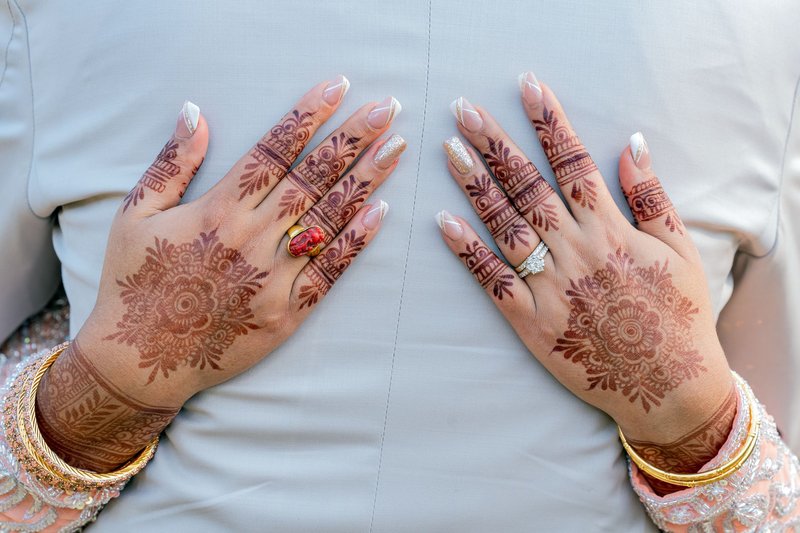
The henna night. One or two days before the wedding, the bride’s hands and feet are decorated with henna for luck and fertility, while female relatives and friends sing and dance around her. In some communities the groom’s hands are hennaed too.
The wedding day. An authorized official conducts the marriage contract in front of the bride’s guardian and the groom’s agent, with a Qur’an recitation. The groom’s family then goes to the bride’s home to escort her, in some places with the groom on a horse or camel, followed by a zaffa, a procession with music, dancing and bright costumes. A large lunch for family and friends follows. The day after, a second zaffa carries the bride on a decorated platform, and the groom’s family hosts a smaller waleema reception a few days later.
The red bed and the silk belt. In the jirtig (also written gartag) ceremony, the couple sit on a wooden bed covered in red, wearing red, surrounded by relatives and guests. The bride wears a silk belt that the groom cuts and tosses to the crowd. More on this ritual in the next section.
The whipping custom. Some accounts attribute a ritual whipping at weddings to the Ja’alin community, a display of endurance by the men involved. It’s a regional custom, not a national one, and many Sudanese weddings skip it entirely.
Gartag: the ritual UNESCO listed in 2025
Gartag is the Sudanese tradition most likely to appear in the news right now. In December 2025, at its 20th session in New Delhi, UNESCO’s Intergovernmental Committee inscribed it as “Al-Jertiq” on the Representative List of the Intangible Cultural Heritage of Humanity. It was the second Sudanese element recognized internationally in recent years, after Mawlid celebrations were added in December 2023.
UNESCO describes Al-Jertiq as a ritual among Nubian communities in northern Sudan, along the Nile up to the Egyptian border, meant to bring protection, fertility and abundance. Its ornate objects each carry a purpose, such as guarding against the evil eye, bringing good fortune or promoting fertility. Commonly cited ingredients include gold (blessing and fertility), red silk (luck and protection), henna on the limbs, and traditional perfumes.
Two details set it apart from a typical wedding rite:
- Older women lead it. Brides, grooms, new mothers and children take part, but women are the main bearers of the tradition. Girls learn by watching grandmothers, mothers and older sisters, including by cleaning and keeping the ritual objects.
- It isn’t only for weddings. Gartag marks marriage, childbirth and circumcision, and it’s also performed to mourn a young unmarried man who has died.
Most pages ranking for this topic still skip the story of how the ritual passes down. UNESCO’s file notes it’s now also taught through school and university events and social media, which matters given how many Gartag-practicing families have been displaced.
Births and circumcision
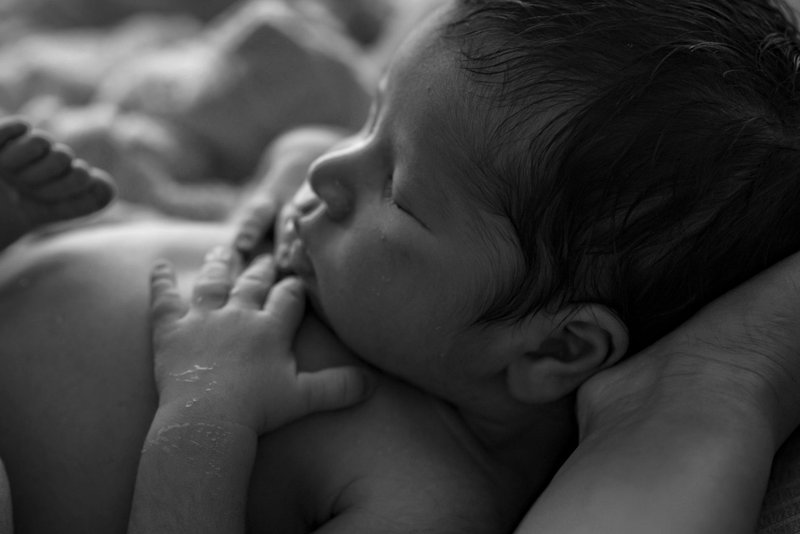
Birth traditions center on the first week and the first forty days, when the mother is looked after by female relatives and neighbors who visit with food and gifts. Gartag objects can appear here too: red silk, gold and perfume are used to protect mother and child from the evil eye.
Circumcision of boys is also treated as a rite of passage, with a family celebration, feasting and, in Gartag-practicing communities, the same protective ornaments. Female genital mutilation is a separate matter. It is widespread in parts of Sudan, is harmful, and is not a tradition worth romanticizing; it has been the target of national and international campaigns for years.
Eid al-Adha and Eid al-Fitr
Both Eids are family reunions first and religious holidays second. People travel long distances to their home areas, and the roads fill up in the days before.
Eid al-Adha. Families sacrifice an animal, usually a sheep, and the meat is shared with relatives and neighbors and given to people in need. Oven-roasted meat is common, along with offal dishes and hot sauce made with dakwa, a peanut-based paste. In the north, the drink of the holiday is sharbout, made from dates boiled with spices, strained and served cold. The standard advice is to drink it fresh, before it starts to ferment.
Eid al-Fitr. Ending Ramadan, this is the sweeter of the two: biscuits like kaak and other pastries are baked in bulk, and visiting is the main event. Neighbors drop in, greet each other with the usual Eid wishes, and settle old disagreements. Refusing a plate of something, even a small one, is taken as a mild snub.
Mawlid and Sufi gatherings
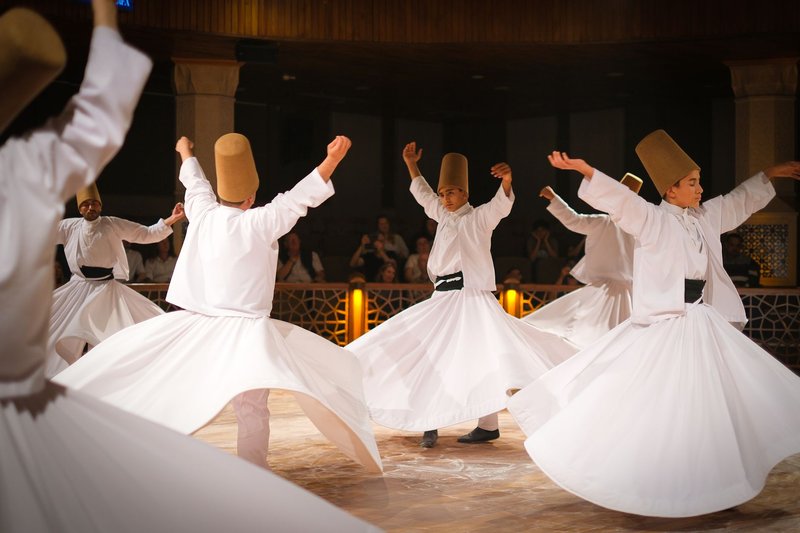
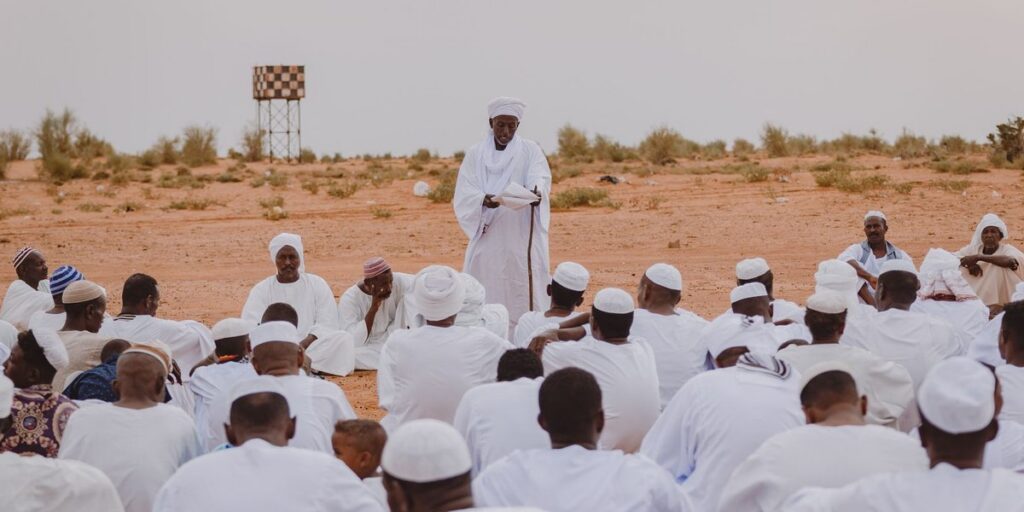
Sufi orders have shaped Sudanese Islam for centuries, and their public gatherings are one of the country’s most visible traditions. During Mawlid, the celebration of the Prophet Muhammad’s birthday, neighborhoods set up tents, groups chant poetry and dhikr (rhythmic remembrance of God) lasts into the night, and children get sweets, including the special sugar figures and chickpea treats sold only in this season.
The weekly version happens in Omdurman. On Friday afternoons near the tomb of Sheikh Hamad al-Nil, members of a Sufi order gather in a circle for dhikr, with drumming, chanting and spinning, while spectators watch from the edge. Visitors are generally welcome to watch quietly; don’t step into the circle uninvited.
Hospitality and the coffee ceremony
Hospitality in Sudan is not a polite extra. A guest who arrives unannounced will be fed, and a host who doesn’t offer is embarrassed. Tea and jabana coffee are how that gets done.
Jabana is both the clay pot and the coffee brewed in it. The beans are roasted and ground, often with spices such as ginger or cloves, then brewed in the pot on a small charcoal stove and poured into tiny cups on a tray. The cups go around the group in turn. A woman, usually the host, runs the whole thing, and the process is slow by design: a coffee session is an hour of conversation with a drink attached.
Practical rules: accept at least one cup, take it with your right hand, and don’t rush to leave after the last pour.
Sudanese food and drink traditions
Food rituals follow the calendar and the guest list.
- Kisra is a thin flatbread made from fermented sorghum batter, cooked on a hot plate, and eaten with stews. It’s the everyday staple in much of the country.
- Ful medames, stewed fava beans with oil, is breakfast for many Sudanese, usually eaten from a shared dish with bread.
- Asida, a thick cornmeal or sorghum porridge, is a common festive and household dish eaten with stews.
- Hassawa, a sweet cake, appears at weddings, and large lunches at celebrations tend to be shared from big communal trays.
- Sharbout and hibiscus drinks, cold and sweet, are standard for guests and for breaking the Ramadan fast.
Eating is communal. Dishes arrive on one large tray, and you eat from the part nearest to you.
How customs differ by region
- Northern Sudan and the Nile (Nubian communities): The home of Gartag/Al-Jertiq, date-based drinks like sharbout, and elaborate bridal ornament traditions.
- Central Sudan and Khartoum: The most mixed region. Urban weddings blend Arab, Nubian and Sufi elements, and many couples shorten the multi-week sequence to fit work schedules.
- The east (Beja communities): Pastoral customs, distinctive dress and a strong tradition of hospitality around coffee.
- Darfur and Kordofan (Darfuri and Nuba communities): Customs vary widely by group, with their own music, dance and ceremonies tied to harvests and the seasons.
Treat these as starting points. Within each region, the village and the family matter more than any label.
Etiquette for visitors
- Greetings are long. Ask after the person’s health and family before anything else. Skipping this reads as cold.
- Use your right hand for eating, handing over objects and shaking hands. Wait for women to offer a handshake first.
- Dress modestly. Cover shoulders and knees in public; women often carry a light scarf for religious settings.
- Take off your shoes when entering a home, and when entering a mosque.
- Accept hospitality. Refusing tea, coffee or food more than once offends. Take a little if you can’t finish it.
- Ask before photographing people, particularly women, and don’t photograph military or government sites.
- Check current conditions. Sudan is in an active conflict, and most governments advise against travel. See the last section.
Traditions during the war
Fighting between the army and the Rapid Support Forces began in April 2023, and it has displaced millions of people. The UN refugee agency’s Sudan situation page tracks the numbers of those displaced inside the country and across borders.
What that does to tradition is concrete. Weddings are postponed or scaled down, and large Mawlid and Eid gatherings are harder to hold in areas under fire. Families celebrate in camps and host communities, often far from the home villages where the rituals “belong”. Gartag objects, kept in households for generations, are among the things left behind or lost.
But practice has also traveled. Sudanese in Egypt, Chad, Uganda, the Gulf and Europe still hold henna nights and Eid visits, and the UNESCO listing gives a formal reason to document them. For a displaced community, the ritual has become a way to keep the household, and the place, in view.
Summary
Traditions in Sudan cluster around life events: courtship and dowry, a henna night and smoke bath, the Gartag rite that UNESCO listed in 2025, births, the two Eids, Mawlid and Friday dhikr in Omdurman, and a coffee tray that sets the pace for every visit. Customs vary by region and by community, which is why generalizing about Sudanese culture rarely works. The war since 2023 has pushed many of these practices into camps and the diaspora, where they continue in smaller form.