
TLDR
- Nine of South Africa’s 11 official languages are indigenous: isiZulu, isiXhosa, Sepedi (Northern Sotho), Setswana, Sesotho, Xitsonga, siSwati, Tshivenda and isiNdebele. The other two, English and Afrikaans, arrived with colonisation.
- Ethnologue counts about 20 living indigenous languages in total. The rest are smaller Bantu varieties and the Khoe and San languages, several of which are close to disappearing.
- isiZulu is the most common home language (roughly a quarter of the population in the 2022 census), followed by isiXhosa.
- South African Sign Language became the country’s twelfth official language in 2023.
Contents
- The short answer: which languages count as indigenous
- Indigenous languages in South Africa by family
- Speaker numbers and where each language lives
- The Khoe and San languages
- What the Constitution says
- English, schools and the Grade 4 switch
- Media and daily life
- Greetings you can use today
- How to learn one
The short answer: which languages count as indigenous
South Africa has 11 official languages, and nine of them are indigenous African languages. Afrikaans grew out of Dutch in the Cape and English came with British rule, so neither belongs on the list. What remains is isiZulu, isiXhosa, Sepedi, Setswana, Sesotho, Xitsonga, siSwati, Tshivenda and isiNdebele.
The official list is not the full picture. Ethnologue, the main reference for world language counts, puts the number of living indigenous languages at about 20. The gap is made up of smaller Bantu languages such as Phuthi, which is spoken on both sides of the Lesotho border, and the Khoe and San languages of the Kalahari and the Northern Cape.
One naming note before the details. The same language shows up under different names depending on the source: Zulu or isiZulu, Tswana or Setswana, Northern Sotho or Sepedi. The prefix (isi-, se-, xi-, tshi-) is the language’s own word for “the language of”. Locals use the prefixed forms, and so does this post.
Indigenous languages in South Africa by family
Linguists sort the nine official indigenous languages into four groups. Knowing the group tells you quickly which languages sound alike and which don’t.
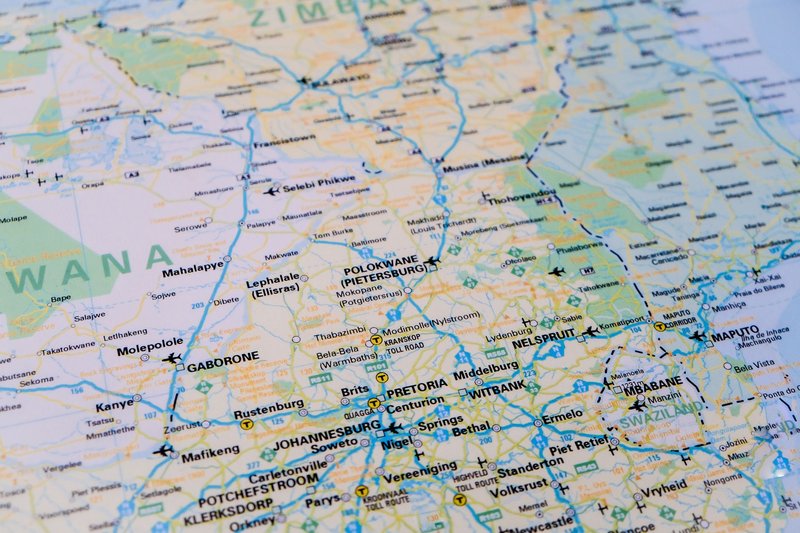
Nguni (four languages). isiZulu, isiXhosa, siSwati and isiNdebele. They are closely related, and a Zulu speaker can follow a good deal of Xhosa and almost all of siSwati or Southern Ndebele. Nguni languages are concentrated in the east and southeast, from the Eastern Cape up through KwaZulu-Natal into Mpumalanga. Zulu and Xhosa also borrowed click consonants from Khoe and San neighbours centuries ago. The Xhosa spelling uses c, q and x for the three basic clicks, which is why the “x” in “Xhosa” is a sound most English speakers have to be taught.
Sotho-Tswana (three languages). Sepedi, Setswana and Sesotho. These cover the interior plateau, the highveld and the north. A speaker of one can usually read the others with effort, and they share a standard greeting, dumela. Setswana is also the national language of neighbouring Botswana, and Sesotho is the national language of Lesotho, whose other indigenous languages are covered in their own guide, so both extend well beyond South Africa’s borders.
Tswa-Ronga (one language). Xitsonga, spoken in Limpopo, Mpumalanga and Gauteng, and across the border in southern Mozambique. It is not close to the Nguni or Sotho-Tswana groups, so Zulu speakers and Tsonga speakers can’t simply understand each other.
Venda (one language). Tshivenda, centred on the far north of Limpopo around the Soutpansberg mountains and the Vhembe district. It is its own branch, and it is the language of the sacred Lake Fundudzi region.
One more point on the Ndebele label: the isiNdebele in South Africa is Southern Ndebele, a Nguni language. It is a separate language from the Northern Ndebele spoken in Zimbabwe, where 16 languages have official status, even though the names match.
Speaker numbers and where each language lives
South Africa’s population was about 62 million in the 2022 census, run by Statistics South Africa. The table below uses the 2022 census for home language and rounds the figures, since the smaller languages shift slightly depending on how the data is cut. In 2011, for comparison, isiZulu sat at about 23%.
| Language | Family | Share of population (approx.) | Speakers (approx.) | Main provinces |
|---|---|---|---|---|
| isiZulu | Nguni | 24% | 15 million | KwaZulu-Natal, Gauteng, Mpumalanga |
| isiXhosa | Nguni | 16% | 10 million | Eastern Cape, Western Cape |
| Sepedi | Sotho-Tswana | 10% | 6 million | Limpopo, Gauteng, Mpumalanga |
| Setswana | Sotho-Tswana | 8% | 5 million | North West, Northern Cape, Gauteng |
| Sesotho | Sotho-Tswana | 7-8% | 4.5 million | Free State, Gauteng |
| Xitsonga | Tswa-Ronga | 4-5% | 2.7 million | Limpopo, Mpumalanga, Gauteng |
| siSwati | Nguni | 2-3% | 1.5 million | Mpumalanga |
| Tshivenda | Venda | 2% | 1.4 million | Limpopo |
| isiNdebele | Nguni | 2% | 1 million | Mpumalanga, Limpopo, Gauteng |
Two patterns show up in the numbers. First, the two biggest languages, isiZulu and isiXhosa, together account for around 40% of the population as a home language, and both are widely understood as second languages. Second, the smaller languages are small in absolute terms but not fragile: a million-plus speakers with a national radio station and a school curriculum is a different situation from the Khoe-San languages below.
Gauteng, the province that holds Johannesburg and Pretoria, is where all of this overlaps. Migration from every other province means a single Soweto street can include Zulu, Sesotho, Setswana, Sepedi and Xitsonga speakers, which is also why Johannesburg developed its own street slang, Tsotsitaal (or Iscamtho), that borrows from all of them.
The Khoe and San languages
The oldest languages in southern Africa are the Khoe and San languages, spoken long before Bantu-speaking farmers moved south. Most top-ranking articles skip them or give them a sentence. They deserve more, because they are the ones in real danger.
Khoekhoegowab (also called Nama/Damara) is the healthiest of the group, with the bulk of its speakers in Namibia. In South Africa it survives in the Northern Cape, in places like the Richtersveld, where Nama is still spoken in some households.
N|uu is the case people cite when they talk about language loss. It once ranged across the Northern Cape, and by the 2000s only a handful of elderly speakers remained. Katrina Esau, who ran a small language school in Upington to teach the remaining words to children, was among the last fluent speakers; she died in 2019. The vertical bar in the name is a click consonant, a sound with no English equivalent.
!Xun and Khwe are spoken by communities that settled at Platfontein near Kimberley after the end of the Namibian and Angolan wars. They have more active speakers than N|uu, but the communities are small and the younger generation increasingly speaks Afrikaans or English.
Others, like |Xam, are extinct. The |Xam language survives only in notebooks recorded in the 1870s by Wilhelm Bleek and Lucy Lloyd from a handful of informants.
What the Constitution says
Before 1994, English and Afrikaans were the official languages, and the Bantu languages had status only in the “homelands”. The 1996 Constitution reversed that. Section 6 of the Constitution lists the 11 official languages and says the state “must take practical and positive measures to elevate the status and advance the use of” the indigenous languages whose use has been historically diminished.
It also requires national and provincial governments to use at least two official languages, and it set up the Pan South African Language Board (PanSALB) to promote all of them, plus the Khoe, Nama and San languages and sign language.
In 2023, South African Sign Language was recognised as the twelfth official language after the Constitution was amended. For the roughly half a million people who depend on it, that is the first time the state has been obliged to provide services in it.
The gap between what the law says and what happens is wide. In practice, government departments, courts, and Parliament run overwhelmingly in English.
English, schools and the Grade 4 switch
English is the home language of under one in ten South Africans, yet it dominates business, law, higher education and official paperwork. This is the practical meaning of “marginalisation” that academic papers describe in abstract terms.
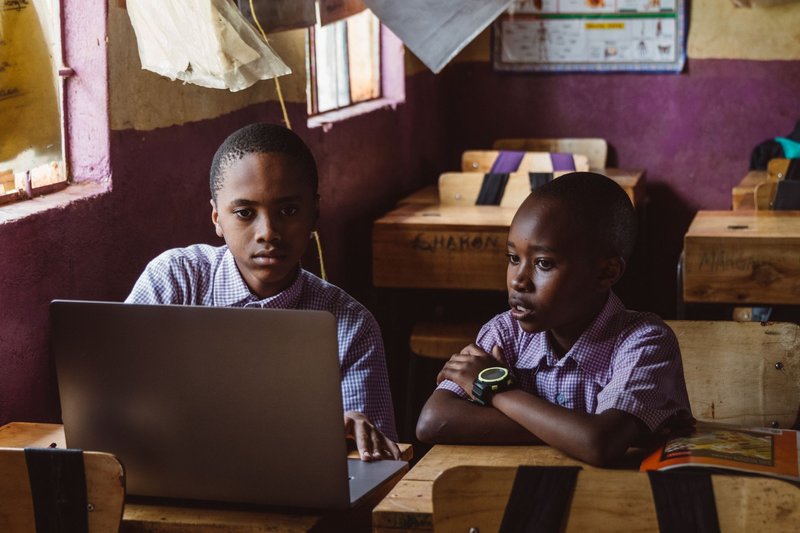
The clearest example is school. Under the national Language in Education Policy, children are meant to be taught in their home language for the first three years (Grades R to 3). From Grade 4, most schools switch to English as the language of teaching, or to Afrikaans in a smaller share of them. A nine-year-old who has just learned to read in isiXhosa then has to learn maths, science and every other subject in a second language.
The results show up in reading data. In the 2021 PIRLS international reading study, 81% of South African Grade 4 learners could not read for meaning in any language, up from 78% in 2016. Researchers point to the language switch as one contributing factor among several, alongside teacher training and school resources.
For visitors, the consequence is simple: you can get by in English almost anywhere in South Africa’s cities and tourist areas, but outside them, in rural Eastern Cape, Limpopo or KwaZulu-Natal, many people will be more comfortable in their home language than in English.
Media and daily life
The public broadcaster, the SABC, runs radio stations in each official indigenous language, and Ukhozi FM, in isiZulu, has one of the largest audiences of any radio station in Africa. Television is more uneven. News bulletins air in all nine languages on SABC, and popular dramas lean on code-switching: characters flip between isiZulu, Sesotho and English in the same scene, which matches how people actually talk in cities. Series like Uzalo (isiZulu) and Skeem Saam (Sepedi) are major draws.
Print and online media are mostly in English and Afrikaans, so searches for a news article or a government form in Setswana or Tshivenda often come up empty. That gap is part of why the languages stay stronger in conversation and music than in writing.
Greetings you can use today
Greetings carry more weight than in English. In most South African cultures, skipping the hello and going straight to your question is considered rude. A greeting also changes between singular and plural, and between times of day.
| Language | Hello (to one person / to several) | Thank you |
|---|---|---|
| isiZulu | Sawubona / Sanibonani | Ngiyabonga |
| isiXhosa | Molo / Molweni | Enkosi |
| Sepedi | Dumela / Dumelang | Ke a leboga |
| Setswana | Dumela / Dumelang | Ke a leboga |
| Sesotho | Dumela / Dumelang | Kea leboha |
| Xitsonga | Xewani | Inkomu |
| siSwati | Sawubona / Sanibonani | Ngiyabonga |
| Tshivenda | Ndaa (reply: Aa) | Ndi a livhuwa |
| isiNdebele | Lotjhani | Ngiyathokoza |
Sawubona literally means “I see you”, and the reply, yebo, sawubona, acknowledges it back. It is the greeting people remember most from trips to KwaZulu-Natal.
How to learn one
Pick the language of the region where you will spend time. A week in Durban is the place for isiZulu, a stay in the Eastern Cape is the place for isiXhosa, and a month in Johannesburg is a good reason to start with Sesotho or isiZulu, since both are widely understood there.
Three practical routes work:
- Radio and TV. Listening to an SABC station in your target language trains your ear for tone and rhythm, even before you understand the words.
- Phrasebooks and apps. Resources are thinner than for European languages, but isiZulu has the widest selection. For Tshivenda or isiNdebele you will often be relying on a single book or a university course.
- Local classes. Many universities and cultural centres in Johannesburg, Cape Town and Durban run short evening courses. Wits, the University of Cape Town and UKZN all teach African languages to non-native speakers.
Start with greetings and numbers, then learn how to ask for something politely. Speakers notice the effort, and most will respond with patience, a correction, and usually a smile.


