
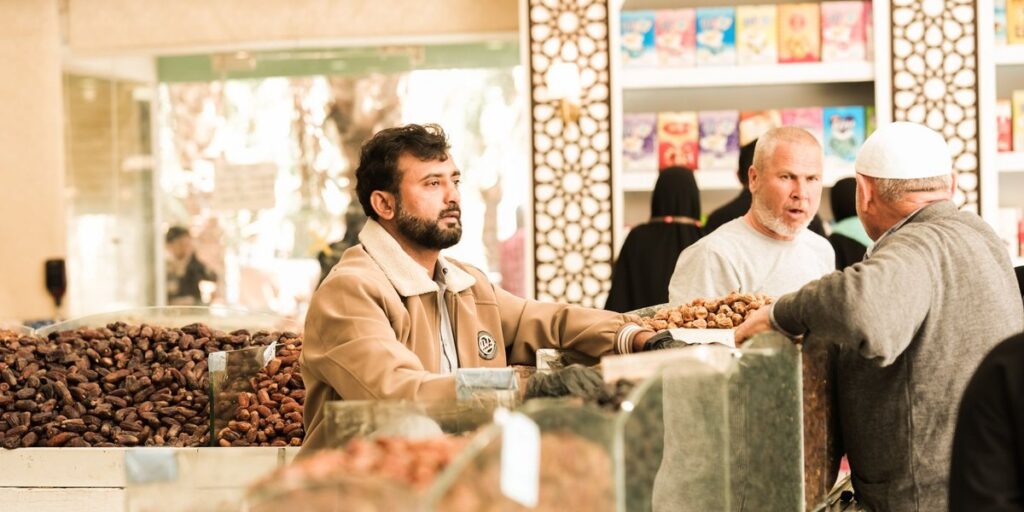
You can get through Bahrain on English alone. Hotel staff, taxi drivers, waiters, shop clerks and most officials switch to it without being asked, and road signs are bilingual. The CIA World Factbook lists Arabic as the official language, with English, Farsi and Urdu also widely spoken. More than half of Bahrain’s residents are foreign nationals, so the person serving you may speak Hindi, Urdu, Malayalam or Tagalog before they speak Arabic.
So these phrases aren’t a survival kit. They’re goodwill. A clumsy shukran gets a smile that a flawless “thank you” doesn’t, and a few words of Bahraini Arabic change how a shopkeeper opens the price negotiation.
One thing to know first: the Arabic on a phrasebook page is usually Modern Standard Arabic (MSA), the formal version used in news and writing. Bahrainis speak a Gulf dialect. The tables below give the form you’ll actually hear, and flag where it differs from MSA.
Table of contents
- How to read the tables
- Greetings and basics
- Taxis and directions
- Restaurants and cafes
- Souq shopping, money and numbers
- Emergencies
- Mosques and etiquette
- What inshallah really means
- The 10-phrase cheat sheet
How to read the tables
Transliteration is consistent throughout. aa is a long “a”, kh is the throaty “ch” in Scottish “loch”, gh is a gargled “r” sound, and an apostrophe (‘) marks the catch in the throat that Arabic calls ayn. Don’t stress over that last one. Skip it and you’ll still be understood.
Capital letters in the “Say it like” column mark the stressed syllable. Where a phrase changes depending on who you’re speaking to, the masculine form comes first and the feminine second.
Two Gulf habits will help your ear. The letter qaf (ق), pronounced “q” in MSA, becomes a hard “g” in Bahrain, so coffee is gahwa, not qahwa. And the “-ik” ending that addresses a woman often comes out as “-ich” (“shlonich”).
Greetings and basics
Greetings matter more in Arabic than in English. Skipping straight to your question without one reads as abrupt.
| English | Arabic | Transliteration | Say it like | Bahraini note |
|---|---|---|---|---|
| Peace be upon you (hello) | السلام عليكم | as-salaamu alaykum | as-sa-LAA-mu a-LAY-koom | Universal. The reply is wa alaykum as-salaam (وعليكم السلام) |
| Hello (casual) | مرحبا | marhaba | MAR-ha-ba | Safe with anyone, any time of day |
| Welcome | أهلا وسهلا | ahlan wa sahlan | AH-lan wa SAH-lan | Reply: ahlan bik (أهلا بك) |
| Good morning | صباح الخير | sabaah al-khayr | sa-BAAH il-KHAYR | Reply: sabaah an-noor (صباح النور) |
| Good evening | مساء الخير | masaa al-khayr | ma-SAA il-KHAYR | Reply: masaa an-noor (مساء النور) |
| How are you? | شلونك / شلونج | shlonak / shlonich | shlow-NAK / shlow-NEECH | Gulf form. MSA is kayfa haaluk |
| Fine, thank God | الحمد لله | al-hamdu lillah | al-HAM-du lil-LAH | The standard reply. Zain (زين, “good”) also works |
| Thank you | شكرا | shukran | SHOO-kran | Same in Gulf and MSA |
| You’re welcome | عفوا | afwan | AF-wan | |
| Please | من فضلك | min fadlak / fadlik | min FAD-lak / FAD-lik | Gulf speakers also say allah yikhallik |
| Yes | أيوه / نعم | aywa / na’am | AY-wa / NA-am | Aywa is the everyday Gulf form; na’am is formal |
| No | لا | laa | laa | |
| No thank you | لا شكرا | laa shukran | laa SHOO-kran | Useful for touts and extra tea refills |
| Sorry | آسف / آسفة | aasif / aasifa | AA-sif / AA-si-fa | |
| Goodbye | مع السلامة | ma’a as-salaama | ma-as-sa-LAA-ma | |
| I don’t speak Arabic | ما أتكلم عربي | maa atkallam arabi | maa at-KAL-lam AA-ra-bee | MSA: laa atakallam al-arabiyya |
| Do you speak English? | تتكلم إنجليزي؟ | titkallam inglizi? | tit-KAL-lam in-gli-ZEE |
Two more words worth having: yalla (يلا, “let’s go” or “come on”) and khalas (خلاص, “that’s it” or “finished”). Both turn up in every other Bahraini sentence.
Taxis and directions
Most visitors use ride-hailing apps or taxis, and a few words help when a driver can’t find your guesthouse in Muharraq’s back lanes. Agree on the fare or confirm the meter is running before you set off. Say al-addaad and point at the dashboard if you need to.
| English | Arabic | Transliteration | Say it like | Bahraini note |
|---|---|---|---|---|
| Where is…? | وين…؟ | wayn…? | wayn | Gulf. MSA is ayna (أين) |
| The hotel | الفندق | al-funduq | al-FUN-dook | |
| The airport | المطار | al-mataar | al-ma-TAAR | |
| Straight ahead | دغري | dughri | DOOGH-ree | Gulf and Levantine form |
| Right | يمين | yameen | ya-MEEN | |
| Left | يسار | yasaar | ya-SAAR | |
| Turn right / left | لف يمين / يسار | laff yameen / yasaar | laff ya-MEEN / ya-SAAR | |
| Stop here, please | وقف هنا من فضلك | waqqif hunaa, min fadlak | WAK-kif HU-naa, min FAD-lak | Say it a little before your door, not after |
| Is it far? | بعيد؟ | ba’eed? | ba-EED | |
| The meter, please | العداد من فضلك | al-addaad min fadlak | al-ad-DAAD min FAD-lak | |
| How much? | بكم؟ | bikam? | bi-KAM | Gulf. MSA is kam as-si’r |
| Right here is fine | هنا زين | hunaa zayn | HU-naa zayn |
Restaurants and cafes
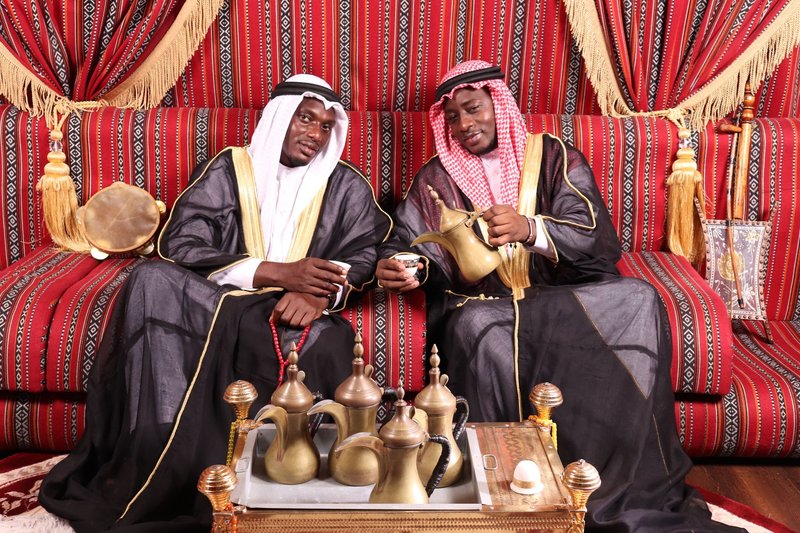
Bahrain’s cafe scene runs on tea. The local version is karak, black tea boiled with evaporated milk and cardamom, sold for pocket change at roadside counters. The coffee you’ll be offered as a guest is gahwa: thin, pale, cardamom-scented and poured in thimble-sized cups.
| English | Arabic | Transliteration | Say it like | Bahraini note |
|---|---|---|---|---|
| Table for two | طاولة لشخصين | taawila li-shakhsayn | TAA-wi-la li-shakh-SAYN | Gulf speakers say taawla |
| The menu, please | القائمة من فضلك | al-qaa’ima min fadlak | al-QAA-i-ma min FAD-lak | Many places say “menu” in English anyway |
| I want… | أبغى… | abgha… | AB-gha | Gulf. MSA is uriid (أريد) |
| Water | ماي | maay | maay | Gulf. MSA is maa’ (ماء) |
| Tea | شاي | chaay | chaay | Gulf pronunciation with a “ch” |
| Karak tea | كرك | karak | ka-RAK | |
| Arabic coffee | قهوة | gahwa | GAH-wa | Gulf “g” instead of MSA “q” |
| Without sugar | بدون سكر | bidoon sukkar | bi-DOON SUK-kar | |
| I’m vegetarian | أنا نباتي / نباتية | ana nabaati / nabaatiyya | a-na na-BAA-tee / na-baa-TEE-ya | |
| Halal | حلال | halaal | ha-LAAL | Nearly everything is, but ask about alcohol in dishes |
| Delicious | لذيذ | ladheedh | la-DHEEDH | Locals also say zain wayed (very good) |
| I’m full | شبعت | shabi’t | sha-BI-t | A polite way to stop a host refilling your plate |
| The bill, please | الحساب من فضلك | al-hisaab min fadlak | al-hi-SAAB min FAD-lak |
Wayed (واجد), the Gulf word for “a lot” or “very”, is the one dialect word worth stealing. Shukran wayed is “thank you very much” in Bahraini.
Souq shopping, money and numbers
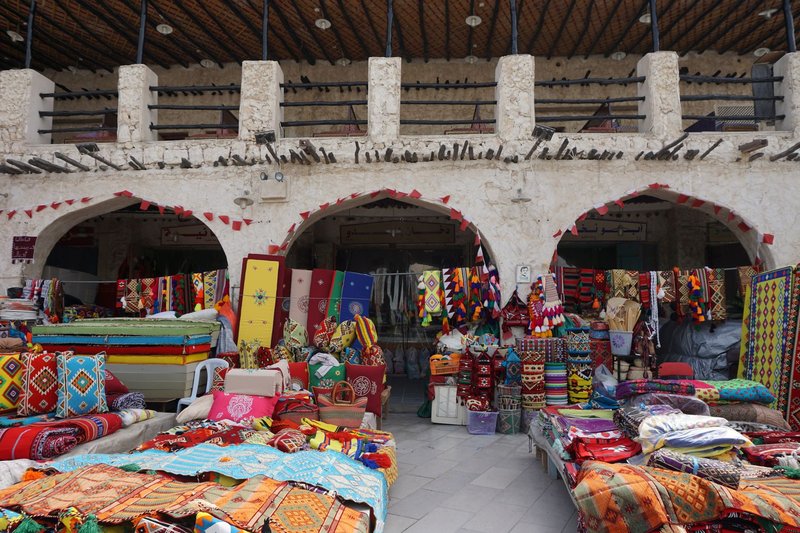
The Manama Souq around Bab Al Bahrain is where a few phrases pay for themselves. Prices for gold, spices, textiles and pearls start negotiable. A smile, a greeting in Arabic and a calm counteroffer will do more than cleverness.
| English | Arabic | Transliteration | Say it like | Bahraini note |
|---|---|---|---|---|
| How much is this? | بكم هذا؟ | bikam haatha? | bi-KAM HAA-tha | |
| Too expensive | غالي | ghaali | GHAA-lee | |
| Cheaper | أرخص | arkhas | AR-khas | Rakhees (رخيص) means “cheap” |
| A little cheaper | أرخص شوي | arkhas shwayy | AR-khas SHWAYY | Shwayy is Gulf for “a little” |
| Last price | آخر سعر | aakhir si’r | AA-khir SIR | |
| I’m just looking | بس أنظر | bas anzur | bas AN-zur | |
| OK, deal | تمام | tamaam | ta-MAAM | |
| No problem | ما في مشكلة | maa fi mushkila | maa fi MUSH-ki-la |
Bahrain’s currency is the dinar (دينار, dinaar), divided into 1,000 fils (فلس). Prices are quoted in dinars with three decimals, so BD 2.500 is two and a half dinars. The dinar is pegged to the US dollar at about 0.376, which makes one dinar worth roughly $2.65.
| Number | Arabic | Transliteration | Say it like |
|---|---|---|---|
| 1 | ١ | waahid | WAA-hid |
| 2 | ٢ | ithnayn | ith-NAYN |
| 3 | ٣ | thalaatha | tha-LAA-tha |
| 4 | ٤ | arba’a | AR-ba-a |
| 5 | ٥ | khamsa | KHAM-sa |
| 6 | ٦ | sitta | SIT-ta |
| 7 | ٧ | sab’a | SAB-a |
| 8 | ٨ | thamaaniya | tha-MAA-nee-ya |
| 9 | ٩ | tis’a | TIS-a |
| 10 | ١٠ | ‘ashara | AA-sha-ra |
Prices on tags and receipts often use the Arabic-Indic digits above (٥ for 5), but Western digits (1, 2, 3) are common too, particularly in malls.
For time, three words cover most situations: al-aan (الآن, “now”), al-yawm (اليوم, “today”) and bukra (بكرة, “tomorrow”). To ask the time, say kam as-saa’a? (كم الساعة؟). Remember that the Bahraini weekend is Friday and Saturday, and that Friday midday is prayer time when many shops close for a few hours.
Emergencies
Save the numbers before you need the words. Bahrain’s emergency line is 999, which connects to police, ambulance and civil defense (fire). The coast guard is on 994, which matters if you’re on a boat or at the causeway or marina.
Operators in Bahrain handle calls in English, so the phrases below are for the person standing next to you who doesn’t.
| English | Arabic | Transliteration | Say it like | Bahraini note |
|---|---|---|---|---|
| Help! | النجدة | an-najda | an-NAJ-da | The shout for urgent help |
| I need a doctor | أبغى دكتور | abgha doktoor | AB-gha dok-TOOR | MSA: ahtaaj ilaa tabeeb |
| Call the police | اتصل بالشرطة | ittasil bish-shurta | it-TA-sil bish-SHUR-ta | |
| Ambulance | إسعاف | is’aaf | is-AAF | |
| Hospital | مستشفى | mustashfa | mus-tash-FA | |
| I’m lost | ضعت | dhi’it | DHEE-it | |
| I’m sick | أنا مريض / مريضة | ana mareedh / mareedha | a-na ma-REEDH / ma-REE-dha |
Mosques and etiquette
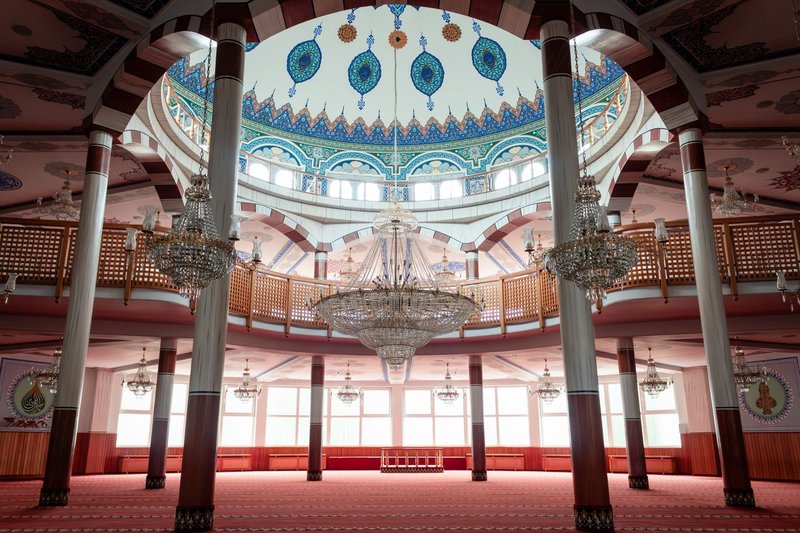
Bahrain is among the more relaxed Gulf states for visitors, but the baseline rules still apply. The call to prayer (adhan, أذان) sounds five times a day from mosques across the island, and you’ll hear it in malls and from taxi radios.
To visit a mosque, ask first:
| English | Arabic | Transliteration | Say it like |
|---|---|---|---|
| Can I come in? | ممكن أدخل؟ | mumkin adkhul? | MUM-kin AD-khul |
| Can I take a photo? | ممكن أصور؟ | mumkin usawwir? | MUM-kin u-SAW-wir |
Mumkin (“possible” or “may I”) is the most useful word in this section and works for almost any request. The Al Fateh Grand Mosque in Juffair, the country’s largest, welcomes non-Muslim visitors. Cover your shoulders and knees, and expect women to cover their hair. Remove your shoes at the door.
Handshakes. Between men, a handshake followed by a hand to the chest is standard. With a woman, let her offer her hand first. If she doesn’t, a nod and a hand to your own chest is the polite substitute, and the same goes for men meeting a Muslim woman as a visitor. Neither is an insult.
Karak and gahwa. If you’re handed tea or Arabic coffee, accept it. Take it with your right hand, which is also the hand for passing money and food. A host will keep refilling the small coffee cup until you shake it gently from side to side, which means “enough.” Bismillah (“in the name of God”) before eating and al-hamdu lillah afterwards are expected from Muslim hosts and appreciated from you.
Dress. Shoulders and knees covered is the practical rule in souqs, government offices and anywhere outside resort pools and beach clubs. Light long sleeves and trousers are comfortable in summer heat.
Ramadan. During the day, don’t eat, drink or smoke in public. Many cafes close or screen off their seating until sunset. The greeting is Ramadan kareem (رمضان كريم).
What inshallah really means
Inshallah (إن شاء الله, “God willing”) is the phrase foreign visitors misread most often. It isn’t a polite no, and it isn’t a shrug. It’s an honest acknowledgment that the future isn’t entirely in your hands, and the speaker means it as a promise to try.
Context does the rest. A friend saying “see you tonight, inshallah” means they’ll be there. A shopkeeper saying the delivery will arrive tomorrow, inshallah, means probably, with the usual caveats. If you need certainty, ask a direct question (mumkin bukra?, “possible tomorrow?”) and watch the tone of the reply.
Ma sha’a Allah (ما شاء الله) is the other phrase to know. It’s what Bahrainis say when they admire something: a child, a new car, a nicely cooked meal. Say it back when you’re offered a compliment-worthy dinner and you’ll get a warm look.
The 10-phrase cheat sheet
If you only memorize ten, make it these.
| # | English | Arabic | Transliteration | Say it like |
|---|---|---|---|---|
| 1 | Hello (peace be upon you) | السلام عليكم | as-salaamu alaykum | as-sa-LAA-mu a-LAY-koom |
| 2 | Thank you | شكرا | shukran | SHOO-kran |
| 3 | Please | من فضلك | min fadlak | min FAD-lak |
| 4 | No thank you | لا شكرا | laa shukran | laa SHOO-kran |
| 5 | How much? | بكم؟ | bikam? | bi-KAM |
| 6 | Where is…? | وين…؟ | wayn…? | wayn |
| 7 | May I / is it possible? | ممكن؟ | mumkin? | MUM-kin |
| 8 | OK / fine | تمام | tamaam | ta-MAAM |
| 9 | No problem | ما في مشكلة | maa fi mushkila | maa fi MUSH-ki-la |
| 10 | Help! | النجدة | an-najda | an-NAJ-da |
Add two numbers you don’t need to translate: 999 for emergencies and 994 for the coast guard. And if all else fails, English works.


