Contents
- TLDR
- Micronesia the region vs. the Federated States of Micronesia
- The comparison table
- The 13 groups, one by one
- High islands vs. low islands
- Where Micronesians came from
- The Polynesian outliers
- Diaspora: Micronesians outside Micronesia
TLDR
- “Micronesia” is a region of roughly 2,000 islands spread over seven countries and territories. The Federated States of Micronesia (FSM) is one of those seven, and it has four states.
- There is no single “Micronesian” ethnicity. The 13 groups below speak different languages, many of them unintelligible to each other, and they organize family and land in different ways.
- In the FSM, Chuukese and Mortlockese people make up about half the population and Pohnpeians close to 30%.
- Not every group is matrilineal. Yapese and I-Kiribati family systems run mainly through the father.
- Two Polynesian-language communities, Nukuoro and Kapingamarangi, sit inside Pohnpei state and are counted separately from the 13.
Micronesia the region vs. the Federated States of Micronesia
Search “Micronesia” and you get two different answers, often mixed together in the same article.
Micronesia the region is one of the three Pacific cultural areas (the others are Melanesia and Polynesia), a name that goes back to the 1830s and means “small islands.” It covers about 2,000 islands. Seven sovereign nations and territories sit within it: Palau, the Federated States of Micronesia, the Marshall Islands, Kiribati (its Gilbert Islands, in particular), Nauru, and the US territories of Guam and the Northern Mariana Islands.
The Federated States of Micronesia is a single country of four states: Yap, Chuuk, Pohnpei and Kosrae. Its population is a little over 100,000, which is smaller than the Kiribati population alone. When a source says “Micronesians make up X% of the population,” check which one it means.
The word “Micronesian” was an outsider’s label. Palauans, Marshallese and Chamorro people don’t say they are the same people, and they aren’t. Most identify first by island or archipelago, then by clan, and only then, if at all, by region.
The comparison table
No quick reference exists that puts all of these groups side by side, so here is one. Population figures are rounded estimates drawn from national censuses, and counts vary by year and by how each census defines ethnicity. Treat them as orders of magnitude.
| Group | Homeland | Approx. population | Language |
|---|---|---|---|
| Chamorro | Guam, Northern Mariana Islands | 50,000+ in the Marianas, more abroad | Chamorro |
| Carolinian (Refaluwasch) | Saipan and nearby Marianas (from the Caroline atolls) | A few thousand | Carolinian |
| Chuukese | Chuuk Lagoon and outer islands, FSM | About 50,000 | Chuukese |
| Pohnpeian | Pohnpei, FSM | About 30,000 | Pohnpeian |
| Kosraean | Kosrae, FSM | About 6,500 | Kosraean |
| Yapese | Yap, FSM | Under 10,000 | Yapese |
| Palauan | Palau | About 13,000 | Palauan |
| Marshallese | Marshall Islands | About 42,000 | Marshallese |
| I-Kiribati | Gilbert Islands, Kiribati | About 120,000 | Gilbertese |
| Nauruan | Nauru | Under 10,000 | Nauruan |
| Banaban | Banaba (Kiribati), now mostly Rabi, Fiji | About 5,000 | Gilbertese-related |
| Tobian | Tobi (Hatohobei), Palau | Under 1,000 | Tobian |
| Sonsorolese | Sonsorol, Palau | Under 1,000 | Sonsorolese |
If you want the FSM’s own breakdown, the CIA World Factbook lists its ethnic groups from census data.
The 13 groups, one by one
1. Chamorro
The Chamorro are the indigenous people of Guam and the Northern Mariana Islands, and the first Micronesians to meet Europeans: Magellan arrived in 1521, and Spain ruled from 1668 for more than two centuries. That shows in the language. Chamorro is an Austronesian language with a large layer of Spanish vocabulary, and many surnames are Spanish too.
The distinctive tradition is inafa’maolek, the ethic of keeping relationships in balance, which shapes everything from fiestas to family obligations. The other symbol is the latte stone, the paired stone pillars that held up ancient houses, now a common emblem of Chamorro identity on Guam.
2. Carolinian (Refaluwasch)
Carolinians are not native to the Marianas. Their ancestors sailed north from the Caroline atolls such as Satawal and Lamotrek in the 1800s, after Spanish authorities allowed settlement on islands emptied by disease and colonial relocation. Today they are a small community, centered on Saipan, that calls itself Refaluwasch (“people of the low islands”).
Their language, Carolinian, is closely related to the languages of the outer islands they came from. Their distinct tradition is canoe building and voyaging, kept alive in a place where most other people drive cars.
3. Chuukese
Chuuk Lagoon is a ring of reef enclosing high volcanic islands and the largest single block of FSM population. The Chuukese live in matrilineal clans, and land passes through women. Mortlockese people, from the Mortlock Islands southeast of the lagoon, speak a closely related language and are usually grouped with them in census data.
The lagoon is also where the Japanese navy parked a fleet in World War II, and dozens of wrecks still sit on the lagoon floor. Locals live with that daily, and the wrecks are the draw for visiting divers.
4. Pohnpeian
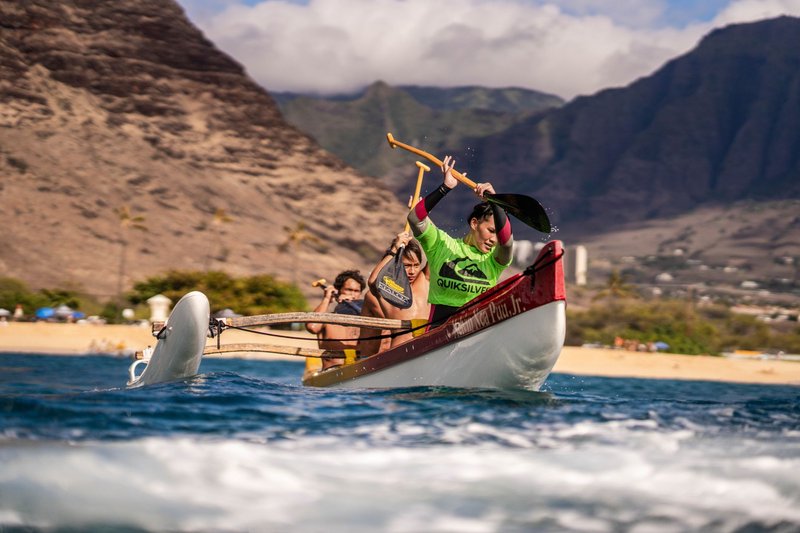
Pohnpei is the wettest and greenest of the FSM islands, with the highest peak in the country. The Pohnpeians run a parallel chiefly system: each of the island’s five kingdoms has a nahnmwarki and a nahnken, two lines of titles. Social rank is performed at feasts, where the pounded root drink sakau (kava) is served in a fixed order of precedence.
The island also has Nan Madol, a city of roughly 100 artificial islets built from basalt columns and coral, which UNESCO lists as a World Heritage site. It was built centuries before European contact and it was a capital. Nobody in Pohnpei treats it as a ruin in the abstract.
5. Kosraean
Kosrae is a single high island, and the Kosraean language is spoken almost nowhere else. A king, the tokosra, once ruled from Leluh, a walled stone town built on a reef islet. American missionaries arrived in 1852, and today Sunday observance is close to universal, with church choirs that are a point of local pride.
Kosraeans have a matrilineal system like the Pohnpeians and Chuukese, but with a much smaller population and a tighter sense of being one community.
6. Yapese
Yap is the exception that breaks most generalizations about Micronesia. Yapese descent is traced through the father, not the mother. The island kept a strict caste system into the 20th century, and its villages rank each other in a hierarchy that still shapes who can build what and where.
The best-known Yapese tradition is rai, stone money: limestone discs, some up to 3.6 meters wide, quarried in Palau and moved to Yap by canoe and raft, about 400 kilometers away. A disc’s value comes from its history, not its size. A rai can change owners while staying where it is.
Yap also has an outer-island world: the Ulithi and Woleai atolls speak different languages from Yapese, and they historically sent tribute to Yap under a system called sawei. In census data they appear as a separate category from the Yapese.
7. Palauan
Palau sits at the western edge of Micronesia, closer to the Philippines and Indonesia than to most of its neighbors, and its language is one of the most distinct in the region. Palauans are matrilineal, with clans led by titled women who help choose the male chiefs. Traditional men’s meetinghouses (bai) are covered in carved and painted storyboards, and they are among the most elaborate wooden buildings in the Pacific.
The country has a small population, about 13,000 Palauans, in a very large marine territory. How the rest of the population divides is set out in Palau’s ethnic groups, by the numbers. It was also, along with Yap, one of the earliest-settled parts of Micronesia.
8. Marshallese
The Marshall Islands are two chains of low coral atolls, with a land area of about 180 square kilometers and a highest point of only a few meters. The Marshallese traditionally lived by navigation, and they’re known for the stick chart: a lattice of palm ribs and shells that maps how ocean swells bend around islands. Navigators memorized the charts on land and did not take them to sea.
Land (wato) passes through the mother’s line, while iroij, the paramount chiefs, hold authority above it. The Marshallese also carry a modern history that no other Micronesian group does: 67 US nuclear tests were carried out at Bikini and Enewetak atolls between 1946 and 1958, and the displaced communities still debate compensation and return.
9. I-Kiribati
I-Kiribati (“people of Kiribati”) are the largest group in this list, at about 120,000 people. Most live on the Gilbert Islands, a chain of low atolls; Kiribati’s wider territory also includes Banaba and, far to the east, the Line and Phoenix Islands. The ethnic groups of Kiribati are compared separately, with population shares and languages for each.
The central institution is the maneaba, a large open-sided meetinghouse where seats are assigned by clan. Decisions are made there, and a person’s place under the roof marks their lineage. Unlike many of their neighbors, I-Kiribati inheritance runs mainly through the father.
10. Nauruan
Nauru is a single raised-coral island, about 21 square kilometers, and the Nauruan language is a standalone branch within the Micronesian family, unintelligible to speakers of Marshallese or Gilbertese, despite the short distance. The nation is traditionally made of twelve clans, represented by the twelve points of the star on the national flag. Descent is matrilineal.
The date to know is Angam Day on 26 October, which celebrates the population recovering to 1,500 after the 1920s influenza and the dislocations of the war. Phosphate mining took most of the island’s interior, and today most Nauruans live in a narrow ring around it.
11. Banaban
Banaba (Ocean Island) is a single island within Kiribati whose people are ethnically close to, but distinct from, the I-Kiribati. Phosphate mining began there in 1900. After the Second World War, Britain relocated most of the population to Rabi Island in Fiji, which Banabans had bought with phosphate royalties.
Today about 5,000 Banabans live on Rabi, and a few hundred remain on Banaba. They keep their own land claims, council and cultural identity, and are one of the clearest cases in the region of a people living far from their homeland and still governing themselves.
12. Tobian
Tobi, or Hatohobei, is a small island in Palau’s far southwest, over 600 kilometers from Koror. Its language, Tobian, is related to the languages of Chuuk’s western islands and is very different from Palauan. The island’s resident population has fallen to a few dozen, and most Tobians now live in Koror.
The Tobian tradition worth knowing is the long habit of voyaging between the Southwest Islands and Palau, which makes them closer culturally to the outer islands of Yap and Chuuk than to the Palauans who administer them.
13. Sonsorolese
Sonsorol, another Palauan state in the far southwest, has the same story: a handful of tiny islands, a few residents and a larger community in Koror. The Sonsorolese speak a language of their own, related to Tobian and the Carolinian-type languages to the east.
Like the Tobians, they are culturally closer to the Carolinian outer-island world than to the Palauans in the north, with a different language and a voyaging past. Lists of Palau’s population tend to count everyone as one group, which hides that.
High islands vs. low islands
The most useful way to split Micronesia is not by country but by geology.
High islands are volcanic or uplifted rock: Pohnpei, Kosrae, Chuuk Lagoon’s inner islands, Yap, Palau and southern Guam. Pohnpei’s peak, Nahna Laud, is about 780 meters. Rivers, forest and fertile soil support dense populations, taro gardens and, historically, strong chiefs. This is where the large stone architecture appears: Nan Madol on Pohnpei, Leluh on Kosrae, the latte sites of the Marianas.
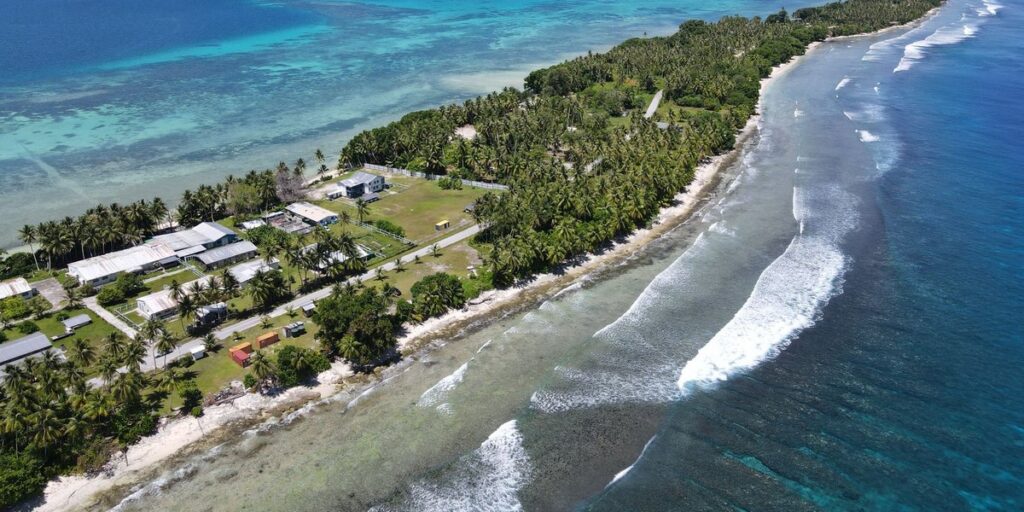
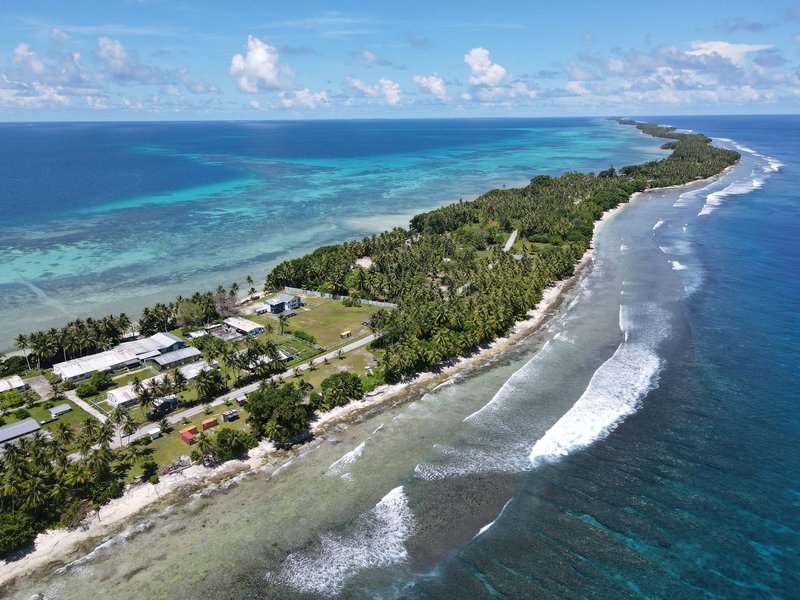
Low islands are coral atolls, rarely more than a few meters above the sea. The Marshalls, Kiribati, Nauru’s coast and the outer islands of Chuuk and Yap are all low. Soils are thin, freshwater is a lens under the sand, and diets lean on coconut, pandanus, breadfruit and fish. Those limits shaped social habits: sharing across households, tribute between islands, and navigation systems so reliable that Micronesian sailors, among them Mau Piailug of Satawal, were later asked to help revive Polynesian voyaging in Hawaii.
The result is two kinds of society. High-island groups built ranked chiefdoms and fixed architecture. Low-island groups built networks, with ties of marriage, tribute and trade stretching across hundreds of kilometers of open water.
Where Micronesians came from
The settlement of Micronesia has two broad stages. Austronesian speakers moved from Taiwan into the Philippines thousands of years ago, then pushed out into the Pacific. The Mariana Islands were occupied about 3,500 years ago, in one of the longest open-ocean crossings in human history up to that point. Palau and Yap followed soon after, and the eastern atolls, such as the Marshalls, were settled later.
A 2022 genetic study in Science clarified the picture. Researchers analyzed DNA from 164 ancient and 112 modern individuals and identified five migration streams into Micronesia: three East Asian-related, one Polynesian and one Papuan. The Marianas population appears to descend entirely from East Asian sources, which makes it unusual among the Pacific islands. The full paper is open on Science’s site.
The study also found that early island communities had very different maternal DNA from one another while being uniform within each community. That pattern suggests that women stayed in the communities where they grew up, which fits the matrilineal organization still found on many islands, including Palau, Pohnpei and Chuuk. It does not mean every group today works that way, as Yap shows.
The Polynesian outliers
Two communities sit inside the FSM geographically but belong to a different language family. Nukuoro and Kapingamarangi, both atolls in Pohnpei state, speak Polynesian languages and trace their ancestry to voyagers from the south and east. Each has a few hundred people on the atoll itself, with a larger community living on Pohnpei.
Nukuoro is known for carved wooden figures of its ancestral gods, about twenty of which survive in museums abroad. Kapingamarangi has a settlement near Kolonia on Pohnpei, a result of decades of migration for schooling and work. The FSM census counts them as “Polynesian,” a category worth about 1.5% of the country.
Diaspora: Micronesians outside Micronesia
Many Micronesians now live abroad, and that has changed what the ethnic map looks like.
Under the Compacts of Free Association, citizens of the FSM, the Marshall Islands and Palau can live and work in the United States without a visa. Large communities have formed in Guam, Hawaii, and on the US mainland. Marshallese in Springdale, Arkansas form one of the largest overseas communities, and Chuukese people make up a large share of the migrant population in Guam and Hawaii.
Chamorro people have a separate story. Many left Guam for the US military and for work, and census counts of people identifying as Chamorro in the United States now exceed the number on Guam. Banabans in Fiji, I-Kiribati in New Zealand and Nauruans overseas follow different routes, driven by land, work and, increasingly, sea-level rise.
The result is a set of identities that exist across several places at once: a Marshallese family in Arkansas, a Chuukese family in Honolulu, and a village on a Gilbert atoll all remain part of the same clan. The numbers in the table above show who lives at home. They leave out everyone else.