TLDR
- 46 UN member states sit entirely on islands. That count includes the United Kingdom, Ireland and Brunei, which share their islands with other countries. Add Taiwan, which governs itself but has no UN seat, and you get 47.
- Biggest: Indonesia (about 1.9 million km²). Smallest: Nauru (21 km²). Most islands: Indonesia (17,000+), then Japan (14,125 by Japan’s 2023 recount) and the Philippines (7,641).
- Not on the list: Australia (a continent), Greenland, Puerto Rico, the Cayman Islands and Hawaii. They’re territories, dependencies or states, not sovereign countries.
- Counts are as of November 2026.
Table of Contents
- The rule used for counting
- Single-island countries
- Archipelago countries
- Island countries that share an island
- Island countries with a fixed link to the mainland
- Largest, smallest and most islands
- Islands that are not countries
- Edge cases: Australia, Greenland, Taiwan
- FAQ
The rule used for counting
Ask five sources how many islands are countries and you’ll get five numbers. The gap isn’t geography. It’s definitions, so here’s the one this list uses.
A country counts if it is a UN member state and all of its territory is on islands, with no piece of a continental mainland. That rule gives 46.
Two things it allows:
- Countries that share an island with another country (Ireland, Haiti, Brunei) still count. They have no mainland.
- Countries joined to the mainland by a bridge (Bahrain, Singapore) still count. A causeway doesn’t turn an island into a peninsula.
Two things it rejects:
- Malaysia has a mainland peninsula plus part of Borneo. Part island is not island.
- Denmark owns Zealand and Funen, but also the Jutland peninsula, which is attached to Germany.
The list is built from the UN’s roster of 193 member states. Areas and populations are rounded and checked against the CIA World Factbook.
Single-island countries
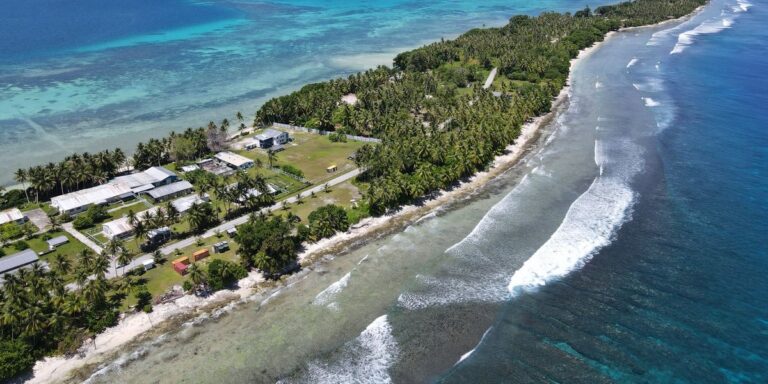
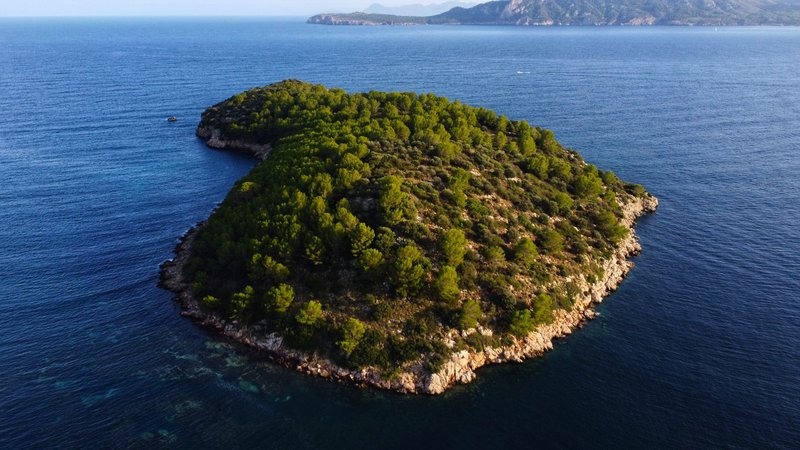
Nine countries are essentially one island, give or take a few offshore islets. The range is wide: Nauru is 21 km², while Madagascar is 587,000.
| Country | Island | Ocean or sea | Area (km²) | Population | Capital |
|---|---|---|---|---|---|
| Iceland | Iceland | North Atlantic | 103,000 | 390,000 | Reykjavík |
| Madagascar | Madagascar | Indian Ocean | 587,000 | 31 million | Antananarivo |
| Sri Lanka | Sri Lanka | Indian Ocean | 65,600 | 22 million | Sri Jayawardenepura Kotte |
| Cyprus | Cyprus | Mediterranean | 9,251 (whole island) | 0.9 million (government-controlled area) | Nicosia |
| Jamaica | Jamaica | Caribbean | 10,991 | 2.8 million | Kingston |
| Barbados | Barbados | Atlantic / Caribbean | 430 | 280,000 | Bridgetown |
| Nauru | Nauru | Pacific | 21 | 12,000 | Yaren (de facto) |
| Dominica | Dominica | Caribbean | 751 | 73,000 | Roseau |
| Saint Lucia | Saint Lucia | Caribbean | 616 | 180,000 | Castries |
Three footnotes. Sri Lanka’s legislative capital is Sri Jayawardenepura Kotte, but most people mean Colombo, the commercial hub. Nauru has no official capital; Yaren is where the government buildings and the airport are. And Cyprus is divided: the internationally recognized Republic of Cyprus holds the south, the self-declared Northern Cyprus (recognized only by Turkey) holds the north, and the UK keeps two military base areas. The UN treats the island as one country’s territory, so it sits here rather than in the shared-island group.
Archipelago countries
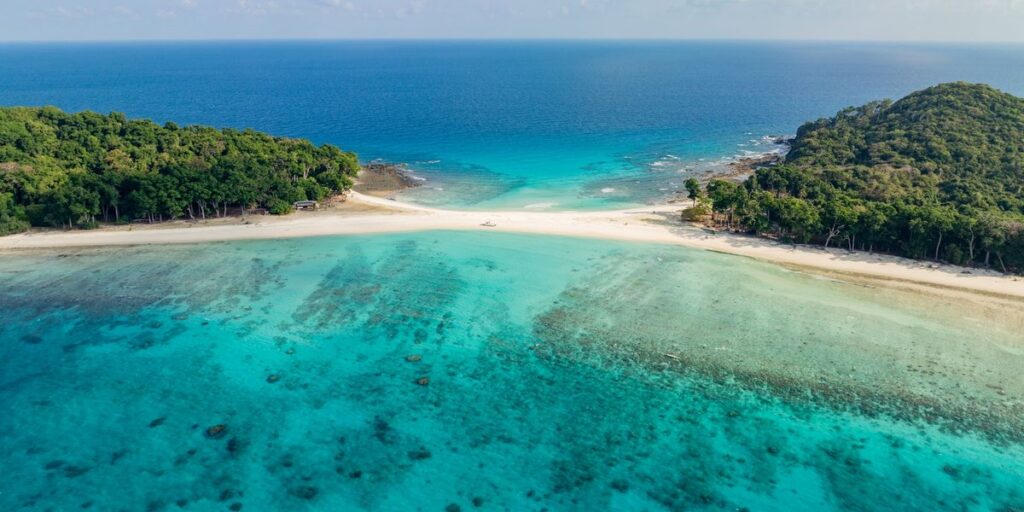
The biggest group: 27 countries made of chains, clusters and scattered atolls. Some have two main islands. Some have hundreds.
| Country | Main islands | Ocean or sea | Area (km²) | Population | Capital |
|---|---|---|---|---|---|
| Antigua and Barbuda | Antigua, Barbuda | Caribbean | 442 | 94,000 | St. John’s |
| Bahamas | New Providence, Grand Bahama, 700+ others | Atlantic | 13,880 | 400,000 | Nassau |
| Cabo Verde | Santiago, São Vicente, 8 others | Atlantic | 4,033 | 560,000 | Praia |
| Comoros | Grande Comore, Mohéli, Anjouan | Indian Ocean | 1,861 | 850,000 | Moroni |
| Cuba | Cuba, Isla de la Juventud | Caribbean | 109,884 | 11 million | Havana |
| Fiji | Viti Levu, Vanua Levu | Pacific | 18,274 | 930,000 | Suva |
| Grenada | Grenada, Carriacou | Caribbean | 344 | 120,000 | St. George’s |
| Japan | Honshu, Hokkaido, Kyushu, Shikoku | Pacific | 377,975 | 124 million | Tokyo |
| Kiribati | Tarawa, Kiritimati, 30+ atolls | Pacific | 811 | 130,000 | South Tarawa |
| Maldives | 26 atolls | Indian Ocean | 298 | 520,000 | Malé |
| Malta | Malta, Gozo, Comino | Mediterranean | 316 | 560,000 | Valletta |
| Marshall Islands | 29 atolls, 5 islands | Pacific | 181 | 42,000 | Majuro |
| Mauritius | Mauritius, Rodrigues | Indian Ocean | 2,040 | 1.26 million | Port Louis |
| Micronesia | Pohnpei, Chuuk, Yap, Kosrae | Pacific | 702 | 110,000 | Palikir |
| New Zealand | North Island, South Island | Pacific | 268,000 | 5.3 million | Wellington |
| Palau | Babeldaob, Koror, 340+ others | Pacific | 459 | 18,000 | Ngerulmud |
| Philippines | Luzon, Mindanao, Visayas group | Pacific | 300,000 | 115 million | Manila |
| Saint Kitts and Nevis | Saint Kitts, Nevis | Caribbean | 261 | 48,000 | Basseterre |
| Saint Vincent and the Grenadines | Saint Vincent, Grenadines | Caribbean | 389 | 100,000 | Kingstown |
| Samoa | Upolu, Savai’i | Pacific | 2,842 | 220,000 | Apia |
| São Tomé and Príncipe | São Tomé, Príncipe | Gulf of Guinea | 964 | 230,000 | São Tomé |
| Seychelles | Mahé, Praslin, 100+ others | Indian Ocean | 459 | 110,000 | Victoria |
| Solomon Islands | Guadalcanal, Malaita, 900+ others | Pacific | 28,896 | 720,000 | Honiara |
| Tonga | Tongatapu, 170 others | Pacific | 747 | 100,000 | Nukuʻalofa |
| Trinidad and Tobago | Trinidad, Tobago | Caribbean | 5,128 | 1.4 million | Port of Spain |
| Tuvalu | 9 atolls and reef islands | Pacific | 26 | 11,000 | Funafuti |
| Vanuatu | Efate, Espiritu Santo, 80 total | Pacific | 12,189 | 330,000 | Port Vila |
A few deserve a second look. Japan’s four main islands get all the attention, but the country has thousands more. Cuba is by far the largest island country in the Caribbean. And the Maldives is the lowest-lying country on Earth, which is why its government once held a cabinet meeting underwater to make a point about sea-level rise.
Island countries that share an island
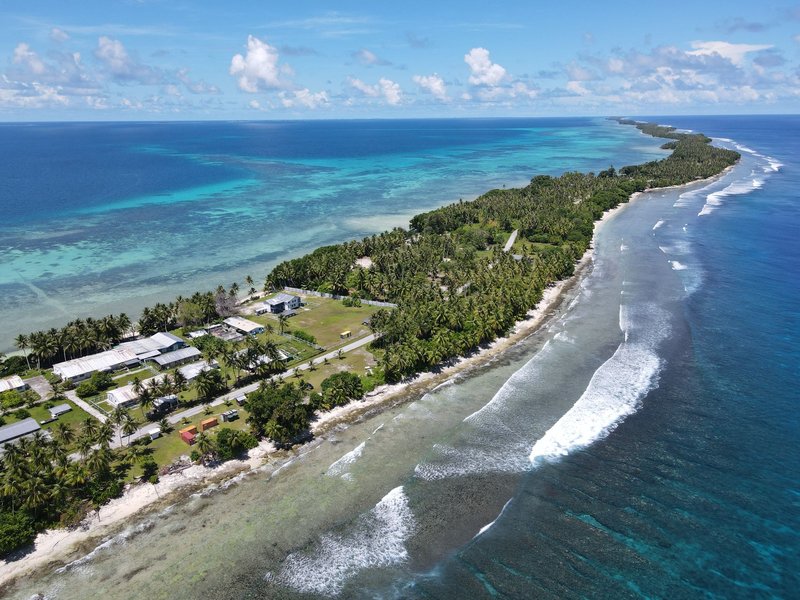
Eight countries sit on islands they split with someone else. This is where “island or country?” gets awkward, because a border runs through the middle of the island.
| Country | Island | Shared with | Area (km²) | Population | Capital |
|---|---|---|---|---|---|
| United Kingdom | Great Britain, northeast Ireland | Ireland | 243,600 | 68 million | London |
| Ireland | Ireland | United Kingdom (Northern Ireland) | 70,273 | 5.3 million | Dublin |
| Haiti | Hispaniola (west) | Dominican Republic | 27,750 | 11.7 million | Port-au-Prince |
| Dominican Republic | Hispaniola (east) | Haiti | 48,671 | 11.3 million | Santo Domingo |
| Brunei | Borneo (north coast) | Indonesia, Malaysia | 5,765 | 450,000 | Bandar Seri Begawan |
| Indonesia | Sumatra, Java, Sulawesi, plus parts of Borneo, New Guinea and Timor | Malaysia and Brunei (Borneo), Papua New Guinea (New Guinea), Timor-Leste (Timor) | 1,905,000 | 280 million | Jakarta (Nusantara under construction) |
| Timor-Leste | Timor (east), Atauro, Oecusse exclave | Indonesia | 14,919 | 1.4 million | Dili |
| Papua New Guinea | New Guinea (east), New Britain, Bougainville | Indonesia | 462,840 | 10 million | Port Moresby |
Borneo is the odd one. Three countries split it: Indonesia holds about 73 percent, Malaysia about 26, and Brunei the sliver left over. Malaysia is why Borneo’s countries don’t all qualify: its other half is on the Asian mainland.
Hispaniola is the best-known split. The Haiti and Dominican Republic border shows up in satellite images, because Haiti’s side has far less forest cover.
Indonesia is the only country that shares three different islands with three different neighbors.
Island countries with a fixed link to the mainland
Two island countries are ones you can drive out of.
| Country | Island(s) | Water | Area (km²) | Population | Capital | Link |
|---|---|---|---|---|---|---|
| Bahrain | Bahrain Island plus 30+ islets | Persian Gulf | 780 | 1.5 million | Manama | King Fahd Causeway to Saudi Arabia (about 25 km) |
| Singapore | Singapore Island plus about 60 islets | Singapore Strait | 735 | 6 million | Singapore | Johor-Singapore Causeway and Tuas Second Link to Malaysia |
Both still count as island countries, because each is a set of islands joined to the mainland by roads across a narrow strait. Bahrain’s causeway opened in 1986. Singapore’s older causeway dates to 1923, and reclamation has since added roughly a quarter to the country’s land area.
Largest, smallest and most islands
By area, largest
- Indonesia: about 1.9 million km²
- Madagascar: about 587,000 km²
- Papua New Guinea: about 463,000 km²
- Japan: about 378,000 km²
- Philippines: about 300,000 km²
By area, smallest
- Nauru: 21 km², the third-smallest country in the world after Vatican City and Monaco
- Tuvalu: 26 km²
- Marshall Islands: 181 km²
- Saint Kitts and Nevis: 261 km²
- Maldives: 298 km²
By population, largest
- Indonesia: about 280 million
- Japan: about 124 million
- Philippines: about 115 million
At the other end, Tuvalu has about 11,000 people and Nauru about 12,000.
By number of islands
- Indonesia: more than 17,000
- Japan: 14,125, after a 2023 recount by its mapping agency that roughly doubled the old figure of 6,852
- Philippines: 7,641
- Maldives: about 1,200 coral islands across 26 atolls
Madagascar is the largest country made of a single island, and that island is the fourth largest on Earth, after Greenland, New Guinea and Borneo.
Islands that are not countries
Plenty of famous islands aren’t countries. The test is who holds sovereignty. If someone else does, it’s a territory, dependency or region, however independent it feels.
- Greenland: self-governing territory within the Kingdom of Denmark. The largest island on Earth (about 2.16 million km²), with about 56,000 people.
- Puerto Rico: unincorporated US territory. Residents are US citizens but have no voting member of Congress and no vote for president.
- Cayman Islands, Bermuda, Falkland Islands: British Overseas Territories. The UN lists all three as Non-Self-Governing Territories.
- Guam and American Samoa: US territories, also on that UN list.
- Isle of Man, Jersey, Guernsey: Crown Dependencies. They run their own domestic affairs, and the UK handles defense and foreign policy.
- Faroe Islands: self-governing region of Denmark.
- Aruba, Curaçao, Sint Maarten: constituent countries of the Kingdom of the Netherlands. They have their own governments but not sovereignty.
- Martinique, Guadeloupe, Réunion: overseas departments of France, and therefore part of the EU.
- New Caledonia, French Polynesia: French overseas collectivities.
- Cook Islands, Niue: self-governing in free association with New Zealand. They handle much of their own foreign relations but aren’t UN members, so this list leaves them out.
- Hawaii: a US state. It is a chain of volcanic islands in the Pacific, and no other state borders it.
- Tasmania: an Australian state.
- Sicily, Sardinia: autonomous regions of Italy.
- Crete, Mallorca, Corsica: part of Greece, Spain and France.
- Bali: a province of Indonesia.
- Hainan: a province of China.
- Zanzibar: a semi-autonomous region of Tanzania.
The pattern: the closer an island is to a larger country that it depends on economically, the less likely it is to be independent.
Edge cases: Australia, Greenland, Taiwan
Is Australia an island country? No. Geographers classify the Australian mainland as a continent, not an island. The usual dividing line is Greenland, the largest island, which is about a quarter of Australia’s size. Tasmania and the offshore islands are islands, but Australia as a country is mostly continent, so it stays off the list.
Is Greenland a country? No. It’s an autonomous territory of Denmark, with its own parliament and government, while Denmark keeps foreign policy and defense. Greenland’s 2009 self-government law sets out a path to independence through a referendum. That referendum hasn’t happened.
Is Taiwan an island country? In practice, yes. Taiwan has its own government, military and currency, and covers about 36,000 km² with roughly 23 million people. In law, it’s contested. The People’s Republic of China claims it, and only about a dozen UN members recognize it as a sovereign state. That’s why it isn’t one of the 46, and why some lists say 47.
FAQ
How many island countries are there? 46 UN member states are made up entirely of islands. With Taiwan, the number is 47. Sources that give other numbers are using different rules, such as excluding countries that share an island or counting Cook Islands and Niue.
What is the largest island country? Indonesia, at about 1.9 million km². It also has the most islands.
What is the smallest island country? Nauru, at 21 km². It’s also the smallest republic in the world.
Which island countries share an island? The UK and Ireland (Ireland), Haiti and the Dominican Republic (Hispaniola), Brunei and Indonesia (Borneo), Indonesia and Timor-Leste (Timor), and Indonesia and Papua New Guinea (New Guinea). Malaysia shares Borneo too, but isn’t an island country.
Is the United Kingdom an island country? Yes. Its territory is Great Britain, the northeastern part of Ireland and many smaller islands. It has no mainland territory.
Is Iceland an island country? Yes. It sits on its own island in the North Atlantic, with no land border.