
TLDR
- The smallest Saudi city by land area is Safwa, at about 10 km² (3.9 sq mi).
- Abu ‘Arish, Al Reheli, Samitah and Sabya tie behind it at about 11 km² each (4.2 sq mi).
- These are UN 2026 urban-area estimates, as compiled by Worldometers. They measure the built-up footprint, not the municipal or governorate boundary.
- Riyadh covers about 1,973 km² on the same basis, roughly 180 to 200 times more land than any of the five.
Contents
- How we ranked them
- The smallest cities in Saudi Arabia by area
- The five smallest, one by one
- Why Saudi city sizes don’t match across sources
- Small vs large: how Riyadh compares
How we ranked them
Search for the smallest cities in Saudi Arabia and you get lists of cities by population, usually the same ten names, usually Riyadh first. Almost nothing ranks them by land area. The popular city lists from WorldAtlas, Wikipedia and Britannica have no area column at all.
The one source that does is Worldometers, which publishes UN estimates for 44 Saudi urban areas, with land area in km². That table is what we used here. An urban area is the continuous built-up footprint of a city, the way UN urbanization data treats it. It ignores the empty desert a municipality may legally include.
Two limits apply. The table covers 44 urban areas, so “smallest” means smallest among Saudi cities large enough to make the UN’s list. Hundreds of smaller towns aren’t in it. And the numbers are rounded to whole km², which is why four cities tie.
The smallest cities in Saudi Arabia by area
| Rank (smallest first) | City | Area (km²) | Area (sq mi) |
|---|---|---|---|
| 1 | Safwa | 10 | 3.9 |
| 2= | Abu ‘Arish | 11 | 4.2 |
| 2= | Al Reheli | 11 | 4.2 |
| 2= | Samitah | 11 | 4.2 |
| 2= | Sabya | 11 | 4.2 |
Source: UN 2026 urban-area estimates as listed by Worldometers. Square miles are converted from km².
For scale, 10 km² is a square about 3.2 km on each side. A 1 km² gap between first and second place is inside the rounding error. Treat Safwa as the smallest on paper and the other four as effectively the same size.
The five smallest, one by one
Safwa. It sits in Qatif Governorate in the Eastern Province, in the oasis belt near the Gulf coast. Of the five, it’s the one most likely to be mistaken for a neighborhood of a bigger place.
Abu ‘Arish. A town in Jazan Province in the southwest, inland from the regional capital, Jazan. It’s a governorate seat and an agricultural market town, set on the Tihama plain.
Sabya. Also in Jazan Province, also a governorate seat with a farming economy. Sabya and Abu ‘Arish have almost the same footprint on the UN’s numbers.
Samitah. The third Jazan town on the list, close to the Yemeni border. Spellings vary (Samtah, Samitah), which matters if you’re searching for population or area data on your own.
Al Reheli. The least documented of the five. English-language sources are thin and transliterations differ, so confirm the name before relying on any figure you find elsewhere.
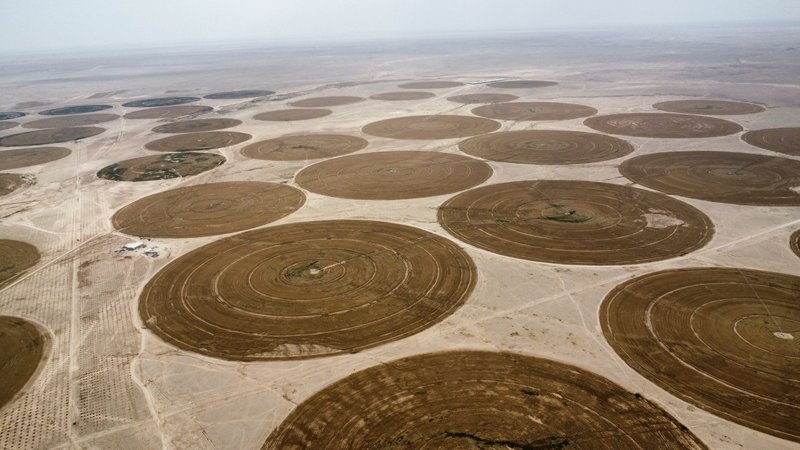
Three of the five are in Jazan, where small agricultural towns sit close together in the southwest. The country’s huge cities are a product of oil money and open desert. These small ones sit in a very different Saudi Arabia.
Why Saudi city sizes don’t match across sources
Ask different websites for the area of the same Saudi city and you can get answers an order of magnitude apart. “City” has at least three definitions in Saudi data.
- Urban area. The built-up footprint. This is what the table above uses.
- Municipality (baladiyah). The administrative boundary, which can include large stretches of undeveloped land.
- Governorate (muhafazah). The wider district a city serves. This is the largest of the three, and it’s often what a careless source reports.
The clearest case is Al Kharj, which one travel-insurance site lists at 19,790 km². That is a governorate-scale figure, not a city. The same site gives Jeddah as 1,600 km², which doesn’t line up with the urban-area numbers other compilers use. Each figure can be right under its own definition. They answer different questions.
At the top of the hierarchy, Saudi Arabia’s 13 provinces are enormous. The smallest, Al-Bahah, covers about 12,000 km², more than a thousand times the area of Safwa.
For official Saudi figures, the national statistics agency GASTAT publishes the 2022 census results. Check which boundary level a table uses before comparing numbers.
Small vs large: how Riyadh compares
Riyadh’s urban area is about 1,973 km² on the same UN basis, roughly 762 sq mi. Divide that by Safwa’s 10 km² and you get about 197. Against the 11 km² towns it’s about 179.
Put another way, Safwa’s built-up area would fit inside Riyadh almost two hundred times.
If you’re building a quiz or a school project, state the definition you used. “Smallest city in Saudi Arabia” has a clean answer only once you’ve said what you mean by city, and on the urban-area definition that answer is Safwa.


