Table of Contents
- TLDR
- The languages at a glance
- Pulaar
- Soninke
- Wolof
- Zenaga: the Berber language nearly gone
- Bambara, Serer and Tamasheq
- Is Hassaniya indigenous?
- How arabisation reshaped language policy
- Schools today: the 2022 law and the OLAN movement
- Why the speaker numbers don’t agree
TLDR
Mauritania’s indigenous languages are not just “Arabic and French.” Pulaar, Soninke and Wolof are the three constitutionally recognized national languages, alongside Arabic. Zenaga, Bambara, Serer and Tamasheq are smaller minority languages with no constitutional status. Zenaga, a Berber language, has about 3,500 speakers and is severely endangered. Hassaniya, an Arabic dialect, is the everyday language of most Mauritanians.
The languages at a glance
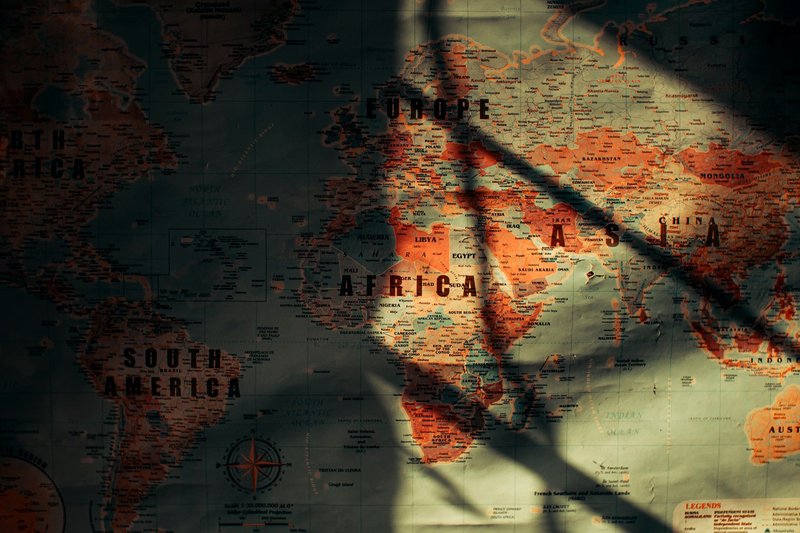
Mauritania has about five million people and a language map that splits roughly along the Senegal River. North of it, Hassaniya Arabic dominates. In the south, along the river valley, Pulaar, Soninke and Wolof take over. Speaker shares below are approximate and come from the competing estimates explained further down.
| Language | Family | Main region | Estimated speakers | Legal status |
|---|---|---|---|---|
| Hassaniya | Arabic (Semitic) | Nationwide, strongest in the north and east | About 82–89% of the population | Spoken form of Arabic, the official language |
| Pulaar | Niger-Congo (Atlantic) | Senegal River valley | About 6–7% | National language (Article 6) |
| Soninke | Niger-Congo (Mande) | Southern border areas, Guidimakha and Gorgol | About 5% | National language (Article 6) |
| Wolof | Niger-Congo (Atlantic) | Far southwest, near the river and Rosso | Around 1% | National language (Article 6) |
| Zenaga | Berber (Afroasiatic) | Southwest | About 3,500 | None. Severely endangered per UNESCO |
| Bambara | Niger-Congo (Mande) | South and southeast | No reliable figure | None |
| Serer | Niger-Congo (Atlantic) | Small southern communities | No reliable figure | None |
| Tamasheq | Berber (Afroasiatic) | Eastern borderlands near Mali | No reliable figure | None |
The percentages add up to more than 100% in some sources because many Mauritanians speak two or three languages. A Soninke speaker in Kaédi will often also know Pulaar, Hassaniya and French.
Pulaar
Pulaar is the Fula language as spoken along the Senegal River. It’s the largest of the three recognized national languages, spoken by the Haalpulaar’en, who live in towns and villages from Rosso upriver through Boghé and Kaédi toward the Malian border. Most estimates put it at 6–7% of the population, which is a few hundred thousand people.
It’s also the language with the most visible written life among the southern languages, with community literacy programs, radio broadcasts and a Latin-script orthography. If you travel the river valley, Pulaar is what you’ll hear in the market.
Soninke
Soninke belongs to the Mande family, which makes it a distant cousin of Bambara but unrelated to Pulaar. Its speakers live mostly in the south and southeast, in the Guidimakha region and around Gorgol, Assaba and the Hodh regions. About 5% of Mauritanians speak it.
Soninke has an unusual reach for its size. The Soninke people trace themselves to the medieval Ghana Empire, and migrant communities carry the language to France and across West Africa. Many families in Mauritania’s south have a relative abroad who speaks it daily in Paris or Dakar.
Wolof
Wolof is the smallest of the three national languages inside Mauritania, at roughly 1% of the population, and it sits in the far southwest near the Senegalese border. Its status doesn’t match its local size. Across the border, Wolof is Senegal’s dominant language, and that regional weight is part of why it carries national-language recognition in Mauritania.
Zenaga: the Berber language nearly gone
Zenaga is the one indigenous language here that’s close to disappearing. About 3,500 people speak it, mostly in the southwest, and UNESCO’s Atlas of the World’s Languages in Danger lists it as severely endangered. In a severely endangered language, the grandparents speak it, the parents understand it, and the children don’t use it.
It’s a Berber language, and it’s the last survivor of the Sanhaja Berber speech that once covered the western Sahara. The reason for its collapse is historical rather than mysterious. The Char Bouba war, fought in the 17th century, pitted Berber groups against the Arab Beni Hassan tribes. The Berbers lost. The winners’ language, Hassaniya, became the prestige tongue, and the defeated Zenaga-speaking groups shifted to it over generations. Zenaga survives in a few communities that kept it while everyone around them changed.
No law protects it. It’s not a national language under Article 6, it has no school presence, and no media broadcast in it. Its main documentation comes from linguists.
Bambara, Serer and Tamasheq
These three get the least attention, and no official statistics exist for them.
- Bambara is a Mande language related to Soninke, spoken in small communities in the south and southeast. It’s far bigger in Mali, where it works as a lingua franca.
- Serer is an Atlantic language like Pulaar and Wolof. Its heartland is Senegal, and Mauritania has only small Serer communities in the south.
- Tamasheq is the Tuareg Berber language, spoken by small groups in the east close to the Malian border. It’s a cousin of Zenaga, though speakers of one can’t understand the other.
None has constitutional recognition. Their survival depends on cross-border communities rather than on anything Mauritania does.
Is Hassaniya indigenous?
Arabic-speaking readers often ask this, and the answer depends on what “indigenous” means.
Hassaniya is native to Mauritania in every practical sense. It’s the mother tongue of most of the population, including the Bidan (often called “White Moors”) and the Haratin. It developed locally after Arab Beni Hassan tribes moved into the region and absorbed Berber vocabulary and grammar from Zenaga. No one speaks it the same way in Cairo or Damascus.
It isn’t indigenous in the pre-Arab sense. Berber languages and the southern African languages were there first. Legally, Hassaniya has no separate status. Article 6 names Arabic as the official language, and Hassaniya counts as its spoken everyday form, which is why it doesn’t appear on the list of national languages.
How arabisation reshaped language policy
Language policy in Mauritania has been a political fight since independence, and the timeline explains most of today’s tension.
- 1959: French gets official status under the constitution drafted before independence.
- 1966: Making Arabic compulsory in secondary schools triggers protests from Black Mauritanian students and civil servants, who see it as a threat to their jobs and identity.
- 1980: Arabic becomes the only official language, and arabisation of schools and administration accelerates.
- 1991: A new constitution is adopted. Article 6 names Arabic, Pulaar, Soninke and Wolof as national languages and keeps Arabic as the sole official one.
That last compromise is the source of the current gap. “National language” is symbolic recognition. It doesn’t oblige the state to use, teach or publish in those languages. Official documents, courts and parliament work in Arabic, with French still common in business and higher education.
Schools today: the 2022 law and the OLAN movement
The 2022 education law requires students who don’t speak Arabic to take Arabic courses. Supporters see it as a way to unify the school system. Critics in Pulaar, Soninke and Wolof communities see another step in the arabisation that began in the 1960s, because national languages receive no matching place in the curriculum.
The OLAN movement campaigns on that point. It argues the national languages should move beyond symbolic status and become official languages, with real use in schools and administration. The state has not adopted that position. For now, a child in Kaédi who grows up speaking Pulaar studies mainly in Arabic or French.

Why the speaker numbers don’t agree
Look up any language in Mauritania and you’ll find different percentages. A full list of the languages spoken in Mauritania, with speaker shares for each, makes the spread easy to compare. The main reasons:
- No census data. The 2013 census didn’t publish mother-tongue figures, so every estimate is built on something else.
- Different sources. Ethnologue’s 2013 figures give Hassaniya 89%, Pulaar 7% and Soninke 5%. Joshua Project gives Hassaniya 82%, Pulaar 6.3% and Soninke 5.1%. The Hassaniya gap alone is seven points.
- Ethnicity versus language. Some estimates count ethnic groups and assume they speak the matching language. That breaks down when Haratin speak Hassaniya as a first language, or when Zenaga-descended families have switched fully to Arabic.
- Multilingualism. People report first language, second language or “language I use daily” depending on who’s asking.
- Politics. Language and ethnicity are sensitive topics, and official statistics on them are scarce.
The CIA World Factbook lists the main languages without a full breakdown, which is itself a sign of the data gap. Treat any figure for Bambara, Serer or Tamasheq as a guess, and read the Hassaniya, Pulaar and Soninke numbers as ranges rather than facts.