TLDR
- Official language: Spanish, spoken by roughly 99% of the population.
- Native languages: Colombia’s government recognizes 68: 65 indigenous languages, 2 creoles (Palenquero and San Andrés Creole) and Romani.
- English: Spoken as a creole on San Andrés, Providencia and Santa Catalina, and as a second language in tourism and business.
- For travelers: Spanish is all you need on the mainland. Learn a few words of the local variety and you’ll get further.
Contents
- How many languages are spoken in Colombia?
- Spanish, the official language of Colombia
- Colombian Spanish dialects and slang
- Indigenous languages of Colombia
- Palenquero and San Andrés Creole
- Sign languages and Romani
- Which language where: a quick table
- Does Venezuelan migration change the picture?
- Protection and revitalization
How many languages are spoken in Colombia?
Spanish is spoken by about 99% of Colombians. Alongside it, the country has 65 indigenous languages, two creoles and Romani, which the government groups together as native languages. English is also used on the Caribbean islands of San Andrés and Providencia.
Every source gives a different number, and none of them is necessarily wrong. They count different things.
| Figure | What it counts | Source type |
|---|---|---|
| 37 | Languages reported by respondents in the 2005 census | National census |
| 65 | Indigenous (Amerindian) languages | Government and academic lists |
| 68 | Native languages: 65 indigenous, 2 creoles, Romani | Colombian Ministry of Culture |
| 71 | Living languages, including Spanish and sign language | Linguistic catalogs such as Ethnologue |
| 83 to 101 | Wider counts that add extinct or nearly extinct languages and split dialect clusters | Academic surveys, varies by author |
Census figures run low because people answer the language question based on what they speak at home, and many communities now speak mostly Spanish. Linguists’ counts run high because they decide differently where one language ends and a dialect begins. If a page gives you one figure with no date and no source, treat it with suspicion.
Spanish, the official language of Colombia
Article 10 of the 1991 Constitution makes Spanish the official language of the country. The same article says indigenous languages are also official within their own territories, and that communities with their own linguistic traditions are entitled to bilingual education. So Spanish is not quite the only official language once you look at how those rules apply in specific regions and communities.
Colombian Spanish has a reputation, and it’s earned. Bogotá’s variety is often described as among the clearest in Latin America: little swallowing of consonants, a measured pace, and a strong preference for formal address. Plenty of learners start here for that reason.
Colombian Spanish dialects and slang
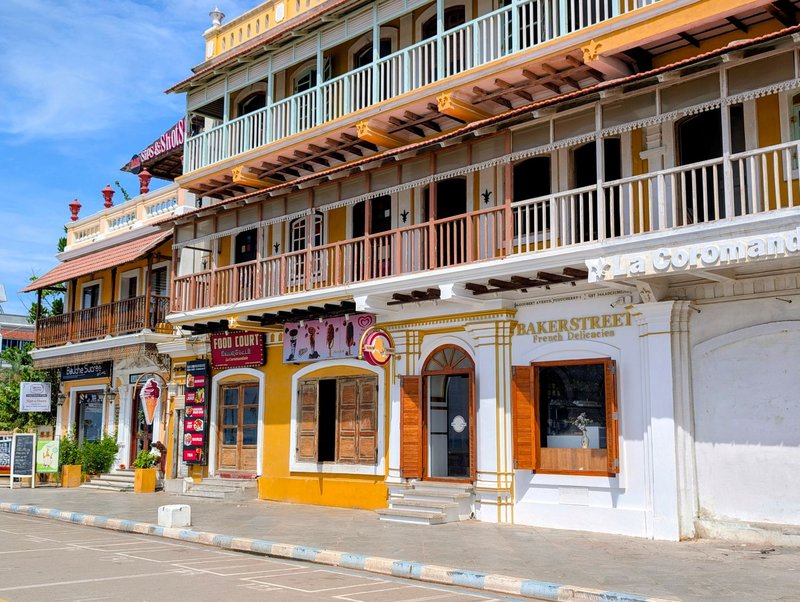
Colombia is mountainous, and its Spanish split along those mountains. Four regional varieties cover most of what you’ll hear.
Bogotá and the Andean highlands (rolo). Clear vowels and consonants. Friends often address each other as usted, the formal “you,” which surprises visitors who expect warmth to mean tú. Locals call themselves rolos, and a tinto is a small black coffee, not a red wine.
The Caribbean coast (costeño). Fast, loud and musical. Final s sounds often disappear, so los amigos comes out as something close to “lo amigo.” Cartagena, Barranquilla and Santa Marta share the accent but each has its own slang.
Medellín and the coffee region (paisa). Slower and sing-song. Speakers use vos alongside or instead of tú, and parce (friend, from parcero) has spread across the country from Medellín. Expect lots of diminutives: un momentico, ahorita, tintico.
The Pacific coast. Afro-Colombian communities in Chocó, Buenaventura and Tumaco speak a rhythmic Spanish with West African influence in vocabulary and cadence.
Some words work almost everywhere:
- Chévere and bacano: great, cool.
- Parce or parcero: buddy.
- ¿Quiubo?: what’s up (short for ¿qué hubo?).
- De una: sure, right away.
- Vaina: a thing, a situation. Used constantly, particularly on the coast.
Indigenous languages of Colombia
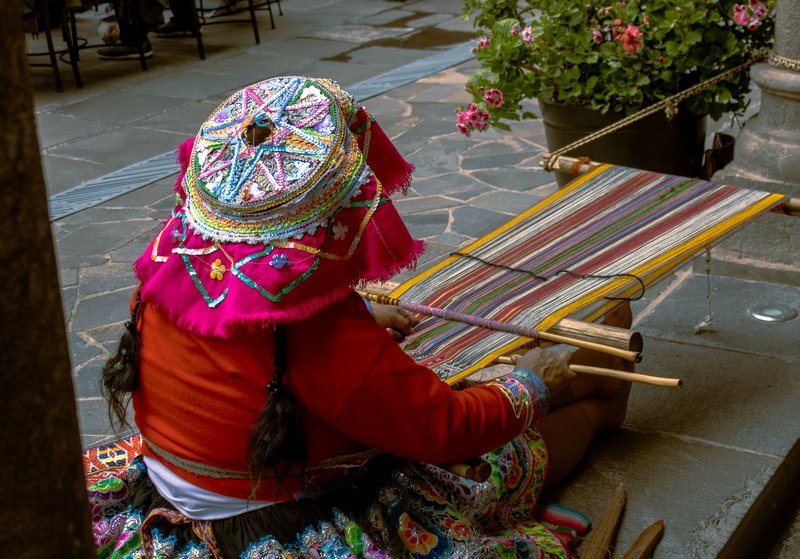
The 65 indigenous languages belong to several families, including Chibchan, Arawakan, Cariban, Tucanoan and Barbacoan, plus a number of isolates with no known relatives. Many have only a few hundred speakers. A few have tens of thousands. The speaker numbers below are rough estimates, and sources disagree. For a longer reference with endonyms and regional detail, see the complete list of indigenous languages in Colombia.
| Language | Where | Approximate speakers |
|---|---|---|
| Wayuunaiki | La Guajira, on the Venezuelan border | The largest indigenous language in the country, well over 100,000 speakers in Colombia |
| Nasa Yuwe (Páez) | Cauca and Huila departments | Tens of thousands, commonly estimated between 60,000 and 100,000 |
| Embera (several varieties) | Chocó, Risaralda, Antioquia | Tens of thousands across its varieties |
| Sikuani | Eastern plains (Llanos), Vichada and Meta | Roughly 20,000 |
| Misak (Namtrik) | Cauca highlands near Silvia | Roughly 20,000 |
| Arhuaco (Ika) | Sierra Nevada de Santa Marta | Roughly 10,000 to 15,000 |
| Kogui (Kogi) | Sierra Nevada de Santa Marta | Roughly 10,000 |
Wayuunaiki is the one you’re most likely to encounter as a traveler. The Wayuu people run much of the tourism and craft economy in the Guajira desert, and you’ll hear the language in the markets of Uribia and Riohacha. It belongs to the Arawakan family and crosses the border into Venezuela, where the Wayuu population is also large.
Nasa Yuwe is spoken in the Cauca highlands, where the Nasa people have built their own schools and radio stations around it. It’s often cited as a case of a language kept alive by organized community effort.
Kogui and Arhuaco are Chibchan languages of the Sierra Nevada de Santa Marta, the coastal range that rises to nearly 5,800 meters a short distance from the Caribbean. Both groups limit contact with outsiders by choice, and visits are controlled by the communities themselves.
Many of the smaller languages, especially in the Amazon, have fewer than a thousand speakers. The Ministry of Culture and organizations such as UNESCO’s World Atlas of Languages classify a large share of them as endangered, and a handful as close to disappearing.
Palenquero and San Andrés Creole
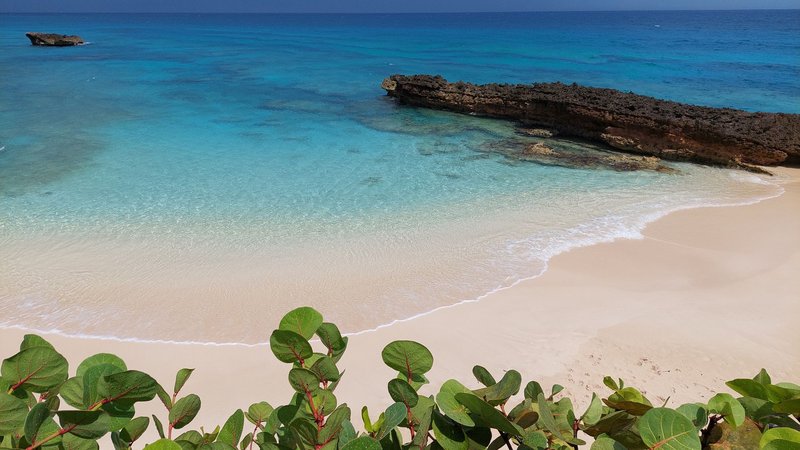
Colombia has two creole languages, and both are recognized as native languages.
Palenquero is spoken in San Basilio de Palenque, a village near Cartagena founded by escaped enslaved Africans in the 17th century. It’s a Spanish-based creole with a large share of vocabulary from Kikongo, a Bantu language of Central Africa, which makes it unusual among the creoles of the Americas. UNESCO inscribed the cultural space of Palenque de San Basilio as a Masterpiece of the Oral and Intangible Heritage of Humanity in 2005. Speakers are estimated at a few thousand, and the language is taught in the village school.
San Andrés Creole (Islander Creole English) is spoken by the Raizal people of San Andrés, Providencia and Santa Catalina. It’s an English-based creole shaped by the British and Puritan settlement of the islands and by the Caribbean around them, and it sounds closer to Jamaican or Nicaraguan Caribbean speech than to the English of London or New York. A visitor with standard English will catch some of it but not all. Many islanders also speak Spanish and standard English.
Sign languages and Romani
Colombian Sign Language (Lengua de Señas Colombiana, LSC) is the national sign language and has legal recognition. A separate sign language is used by the deaf community on San Andrés.
Romani, the language of the Roma, is the 68th native language on the government’s list. Colombia’s Roma population, known as Rrom, is small and concentrated in a few cities. Their language is Vlax Romani, a variety of Romani, and it is not a creole despite sometimes being listed as one.
Which language where: a quick table
| Region | Main languages |
|---|---|
| Bogotá and the Andes | Spanish (rolo variety); Nasa Yuwe and Misak in Cauca |
| Caribbean coast | Costeño Spanish; Palenquero near Cartagena |
| San Andrés and Providencia | San Andrés Creole, Spanish, English |
| La Guajira | Wayuunaiki, Spanish |
| Sierra Nevada de Santa Marta | Kogui, Arhuaco, Spanish |
| Medellín and coffee region | Paisa Spanish; Embera in nearby highlands |
| Pacific coast | Pacific Spanish; Embera and Afro-Colombian communities |
| Eastern plains | Sikuani and other Llanos languages |
| Amazon | Dozens of small languages, many with a few hundred speakers |
Does Venezuelan migration change the picture?
Not much. More than two million Venezuelans have arrived in Colombia since 2015, and they speak Spanish. The effect is on accent and vocabulary in border cities, Bogotá and Medellín, not on the language map. The one place where it matters linguistically is La Guajira, where Wayuu communities live on both sides of the border.
Protection and revitalization
Colombia’s Law 1381 of 2010 is the Native Languages Law. It recognizes indigenous languages, the two creoles and Romani as part of the national heritage and commits the state to support their use in education, media and public services. In practice, the funding is thin and the results are uneven. Language survival still depends mostly on communities: Nasa radio, Palenquero classes, and Wayuu-run schools.
For a visitor, the practical takeaway is simple. Spanish will carry you through every city, airport and tourist route in Colombia. The other languages are there, but you meet them by going to specific places: a Palenque village, the Guajira desert, an island in the Caribbean. A greeting in the local language, even a clumsy one, is received better than any amount of perfect Spanish.