
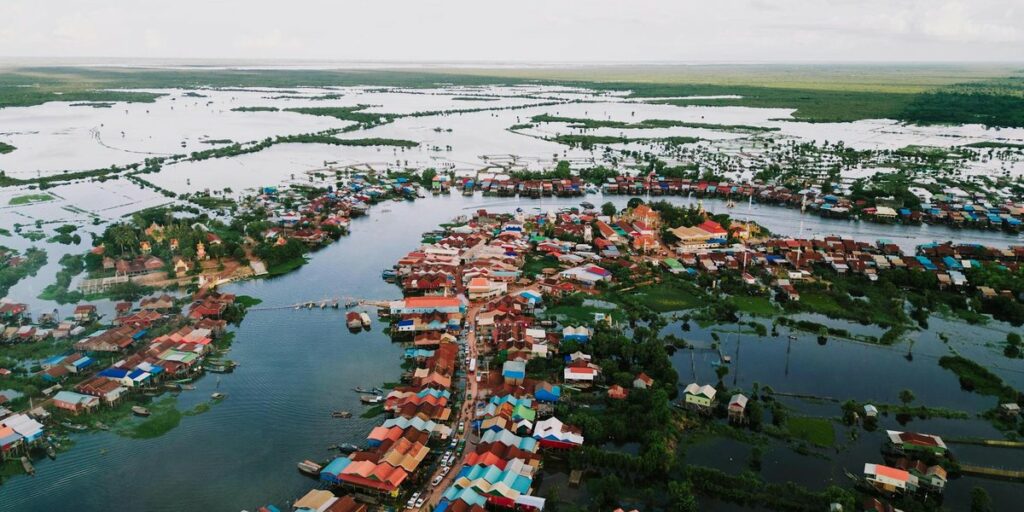
Cambodia looks ethnically simple on paper. Around 90% of the population is Khmer, and that number is so dominant it tends to flatten the whole conversation. But the remaining slice holds a Muslim seafaring people with their own script, more than twenty indigenous highland tribes scattered across the northeast, and trading communities that have shaped Phnom Penh’s economy for centuries.
This guide walks through every group: who they are, where they live, what they believe, and the pressures reshaping their lives right now. The land-rights fights in Ratanakiri and Mondulkiri are not history. They are happening this decade.
Table of Contents
- The Demographic Snapshot
- The Khmer Majority
- The Cham: Cambodia’s Muslim Minority
- Chinese-Cambodians
- The Vietnamese Community
- The Khmer Loeu: Indigenous Highlanders
- Where the Groups Live
- The Pressures Reshaping Minority Life
- Experiencing These Cultures Ethically
The Demographic Snapshot
Census figures in Cambodia come with caveats. Many indigenous and minority communities are undercounted, and the Vietnamese population in particular is politically fraught to measure. With that in mind, here’s the working picture most sources agree on.
| Group | Share of population | Main regions | Religion | Language family |
|---|---|---|---|---|
| Khmer | ~90–95% | Nationwide, esp. central lowlands | Theravada Buddhism | Austroasiatic (Mon-Khmer) |
| Cham | ~1.2–2% | Kampong Cham, Kampong Chhnang, coast | Islam | Austronesian |
| Chinese-Cambodian | ~1% | Phnom Penh, towns | Buddhism, Taoism, folk | Sino-Tibetan |
| Vietnamese | ~0.5–5%* | Tonle Sap, southeast, Phnom Penh | Buddhism, Catholicism | Austroasiatic (Vietic) |
| Khmer Loeu (indigenous) | ~1–2% combined | Ratanakiri, Mondulkiri, Stung Treng | Animism | Austroasiatic & Austronesian |
*The Vietnamese figure swings wildly depending on the source and the political moment. Official census numbers run low; independent estimates run far higher.
The thing to notice: these groups don’t all belong to the same language family or even the same broad ethnolinguistic origin. The Cham are Austronesian, linguistic cousins of Malays and Indonesians. Some highland tribes are too. That’s a very different lineage from the Khmer majority. Zoom out to the wider region and the same patterns repeat across borders, as the full list of ethnic groups in Southeast Asia makes clear.
The Khmer Majority
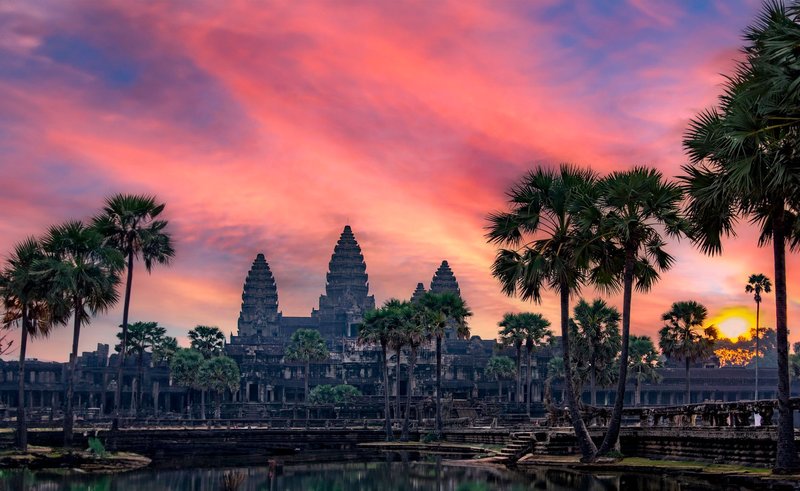
The Khmer are the people who built Angkor. The empire that ran much of mainland Southeast Asia from the 9th to the 15th century was theirs, and that legacy sits at the center of national identity. When Cambodians say “our culture,” the default referent is Khmer culture: Theravada Buddhism, the Khmer language and its rounded script descended from South Indian Brahmi, classical dance, and the food.
They occupy the fertile lowlands around the Mekong and the Tonle Sap, which is exactly where you’d expect the agricultural majority of a rice-growing society to settle. The Khmer language is Austroasiatic, part of the same broad family as Vietnamese and Mon, though the everyday vocabulary borrows heavily from Sanskrit and Pali through centuries of Indian religious influence.
What’s worth understanding is how the Khmer Rouge weaponized this majority identity. The regime’s vision of a pure agrarian Khmer nation treated ethnic and religious minorities as contaminants. That ideology is the through-line connecting almost every minority story in this article.
The Cham: Cambodia’s Muslim Minority
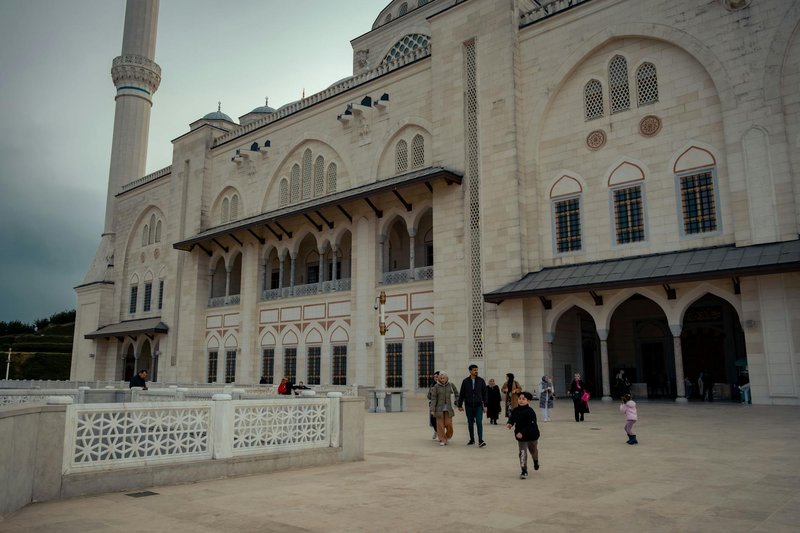
The Cham are the most distinct group in Cambodia, and their history is a long fall from power. They once ruled Champa, a maritime kingdom along the coast of present-day central and southern Vietnam. After centuries of war with the Vietnamese, Champa collapsed, and waves of Cham refugees moved west into Cambodia from roughly the 15th century onward.
Most Cambodian Cham are Sunni Muslims, which makes them religiously unique in an overwhelmingly Buddhist country. You’ll find their villages clustered along the rivers in Kampong Cham and Kampong Chhnang, often built around a mosque, with fishing and small-scale trade as economic backbones. They speak Cham, an Austronesian language written historically in its own script, though Arabic and Khmer have heavily influenced religious and daily life.
The Khmer Rouge singled them out with particular brutality. The regime banned the Cham language, forced people to eat pork, destroyed mosques, and executed religious leaders. Estimates of Cham deaths during the regime run into the hundreds of thousands, and the UN-backed Khmer Rouge Tribunal explicitly recognized the persecution of the Cham as genocide in its 2018 verdict. The community rebuilt after 1979, and today Cham Muslim life is visible again, with mosques and Islamic schools across the country.
Chinese-Cambodians
Chinese traders have been part of Cambodian commerce for centuries, and by the mid-20th century the Chinese-Cambodian community was the dominant force in urban business, banking, and import-export. Many arrived from southern China in distinct dialect groups, Teochew being the largest, followed by Cantonese, Hokkien, Hainanese, and Hakka.
Two waves of catastrophe hit them. First the Khmer Rouge, which targeted urban “capitalists” and ethnic Chinese with savage efficiency; the Chinese population was decimated during the regime years. Then, after 1979, the new Vietnamese-backed government restricted Chinese cultural and economic activity for a decade.
The community’s rebound since the 1990s has been striking. Chinese New Year is widely celebrated, Chinese-language schools have reopened, and ethnic Chinese families are again prominent in Phnom Penh’s business class. A large share of Chinese-Cambodians have intermarried with Khmer over generations, so the lines blur in a way they don’t for the Cham or the highland tribes.
The Vietnamese Community
The Vietnamese are Cambodia’s most politically sensitive minority, and the reasons are tangled up in history. Centuries of territorial conflict, French colonial labor policies that brought Vietnamese workers into Cambodia, and the Vietnamese military occupation of the 1980s all feed a current of resentment that politicians have repeatedly exploited.
Many ethnic Vietnamese live in floating villages on the Tonle Sap lake and along the rivers of the southeast, working as fishers. Here’s the cruel catch: a significant number lack Cambodian citizenship despite being born in the country, often classified as foreigners or left stateless. That status blocks them from owning land, accessing services, or sometimes even attending school. The floating-village existence on the Tonle Sap isn’t only picturesque tradition; for many families it reflects an inability to settle legally on land.
The Khmer Rouge expelled or murdered Vietnamese residents, and an estimated 100,000-plus fled or were killed. Cross-border violence against ethnic Vietnamese civilians continued sporadically even after the regime fell.
The Khmer Loeu: Indigenous Highlanders
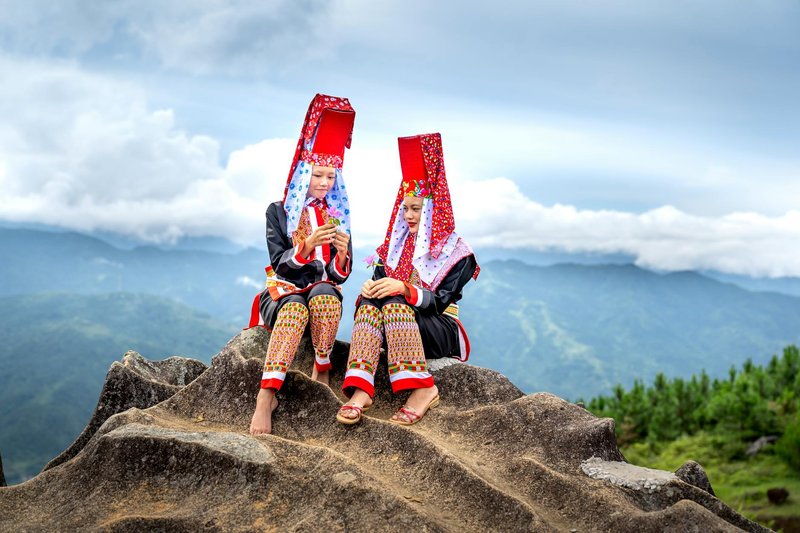
“Khmer Loeu” translates roughly to “upper Khmer” or “highland Khmer,” a catch-all term coined in the 1960s for the indigenous peoples of Cambodia’s northeastern hills and forests. It’s a convenient label, but it papers over real diversity: these are more than twenty distinct groups with separate languages, beliefs, and customs.
Unlike the Buddhist lowland Khmer, most highland groups are traditionally animist. They believe spirits inhabit forests, rivers, mountains, and rice. Their economies historically centered on rotational swidden (slash-and-burn) farming, hunting, and forest gathering, a way of life that depends entirely on access to communal forest land. That dependence is exactly what’s now under threat.
The major groups include:
- Bunong (Phnong) — the largest highland group, concentrated in Mondulkiri, known for elephant-keeping traditions.
- Tampuan — centered in Ratanakiri, with a strong animist spiritual culture and distinctive burial customs.
- Jarai — straddling the Cambodia-Vietnam border, an Austronesian-speaking people (linguistic relatives of the Cham), known for elaborate carved cemetery sculptures.
- Kreung — a Ratanakiri group historically known for the “love hut” custom, where adolescents build small huts to court partners.
- Brao (Proue) — living near the Lao border in Ratanakiri and Stung Treng.
Beyond these, the highland mosaic includes the Kuy, Stieng, Kavet, Kachok, Lun, Mel, Por, and others. Linguistically they split between Austroasiatic (Bunong, Tampuan, Kuy, Stieng) and Austronesian (Jarai, Rade), which means the highlands are not one cultural bloc but two ancient lineages living side by side. For a fuller breakdown of these tongues by family, region, and speaker count, see the complete list of indigenous languages in Cambodia.
Where the Groups Live
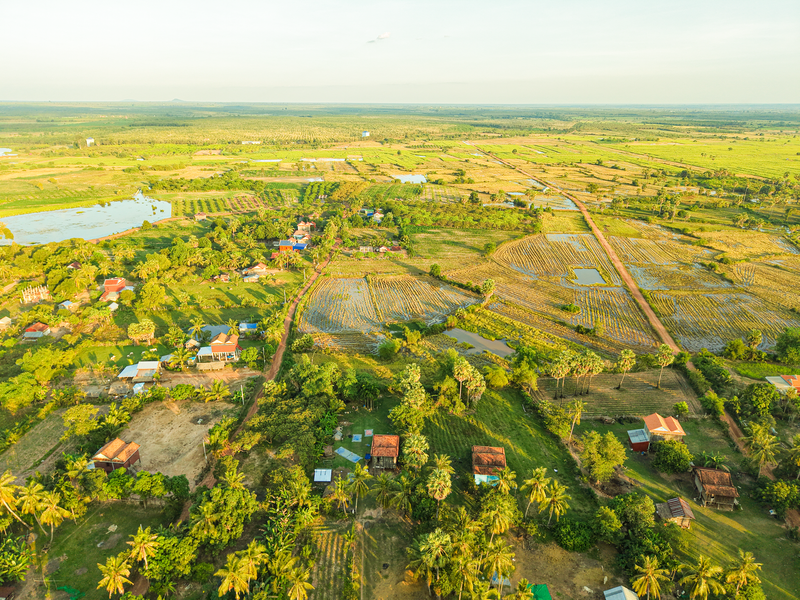
Geography maps onto ethnicity in Cambodia with unusual clarity:
- Central lowlands (Mekong/Tonle Sap basin): Khmer majority, plus the floating Vietnamese fishing communities on the Tonle Sap.
- Kampong Cham and Kampong Chhnang: dense Cham Muslim riverside villages.
- Phnom Penh and provincial towns: the urban Chinese-Cambodian commercial population.
- Ratanakiri (far northeast): Tampuan, Jarai, Kreung, Brao, and other highland groups.
- Mondulkiri (east): Bunong heartland, with the country’s surviving elephant-keeping culture.
- Stung Treng and the Lao border zone: Brao, Kavet, and related groups.
The northeastern provinces of Ratanakiri and Mondulkiri are the indigenous core. They’re also the least densely populated and, until recently, the most forested, which is precisely why they’ve become flashpoints.
The Pressures Reshaping Minority Life
The land-rights crisis is the defining issue for Cambodia’s indigenous peoples right now. Through the 2000s and 2010s, the government granted enormous Economic Land Concessions, leasing tracts of forest to agribusiness companies for rubber, cassava, and other plantation crops. A great deal of that land was indigenous communal territory, farmed and revered for generations but rarely held under formal title.
Cambodian law does include a path for indigenous communities to register collective land ownership, but the process is slow, bureaucratic, and expensive, and only a fraction of eligible communities have completed it. Human rights organizations including Amnesty International have documented how deforestation and concession deals have stripped Bunong, Tampuan, and other groups of the forests their livelihoods and spiritual practices depend on.
Language and culture are eroding alongside the land. As highland children attend Khmer-language schools and young people migrate for wages, fewer fluent speakers of languages like Bunong and Tampuan remain. Some groups have only a few thousand speakers left, putting them in the danger zone for language extinction. The same erosion is playing out across the border, where Thailand’s hill communities face parallel assimilation pressures, as the survey of Thailand’s ethnic groups details. Several NGOs and the UNESCO framework on safeguarding intangible cultural heritage now support mother-tongue education and documentation projects, but the trend lines are not encouraging.
Assimilation pressure runs through all of it. Marrying into the Khmer majority, converting to Buddhism, adopting Khmer dress and language, all of it carries social and economic advantages. The result is a slow blending that, group by group, thins out the distinct cultures this article describes.
Experiencing These Cultures Ethically
If you’re traveling and want to encounter this diversity rather than just read about it, a few principles keep it respectful:
Go through community-based and indigenous-run tourism rather than operators who treat villages as photo backdrops. In Mondulkiri, several Bunong-led elephant sanctuaries let you walk with elephants in forest rather than ride them, and the money stays in the community. In Ratanakiri, locally guided treks and homestays put income directly into Tampuan and Kreung hands.
Treat sacred sites with the same care you’d want for your own. Highland cemeteries, spirit forests, and burial sculptures are not tourist attractions, and some are off-limits to outsiders entirely. Ask first.
And remember that the Cham villages along the rivers, the Chinese temples in Phnom Penh, and the floating Vietnamese communities on the Tonle Sap are all part of the same living mosaic. Cambodia is far more than its temples, and the people are the reason.