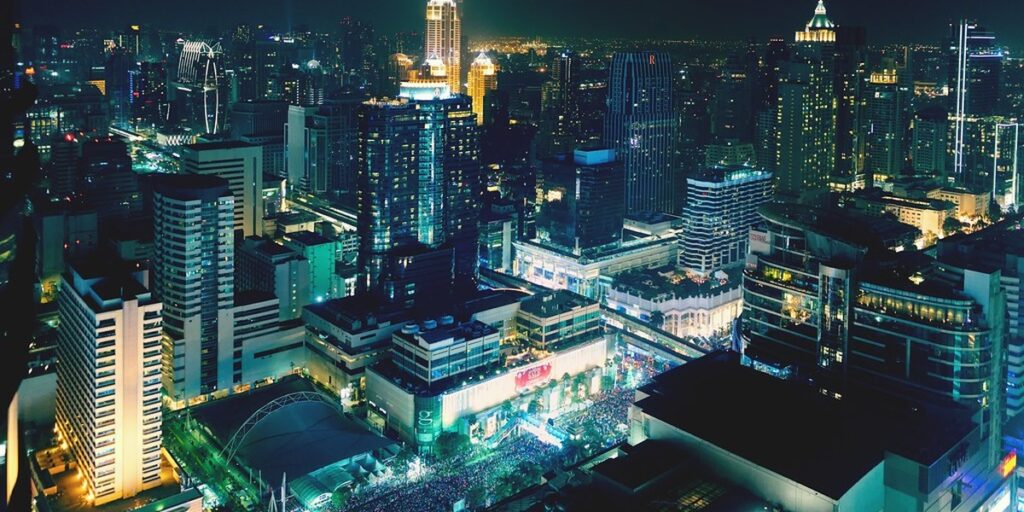
Thailand’s landscapes — from northern highlands and central plains to southern islands — are home to a wide tapestry of communities with distinct histories, languages, and cultural practices. Exploring these groups helps explain regional traditions, festivals, and how modern Thailand reflects centuries of migration and exchange.
There are 20 Thailand Ethnic Groups, ranging from Akha to Yao (Mien). For each group, the list includes Region(s),Primary language(s),Population (est.) — you’ll find these details below.
How reliable are the population estimates for these ethnic groups?
Population estimates combine national census data, academic surveys, and NGO reporting, but methods vary by source and some communities are undercounted or mobile. Treat the figures as best available approximations rather than exact counts, and check source notes in the list below for margins or date references.
Are the traditional languages still spoken, and where can I hear them?
Many groups still use their ancestral languages in homes and villages, especially in rural areas and community events; in towns younger generations may shift to Thai. If you want to hear the languages, look for local festivals, community radio programs, or recordings from linguistic projects linked in the entries below.
Thailand Ethnic Groups
| Name | Region(s) | Primary language(s) | Population (est.) |
|---|---|---|---|
| Central Thai | Central plains, Bangkok and nearby provinces | Central Thai (Thai) | 20,000,000 |
| Isan (Lao) | Northeastern Thailand (Isan provinces) | Isan (Lao dialects), Thai | 22,000,000 |
| Northern Thai (Lanna/Tai Yuan) | Chiang Mai, Chiang Rai, Lampang, Lamphun and northern highlands | Northern Thai (Lanna/Tai Yuan), Thai | 6,500,000 |
| Southern Thai | Southern peninsula provinces (Phuket, Surat Thani, Nakhon Si Thammarat, etc.) | Southern Thai dialects, Thai | 9,000,000 |
| Thai Chinese | Bangkok, major trading towns, nationwide | Thai, Teochew, Hokkien, Cantonese | 7,000,000 |
| Malay (Pattani Malay) | Deep south: Pattani, Yala, Narathiwat and southern border districts | Kelantan-Pattani Malay, Thai | 3,000,000 |
| Khmer (Thai Khmer) | Eastern and northeastern provinces (Surin, Buriram, Sisaket) | Khmer, Thai | 1,600,000 |
| Mon | Central and parts of southern Thailand (historic centers and communities) | Mon, Thai | 350,000 |
| Sgaw Karen | Western and northern border provinces, refugee settlements | Sgaw Karen, Thai | 400,000 |
| Pwo Karen | Southern and western highlands, border regions | Pwo Karen languages, Thai | 200,000 |
| Hmong | Northern highlands (Chiang Mai, Chiang Rai, Nan) | Hmongic languages, Thai | 150,000 |
| Akha | Far-northern highlands (Chiang Rai, Mae Hong Son) | Akha, Thai | 80,000 |
| Lahu | Northern hill areas and border regions | Lahu, Thai | 70,000 |
| Lisu | Northern and northwestern highlands | Lisu, Thai | 60,000 |
| Yao (Mien) | Northern provinces and hill regions | Mienic languages, Thai | 90,000 |
| Shan (Tai Yai) | Northern border provinces (near Myanmar) | Shan, Thai | 500,000 |
| Burmese (Bamar) | Western border towns, Mae Sot, urban centers | Burmese, Thai | 1,000,000 |
| Kuy (Kuay) | Northeastern and central provinces near Cambodia (Surin, Buriram) | Kuy (Austroasiatic), Thai | 300,000 |
| Moken | Andaman coastal islands and coastal areas | Moken, regional Thai | 7,000 |
| Cham | Southern provinces and some central communities | Cham, Thai | 20,000 |
Images and Descriptions
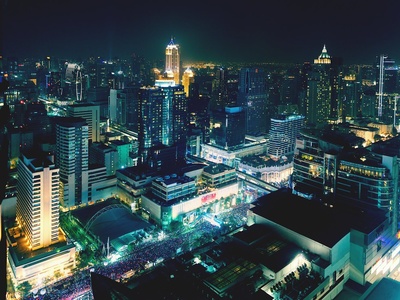
Central Thai
Dominant Tai group centered in Bangkok and central plains, speaking Central Thai. Historically linked to Ayutthaya and Bangkok kingdoms, they shape national culture, government, and media. Rice farming, Theravada Buddhism, and urban professions characterize their diverse lifestyles.

Isan (Lao)
People of Northeastern Thailand (Isan), culturally and linguistically close to Lao, speaking Isan (Lao dialects). Rice-growing communities, strong folk music (mor lam), and animist-Buddhist practices; many have migrated to cities for work while retaining Lao heritage.
Northern Thai (Lanna/Tai Yuan)
Inhabitants of the mountainous north around Chiang Mai and Chiang Rai, speaking Northern Thai (Lanna/Tai Yuan). Rich in Lanna history, temples, hill agriculture, unique textiles and festivals (Yi Peng); cultural identity blends Tai roots with highland influences.
Southern Thai
Southern Thai communities occupy peninsular provinces, speaking Southern Thai dialects and practicing Theravada Buddhism with local customs. Seafood, Malay-influenced cuisine, and boat-building are notable; coastal fishing, rubber and palm agriculture shape their economy and culture.
Thai Chinese
Ethnic Chinese in Thailand, long-established communities centered in Bangkok and trading towns, speaking Thai and varieties of Chinese (Teochew, Hokkien, Cantonese). Prominent in commerce, cuisine, festivals (Chinese New Year), and blending Confucian and Buddhist traditions into Thai society.
Malay (Pattani Malay)
Malay-Muslim communities in Thailand’s deep south (Pattani, Yala, Narathiwat), speaking Kelantan-Pattani Malay and practicing Sunni Islam. Distinct cultural traditions, cuisine, and political history; many maintain Malay identity alongside Thai citizenship and local autonomy movements.
Khmer (Thai Khmer)
Ethnic Khmer live mainly in eastern and northeastern provinces (Surin, Buriram), speaking Khmer and Thai. They preserve Khmer temple traditions, rice-farming practices, and folk arts; many trace roots to ancient Angkorian kingdoms and contribute to regional cultural diversity.
Mon
Mon people have ancient historical presence in central and southern Thailand, speaking Mon and Thai. Early adopters of Theravada Buddhism, Mon influence shaped early Thai kingdoms; communities retain weaving, religious festivals, and distinct Mon temples.
Sgaw Karen
Sgaw Karen live mainly in western and northern border provinces and refugee camps, speaking Sgaw Karen and Thai. Known for distinct dress, drum dances, animist and Christian practices; many engaged in upland agriculture and cross-border trade with Myanmar.
Pwo Karen
Pwo Karen inhabit southern and western border highlands, speaking Pwo Karen languages and Thai. Traditionally rice cultivators and artisans, they practice animist beliefs and Christianity; notable for woven textiles, distinctive clothing, and village-based social structures.
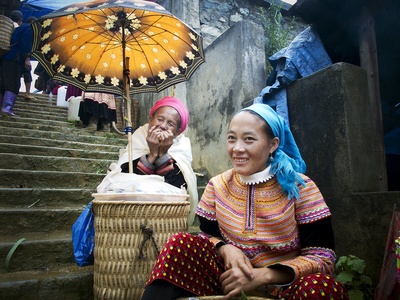
Hmong
Hmong hill-tribe people concentrated in northern highlands, speaking Hmong-Mien languages and Thai. Known for intricate embroidery, silverwork, and clan-based villages, many practiced swidden agriculture; historical migration from southern China shaped their cultural heritage and refugee histories.
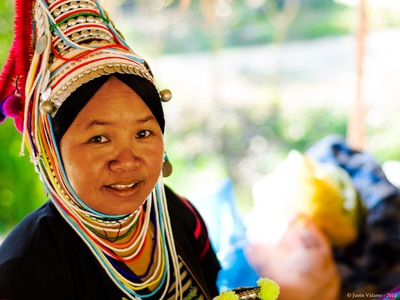
Akha
Akha live in far-northern highlands near Myanmar and Laos, speaking Akha and regional Thai. Living in stilted wooden villages, they practice animist rituals, distinctive headdress traditions, terrace farming, and maintain strong cross-border kinship networks.
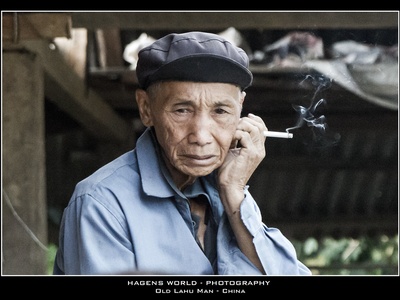
Lahu
Lahu communities inhabit northern Thailand’s hills, speaking Lahu languages and Thai. Skilled hunters and swidden farmers historically, many converted to Christianity; vibrant oral traditions, colorful dress, and seasonal festivals mark Lahu cultural life.
Lisu
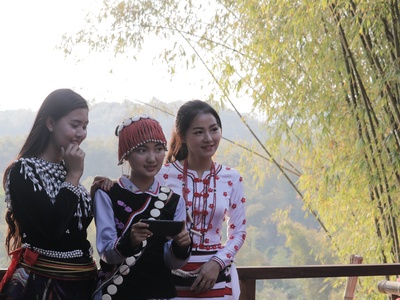
Lisu people live in northern and border highlands, speaking Lisu and Thai. Recognized for bright woven clothing, hill agriculture, and strong community chieftaincies, many practice Christianity and maintain lively music and dance traditions.
Yao (Mien)
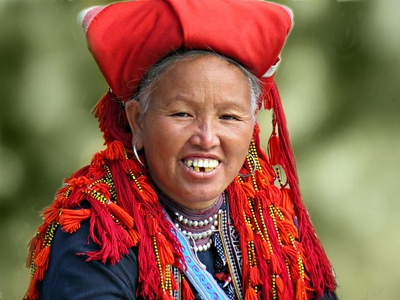
Yao (Mien) communities in northern provinces speak Mienic languages and Thai. Noted for embroidery, clan identity, herbal knowledge, and migration history from southern China; practices include shamanism and both subsistence farming and market work.
Shan (Tai Yai)
Shan (Tai Yai) are Tai people in northern border areas, speaking Shan and Thai. Closely related to Tai groups in Myanmar, they practice wet-rice agriculture, maintain Shan temples, unique festivals, and have long cross-border ties influencing trade and culture.
Burmese (Bamar)
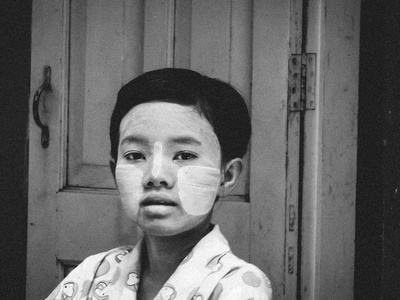
Bamar (Burman) communities, both long-established and recent migrants, live in western border towns and urban centers, speaking Burmese and Thai. Many work in trade or labor; cultural ties with Myanmar influence language, food, and religious practices.
Kuy (Kuay)
Kuy people live in northeastern and central provinces near Cambodia, speaking Kuy (Austroasiatic) and Thai. Traditionally skilled in elephant training, rice farming, and animist rituals, they maintain distinctive clan customs and Khmer-influenced cultural traits.
Moken
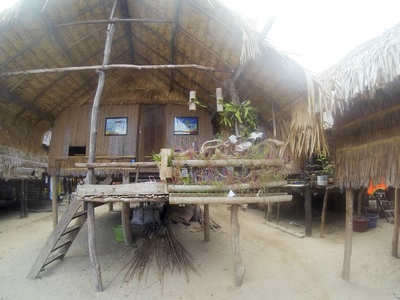
Moken ‘sea gypsy’ communities live along Andaman coasts and islands, speaking Moken and regional Thai. Traditionally nomadic maritime hunter-gatherers, they excel in boatcraft, diving, and marine knowledge, facing pressures from tourism and resettlement policies.
Cham
Cham Muslim communities, descendants of Champa migrants, live in southern and some central Thai areas, speaking Cham and Thai. They maintain Islamic faith, unique dress, boat-craft and rice-farming traditions, blending Malay and Austronesian cultural elements.