
TLDR
Italian is an official language in four countries: Italy, Switzerland, San Marino and Vatican City. Slovenia and Croatia give it regional co-official status along the Istrian coast. Beyond that, large Italian-speaking communities live in Argentina, Brazil, the United States, Canada, Australia, Venezuela, Uruguay, Germany and France. Malta, Albania, Monaco and a few former Italian colonies in Africa have partial or historical use.
Table of contents
- Countries where Italian is official
- Where Italian has regional status
- Countries with big Italian-speaking communities
- Partial and historical use
- Why the counts disagree
- Dialects versus standard Italian
- Where to practice Italian as a traveler
Countries where Italian is official
Four countries have Italian as an official language. Only one of them is big.
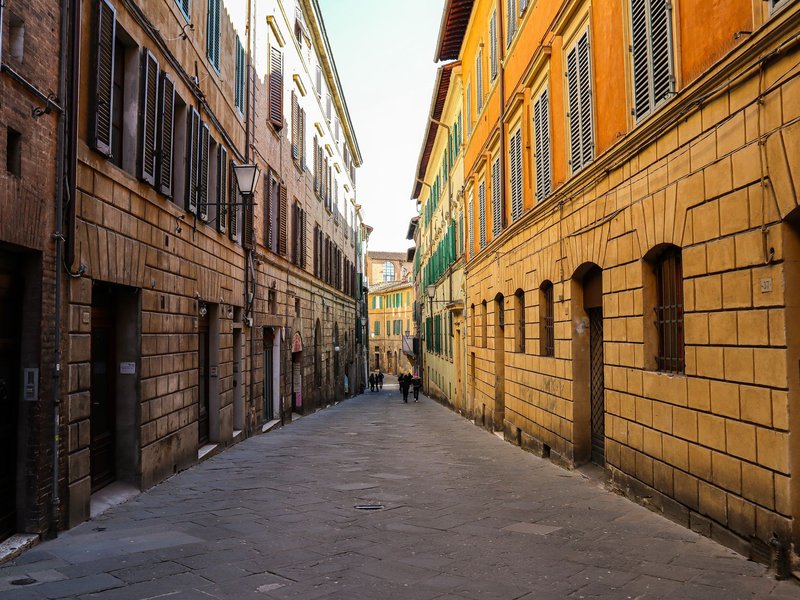
Italy is home to roughly 58 million people, and almost all of them speak Italian. Regional languages like Sardinian, Friulian and Ladin hold protected status in their areas, but Italian is the common language from the Alps to Sicily.
Switzerland is the surprise for many readers. Italian is one of its four national languages, alongside German, French and Romansh. According to the Swiss Federal Statistical Office, around 8% of residents name Italian as a main language, which works out to about 600,000 people. They are concentrated in the canton of Ticino and in four southern valleys of Graubünden. A Swiss Italian speaker in Lugano will use the same Italian as a Milanese, with a few local words and a distinct accent.
San Marino is a landlocked republic of about 34,000 people surrounded by Italy. Italian is the only official language, and the country’s institutions run on it.
Vatican City has fewer than a thousand residents. Latin is the Church’s ceremonial language, but Italian handles daily life, administration and most of the city-state’s practical communication.
Where Italian has regional status
Italian is not national in Slovenia or Croatia, but both countries recognize it locally.
In Slovenia, Slovene is the only national language, but Italian is co-official in the coastal municipalities of Koper, Izola and Piran. Road signs are bilingual, schools teach in Italian, and the Italian minority is guaranteed a seat in the national parliament.
In Croatia, Istria County treats Italian as co-official alongside Croatian. Towns like Rovinj, Poreč and Pula carry bilingual street signs, and the Italian community has its own schools and cultural associations. The population is small, in the tens of thousands, but visible.
Both communities are what remains of the Italian population of Istria, which was much larger before the 1940s.
Countries with big Italian-speaking communities
Italian emigration is one of the largest in modern history, and it left language behind. These countries have no official status for Italian but have millions of people of Italian descent. How many of them still speak it varies.
- Argentina: Italian descendants make up a very large share of the population, and Argentine Spanish carries Italian rhythm and vocabulary. Many families still speak some Italian or a regional dialect.
- Brazil: Home to the largest Italian-descended population outside Italy, concentrated in the south, especially São Paulo and Rio Grande do Sul. Talian, a Venetian-based dialect, is recognized as a cultural heritage language there.
- United States: Italian is among the more commonly spoken languages at home in states like New York, New Jersey and Pennsylvania, though use is declining as older speakers pass away.
- Canada: Toronto and Montreal have long-established Italian communities and Italian-language media.
- Australia: Melbourne and Sydney have large Italian-speaking populations, mostly from postwar migration.
- Venezuela and Uruguay: Both received large waves of Italian immigrants in the 20th century.
- Germany and France: Italian guest workers and their families settled here after World War II, and Italian is widely heard in cities with large communities.
Treat the speaker numbers for this group as estimates. Census questions differ from country to country, and “speaks Italian” can mean anything from fluent to a few phrases learned from a grandmother.
Partial and historical use
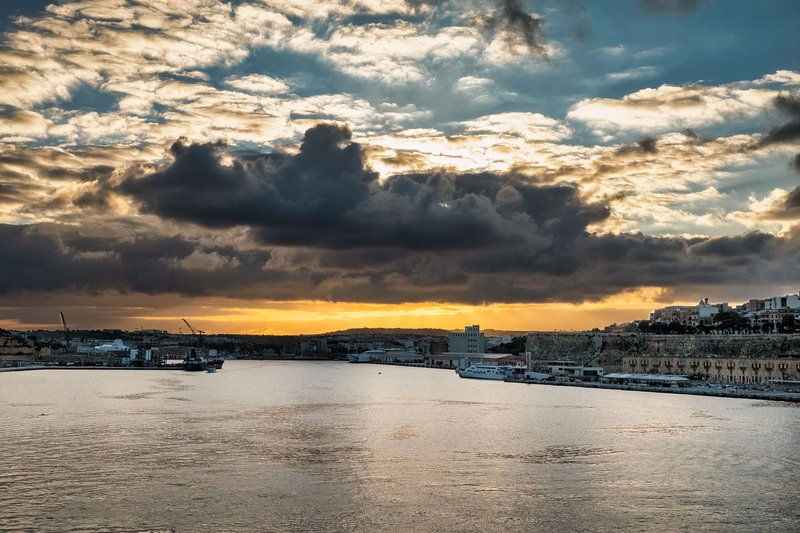
Malta has the strongest case in this category. Italian television reached the islands from the 1950s, and a generation grew up understanding it. The Eurobarometer survey on languages has repeatedly found that a large share of Maltese people can hold a conversation in Italian, well above any other country where it isn’t official. Maltese itself is a Semitic language with a heavy Italian and Sicilian vocabulary layer.
Albania picked up Italian the same way: through RAI broadcasts, which Albanians could receive across the Adriatic even under the communist regime. Many older Albanians speak it fluently, and it remains a popular foreign language in schools.
Monaco has no official status for Italian, since French holds that role, but Italians are among the largest groups of residents and Monégasque, the traditional local language, is closely related to Ligurian.
Libya, Eritrea, Somalia and Ethiopia were all under Italian rule at various points between the 1880s and 1940s. Italian lingers in Eritrea, particularly in Asmara, where Italian-style architecture and cafés remain, and where some older residents still speak it. In Somalia and Libya, the language has mostly faded. For the continent-wide picture, see Italian-speaking countries in Africa.
Why the counts disagree
Search for this topic and you’ll see numbers ranging from 4 to over 20 countries. The difference comes from what each list counts.
- Four counts only national official status: Italy, Switzerland, San Marino and Vatican City.
- Six adds regional co-official status in Slovenia and Croatia.
- Thirteen to twenty-plus adds countries with large communities of speakers or historical use.
None of these is wrong. They answer different questions. If you’re asking “where can I deal with government offices in Italian?”, the answer is four countries, plus parts of two more. If you’re asking “where will I meet someone who speaks Italian at home?”, the answer includes much of the Americas.
Worldwide, estimates put Italian at around 65 million native speakers, with a total near 85 million once second-language speakers are included. Treat those as rough figures: the most recent data varies by source and year.
Dialects versus standard Italian
Standard Italian is based on the Tuscan dialect of Florence, thanks largely to Dante, Petrarch and Boccaccio. For centuries it was mostly a written language. Most Italians spoke their local tongue at home, and a Sicilian and a Venetian could struggle to understand each other well into the 20th century.
Television and universal schooling changed that after World War II. Today nearly everyone in Italy speaks standard Italian, but dialects such as Neapolitan, Sicilian, Venetian, Lombard and Piedmontese remain alive, and linguists classify several of them as separate Romance languages.
This matters for the countries above. Ticino’s Italian leans on Lombard. Istrian Italian is Venetian-flavored. Brazilian Talian is almost entirely Venetian. The Italian spoken abroad is often the Italian of the region the emigrants left, not the standard version taught in textbooks.
Where to practice Italian as a traveler
Italy is the obvious choice, but it isn’t the only one.
- Ticino, Switzerland: Lugano, Locarno and Bellinzona give you standard-adjacent Italian in a country where everything runs on time. Menus, transit and signage are all in Italian.
- Istria, Croatia and Slovenia: Rovinj, Piran and Koper are small and walkable, and many locals switch to Italian when they hear you try.
- Malta: Valletta works well for listening practice. You’ll hear Italian on television, in shops and from Italian tourists, though locals mostly reply in English or Maltese.
- San Marino: A day trip from Rimini or Bologna. It’s compact and entirely Italian-speaking.
- Buenos Aires or São Paulo: Neighborhoods like La Boca and Bixiga still carry Italian signage and old family restaurants where older customers speak Italian or dialect.
Pick the one that fits your goal. For standard Italian, stick to Italy or Ticino. For something with a different accent and history, Istria and Argentina are better bets.