TLDR
Mali doesn’t have a single official language anymore. Its 2023 constitution named 13 national languages — Bambara, Bobo, Bozo, Dogon, Fula, Hassaniya, Kassonke, Maninke, Minyanka, Senufo, Songhay, Soninke, and Tamasheq — as official, and demoted French to a “working language” used in administration and courts. In practice, Bambara (Bamanankan) is what gets you understood almost everywhere: roughly 80% of Malians speak it as a first or second language, making it the country’s real lingua franca regardless of what’s stamped on government letterhead.
Table of Contents
- Who Speaks What in Mali
- Mali Dropped French as Its Official Language in 2023
- Why Mali Has So Many Languages
- A Few Words of Bambara Worth Knowing
- Frequently Asked Questions
Who Speaks What in Mali
Ethnologue counts more than 80 living languages inside Mali’s borders. Most Malians don’t speak just one — a farmer in the Mopti region might grow up with Fulfulde at home, pick up Bambara from traders and radio, and learn French in a classroom that may or may not still be teaching it that way. Here’s how the numbers break down for the languages that actually carry weight.
| Language | Roughly who speaks it | Where |
|---|---|---|
| Bambara (Bamanankan) | ~80% of Mali’s population as first or second language; ~11.7 million speakers across West Africa | Nationwide, strongest in Bamako and the south |
| Fulfulde (Fula/Peul) | ~1 million+ in Mali | Mopti region, Sahel corridor |
| Soninke | ~1.28 million | Kayes region, west |
| Dogon (a cluster of ~20 related languages) | Several hundred thousand combined | Bandiagara escarpment, central Mali |
| Songhay languages (Koyraboro Senni, Koyra Chiini, and others) | Several hundred thousand | Along the Niger River bend — Gao, Timbuktu |
| Tamasheq | Tuareg communities, several hundred thousand | Kidal, Timbuktu, Gao — the north |
| Maninke, Bobo, Bozo, Kassonke, Minyanka, Senufo, Hassaniya | Smaller regional populations each | Scattered across the south, west, and Saharan fringe |
| French | A minority, concentrated in cities and among the educated | Government, courts, higher education, media |
The gap between Bambara and everything else is the story here. No other single language comes close to its reach, which is exactly why it ended up doing the job French used to do — informally, long before the constitution caught up.
Mali Dropped French as Its Official Language in 2023
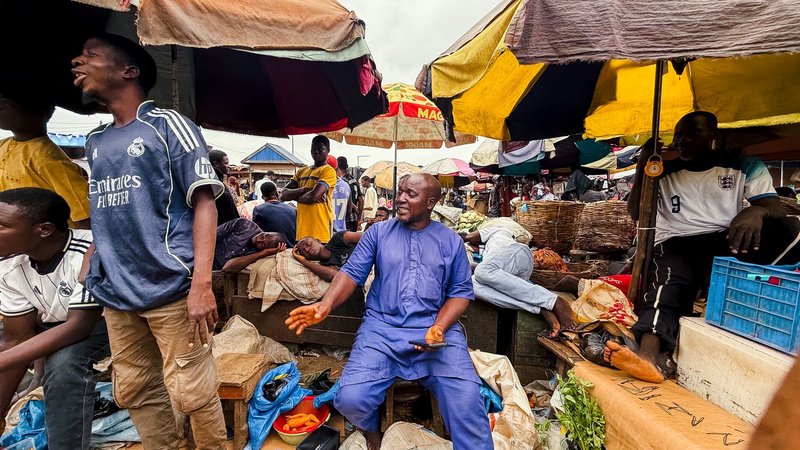
On June 18, 2023, Malians voted on a new constitution and passed it by a wide margin — official results put approval near 97%. Buried in the document was a language policy shift that had been building for years: French, official since independence from France in 1960, was demoted to a “working language,” and 13 indigenous languages were elevated to official status instead.
The Washington Post reported the change as part of a broader distancing from Mali’s former colonial ruler, coming after the military government that took power in 2021 had already pushed French troops out and pivoted toward Russia for security cooperation. Language policy became one more lever in that split. Mali’s move parallels similar shifts in other African nations — Ethiopia, for example, also recognizes multiple indigenous languages as official alongside colonial languages.
What it means in practice is less dramatic than the headline. French hasn’t disappeared from government buildings, courtrooms, or university lecture halls — the “working language” designation keeps it functioning there. What’s changed is symbolic and gradual: state media has expanded broadcasts in Bambara and other national languages, school curricula are under pressure to teach more content in local languages at the primary level, and officials increasingly open public remarks in Bambara before switching to French for formal business. None of the 13 newly official languages has the infrastructure — textbooks, standardized orthography in wide use, trained teachers — to fully replace French overnight, so the transition is happening at the edges rather than all at once.
Why Mali Has So Many Languages
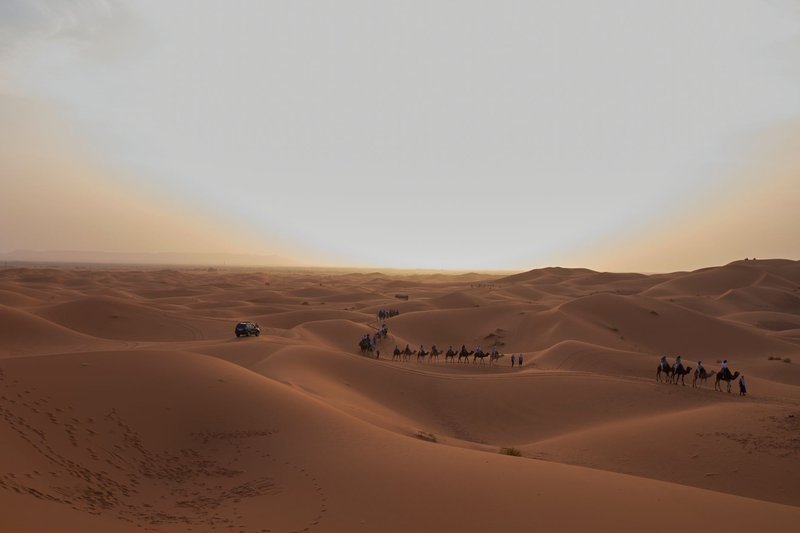
Mali’s language map is really a map of who moved through the region and when. The Niger River bend has been a migration corridor and trading crossroads for over a thousand years, and empires rose and fell across it in overlapping waves: the Ghana Empire in the west (which the Soninke trace their roots to), the Mali Empire in the 13th century that gave Bambara and its Manding relatives their common literary tradition, and later the Songhai Empire centered on Gao and Timbuktu.
Add the Sahara to the mix and you get another layer entirely. Trans-Saharan trade routes carrying salt, gold, and eventually goods from North Africa brought Berber-speaking Tuareg communities into the north, which is why Tamasheq — an Afro-Asiatic language with no relation to Bambara or Fulfulde — is native to Kidal and Timbuktu today. Fulani herders moving with cattle across the Sahel carried Fulfulde with them. The Dogon, isolated for centuries along the Bandiagara escarpment’s cliffs, developed a cluster of roughly 20 distinct languages in relative separation from their neighbors.
None of this was designed. It’s what happens when a region sits at the intersection of river trade, desert caravan routes, and centuries of empire-building, and nobody ever needed to standardize on one tongue to make it work.
A Few Words of Bambara Worth Knowing
If you’re headed to Mali, or just want the language that actually functions as the country’s connective tissue, a handful of Bambara phrases go further than you’d expect — greetings there aren’t a formality, they’re closer to a small ritual, and skipping them reads as rude.
| Bambara | Meaning |
|---|---|
| I ni sɔgɔma | Good morning |
| I ni wula | Good evening |
| I ni ce (to a man) / I ni cɛ | Thank you |
| Aw ni sɔgɔma | Good morning (to a group) |
| Nba / Nse | “I’m well” — the standard reply to a greeting, said by men and women respectively |
Peace Corps volunteers who’ve served in Mali have written about how much ground a Malian greeting covers — it’s not just “hello,” it’s an exchange about your health, your family, and your work that can run several lines deep before anyone gets to the actual point of the conversation. Rushing it is the mistake most visitors make.
Frequently Asked Questions
Is French still spoken in Mali?
Yes. Despite losing its official status, French remains the working language of government, courts, and higher education, and it’s still the language most likely to appear on official signage and paperwork. It’s concentrated among the urban and educated population rather than spoken widely in rural areas, where Bambara or a regional language is far more useful day to day.
What language should a visitor learn?
Bambara, hands down, if you’re spending time in Bamako or the south — it’s understood by roughly four out of five Malians. Head north into Tuareg territory around Kidal or Timbuktu and Tamasheq or Hassaniya Arabic carry more weight locally. French still helps for official interactions, hotel bookings, and reading signage, but a few lines of Bambara greeting etiquette will change how you’re received almost anywhere in the country.
Is Bambara easy to learn?
Easier than its reputation suggests. It’s tonal, but with only two tones rather than the four or more found in languages like Mandarin, and it has no grammatical gender and minimal verb conjugation compared to French. The Institut National des Langues et Civilisations Orientales notes its agglutinative structure — meaning and grammar are built by stacking suffixes onto root words — which is consistent once you learn the pattern, even if it’s unfamiliar to English or French speakers at first.
What are Mali’s national languages?
Thirteen languages hold official status under the 2023 constitution: Bambara, Bobo, Bozo, Dogon, Fula, Hassaniya, Kassonke, Maninke, Minyanka, Senufo, Songhay, Soninke, and Tamasheq. That list sits alongside French as a working language, and beneath all of it, Ethnologue and the CIA World Factbook both put Mali’s total language count above 80 — most spoken by relatively small communities with no official recognition at all.