
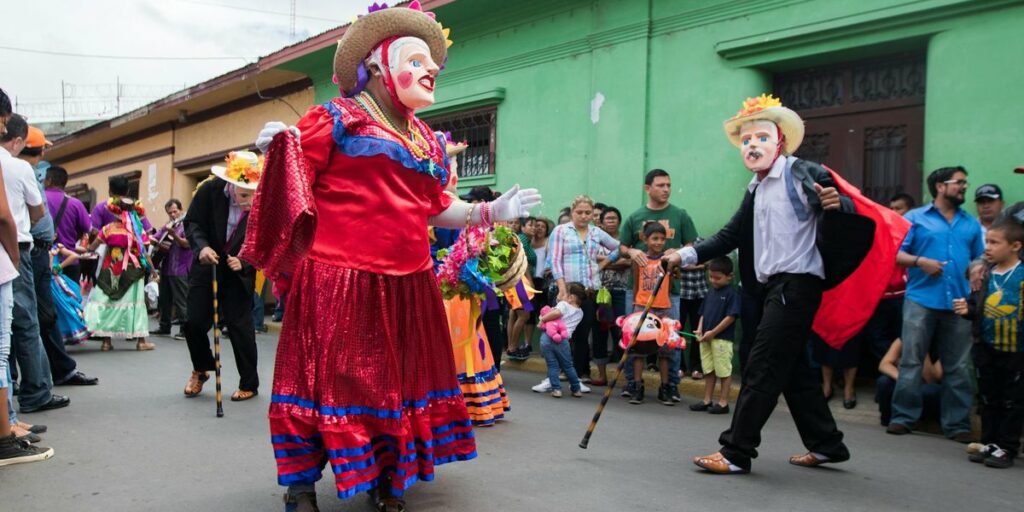
Ask “what language do they speak in Nicaragua” and the one-word answer is Spanish. Roughly nine in ten Nicaraguans speak it, and on the Pacific side it’s the only language you’ll hear all day. But that answer hides the more interesting half of the country. Cross over to the Caribbean coast and Spanish becomes one option among several, sharing the air with English, an English-based Creole, and a cluster of indigenous languages, one of which the government officially recognizes alongside Spanish. And then there’s the language a few hundred deaf kids invented from scratch in a Managua schoolyard, which linguists now fly in to study.
Here’s the full picture, sorted out and put in one place.
Table of Contents
- The quick reference table
- Spanish, and the flavor called Nicañol
- English and Creole on the Caribbean coast
- Indigenous languages: Miskito, Mayangna, Rama, Garifuna
- Nicaraguan Sign Language: a language born in a schoolyard
- The languages that didn’t make it
- What should you actually speak as a visitor?
The quick reference table
Speaker counts for Nicaragua’s smaller languages vary wildly between sources, partly because counting is hard in remote regions and partly because some figures count ethnic identity rather than fluent speakers. The numbers below lean on the most-cited estimates; treat the small ones as ballpark.
| Language | Family | Where | Speakers (approx.) | Official status |
|---|---|---|---|---|
| Spanish | Romance | Nationwide | ~5.5 million | Official (national) |
| Miskito | Misumalpan | NE Caribbean coast | ~150,000 | Regional (Caribbean) |
| Creole English | English-based creole | Bluefields, Corn Islands | ~30,000–50,000 | Regional (Caribbean) |
| Mayangna (Sumo) | Misumalpan | Interior Caribbean region | ~10,000 | Regional (Caribbean) |
| Garifuna | Arawakan | Pearl Lagoon area | a few hundred to ~1,500 | Regional (Caribbean) |
| Rama | Chibchan | Rama Cay, south coast | a few dozen fluent | Regional (Caribbean) |
| Nicaraguan Sign Language | Sign (isolate) | Deaf community, Managua | ~1,500+ | Recognized |
Spanish, and the flavor called Nicañol
Spanish arrived with colonization and never left. It’s the language of government, schools, national media, and daily life across the densely populated Pacific lowlands where most Nicaraguans live. Nicaragua is one of the six Spanish-speaking countries in Central America, and if you only learn one language for a trip, this is it, and it’ll carry you everywhere except a few coastal towns.
But Nicaraguan Spanish has its own personality, sometimes called Nicañol. The most distinctive feature is voseo: Nicaraguans use vos instead of tú for “you,” with its own verb endings. You’ll hear ¿Qué hacés? instead of ¿Qué haces? This isn’t slang, it’s the standard, the way everyone actually talks, and it surprises learners who studied textbook Spanish built around tú.
The vocabulary has its own stamp too. Dale pues is a catch-all “okay, sure, go ahead.” Tuani means cool or great. Maje is the all-purpose word for “dude” or “guy,” used roughly the way güey works in Mexico. Coastal pronunciation also softens or drops the s at the ends of syllables, so las casas can come out closer to lah casah. These features are part of a wider spread of regional dialects across Nicaragua that varies by area, and none of it trips up a Spanish speaker, but it gives the dialect a sound you can pick out.
English and Creole on the Caribbean coast
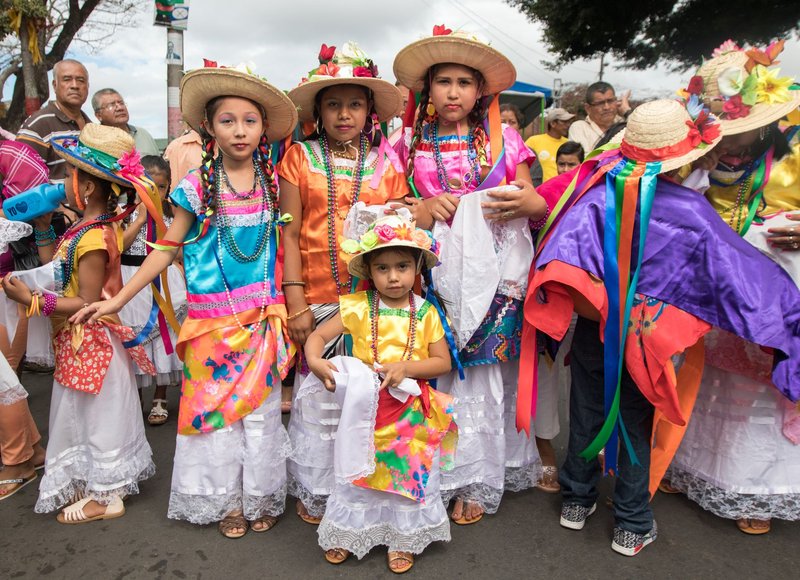
Is English spoken in Nicaragua? On the Pacific side, only in tourist settings. On the Caribbean coast, it’s a native language for a lot of people.
The Caribbean coast, historically the Miskito Coast, spent generations under British influence rather than Spanish, and the linguistic map still shows it. In towns like Bluefields, Pearl Lagoon, and on the Corn Islands, you’ll hear standard English alongside Miskito Coast Creole, an English-based creole that grew out of contact between English speakers, enslaved Africans, and indigenous communities. To an outside ear the Creole sounds like a rapid, rhythmic English with a Caribbean cadence and its own grammar; some words land instantly, others not at all.
This split is more than cultural trivia. In 1987 Nicaragua’s constitution granted autonomy to the Caribbean coast, dividing the old Zelaya department into two autonomous regions. According to Cultural Survival’s reporting on the region, that autonomy came with real language rights, including the framework for schooling in English and indigenous languages, not just Spanish. The constitution makes Spanish the official language of the state while declaring that coastal community languages are also official in their regions.
Indigenous languages: Miskito, Mayangna, Rama, Garifuna
The Caribbean side is also where Nicaragua’s indigenous languages survive, with very different fortunes.
Miskito is the success story. With roughly 150,000 speakers, it’s by far the most widely spoken indigenous language in the country, anchored in the North Caribbean Coast Autonomous Region. It belongs to the Misumalpan family, used in local schools and on regional radio, and unlike most indigenous languages of the Americas, it isn’t fading. The Miskito ethnic group is the largest indigenous population in Nicaragua, which keeps the language alive.
Mayangna (also called Sumo or Sumu) is Miskito’s smaller Misumalpan cousin, spoken by maybe 10,000 people in the interior. It’s hanging on, helped by some bilingual education, but it lives in Miskito’s shadow.
Garifuna is the outlier. An Arawakan language carried to Central America by Afro-indigenous communities, it’s spoken around the Pearl Lagoon area but has dwindled to a small number of fluent speakers in Nicaragua, with active revitalization efforts trying to teach it to younger generations who grew up speaking Creole or Spanish instead.
Rama is the cautionary tale. A Chibchan language tied to Rama Cay island, it’s down to a handful of fluent elderly speakers and is considered critically endangered. There have been documentation and revival projects, but the gap between “documented” and “spoken at home by kids” is exactly the gap that decides whether a language lives.
Nicaraguan Sign Language: a language born in a schoolyard
This is the one almost no general overview mentions, and it’s the most remarkable thing on the list.
Before the late 1970s, deaf Nicaraguans were scattered and isolated, each making do with home signs invented within a single family. Then the government opened special-education schools in Managua, and for the first time hundreds of deaf children were in one place. Enrollment jumped from around 50 students in 1977 to over 200 by 1981. The schools taught spoken Spanish and lip-reading, which largely failed, but in the buses, hallways, and the schoolyard, the kids did something the curriculum never planned for: they pooled their home signs and built a shared language.
What they created wasn’t a copy of any existing sign language. It was new. And each incoming cohort of younger children took the rough system from the older kids and made it more complex, adding the grammar of a full language. American linguist Judy Kegl was brought in to study it in 1986 and documented the language emerging in real time, as detailed by the Nicaraguan Sign Language record on Wikipedia.
That’s why it matters far beyond Nicaragua. Languages almost never appear from nothing in a place researchers can watch. Nicaraguan Sign Language gave linguists a rare live look at how human beings generate grammar when handed nothing but the need to communicate, which is why PBS featured it as the “birth of a language”. A country’s smallest language community ended up producing its most globally studied one.
The languages that didn’t make it
Nicaragua’s linguistic past is bigger than its present. Several indigenous languages of the Pacific and central regions, the areas that got the heaviest dose of Spanish colonization, are gone.
Nahuat (the local relative of Aztec Nahuatl) once dominated parts of the Pacific zone and left its fingerprints all over the map: place names like Managua and Masaya trace back to it. Subtiaba survived near León into the 20th century before dying out. Matagalpa and the language of the Monimbó community in Masaya also fell silent. They linger now only in toponyms, surnames, and a scattering of everyday words absorbed into local Spanish, which is the usual afterlife of a language that loses its last speakers.
What should you actually speak as a visitor?
The practical version, region by region:
- Pacific side (Granada, León, Managua, San Juan del Sur, Ometepe): Spanish, full stop. English exists in hotels and tourist spots but don’t count on it once you step off the tourist track. Even basic Spanish goes a long way.
- Caribbean coast (Bluefields, Corn Islands, Pearl Lagoon): English works. Many locals are bilingual or speak English natively, and you’ll hear Creole among themselves. Spanish still helps, but this is the one part of Nicaragua where an English-only traveler is genuinely fine.
- Anywhere: Learning vos forms isn’t required, but recognizing ¿Qué hacés? and answering with a friendly dale pues earns you instant goodwill.
One small country, one dominant language, and a coast that quietly speaks half a dozen more, including one no other country can claim. That’s Nicaragua’s real answer to a simple question.
Sources: