TLDR
- Every river in Palau is on Babeldaob, the largest island in the country. The Rock Islands have none.
- The Ngermeskang is usually cited as the longest, with roughly 20 km of constant flow into Ngermendu Bay.
- The Ngerdorch River drains Lake Ngardok, the largest freshwater lake in Micronesia.
- Saltwater crocodiles live in the lower reaches of the rivers and the mangroves around them. Don’t swim in tidal water.
Contents
- Why all of Palau’s rivers are on Babeldaob
- The main rivers of Palau
- The longest river in Palau: the Ngermeskang
- The Ngerdorch River and Lake Ngardok
- Crocodiles and river safety
- Water quality and what threatens the rivers
- How to see Palau’s rivers
Why all of Palau’s rivers are on Babeldaob
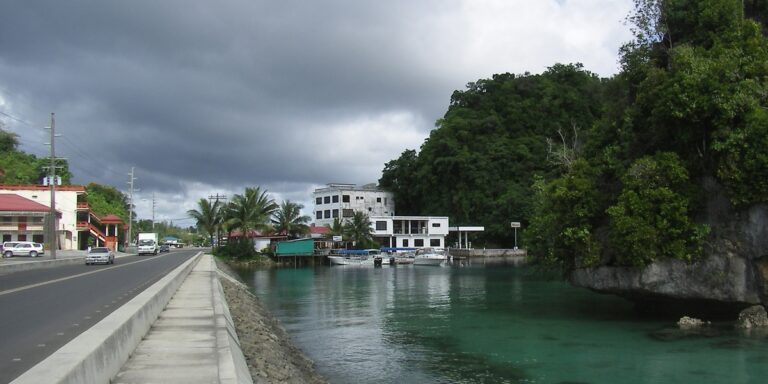
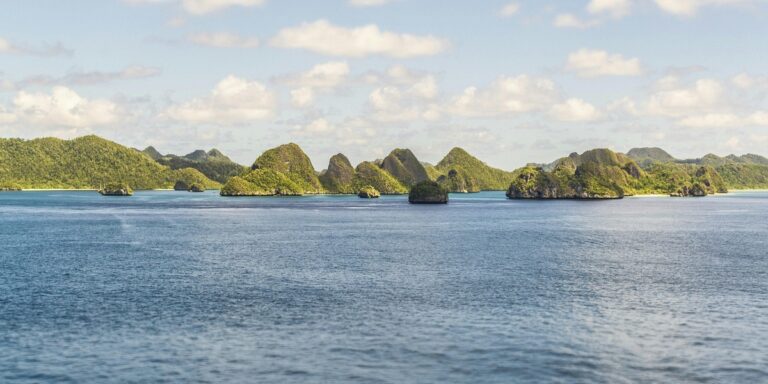
Palau has more than 300 islands, but only one of them is big and high enough to catch and hold rainwater: Babeldaob. It’s a volcanic island, and its interior ridges and rainforest feed streams that run all year. The famous Rock Islands to the south are raised limestone. Rain sinks straight through them, so there are no rivers there at all.
Babeldaob’s highest point, Ngerchelchuus, sits in the north. That matters, because it’s where the longest river in Palau starts.
Most of the island’s streams are permanent. They drain into five major watersheds that fan out from the central ridge toward both the Pacific and Philippine Sea coasts. A 1983 USGS hydrology report on Babeldaob remains the standard reference for how that water moves. It’s dry reading, but it’s the source most other write-ups quietly borrow from.
The main rivers of Palau
Palau has dozens of named streams, and sources disagree on exact lengths and watershed sizes. These four come up most often.
| River | Where it sits | What to know |
|---|---|---|
| Ngermeskang | Northern Babeldaob, flowing to Ngermendu Bay | Usually cited as the longest, about 20 km of constant flow |
| Ngerdorch | Melekeok state, eastern Babeldaob | Outlet of Lake Ngardok, Micronesia’s largest freshwater lake |
| Tabecheding | Babeldaob | One of the named major rivers in the island’s drainage network |
| Ngerikil | Southern Babeldaob | Drains a lowland area near the island’s main population centers |
Treat any single length figure as approximate. Rivers here meander through mangroves and tidal flats, so where you stop measuring changes the number.
The longest river in Palau: the Ngermeskang
The Ngermeskang is the answer most references settle on. Its headwaters are near Ngerchelchuus, the highest point in the country, and it carries water about 20 km down to Ngermendu Bay.
That’s short by continental standards. You could drive the equivalent distance in under half an hour. But on an island where the whole landmass is a few dozen kilometers across, 20 km of permanent flow is a serious river.
Aquarium hobbyists know it too. The Ngermeskang is one of the few Palauan streams with a documented fish community, which is why it shows up on biotope pages for freshwater tanks. Palau’s freshwater fauna is small, and much of it moves between the river and the sea during its life cycle. A 1995 University of Guam survey of Palau’s streamfish catalogs what lives in these streams.
The Ngerdorch River and Lake Ngardok
The Ngerdorch is shorter than the Ngermeskang, but it’s the one with a story. It leaves Lake Ngardok, the largest freshwater lake in Micronesia, and runs to the coast in Melekeok.
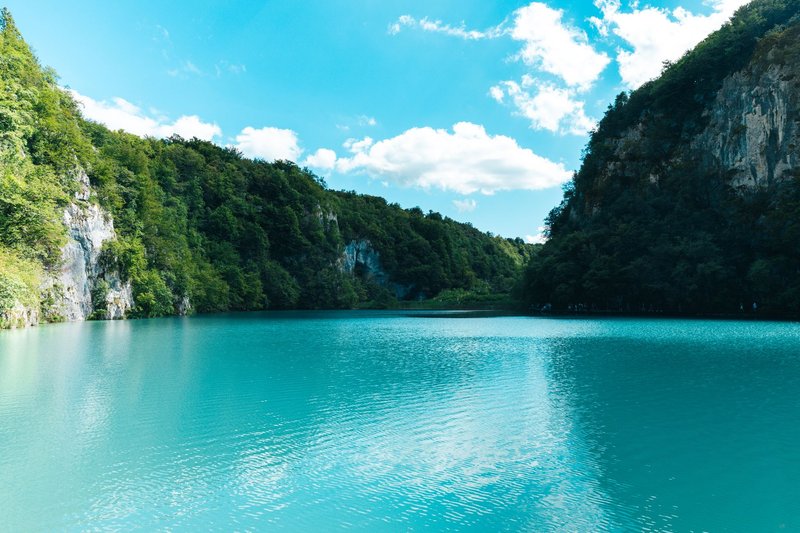
Lake Ngardok is a nature reserve, and it’s shallow, swampy and fringed with forest. It holds birds you won’t easily find elsewhere in Palau, and it’s a rare spot where you can see how a freshwater system works on a Pacific island: rain falls on the ridge, pools in the lake, and the Ngerdorch carries it to the sea.
If you only visit one freshwater site in Palau, make it this one.
Crocodiles and river safety
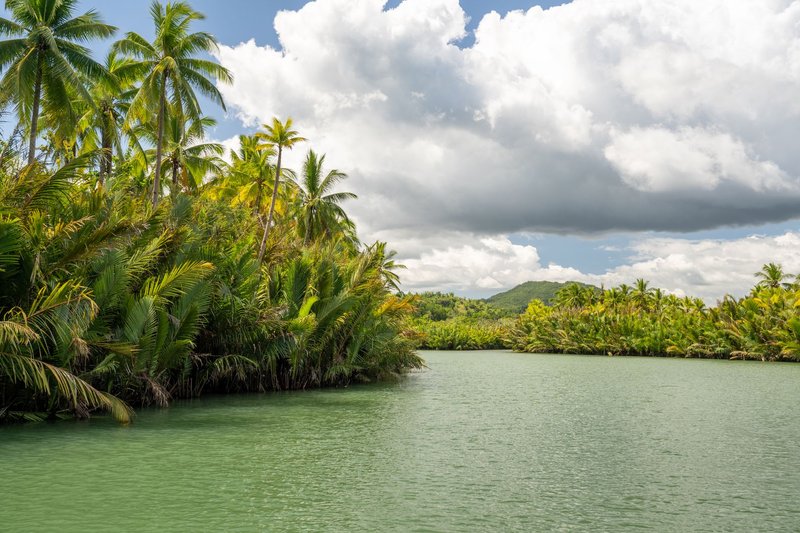
Palau has saltwater crocodiles, and the lower reaches of Babeldaob’s rivers and mangrove channels are their territory. Sightings are uncommon, but they’re not a myth, and the animals are protected.
A few practical rules:
- Don’t swim in tidal sections or river mouths, especially at dusk or night.
- Stay out of mangrove channels unless you’re with a local guide.
- Don’t feed wildlife or leave fish scraps near the water.
- Upstream, in clear freshwater stretches, the risk drops, but a guide will know which pools are safe.
For general background on the species, see the IUCN Red List entry for the saltwater crocodile.
Water quality and what threatens the rivers
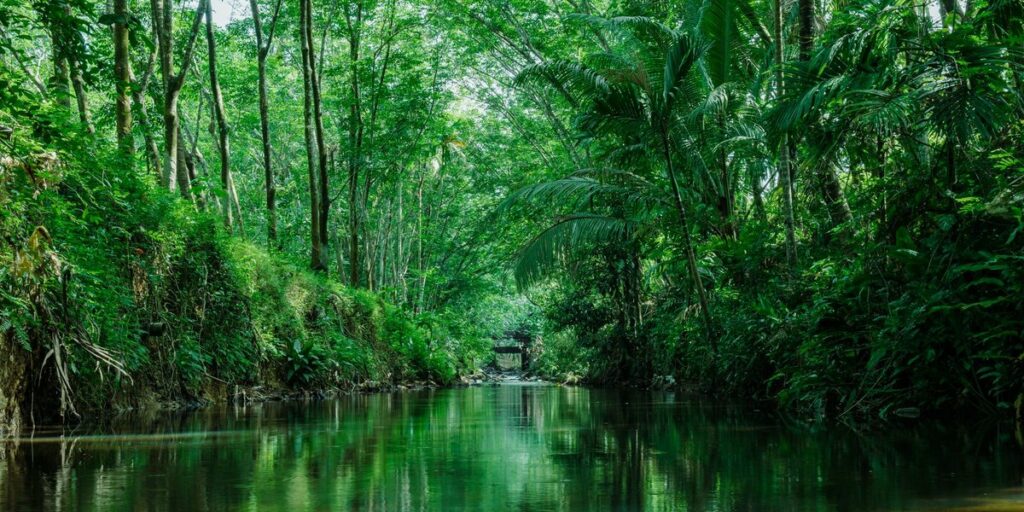
Palau’s rivers are in better shape than most in the Pacific, but they’re not untouched. The main pressure is erosion. Babeldaob’s soils are fragile, and when forest is cleared for roads or construction, sediment washes into streams and eventually onto reefs.
The Compact Road, which circles Babeldaob, was a major source of this runoff during construction. Silt in a river doesn’t stay in the river. It travels to the coast, where it smothers coral. That’s why watershed protection in Palau is tied directly to reef health, and why villages and state governments pay attention to what happens upstream.
How to see Palau’s rivers
You won’t find river-rafting outfitters here. Palau’s rivers are small, and tourism centers on the lagoon. Still, there are good ways to see them:
- Drive the Compact Road. It crosses several streams and gives you a feel for Babeldaob’s interior without leaving the pavement.
- Visit Lake Ngardok. Ask local guides or your hotel about access and permits to the reserve.
- Take a guided kayak or boat trip in the mangrove-lined lower rivers. Go with an operator who knows where the crocodiles are.
- Hike to waterfalls. Ngardmau Falls in the north is the best known and gets you into the forest that feeds the Ngermeskang’s neighborhood.
Plan for rain. Babeldaob is wet, and the trails get muddy fast. Bring insect repellent and shoes you don’t mind ruining.